Wang Tao Builds a Fortress, Liu Jingkang Sets Up a Ladder: Decoding the Billion-Dollar Shadow War Between Shenzhen's Imaging Titans
 04/15 2026
 531
531

If Liu Jingkang is the 'Red Boy,' then what kind of deity is Wang Tao?
Content/YoYo
Edited by/Goose
Proofread by/Ruffian
In a recent exclusive interview with *LatePost*, DJI founder Wang Tao was asked, *'What makes Insta360 different from previous rivals DJI has faced?'* His response painted a vivid metaphor: Insta360's leader is *'so young and dynamic, it reminds me of the Red Boy from *Journey to the West*.'*
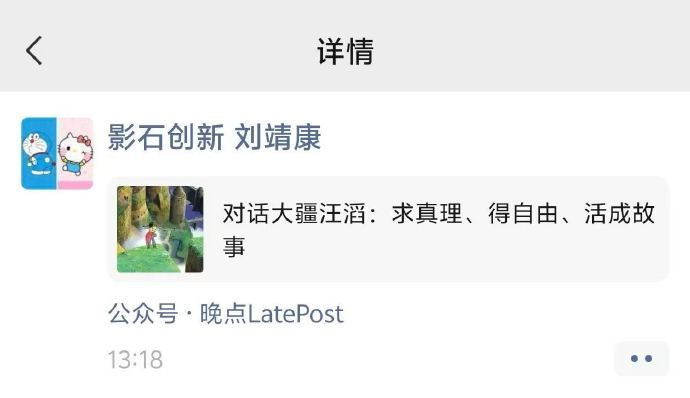
The remark quickly spread. Insta360 founder Liu Jingkang later reposted the interview on WeChat Moments without commentary. This silent repost was interpreted by outsiders as a tacit acknowledgment of the challenge.
In *Journey to the West*, the Red Boy wields supernatural powers and fears nothing, yet his inexperience and shaky foundations ultimately lead to his subjugation by Guanyin as the 'Child of Wealth.' Wang Tao's metaphor, layered with nuance, conveyed both restrained admiration and unabashed condescension.
Behind this literary banter lies escalating tensions between the two companies. Just a month earlier, DJI formally sued Insta360 in Shenzhen Intermediate People’s Court over six patent ownership disputes, targeting patents involving former DJI core R&D personnel.
Earlier, in July 2025, Insta360 launched its first 360-degree drone. Three days later, DJI retaliated with a 2999 RMB 360-degree camera, igniting a nine-month product war that continues to this day.
Wang Tao added during the interview: *'We advocate for a healthy competitive environment and higher-level adherence to rules among entrepreneurs, not endless media stunts for publicity.'* The comment, while diplomatic, was widely seen as a jab at Insta360’s knack for generating public discourse.
Yet Wang Tao himself granted the interview, sparking widespread discussion. On this front, both leaders are waging the same narrative war—just with different styles and postures.
This is what makes the rivalry fascinating. Beyond product strategies, the two sides fundamentally disagree on how the battle should even be fought.
**Part.1**
**Breaking Boundaries**
The Erosion of Divisions Between Shenzhen’s Imaging Titans
In Shenzhen’s Nanshan District, two streets less than ten kilometers apart house China’s top smart imaging firms.
On Liuxian Avenue, DJI’s glass-walled office building almost hides its logo, yet it dominates over 70% of the global consumer drone market. Meanwhile, at the other end of the tech park, Insta360’s office is plastered with creative posters by young staff. Founded less than a decade ago, the company once claimed the title of *'360-Degree Camera King'* with 85% market share.
For years, this was Shenzhen’s most harmonious tech duopoly: DJI ruled the skies, Insta360 documented the ground. They even complemented each other—DJI drones carried Insta360 cameras to redefine extreme imaging.
But in business, the iron law is that when vertical growth stalls, giants must cross boundaries to survive.
**Why Now?**
DJI faces saturation in consumer drones. By 2024, China’s consumer drone shipments hit ~3.5 million units, nearing penetration limits. Price wars and feature homogenization pressure margins.
In action cameras, DJI’s Action series excels in hardware but trails Insta360’s Ace series in young user word of mouth (reputation). Insta360’s AI auto-editing and 360-degree playfulness create formidable barriers. For DJI, inaction risks a midlife crisis for its product line.
Insta360’s challenge is more fundamental. As a publicly traded company, it needs sustained growth narratives, but the 360-degree camera market has inherent ceilings.
By 2025, Insta360’s revenue neared 10 billion RMB, driven largely by action cameras. The absolute market size for 360-degree cameras remains limited. Without breaking into broader consumer imaging markets and rebranding as an all-scenario platform, its valuation will plateau. Drones are Insta360’s narrative lifeline.
Thus, the 2025 *'Sky-vs-Ground Offensive'* was no impulsive clash but an inevitable collision after both companies pushed their growth logics to extremes.
This war transcends product lines—it’s a clash of survival philosophies.
Wang Tao is the archetypal tech geek: obsessed with engineering, uncompromising on performance. DJI’s moat—full-stack self-developed flight control, transmission, and gimbal systems, plus over 38,000 granted patents and 15% of revenue reinvested in R&D annually—stems from this obsession.
With estimated 2025 revenue of 85-90 billion RMB, DJI, as a private company, avoids quarterly earnings pressure and wields ample resources for price wars, patent battles, and talent poaching.
Insta360’s DNA is starkly different. Founder Liu Jingkang’s internet background makes him more of a product manager. His instinct lies in understanding users and scenarios, using algorithms and experiences to lower creative barriers. When Insta360 launched its first 360-degree camera in 2015, its selling point wasn’t hardware specs but a revolution in creative workflow: shoot first, select later, with AI auto-editing.
By mid-2025, Insta360 held 998 granted patents (222 inventions), mostly in utility and design, covering software algorithms like panoramic stitching, FlowState electronic stabilization, and AI post-production.

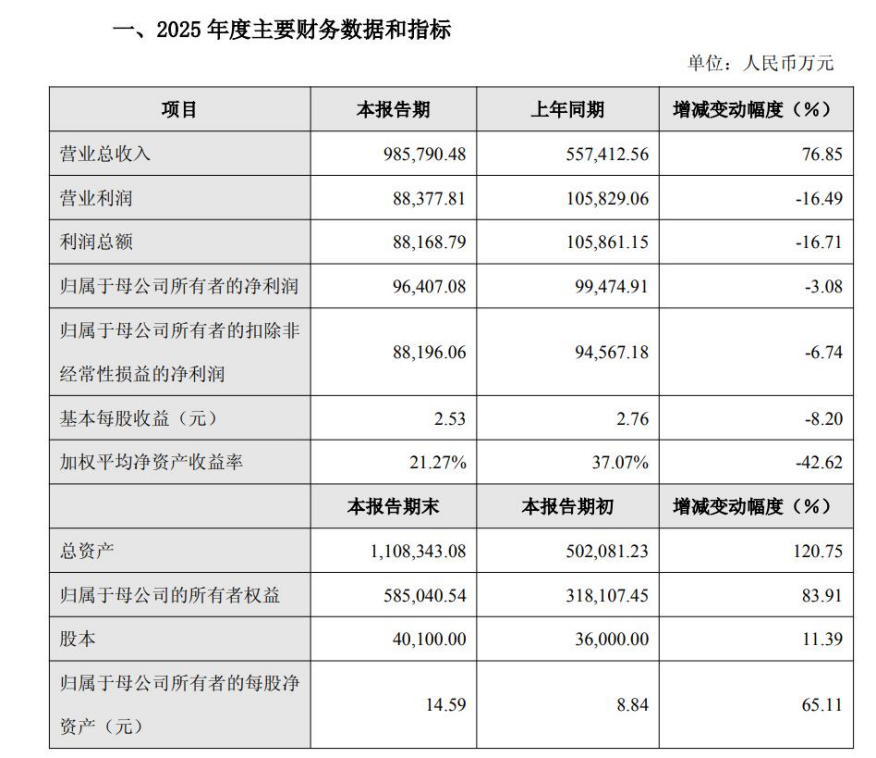
In 2025, Insta360’s revenue reached 9.858 billion RMB, with 1.649 billion RMB in R&D. This algorithm-first, hardware-light approach defines its differentiation (differentiation) strategy against DJI.
These philosophies coexisted peacefully until they collided—now, friction is intense.
**Part.2**
**Clash**
Four Frontlines of Real Combat
The July 2025 territorial incursions shifted DJI and Insta360’s rivalry from coexistence to direct confrontation. The war now spans four domains: 360-degree cameras, action cameras, handheld gimbals, and drones.
360-degree cameras are Insta360’s stronghold. Since 2018, it has led globally for eight years, peaking at 91% market share in Q1 2025. But DJI’s Osmo 360 disrupted the pattern (landscape) in three months.
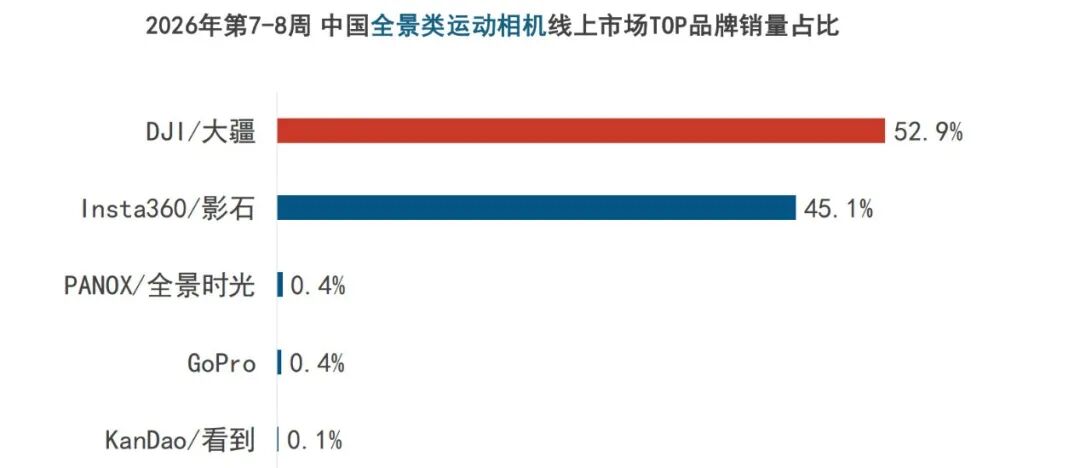
By Q3 2025, DJI surged to 43% global share, while Insta360 plummeted to 49%. During the 2026 Spring Festival week, DJI dominated with 62.9% of total sales, Insta360 retreated to 28.6%. In the 360-degree segment, DJI’s single model captured 52.9%, while Insta360’s three models combined took 45.1%.
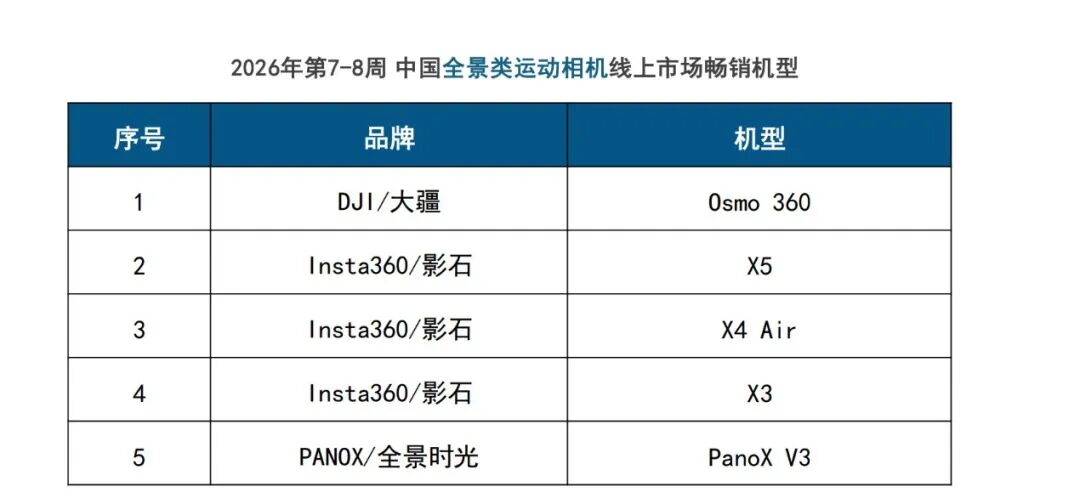
But the real battle in 360-degree cameras is over content ecosystems. Insta360’s creator community, influencer partnerships, and vast UGC library form its strongest defense against DJI. Hardware can be matched, algorithms replicated, but content ecosystems take years to build and cannot be bought.
The action camera front reveals starker divides. DJI’s Action 5 Pro emphasizes mechanical stabilization, large sensors, and professional color science; Insta360’s Ace Pro 2 focuses on dual-lens switching, AI tracking, and playful modes.
The gap reflects user positioning, not technology: DJI serves pros, Insta360 targets casual young creators. These groups could coexist, but AI tools are making casual creation mainstream. If DJI fails to offer engaging experiences, its *'professional'* label may become a barrier.
Insta360’s *'Yingling A1'* 360-degree drone is the war’s riskiest gamble. Instead of challenging DJI’s flight control and patents head-on, it pitched the *'aerial 360-degree camera'* concept, generating 20 million RMB in sales on day one. But this move ignited DJI’s patent counteroffensive.
Success hinges on whether panoramic shooting outweighs compromised flight performance. For Insta360, drones may remain a costly strategic track in the short term.
**Part.3**
**Shadow War**
Who Defines the Next Wave of Creation?
In April 2026, DJI sued Insta360 over six patent ownership disputes—its first domestic ownership claim, targeting patent rights themselves, not infringement damages.
The lawsuit aims to legally entrench DJI’s tech monopoly, raise Insta360’s R&D and legal costs, and pressure its valuation. For Insta360, this is a public relations battlefield—retreat signals weakness, while counter-suing as a *'giant-bullied innovator'* could rally public sympathy.
Regardless of legal outcomes, the true prize is defining smart imaging’s next paradigm.
DJI’s culture is built for professional tools, not mass creativity. As casual users—not pros—drive growth, DJI’s DNA may alienate fun-seeking young creators. The Osmo 360 shows DJI recognizes this, but realigning product logic is harder than launching a new model.
Insta360’s biggest risk isn’t product competition but the double threat of patent wars and supply chain pressure.
If DJI’s suits succeed, Insta360 faces product bans and hefty damages. Price wars could erode profits, starving R&D. For a public company, failing to sustain margins may trigger a capital market confidence crisis.
Yet Insta360 holds a potent card: its algorithm-driven content ecosystem. Panoramic content shares far better on social media than regular action camera footage; its AI auto-editing has enabled millions to create effortlessly.
Once content ecosystems achieve network effects, hardware competition alone cannot dismantle them. Insta360’s best hope is to scale *'360+AI creation'* fast enough during the AI boom to become the standard-bearer, not just a participant, in next-gen creation.
The hardware empire’s walls and AI content’s flexible defenses are colliding. Whatever the outcome, Shenzhen’s Nanshan District will keep delivering compelling business sagas in the rush toward consumer electronics democratization and AI-driven creation.
END
-
![]()
Proceed with Caution Before Entering the Indian Auto Market: Even Musk Faced Challenges, What Makes Chery Think It Can Succeed?
-
![]()
EU Intends to Engage in Trade War with China Amid Chinese Cars Nearing 10% of Monthly Sales in Europe
-
![]()
Shenzhen Rolls Out 'Ten Measures' for New Energy Vehicle Insurance: Integrates Innovative Risk Factors and Adopts Battery-Body Separation Model
-
![]()
If You Can’t Drive a Ferrari Yourself, What’s the Point of Owning One?
-
![]()
ByteDance Clarifies: 'No Car Production, No Investment in Saido!' Seres' Stock Price Plummets to New Lows!
-
![]()
New Energy Vehicles Boast Over 60% Penetration Rate: Joint Venture Automakers Must Accelerate Their Efforts
-
![]()
Why Are New Energy Vehicles Becoming Increasingly 'Bulky'?
-
![]()
Over 12 Years, the Average Passenger Vehicle Has Gained Nearly 400 kg, Sparking Netizens' Queries: When Will New Energy Vehicles Revert to Their 'Standard Size'?