DJI and Insta360: A Clash Over the 'Boundaries' of Chinese Hardware
 04/27 2026
 504
504
【Tide Business Review/Text】
'Everyone should focus on running their own race and not trip others up, but if others come after us, we will fight back. Whatever DJI sets out to do, we aim to be number one.'
These are the words of DJI founder Frank Wang in his first public interview in a decade.
At this time, according to a January 2026 report by 10jqka.com, DJI's annual revenue for 2025 exceeded 90 billion yuan, just a step away from joining the 100-billion-yuan club.
Meanwhile, Insta360, a listed company that started with panoramic cameras, is entering DJI's territory—drones.
In 2026, the two companies are set to collide head-on across multiple dimensions, including litigation, supply chains, and public opinion, with competition unfolding in every arena.
Behind this showdown lies two distinct hardware philosophies.
01 Head-to-Head Clash: When Growth Hits the 'Boundary'
The origins of DJI and Insta360 trace back to a common 'rival'—GoPro.
In 2006, while still pursuing his graduate studies at the Hong Kong University of Science and Technology, Frank Wang founded DJI. At that time, the drone market was still uncharted territory.
Over the next decade, DJI adopted an almost academic approach, independently developing 80% of the technological stack in the drone field, setting an extremely high bar for its first product. The Phantom 1, launched in 2013, despite still using a GoPro camera, became an instant hit with its 'ready-to-fly' positioning and all-in-one consumer aerial photography functionality.
Starting as a GoPro accessory maker, DJI gradually broke out of a niche market and eventually captured over 70% of the global consumer drone market.
Some say DJI initially stood on GoPro's shoulders—whether through drones equipped with GoPro cameras or the Zenmuse gimbal series custom-made for GoPro. By launching accessories for GoPro, DJI achieved a daring leap in commercialization.
However, aerial photography drones alone could not sustain DJI's position in hardware manufacturing. DJI subsequently developed smartphone gimbals and larger drones, venturing into agriculture, forestry, fisheries, power, and security sectors.
For instance, agricultural drones were first developed by Guangzhou-based XAG. When DJI assembled its agricultural machinery team in 2015, XAG's first-generation product was already on the market.
XAG's drones opted for a quadrotor design, which was easier to control in terms of flight control and hardware costs. Compared to DJI's later octocopter products, XAG lagged in operational precision, payload capacity, seeding efficiency, and obstacle avoidance, while DJI's product stability also outperformed XAG's. According to XAG's 2025 Hong Kong IPO prospectus, by 2025, DJI had become the industry leader, with XAG generating only a few billion yuan in revenue.
DJI's expansion logic is clear and unwavering: either don't do it, or be number one.
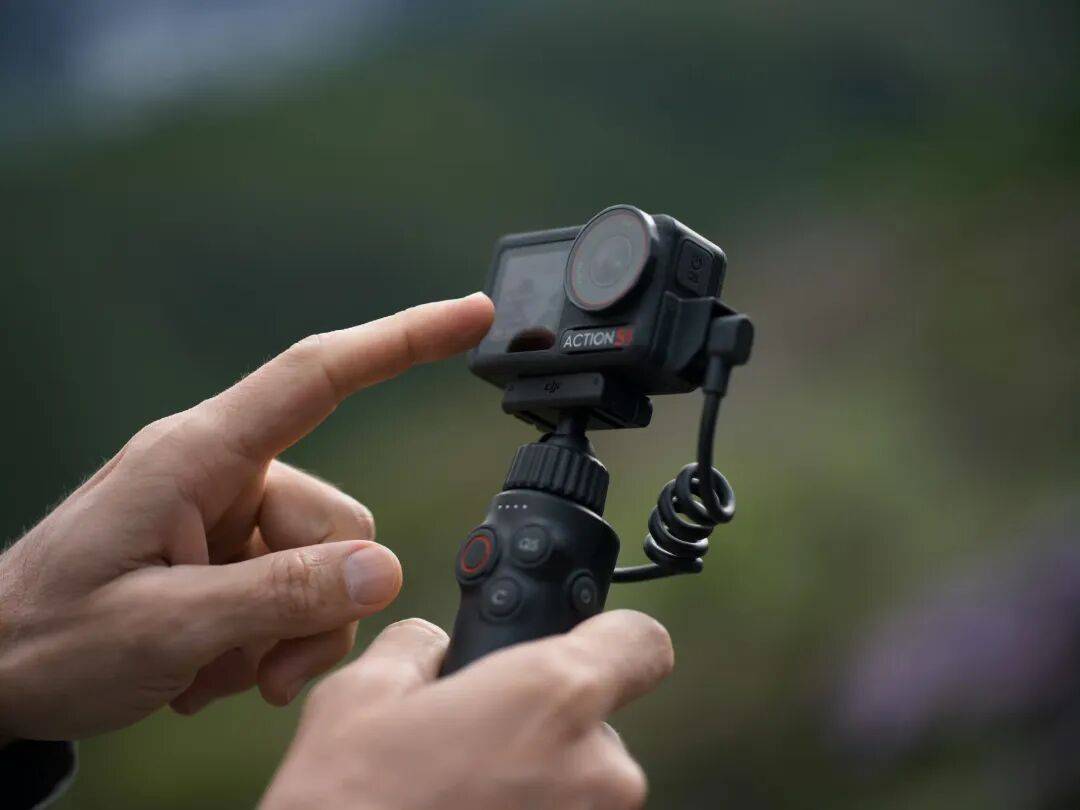
This applies beyond agricultural machinery. In 2019, DJI officially launched its action camera, Action, entering a market then dominated by U.S. company GoPro. This marked the first encounter between DJI and Insta360. The DJI Action has since seen nearly annual iterations, and by the 2024 Action 5 Pro, GoPro's position as the inventor of action cameras was wavering, with Insta360 and DJI emerging as the top two players in the field.
DJI's Automotive Division, established in 2016 and spun off as AutoFlight Technologies in 2023, provides mass-produced advanced driver-assistance systems (ADAS) and high-level autonomous driving systems (L2–L4) for automakers, becoming a core supplier to Volkswagen, Dongfeng Motor, and BYD. Its 2023-launched energy storage business directly competes with EcoFlow's outdoor power products, a rising unicorn in the energy storage sector.
DJI is also willing to explore seemingly small or saturated markets, such as microphones. Additionally, the DJI Osmo Pocket, launched three years ago, entered a niche segment. Now, this 'pocket gimbal camera' has been followed by smartphone manufacturers like Vivo and Honor.
As its business expanded, DJI's revenue grew from 100 million yuan in 2012 to nearly 800 million yuan in 2013, about 2.3 billion yuan in 2014, and surpassed 10 billion yuan in 2016. With a rich talent pool and continuous innovation, DJI's scale became impossible to ignore, including by investors.
Today, DJI operates at least a dozen parallel business lines, covering consumer drones, DJI Agriculture, handheld imaging, panoramic cameras, microphones, gimbals, cleaning appliances, e-bikes, and more. Excluding AutoFlight, each of DJI's current business lines faces an established market leader: XAG in agricultural machinery, Insta360 in panoramic cameras, Moma in microphones, Hohem in gimbals, Autel Robotics in industrial drones, and Roborock in robotic vacuums.
Compared to DJI's 'rivals' across its business lines, Insta360 is not the strongest. Yet, surprisingly, only Insta360 engages in back-and-forth online clashes with DJI and dares to enter DJI's core territory—drones.
But why Insta360?
02 The 'Offense and Defense' Between Tech-Driven and Creativity-Focused Players
Insta360's story begins with 'another accessory.'
As a listed company, Insta360 recently released its 2025 annual financial report: full-year revenue reached approximately 9.858 billion yuan, up 76.85% year-on-year, with net profit attributable to shareholders nearing 1 billion yuan. In 2024, Insta360's revenue was less than 5 billion yuan, making its doubling in just one year, from a substantial base, particularly impressive.
In terms of revenue and profit margins, Insta360 is on the verge of joining China's 10-billion-yuan smart hardware club. More importantly, after its 2025 IPO, the secondary market provides it with easier access to capital.
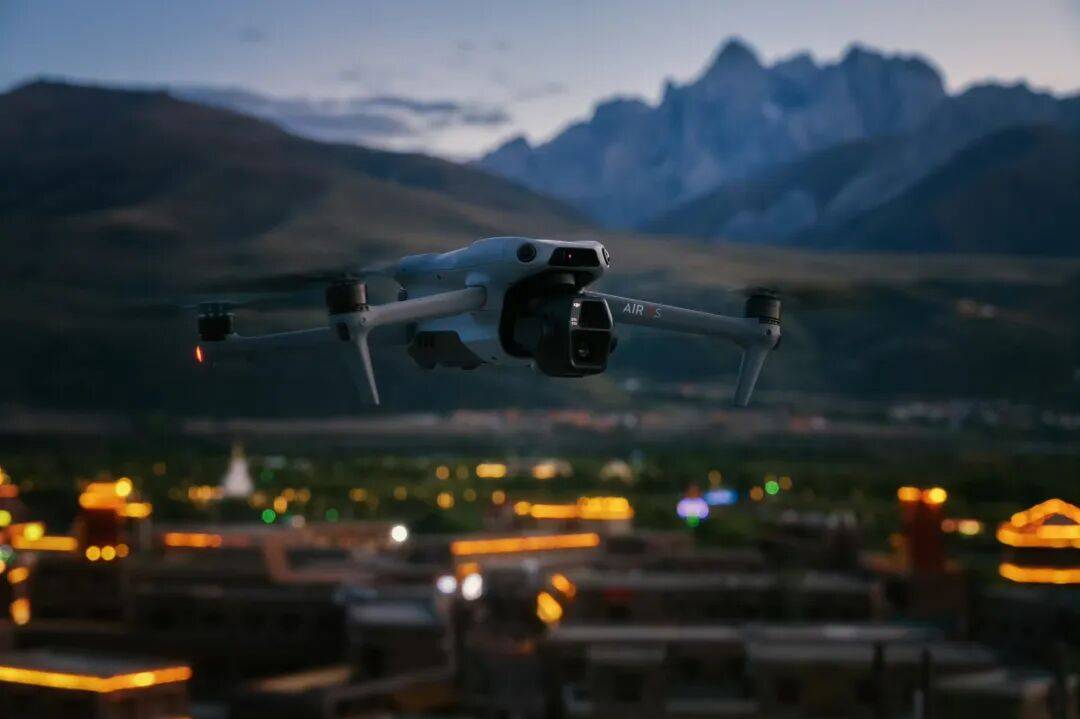
Despite countless rivals retreating in the face of DJI's advances and second-tier drone companies abandoning the chase, Insta360 chose to go against the tide, launching the world's first panoramic drone under its sub-brand Shadow. This move cut into (encroached upon) DJI's core market.
In 2026, DJI and Insta360 found themselves at odds after entering each other's product territories, but their rivalry dates back years, rooted in their connections to GoPro. DJI leveraged GoPro accessories for its breakthrough, while Insta360 took a similar 'accessory shortcut' in the even niche market of panoramic cameras.
In 2016, Insta360 launched the Nano S, a panoramic camera accessory that plugged directly into iPhones. Its excellent compatibility and superior VR experience compared to Ricoh and Samsung models caused a stir in the geek community.

Panoramic cameras were originally intended to complement VR, but VR failed to thrive and instead declined yearly. Fortunately, Insta360 promptly entered the action camera market, creating its other key product line.
Both DJI and Insta360 are hardware companies, but their ethos differs entirely. DJI succeeds through technological accumulation, while Insta360 emphasizes product creativity, pushing each generation to extremes.
The GO series, launched in 2019, is as small as AirPods; the 2020 ONER features a modular design, supporting interchangeable wide-angle, panoramic, and one-inch lenses, and even drone compatibility.
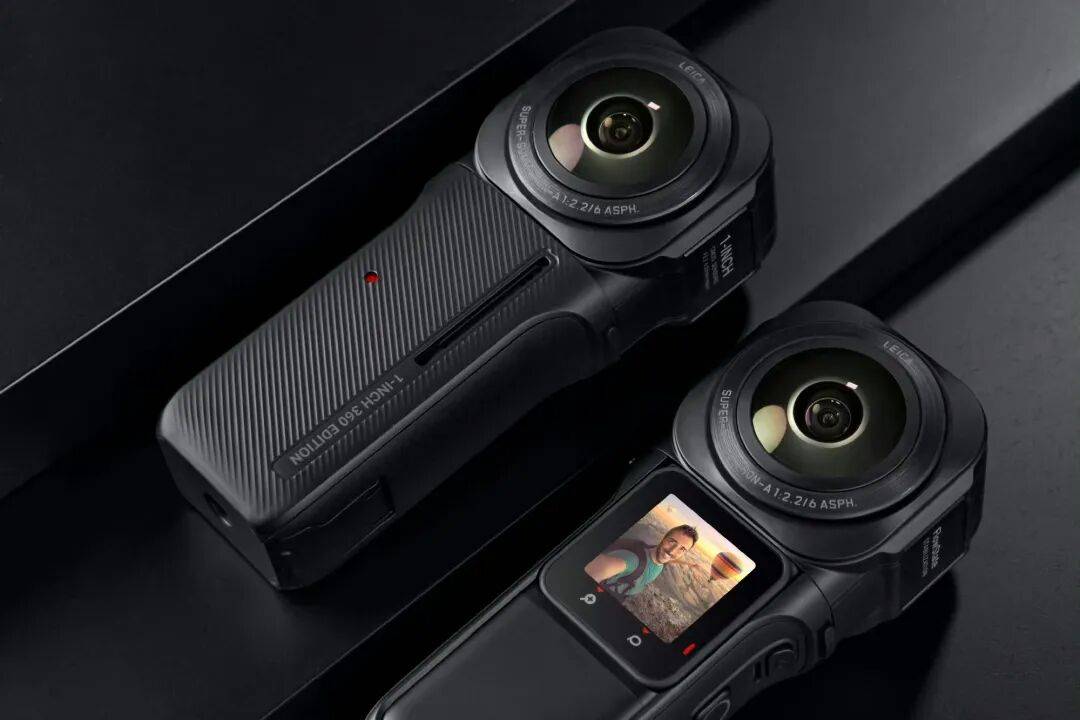
The GO series, in particular, pioneered the 'thumb camera' category, inspiring viral videos like toddlers wearing cameras on their hats or pets with neck-mounted cameras, directly activating a larger market for everyday video recording. Currently, the GO series ranks second in sales among Insta360's product lineup, after panoramic cameras.

Moreover, innovations like panoramic stitching, invisible selfie sticks, lightweight creation experiences, and core features of the Insta360 app—such as AI-powered auto-editing, Shot Lab creative library access, and on-device AI noise reduction—have left GoPro struggling to keep up and DJI wary.
The two companies also differ sharply in branding and user demographics. On TikTok, Insta360's most popular videos have nearly 100 million views, while DJI's top videos reach tens of millions. While Insta360's content is more entertaining and visually appealing, and DJI's focuses on product promotions and tutorials, this disparity reflects their differing approaches to brand youthfulness and community engagement.
The two companies also show distinct directions amid the current AI wave.
In a conversation with Luo Yonghao, Insta360 founder Liu Jingkang explicitly embraced AI. Insta360 aims to build a deeply integrated hardware-software system, endowing hardware with limitless AI capabilities. In summer 2025, Insta360's app upgrade incorporated a panoramic large model, enabling automatic storyline recognition, intelligent editing, and music matching, delivering a 'zero-basis masterpiece' creation experience.
In his latest interview, Frank Wang remained noncommittal, adopting a clearly wait and see (wait-and-see) attitude. While praising the technical flair and enthusiasm of young talents in the AI large model field, he argued that technical passion alone is insufficient, as young leaders lack the 40 years of experience needed to grasp management essentials, making it hard to sustain team cohesion.
An obvious observation: while DJI incorporates AI features into its products, its consumer messaging does not center on AI but rather hardware performance. In contrast, Insta360's AI features and product creativity reflect a strategy of competing not on hardware specs but on unique user insights and functional differentiation.
Insta360's unconventional approach is also evident in its public clashes with DJI. In April, DJI accused Insta360 via its official WeChat account of 'relying on copying and poaching for growth, undermining industry innovation.'
Insta360's response the next day refuted all allegations of patent infringement and talent competition point by point, while exposing DJI's exclusive chip agreement with Bosch, accusing DJI of 'abusing market dominance, engaging in supply chain monopolies, and obstructing fair industry competition.'
Subsequently, both sides engaged in fierce exchanges on social media and industry forums.
This was not DJI's first lawsuit against Insta360, nor Insta360's first public response. Patent disputes, talent flows, and supply chain maneuvers—frictions between the two companies across multiple dimensions have consistently played out in the public arena. Whether proactive or reactive, making competition public has become a standard tactic in their rivalry.
It is clear that while DJI and Insta360 take different paths, they are destined to meet head-on in more and more arenas.
But this 'mutual approach' extends far beyond these two companies.
03 The Spillover Effect: The 'Capability Building Block' Era of Chinese Hardware
Insta360 and DJI represent two distinct paths.
Insta360 excels in AI algorithms, product thinking, and user operations, while DJI dominates in manufacturing, hardware, and supply chains, with core competencies leaning toward hard tech.
DJI independently developed most key drone components early on, creating a formidable technological barrier. As manufacturing scale expanded, this advantage grew exponentially—the same self-developed chip could be used in both thousand-yuan consumer drones and ten-thousand-yuan industrial models. In contrast, Insta360's component procurement volume is about one-tenth of DJI's, reflecting an objective gap in supply chain capabilities.
However, this does not mean Insta360 has no chance in drones.
On one hand, the drone industry's upstream and downstream sectors are vast, spanning basic raw materials to core components like batteries, flight controllers, motors, LiDAR, and chips, as well as assembly manufacturing and diverse applications, hiding numerous opportunities. The industry is far from solidified, leaving room for eager newcomers.

Civil Aviation Administration data shows that nearly 20,000 entities held drone operation certificates by the end of 2024. On the other hand, technological variables are reshaping the landscape—AI enables low-power chips to run complex algorithms, while 5G and edge computing make beyond-visual-line-of-sight (BVLOS) control imminent. The global drone market reached $41.79 billion in 2025 and shows no signs of slowing.
More importantly, the 'mutual approach' is not limited to DJI and Insta360.
In March 2026, Dreame Technology showcased its eVTOL aircraft, 'Rotor Era,' at AWE. A company that started with robotic vacuums is now applying its accumulated capabilities in high-speed motors, visual navigation, and AI algorithms to the low-altitude economy.
This reveals a trend in China's hardware industry: 'capability spillover' is replacing 'category expansion.' DJI has spilled from drones into imaging, agriculture, and automotive; Insta360 from panoramic cameras into action cameras and drones; Dreame from robotic vacuums into low-altitude aircraft. These companies no longer cling to single categories but recombine core technological capabilities like 'building blocks' for new applications.
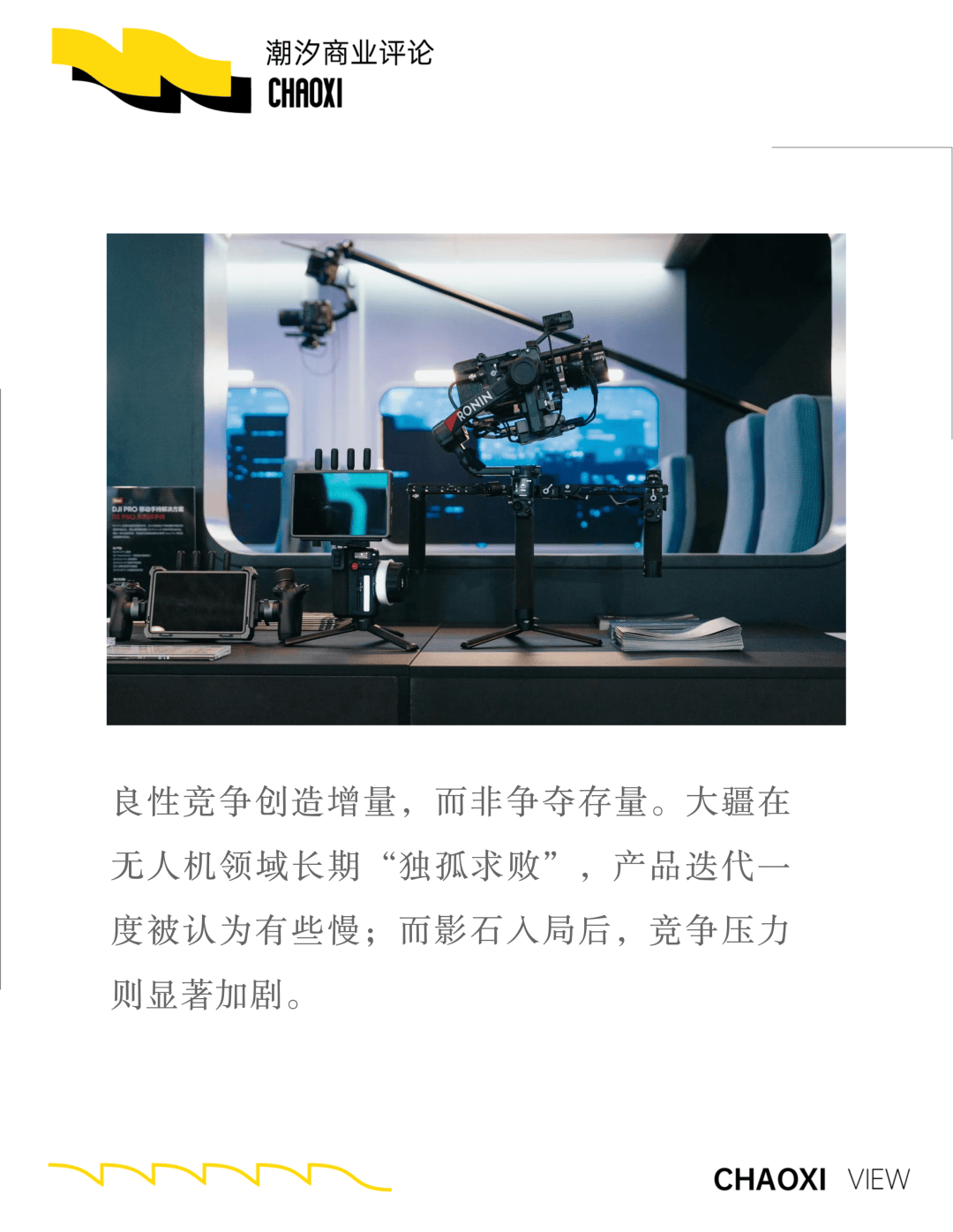
When multiple 'innovation flywheels' spin simultaneously in an industry, a 'catfish effect' emerges. Healthy competition creates increment (increments), not just Competition for stock (competition for existing market share). DJI, long dominant and somewhat slow in product iteration in drones, now faces heightened pressure with Insta360's entry.
This is precisely the true value of multipolar competition: it is not about a life-and-death struggle, but about making all participants run faster. For consumers, this means more choices and better products; for the industry, it means faster technological iteration and a more vibrant innovation ecosystem.
Business competition is inevitable and necessary. It will not eliminate players but will only make the surviving players stronger.
At the end of that interview, Wang Tao shared his insights from Journey to the West:
When Tang Monk was captured by the White Bone Spirit, Sha Monk asked him why he didn't let the eldest disciple kill the demon. Tang Monk replied, 'If I go around fighting and killing everywhere, what's the point of my quest for the scriptures?' When Sha Monk asked what would happen if he died, Tang Monk said, 'If I truly must die, it means my fate is unchangeable, and I accept it.'
Wang Tao summarized: Tang Monk had confidence, but he was not 100% certain. This is the mindset needed for the quest for the scriptures—having sufficient confidence in the outcome but never being, nor should one ever be, 100% certain of success. It is the uncertainty of the outcome that gives the journey meaning.
The same is true in business.
-
![]()
My Beijing Auto Show Adventure: Heart Stirred, Legs Worn, Eyes Feasted
-
![]()
A Glimpse of International Presence at the Beijing Auto Show: Note-Taking, Networking, and the Anticipation Surrounding Lei Jun
-
![]()
Behind the Sensational Launch of DeepSeek V4: Silicon Valley is 'Building Walls', While China is 'Constructing Roads'
-
![]()
Behind the Buzz of DeepSeek V4: Internal Struggles for Some, Relay Race for Others
-
![]()
Xpeng's Ambition in Physical AI Blooms at the Beijing Auto Show, with Cars as Cash Flow and Data Collectors
-
![]()
Confronting GPT-5.5 and Revealed to Be Embarking on Its Initial Fundraising Round, Liang Wenfeng Prepares for a Challenging Showdown
-
![]()
Trend丨The Future Direction of AI Inference is a System-Wide Computing Solution
-
![]()
When DeepSeek V4 Made Waves, Doubao Quietly Surpassed Taobao