From a Migrant Worker Girl in Shenzhen to the 'Queen of Mobile Phone Glass': A Life Story More Thrilling Than a Blockbuster
 05/08 2026
 458
458

Source | Home Appliance Club (jiadpai)
Author | Xiaoxiao
Have you ever used a mobile phone? The answer is undoubtedly yes.
But have you ever pondered this: How does your phone screen manage to stay unscathed even after being dropped, smashed, or jostled with keys in your bag day in and day out? The answer lies in one word: glass.
And the woman who has elevated this glass to an art form is none other than Zhou Qunfei. As the founder of Lens Technology, she is a regular on China's list of self-made female billionaires. What's even more remarkable is that she began her journey as an ordinary migrant worker on a Shenzhen assembly line.
Today, let's delve into just how formidable this 'Queen of Glass' truly is.

At 15, She Became the Sole Breadwinner for Her Family
Zhou Qunfei was born in 1970 in a poverty-stricken village in Xiangxiang, Hunan. Her mother passed away when she was just five years old. Her father suffered an accident on a construction site, which left him blind.
What challenges did a five-year-old girl face? A baby brother with no milk to drink, a blind father, and an entire family with no one else to depend on. For you or me, such circumstances might have been overwhelming.
But Zhou Qunfei persevered. She attended school while also shouldering the responsibilities of farm work, feeding pigs, and chopping firewood. When she graduated from junior high, her family couldn't afford the tuition fees. At the age of 15, she made a bold decision: to drop out and head to Shenzhen to seek work. With only 80 yuan in her pocket, she boarded a rickety bus and embarked on the long journey to Shenzhen.

On the Assembly Line, She Dared to Be Different
Upon arriving in Shenzhen, Zhou Qunfei joined a watch glass processing factory as a basic grinding worker. Her daily routine consisted of nothing but grinding glass, over and over again.
Boring? Absolutely. Tiring? Exhaustingly so. But Zhou Qunfei did something that none of her coworkers understood. After work, instead of shopping or indulging in romantic pursuits, she dedicated herself to learning various skills.
Accounting, computers, BOM table creation, screen printing... she absorbed whatever knowledge she could. Her coworkers mocked her: 'What's the point of learning all this? You're just a glass grinder.' But Zhou Qunfei paid them no heed. Deep down, she knew: she couldn't spend her entire life standing on an assembly line.
Opportunity soon knocked. Her factory was struggling with screen printing processes, and the glass they produced consistently failed to meet customer requirements. The boss was desperate, and the customers were furious. Zhou Qunfei stepped forward and said, 'Let me try.'
A migrant worker girl in her early twenties, claiming she could solve a technical problem that the entire factory couldn't? Everyone thought she was delusional. But three days later, she actually succeeded. From that moment on, she transformed from a 'migrant worker girl' to the 'factory manager.'

She Became Her Own Boss but Faced Bankruptcy
In 1993, Zhou Qunfei felt that 'the time was right.' She took out all her savings, amounting to 20,000 Hong Kong dollars, and with a few relatives, rented a three-bedroom, one-living-room farmer's house in Shenzhen to establish 'Hengsheng Glass Surface Processing Factory.' This was the precursor to Lens Technology.
Calling it a 'factory' was a bit of a stretch. It was more like a collection of small workshops. They worked during the day and slept on mats on the floor at night. Zhou Qunfei was the boss, but she was also the technician, salesperson, purchaser, accountant, and porter... she shouldered the workload of eight people.
But the hardest part wasn't the physical exhaustion. It was the financial strain. Orders were scarce, and payments were slow. Often, they didn't even have the funds to purchase raw materials. Once, when they were on the verge of missing payroll, she went to a client and 'waited them out.' She waited until 10 p.m., and finally, the client handed her a check.
She took the check and waited at the bank all night, cashing it as soon as it opened the next day to pay her workers. During that period, she lost 20 pounds. But it was this 'desperate' spirit that led her to the most pivotal opportunity of her life.

A Motorola Phone Catapulted Her to Success
In 2003, Motorola was preparing to launch a revolutionary new phone, the Razr V3. The design was daring: thin and light, with the screen exposed without a protective cover.
The problem? No glass on the market met the stringent requirements. It was either too brittle and shattered upon impact or too easily scratched and worn after just a few days of use. Motorola scoured the globe for a supplier, but no one dared to take on the challenge. Finally, someone recommended Zhou Qunfei.
At the time, Lens Technology was still in its infancy and relatively small. But Motorola had no other options and decided to take a chance: 'Give it a try.'
After accepting the project, Zhou Qunfei locked herself in the lab for three months. She experimented with hundreds of formulas, modified countless processes, and finally produced glass that met the exacting standards.
The Motorola V3 became a global sensation, selling 130 million units. Lens Technology skyrocketed to fame overnight.
Soon after, Nokia came knocking, followed by Samsung, HTC... and later, the tech titan: Steve Jobs. He said, 'The entire Silicon Valley can't do it. Can you?'
The iPhone Challenge and Her Rise to the Top
In 2007, the first iPhone was about to be unveiled. Jobs's vision was to create a 'glass-only' phone, with a finger-sliding front and no keyboard.
It sounded revolutionary, but the engineers were in a frenzy. Because at the time, no glass could withstand the daily wear and tear of friction and drops.
Jobs approached Corning, the U.S. glass giant, which provided the prototype for 'Gorilla Glass.' But the challenge remained: how to precisely cut, grind, print ink on, and attach this incredibly hard glass to a phone?
Corning said, 'We can't do it.' Silicon Valley suppliers said, 'We can't either.' Jobs was desperate. Then, someone suggested, 'Why not try that Chinese woman, Zhou Qunfei?'
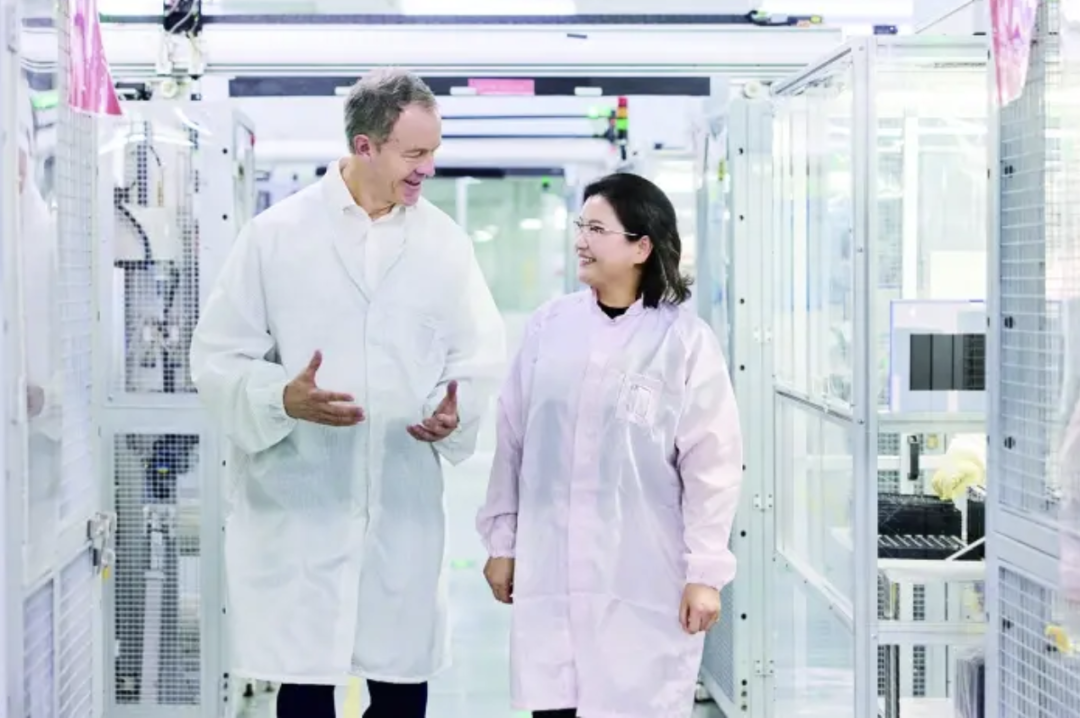
By 2007, Zhou Qunfei had already gained some recognition in the industry, but to Silicon Valley giants, she was still just 'the female boss of a small Chinese factory.' Jobs sent someone to find her and asked if she could do it. After reviewing the blueprints, Zhou Qunfei simply said, 'I can do it.'
What followed was the most intense technical challenge in the history of global mobile phone manufacturing. Jobs's team surrounded her daily, making outrageous demands: the glass's light transmittance had to exceed 98%, ink printing errors couldn't exceed 0.1 millimeters, and the thickness of each glass piece had to be precise to the micrometer...
Zhou Qunfei led her team and tackled each problem head-on. In 2007, the first iPhone was released. That stunning glass screen that amazed the world came from Lens Technology. From that moment on, Zhou Qunfei earned the title 'Queen of Mobile Phone Glass.'

Going Public, Reaching New Heights, and Facing Skepticism
In 2015, Lens Technology went public on the ChiNext board of the Shenzhen Stock Exchange. Its stock price soared, and Zhou Qunfei's net worth surpassed 100 billion yuan, making her China's richest woman that year.
But with fame came controversy. Some labeled her a 'homewrecker,' others claimed she 'got rich through men,' and all sorts of absurd rumors circulated. Zhou Qunfei didn't hold a press conference to lament her situation, nor did she send lawyers' letters. She responded with action.
In six years, she grew Lens Technology's revenue from less than 20 billion yuan to nearly 60 billion yuan. Her client list expanded from just Apple to include Huawei, Xiaomi, OPPO, Vivo, Tesla...
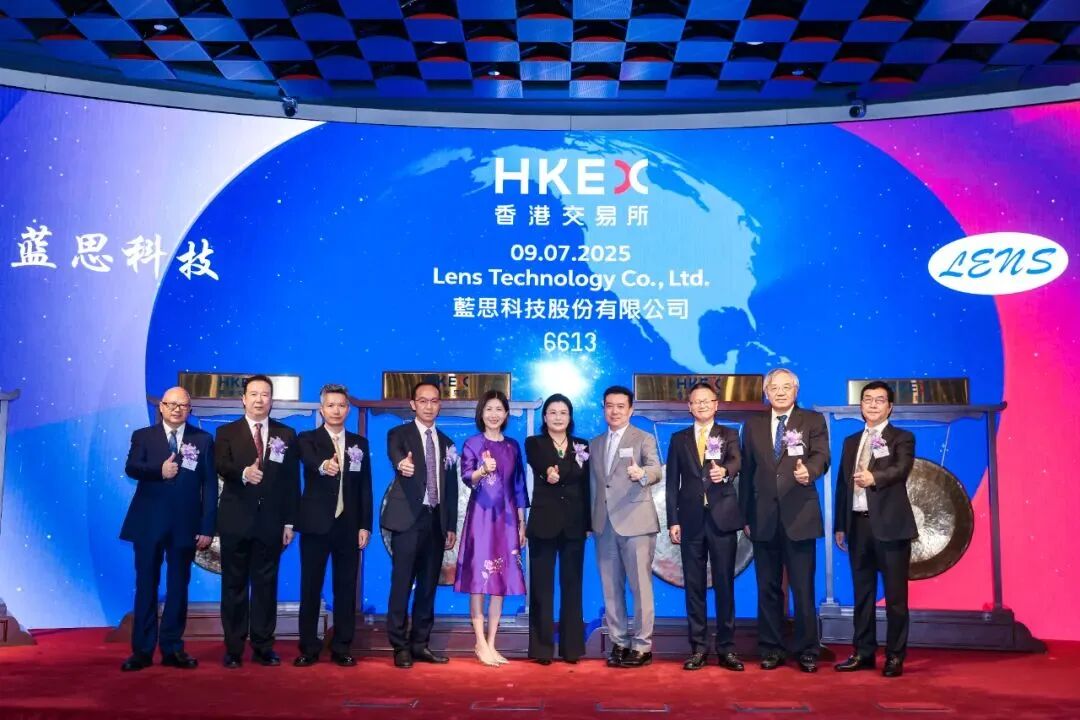
In 2025, Lens Technology went public again on the Hong Kong Stock Exchange, becoming an industry giant with 'A+H' shares. Those who once criticized her fell silent.
Some say Zhou Qunfei was just lucky, catching the smartphone boom and latching onto Apple. But I say: opportunity is never waited for; it's seized through hard work and determination.
Dropping out at 15, teaching herself screen printing at 20, starting her own factory at 30 and nearly going bankrupt, cracking the Motorola code at 37, securing the iPhone contract at 37... along the way, she relied not on luck but on that 'I'll make a name for myself' determination.
Next time you pick up your phone and swipe the screen, take a moment to think about the incredibly resilient woman behind this glass that makes your life so convenient. Her name is Zhou Qunfei. From a humble Hunan village to the pinnacle of the global tech industry.
-
![]()
Doubao's Upcoming Subscription Model: Without Transparent Pricing, There's No Room for Competition
-
![]()
"Strongest Body" QKing Robotics Strengthens Its "Brain" to Move from Competence to Capability
-
![]()
Apple feeds Hynix and wants to earn more too
-
![]()
What Other Big Moves Is Zhejiang Making Besides Unitree and DeepSeek?
-
![]()
Exchanging Profit for Growth: Insta360 Has No Retreat
-
![]()
After Doubao, OpenAI Turns Its Attention to AI Smartphones—A Bold Move with High Risks
-
![]()
Leapmotor Achieves Record Sales but Faces Challenge of Shedding 'Budget-Friendly' Image | Auto Circle
-
![]()
Observation | ByteDance's 842 Billion Baht AI Data Center Investment in Thailand: Facing a Funding Gap, Why Double Down?