From Dominance to Just One Slot: Fuel Vehicles Fully 'Marginalized'
 05/15 2026
 524
524
Once dominant, fuel-powered vehicles are now being pushed into a corner in the domestic market.
In April 2026, a set of data brought the current state of fuel-powered vehicles to the forefront: only one fuel-powered vehicle struggled to remain in the top ten of domestic passenger car retail sales rankings, while exports of new energy passenger vehicles exceeded those of fuel-powered vehicles for the first time. A series of signals have made the topic of whether the Chinese auto market has officially bid farewell to the fuel era a hotly debated issue, casting a shadow over the future prospects of fuel-powered vehicles.
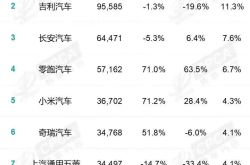
From the changes in the domestic passenger car retail sales rankings over the first four months of this year, we can clearly see the rapid contraction of the fuel-powered vehicle market.
In January, seven fuel-powered vehicles were still in the top ten; in February, this number dropped to six; in March, only five remained; and by April, only the Geely BinYue remained among the top ten. In contrast, the market penetration rate of new energy models has surged, reaching an astonishing 61.4% in April, meaning that more than six out of every ten passenger cars sold were new energy models.
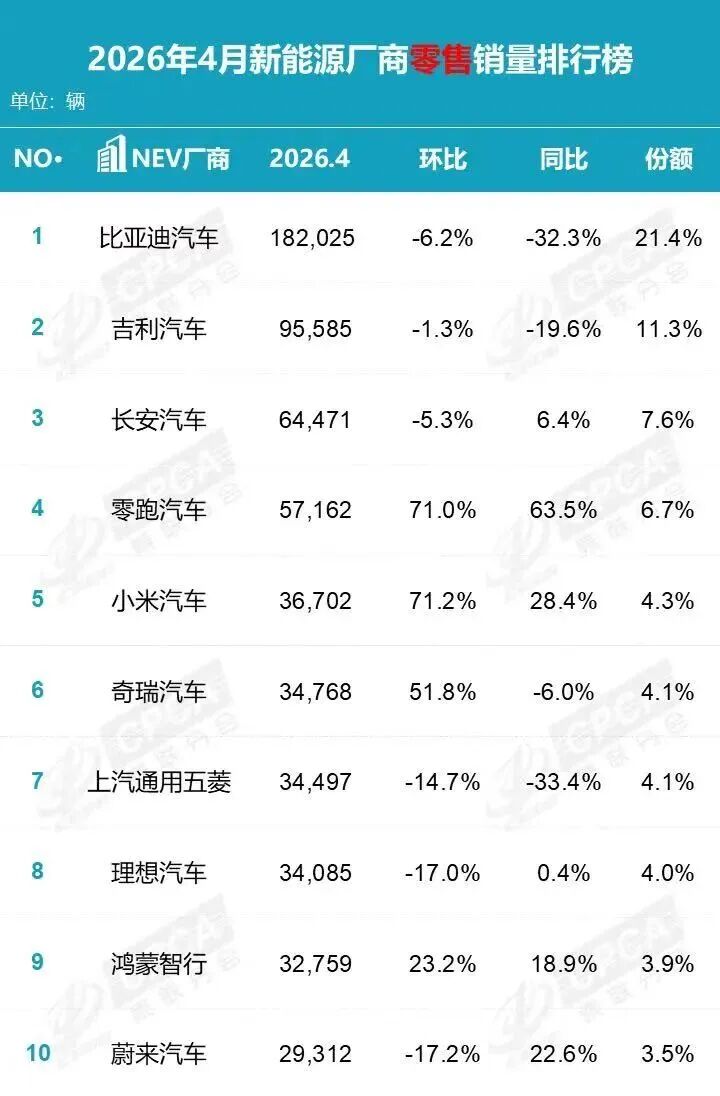
The collapse of fuel-powered vehicles is not due to a comprehensive lag in product competitiveness but rather a defeat in the 'economic calculus of the era.'
Affected by factors such as international geopolitics and disrupted oil supply routes, oil prices have remained high, significantly increasing the daily operating costs of fuel-powered vehicles, especially as consumers increasingly prioritize economy in their purchasing decisions.
Data shows that retail sales of conventional fuel-powered passenger vehicles plummeted to only 530,000 units in April, a 37% year-on-year drop and a 33% month-on-month decline. From January to April, the year-on-year decline in fuel-powered vehicle sales continued to widen, with April's decline accounting for a staggering 84% of the total, almost single-handedly dragging down the performance of the entire passenger car market.
Cui Dongshu, Secretary-General of the China Passenger Car Association, bluntly stated that consumers are abandoning fuel-powered vehicles overnight. Under the atmosphere of cost anxiety, domestic consumer demand is accelerating its shift from fuel-powered vehicles to new energy vehicles. Once dominant, fuel-powered vehicles are now being pushed into a corner in the domestic market.
Accelerated Market Fragmentation
While fuel-powered vehicles are facing setbacks in the domestic market, China's automobile exports are presenting a different picture.
In April, passenger car exports reached 769,000 units, an 80.7% year-on-year increase, accounting for 36% of the sales volume of passenger car manufacturers. Among them, exports of new energy passenger vehicles reached 406,000 units, a staggering 111.8% year-on-year increase, accounting for more than 50% of total passenger car exports for the first time, reaching 52.7%. This marks the first time that exports of Chinese electric and plug-in hybrid vehicles have surpassed those of traditional fuel-powered vehicles.
This trend is undoubtedly encouraging for Chinese automakers.
Currently, Chinese automakers are increasing their bets on foreign markets. Leveraging triple victories in technology, supply chains, and market strategies, automakers such as BYD, Geely, and Leapmotor are thriving in overseas markets, from Southeast Asia to Europe, and from South America to Australia. Chinese new energy vehicles are seizing market share at an unprecedented pace.
Of course, it cannot be concluded that fuel-powered vehicles have no foothold in the export market.
In North America and some developing countries, fuel-powered vehicles still dominate, with a market penetration rate exceeding 80%. Some fuel-powered vehicle companies have met the demands of certain overseas markets by upgrading their technology and introducing small-displacement, hybrid models. Additionally, in regions with low acceptance of new energy vehicles and inadequate charging infrastructure, fuel-powered vehicles remain the consumers' first choice.
Facing the impact of the electrification wave, major automakers have not abandoned the fuel-powered vehicle market but are adjusting their strategies through technological upgrades and product innovation, attempting to find new survival spaces for fuel-powered vehicles amid the transformation wave.
In 2026, the collective efforts of China's leading independent automakers in the HEV field became a major highlight of the fuel-powered vehicle market. These automakers view HEV as a key technological route to lever (leverage) joint venture brand market share and enhance their profitability.
In late March 2026, Changan officially released its Blue Whale Super Engine HEV hybrid system, claiming to usher in the '2L era for urban fuel consumption.' The system is equipped with Changan's self-developed iDE-H deeply electrified intelligent hybrid architecture, boasting 1,500 core technology patents and achieving an urban fuel consumption as low as 2.98L/100km in real-world tests.
Changan's HEV strategic goal is clear: to break the long-term monopoly of joint venture brands in the fuel-powered vehicle market through technological advantages. With the low fuel consumption and high cost-effectiveness of the Blue Whale Super Engine HEV system, Changan hopes to attract more consumers who are inconvenienced by charging but concerned about fuel economy, further expanding its market share.
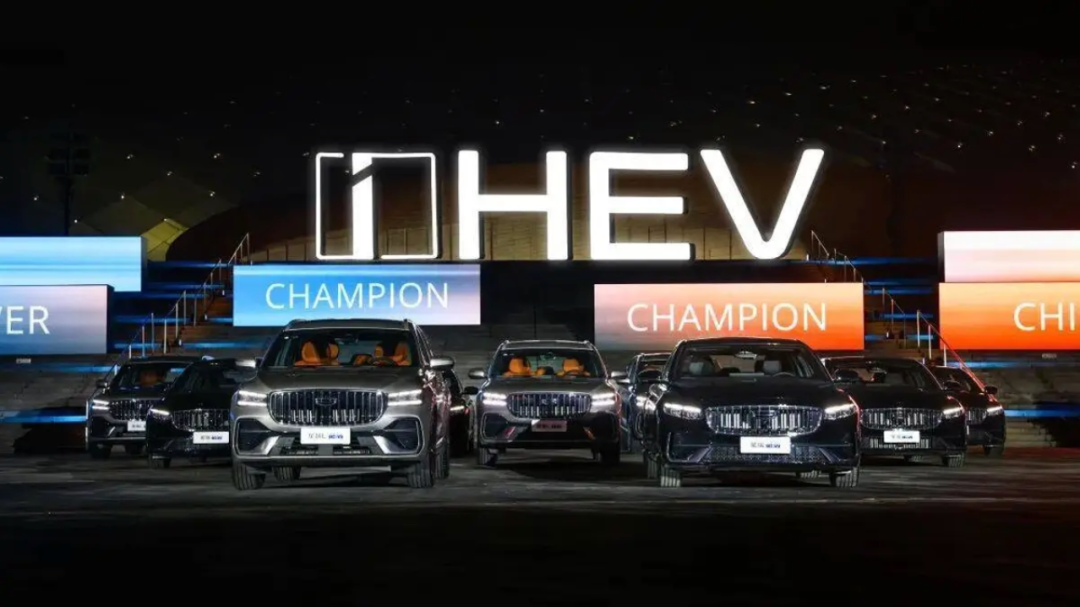
In mid-April 2026, Geely released its i-HEV Intelligent Hybrid Technology, with an engine thermal efficiency reaching 48.41% and a real-world fuel consumption as low as 2.22L/100km, demonstrating strong technological prowess.
In addition to technological breakthroughs, Geely is also empowering fuel-powered vehicles in the field of intelligence. In the export market, Geely also regards HEV models as a key growth point. In 2026, Geely set its export sales target at 640,000 units, a 50% year-on-year increase compared to its overseas sales in 2025.
Great Wall's Hi4 Intelligent Four-Wheel Drive Electric Hybrid technology, with its all-domain power layout, has landed HEV versions on multiple models. Great Wall Motors' flagship Guiyuan S platform is compatible with all-domain power forms, supporting pure electric, plug-in hybrid, and HEV systems.
Great Wall's fuel-powered vehicle planning focuses on differentiated competition. In niche markets such as off-road vehicles, Great Wall still maintains strong product competitiveness. The Tank series models are deeply loved by consumers for their excellent off-road performance and reliability. At the same time, Great Wall is also actively exploring the application of low-carbon fuels in fuel-powered vehicles to reserve (stockpile) technologies for future development.
Chery has always had a deep accumulation in fuel-powered vehicle technology, with its developed internal combustion engine thermal efficiency breaking through 48.15%, approaching the level of hybrid models. Facing the electrification transformation, Chery has chosen a strategy of parallel technological reserve and product layout, actively investing in the hybrid field while not giving up on optimizing and upgrading traditional fuel-powered vehicle technologies to meet different market demands.
Is It Too Early to Bid Farewell to the 'Fuel Era'?
Facing the strong offensive of Chinese independent automakers in the HEV field, joint venture automakers are also actively adjusting their fuel-powered vehicle strategies, attempting to maintain market share through localization cooperation and intelligent upgrades.
Volkswagen proposed the 'Equal Intelligence for Fuel and Electric Vehicles' strategy at the 2025 Guangzhou Auto Show.
In addition, Volkswagen has also engaged in in-depth cooperation with Chinese technology companies to accelerate the intelligent upgrade of fuel-powered vehicles. For example, Volkswagen collaborated with Huawei in the field of intelligent cockpits, introducing Huawei's HarmonyOS into some of its fuel-powered models to enhance vehicle intelligence. Through localization cooperation, Volkswagen attempts to narrow the gap with Chinese independent brands in the field of intelligence and regain the favor of Chinese consumers.
The three major German luxury brands—BMW, Mercedes-Benz, and Audi—have also adjusted their strategies, collectively betting on Chinese intelligent driving companies to accelerate the intelligent transformation of fuel-powered vehicles.
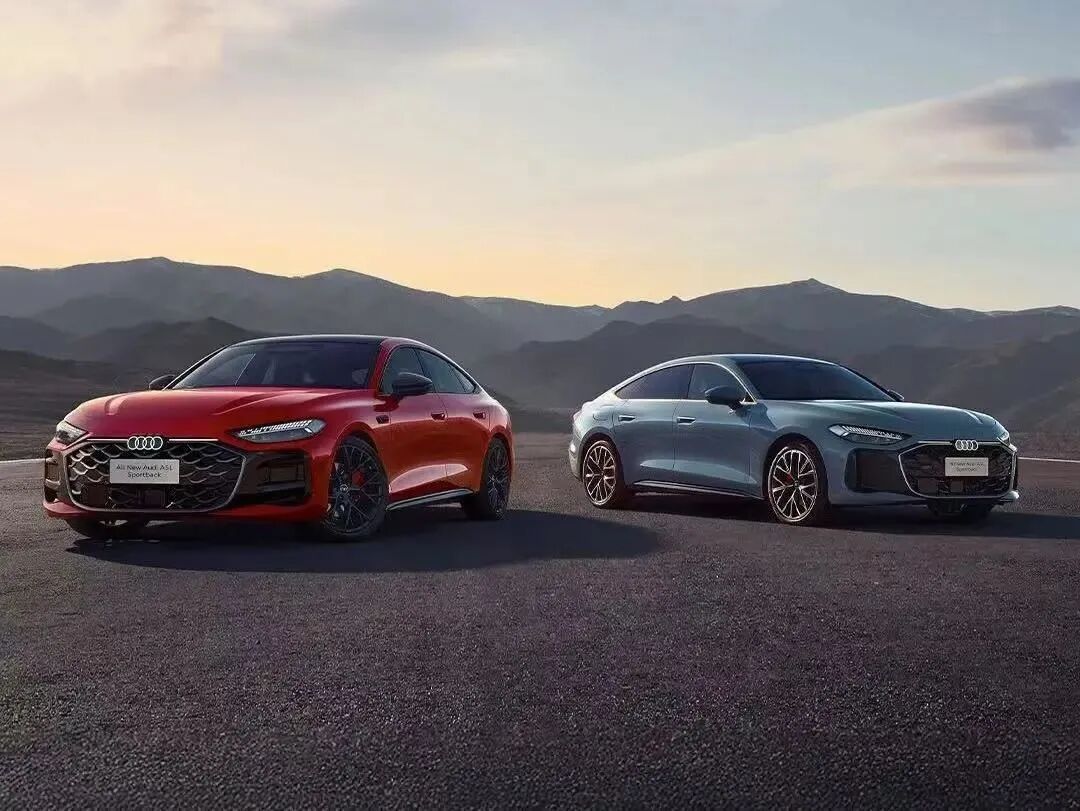
Among them, BMW has signed a strategic cooperation agreement with Momenta. The two parties will conduct road tests simultaneously in Beijing, Shanghai, Shenyang, and Nanjing to jointly develop a 'full-scenario navigated driving assistance' system adapted to Chinese scenarios. The system will feature functions such as automatic lane changing, automatic parking, and highway navigation, providing users with a more convenient and safe driving experience.
Mercedes-Benz and Audi have also respectively cooperated with Chinese intelligent driving companies such as Momenta and Huawei, planning to implement high-level assisted driving in their new-generation models.
For example, Mercedes-Benz will cooperate with Momenta to equip some of its fuel-powered models with Momenta's high-level intelligent driving solution, achieving L3-level autonomous driving functionality; Audi will cooperate with Huawei to equip some of its fuel-powered models with Huawei's intelligent cockpit and intelligent driving systems, enhancing vehicle intelligence.
Although the fuel-powered vehicle market is facing unprecedented challenges, this does not mean that the fuel era has completely ended.
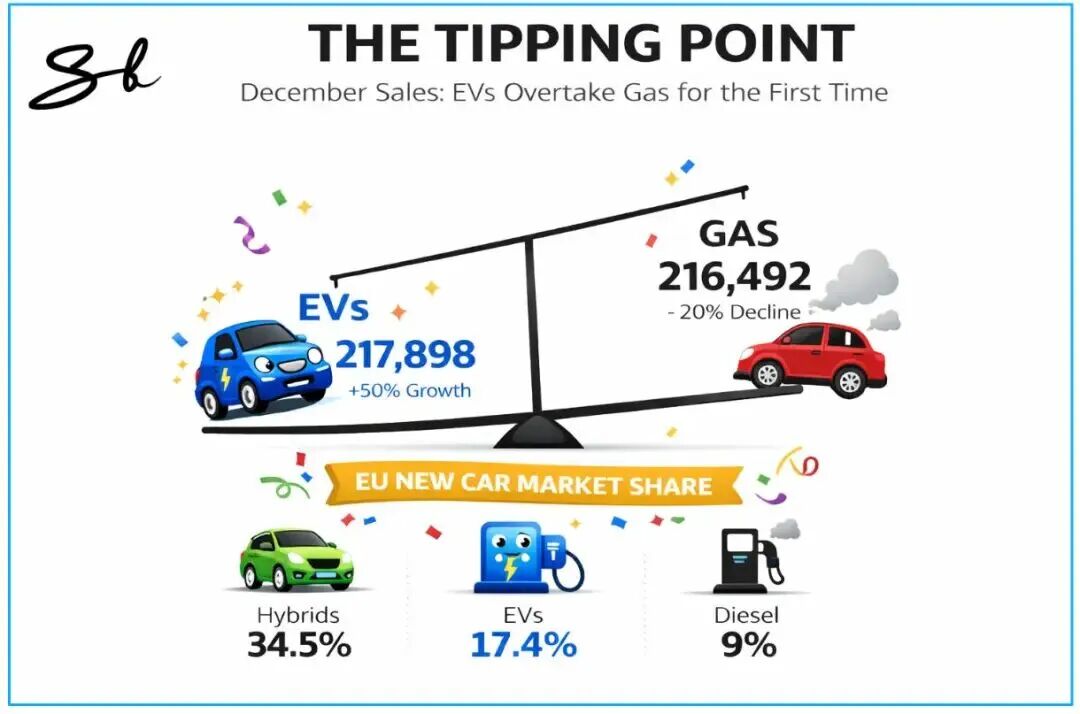
From a policy perspective, the Ministry of Industry and Information Technology has clearly stated to 'simultaneously promote the development of fuel-powered vehicles and new energy vehicles,' dispelling the rumor of a 'nationwide ban on the sale of fuel-powered vehicles by 2030.' Only Hainan plans to ban the sale of new fuel-powered vehicles by 2030, providing a 'reassurance pill' for the fuel-powered vehicle market.
From a market demand perspective, fuel-powered vehicles still have irreplaceable advantages in specific scenarios. In long-distance travel and off-road scenarios, the convenience of refueling and the absence of range anxiety in fuel-powered vehicles are still deeply loved by consumers.
In addition, the massive existing base of fuel-powered vehicles also supports the long-term existence of the fuel-powered vehicle aftermarket. Among the 366 million vehicles in China's automobile parc, fuel-powered vehicles account for more than 88%, meaning that the aftermarket areas such as maintenance, repair, and parts supply for fuel-powered vehicles still have huge market space.
For fuel-powered vehicle companies, transformation is an inevitable choice. On the one hand, companies need to increase their R&D investment in hybrid and energy-saving technologies to launch more efficient and environmentally friendly fuel-powered vehicle models. On the other hand, companies can delve into niche markets and launch personalized products tailored to different consumer needs.
Overall, although the electrification trend in the Chinese auto market is irreversible, it is still too early to conclude that the 'fuel era' has officially ended. After all, for a considerable period in the future, the coexistence of dual fuel-electric tracks will still persist in the market.
Note: Some images are sourced from the internet. If there is any infringement, please contact us for deletion.
-END-
-
![]()
From Dominance to Just One Slot: Fuel Vehicles Fully 'Marginalized'
-
![]()
Doubao Goes Premium, Wukong Goes for Volume: The Divergence of AI Assistants
-
![]()
Yu Hao: The Ubiquitous Force
-
![]()
The Honda that Did Everything Itself is Gone for Good
-
![]()
Why Pocket 4 is in Short Supply and OV is Making a Strong Entry: Why Pocket Gimbal Cameras Have Suddenly Become a New Battleground
-
![]()
Doubao Embraces Premium Tier, Wukong Expands: The Divergence Paths of AI Assistants
-
![]()
China Holds the Key to Success or Failure, BMW's New CEO Faces a Do-or-Die Battle
-
![]()
Holding Similar AI “Passes,” Alibaba and Tencent Have Transformed Beyond Recognition