The Honda that Did Everything Itself is Gone for Good
 05/15 2026
 565
565
An Engineering-First Automaker's Strategic Retreat.
Autopix (ID: autopix) Original
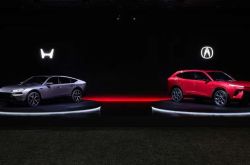
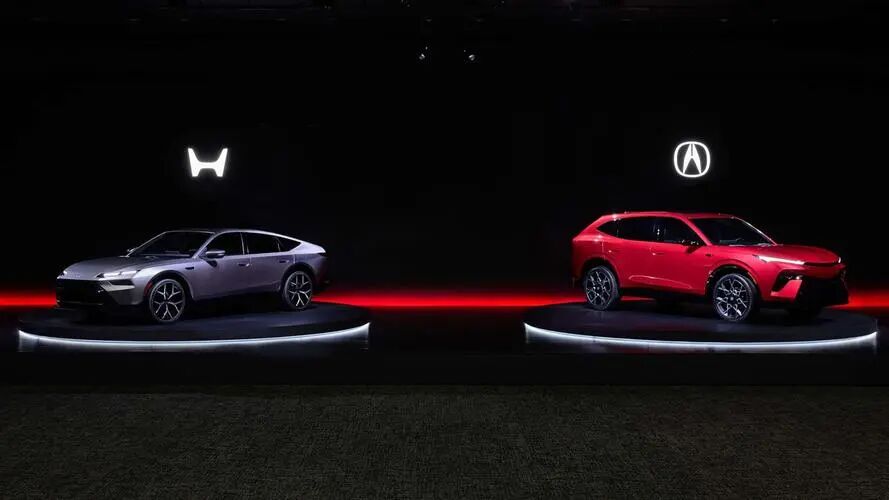
On May 13, Honda unveiled two hybrid electric vehicle (HEV) prototypes, announcing plans to launch 15 hybrid models in North America by 2030.
15 Models to Fill the EV Void.
On March 12, Honda CEO Toshihiro Mibe announced the cancellation of three highly anticipated EV models, including the Honda 0. The write-off totaled ¥2.5 trillion, equivalent to Honda's combined profits over the past three years, bringing the automaker to the brink of its first loss in nearly 70 years as a publicly traded company.
Honda is abandoning EVs as its next growth frontier, retreating to the more familiar, stable, and profitable path of hybrids.
However, Toyota has already reaped at least two years of benefits from this approach. This year, nearly all Chinese brands with internal combustion engine vehicles, including Geely, Changan, Chery, and GAC, are entering the hybrid market. Honda's return now is no longer a first-mover advantage but a fill in (position-filling) move after retreat.
Honda emphasized that the two newly unveiled models are prototypes, not concepts, implying they won't be scrapped like previous attempts.
From offense to defense, Honda finally admits it can no longer sustain its old self.
01
The Collapse of the Honda Model
In April 2026, combined sales of GAC Honda and Dongfeng Honda totaled 22,000 units, while BYD's Song PLUS DM-i alone sold 40,000-50,000 units monthly—double Honda's total China sales.
Founded in 1999 and 2003, respectively, these joint ventures took over two decades to establish Honda as a gold-standard brand in China's joint venture (joint venture) market, with models like the Accord, CR-V, and Civic becoming first cars for countless Chinese families.
At its 2020 peak, Honda sold 1.629 million vehicles annually in China. Now, its monthly sales have reverted to levels seen when GAC Honda first opened in 1999. A 984,000-unit decline in five years is equivalent to erasing Southeast Asia and Japan from Honda's global map.
This collapse reverberates through Honda's global operations, triggering a chain reaction.
Honda has long fascinated auto enthusiasts with its self-reliance and unconventional approaches.
While rivals rely on established suppliers like Aisin or ZF, Honda develops its own transmissions—multiple sets, in fact.
Around 2014, Honda offered six transmission variants across its production lineup: 5AT, 6AT, 7DCT (i-DCD), 8DCT, 9AT, and CVT, all in-house developments.
The same goes for hybrids. While the industry largely followed Toyota's THS or Volkswagen's P2 routes, Honda simultaneously pursued four distinct hybrid systems: IMA single-motor hybrid (early Fit), i-DCD dual-clutch hybrid (later Fit), i-MMD dual-motor series-parallel hybrid (Accord, CR-V), and Sport Hybrid SH-AWD three-motor hybrid (Acura NSX, MDX).
Not to mention F1 engines, HondaJet business jets, ASIMO humanoid robots, solid-state battery R&D, and automotive-grade SoCs developed with Renesas. There was no project Honda dared not undertake itself.
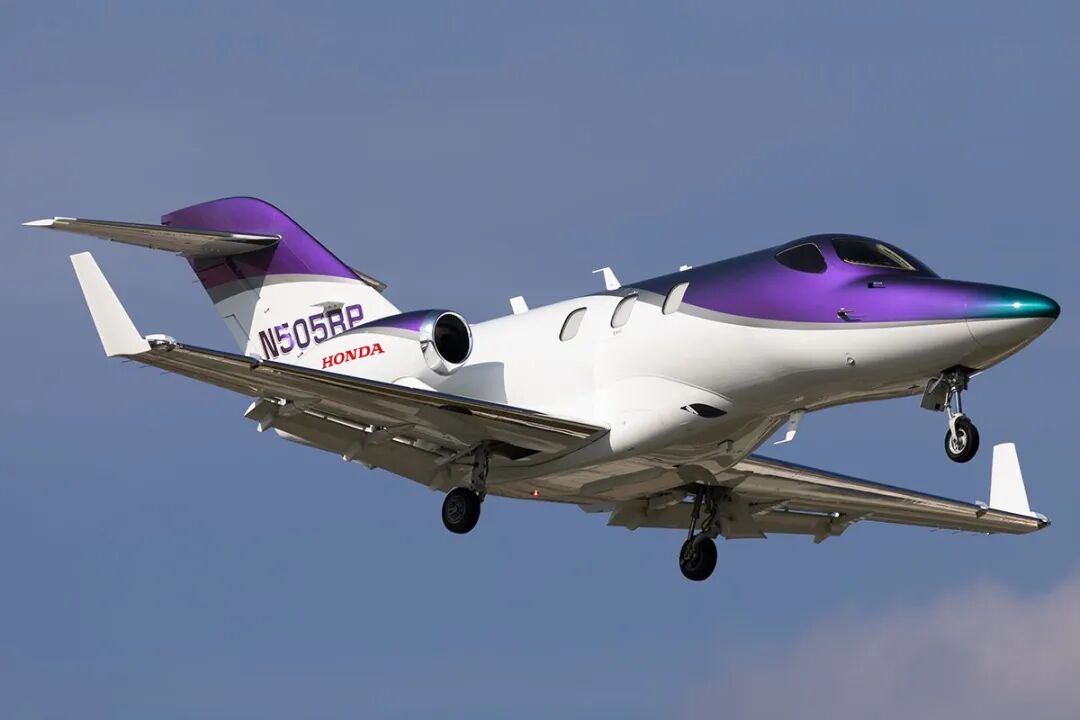 ▍HondaJet
This engineering philosophy was embedded in Honda's DNA since Soichiro Honda's era. Honda R&D Co. operates as an independent entity where engineers have project initiation freedom. This is why Honda created VTEC, the NSX, won F1 championships, and turned the Civic Type R into a global icon.
But this aesthetic relies on an invisible premise: each independent solution requires sufficient sales volume to amortize R&D, production, testing, compliance, and iteration costs.
Industry benchmarks suggest an independent engine family needs 300,000-500,000 annual sales, a complete EV platform requires 500,000-800,000, and an independent intelligentization (intelligent) stack (OS + autonomous driving + cabin) now demands 1-1.5 million units annually.
When Honda's global sales peaked at over 5 million annually, such scale was barely achievable. The i-MMD system, deployed across the Accord, CR-V, and Odyssey, exceeded 900,000 installations in 2024 and may expand to the Pilot. Engine families like the K-series and L-series leveraged global models like the Civic, Accord, CR-V, and Acura to reach critical mass.
Honda's core components couldn't match Volkswagen or Toyota's scale advantages but remained "good enough." Now? Honda's global sales hit 3.5219 million in 2025, down nearly 30% from the 2020 peak.
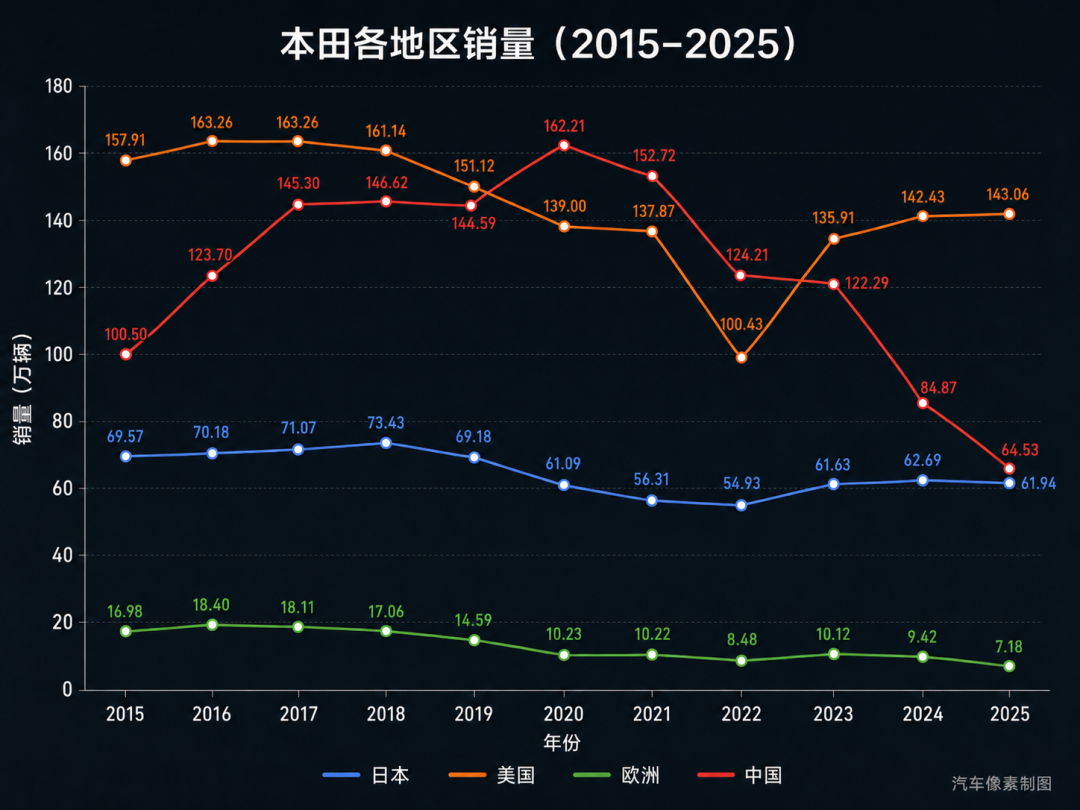
North America sustained 1.62 million units (46% of global sales) through models like the CR-V, but China (-24.21%), Europe (-10.85%), Southeast Asia (-10.2%), and Japan (-7.3%) all declined. Only North and South America held steady.
In FY2025's first three quarters, Honda's automotive division recorded ¥166.4 billion in operating losses, bailed out by ¥546.5 billion in profits from its motorcycle business, which sells over 20.5 million units annually—effectively subsidizing its 3.8 million automobiles.
The technical king of the ICE age now relies on two-wheelers to sustain its four-wheelers.
As the denominator shrinks from 5 million to 3.5 million (and possibly lower this year), the amortization base for each independent product line collapses. Honda, which once did everything itself, faces a harsh reality.
The ¥2.5 trillion write-off represents sunk costs from electrification and a balance-sheet reckoning for its engineer-centric culture. China's sales collapse threatens Honda's entire operational model.
02
Not Yet Defeated, So Hard to Let Go
Strategically, Honda was not late to electrification.
By 2021, it had initiated a systematic EV transition in China, believing the market would determine its global electrification success.
The "e:N" brand launched in April 2024 marked the first time Honda's Chinese R&D arm (HMCT) led product definition, platform selection, and supplier choices—a major institutional concession within Honda.
But the concession was only partial.
The e:NP7 and e:NS7 used Architecture W, a new Chinese-developed EV platform, not borrowed from partners or Chinese EV startups. The cabin adopted Huawei's light-field display, CATL batteries, and iFLYTEK voice control, allowing Chinese suppliers into the "living room" but not the "bedroom." Honda retained control over the electronic architecture, autonomous driving systems, and product definition.
The result? A half-decentralized product lacking Honda's traditional engineering edge or Chinese players' cost and speed advantages.
The numbers are unforgiving. Dongfeng Honda's e:NS7 launched in early March 2025 at ¥259,900 but saw an official ¥60,000 price cut to ¥199,900 by April. That month, it sold just 62 units. The e:NP7 sold 432 units in April.
Annual sales for the two models reached 2,178 and 3,873 units, respectively, in 2025. By early 2026, joint ventures quietly dropped the "e:N" branding, renaming them GAC Honda P7 and Dongfeng Honda S7—an indirect admission of failure.
This outcome was predictable. Meanwhile, Mazda, another Japanese automaker, used Changan's Deepal platform for its EZ-6, which debuted at the Brussels Motor Show in January 2025 as the Mazda 6e overseas. It secured over 7,000 orders in two months, becoming the first successful joint venture 2.0 (Joint Venture 2.0) case in overseas markets. Mazda has since launched a second model following this blueprint.
Honda had opportunities to act first. Its brand influence in Southeast Asia and South America exceeds Mazda's. Or it could follow Nissan's N7 example, delegating pricing power to Chinese teams to capture market share.
But Honda didn't. Why?
Mazda let go because it learned the hard way. Its self-developed MX-30 EV, launched in 2020, sold fewer than 10,000 units annually in Europe—a commercial failure. This early, thorough defeat forced Mazda to accept its inability to build competitive EVs.
The EZ-6, using Changan's Deepal SL03 platform, now targets 50,000 European exports by 2026—a realization born from harsh lessons.
Nissan let go because it had already been dismantled once. Leadership turmoil from 2018-2024 loosened Japan's traditional engineering-centric systems. Last year, Nissan nearly merged with Honda before new CEO Ivan Espinosa took charge in March to lead its transformation.
The Dongfeng Nissan (Dongfeng Nissan) N7, launched at ¥119,900 in April 2024, surpassed 10,000 orders in 18 days and hit a monthly sales peak of 10,148 units in August. This "price-first, product-second" Chinese approach would be unacceptable to Honda's engineer-centric culture.
Honda, meanwhile, remained insulated until April 2025, when North American tariffs surged from 2.5% to 27.5%, adding over $3,000 in tariff costs per Accord Hybrid. Combined with a 48.1% YoY drop in operating profit through Q3, Honda was finally forced to act.
Until then, Honda's motorcycle division generated ¥500 billion in annual cash flow, while North American Accord, CR-V, and Pilot sales reached 1.6 million units yearly. It had sufficient funds to continue its all-in EV gamble.
More critically, Honda's CEO, Toshihiro Mibe, was the architect of this gamble. His tenure's signature projects included ¥10 trillion in EV investments, 100% EV lineup by 2040, the AFEELA joint venture with Sony, the IRA-driven Ohio LG battery plant, and the "e:N" brand in China.
As long as retreat options existed, asking a CEO to invalidate his core strategy mid-tenure was nearly impossible. Honda's cash flow both saved and doomed it.
03
Retreat and Reorganization
At the March 12 press conference, Honda outlined a new narrative:
Cancel the Honda 0 EV. Launch fifth-generation i-MMD hybrids in 2027, expanding large hybrid systems to D-segment and above vehicles. Convert the North American Ohio battery plant from EV to hybrid battery production.
Elevate India to a "focus country" alongside the U.S. and Japan, cutting EV investments from ¥10 trillion to ¥7 trillion and slashing global EV sales targets from 2 million to 700,000-750,000 units. Tighten investment discipline across the board.
This sounds like a strategic shift but reads like post-retreat reorganization.
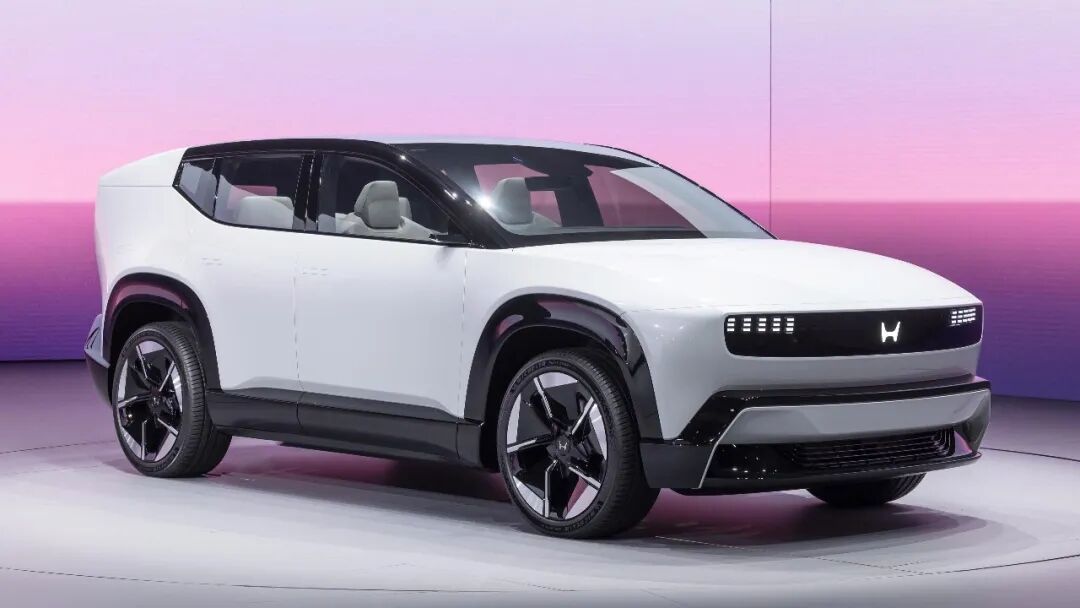 ▍Honda 0 Series
Retreating to hybrids means Honda concedes defeat in EVs, retreating to familiar territory. The i-MMD is Honda's strongest transition technology, with Toyota having already proven the market's potential.
But Toyota has dominated this space for years, and 2026 has brought a red ocean. Geely, Changan, and others have launched their own hybrid technologies, targeting Toyota above and Honda below.
Another challenge is new energy vehicles. If BYD's DM5.0, Geely's Thunder Hybrid, and Changan's iDD cultivate user habits in the coming years, hybrids won't remain a growth market.
India's promotion serves as a lifeline.
India's auto market sells 5 million units annually, with 313,000 passenger vehicles wholesaled in September 2025. Maruti Suzuki (a Suzuki India subsidiary) holds 42.2% of this share, built over 40 years. Other players include Tata (18.9%) and Hyundai (15%).
Honda ranks 7th-8th, selling just 5,303 units (1.7% market share) in September 2025.
Even doubling annual sales to 200,000 units in India couldn't offset China's nearly 1 million lost sales. Mathematically, India is no China replacement.
But India offers something China doesn't: Honda's motorcycle roots run deep there. Honda Motorcycle & Scooter India is the second-largest motorcycle manufacturer after Hero MotoCorp, with brand trust that could slowly extend to automobiles. Honda established a financial subsidiary in India in August 2025 to accelerate layout (deployment).
The new strategy mentions China least but signals clearest intentions there.
"Establish a China-specific supply chain" implies Honda will no longer dominate but collaborate with China's ecosystem.
A GAC Honda executive stated at the April 2026 Beijing Auto Show that the company would "lie low and build strength" in 2026 before launching "self-developed models based on Chinese new energy platforms" in 2027. This phrasing suggests using Chinese platforms and R&D, with Honda contributing only branding and tuning.
This is Joint Venture 2.0—Honda is just three years behind Mazda and 1.5 years behind Volkswagen, Toyota, and Buick.
Honda won't disappear; its motorcycle cash flow ensures survival in any scenario. It will remain profitable and irreplaceable in certain niches. But it can no longer be the Honda that did everything itself, differently from others.
After visiting China in 2026, Mibe publicly admitted, "We have no chance of winning."
He conceded Honda's EV failure in China but, deeper still, acknowledged the decline of an engineer-driven ideal where Honda sustained itself through moderate scale and profits. Now, scale shrinks, profits thin, and markets transform.
For a 70-year-old company built on "challenge" and "creation," accepting mediocrity may be harder than admitting defeat. VTEC, NSX, F1, HondaJet, ASIMO—these icons represent a company that may struggle more with becoming ordinary than with losing.
This article is original content from AutoPix. Unauthorized reproduction is prohibited.
-
![]()
From Dominance to Just One Slot: Fuel Vehicles Fully 'Marginalized'
-
![]()
Doubao Goes Premium, Wukong Goes for Volume: The Divergence of AI Assistants
-
![]()
Yu Hao: The Ubiquitous Force
-
![]()
The Honda that Did Everything Itself is Gone for Good
-
![]()
Why Pocket 4 is in Short Supply and OV is Making a Strong Entry: Why Pocket Gimbal Cameras Have Suddenly Become a New Battleground
-
![]()
Doubao Embraces Premium Tier, Wukong Expands: The Divergence Paths of AI Assistants
-
![]()
China Holds the Key to Success or Failure, BMW's New CEO Faces a Do-or-Die Battle
-
![]()
Holding Similar AI “Passes,” Alibaba and Tencent Have Transformed Beyond Recognition