Vivo's Strategic Retreat in India: From Market Dominance to Forced 'Partnership' in a No-Alternative Scenario
 07/22 2026
 439
439
In 2025, Vivo emerged as India's smartphone market leader, securing a 21% share—the strongest performance by a Chinese brand in the country to date.
However, before it could solidify its position, a government mandate compelled Vivo to relinquish operational control. On July 9, 2026, India's Department for Promotion of Industry and Internal Trade (DPIIT) approved a joint venture between Vivo India and local electronics manufacturer Dixon Technologies, with Dixon holding a 51% stake and Vivo 49%.
The shift from market dominance to ceding control occurred in just one year. Vivo's decade-long investment in India now faces its most challenging chapter.
01 Vivo in India: Relinquishing Control?
On July 9, 2026, a DPIIT directive officially rebranded Vivo India as "India Joint Venture Ltd."
Local electronics manufacturing services provider Dixon Technologies acquired a 51% controlling stake, while Vivo retained 49%. Though seemingly marginal, this two-percentage-point difference grants Dixon decisive influence over major joint venture decisions.
The partnership will handle approximately two-thirds of Vivo's smartphone production in India. JPMorgan analysts project the venture could boost Dixon's annual smartphone output by 22 million units by fiscal years 2028–2029, with Dixon capturing a larger share of production profits.
Dixon may be unfamiliar to many. Founded and chaired by Sunil Vachani, the company operates primarily as a contract manufacturer for global brands. In fiscal 2025–2026, Dixon reported revenue of ₹488.73 billion—much of it derived from assets "acquired" from Chinese tech firms in recent years.
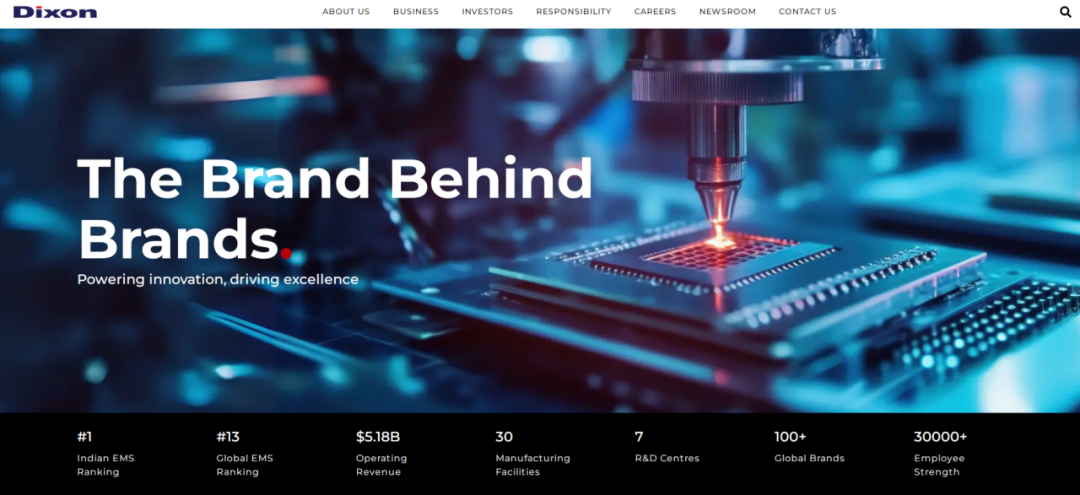
Image source: Dixon's official website
A review of Dixon's expansion timeline reveals a pattern of aggressive opportunism.
In March 2025, it signed a 50% joint venture with Signify (formerly Philips Lighting). In July, it formed a 74% stake partnership with Chongqing Yuhai Precision. In September, it acquired a 51.08% stake in India's subsidiary of China's QTech for ₹5.53 billion. In October, it established a 60% joint venture with Taiwan's Inventec. Now, it has partnered with Vivo in India, securing controlling interest in the joint venture.
This is not mere commercial collaboration—it represents a systematic "asset transfer."
Vivo has effectively handed over the manufacturing capabilities of its Noida mega-factory and the operational expertise of its most critical overseas base in the global supply chain to an Indian company. The cumulative investment of ₹6.5 billion, annual production capacity exceeding 100 million units, and management experience of roughly 10,000 Indian workers—the defensive moat Vivo spent a decade building now operates under Indian ownership.
02 Vivo in India: Navigating Turmoil
To understand Vivo's predicament, we must rewind to 2014.
That year, Prime Minister Modi launched the "Make in India" initiative, inviting global manufacturers to establish operations. Vivo recognized an opportunity—India's 1.3 billion population and low smartphone penetration represented a market even larger and younger than China's.
In 2015, Vivo began constructing factories in India, expanding in 2018 with a total investment of ₹6.5 billion. By 2021, its Noida plant could produce 60 million units annually, later surpassing 100 million. With 650 exclusive stores, over 650 service centers, and 70,000 retail touchpoints, 95% local workforce, and over 60% component localization, Vivo had established a formidable presence.
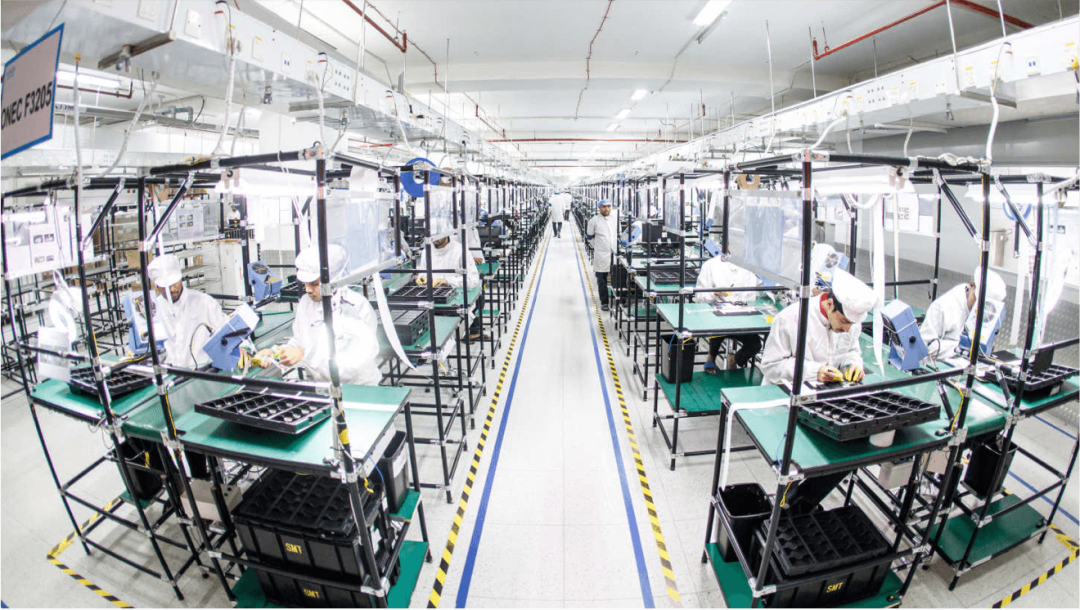
Image source: Vivo's official website
During this period, Chinese smartphone brands flourished in India.
Vivo, Xiaomi, OPPO, and Realme collectively held over 70% market share. Chinese vendors accounted for over 70% of India's smartphone production capacity, helping transform the country into the world's third-largest phone exporter by 2025, with exports reaching $25 billion in FY2024–2025—a supply chain built on Chinese capital.
The turning point came in 2020.
India issued Press Note 3, requiring government approval for all investments from countries sharing a land border with China. This created immense uncertainty for Chinese firms operating in India.
The crisis escalated in 2022. In July, India's Enforcement Directorate raided 48 Vivo offices, freezing 119 bank accounts involving ₹4.65 billion (~$390 million). That same month, the Finance Ministry accused Vivo of customs duty evasion, demanding ₹1.89 billion (~$25 million).
2023 brought even harsher measures. In October, Indian authorities arrested a Chinese Vivo executive. In December, Vivo India's interim CEO and CFO—Hong Xuquan (Terry) and Harideep Dachia—were arrested alongside an advisor. Meanwhile, India sought ₹624.76 billion (~$8.7 billion) from Vivo.
To contextualize: Vivo's total investment in India over a decade was just ₹6.5 billion. India's demand was nearly seven times that amount.
By 2025, Vivo faced another ₹32.9 billion in tax penalties.
Vivo was not alone. Xiaomi had ₹55.5 billion (~$750 million) in Indian assets frozen.
India's strategy against Chinese smartphone makers followed a clear "three-phase" approach: First, use tax threats to destabilize. Second, mandate localization of production. Third, force joint ventures to cede control.
Phase one: Tax intimidation. Make it clear that doing business in India could bankrupt you. Phase two: Forced localization. Trap your supply chain, factories, and jobs in India. Phase three: Forced partnerships. Make you place your hard-earned assets in the hands of "Indian partners."
Vivo's joint venture took 18 months from signing a letter of intent in December 2024 to approval in July 2026. During this time, Vivo's executives likely explored every avenue to avoid ceding control—but India offered no alternatives.
03 Deeply Invested, Forced to Retreat?
Why didn't Vivo simply exit India?
After a decade of heavy asset investment, the ties had become too entangled.
₹6.5 billion in investments, annual production exceeding 100 million units, roughly 10,000 Indian workers, and 70,000 retail touchpoints—these aren't just numbers on a slideshow. They represent actual factories, equipment, and relationships. Exiting would mean assets that couldn't be sold, moved, or repatriated.
More critically, there's the market. In 2025, Vivo shipped 32.1 million units in India, capturing 21% market share to claim the top spot.
In Q1 2026, it shipped 6.3 million units (20% share), maintaining its lead. India is now Vivo's largest overseas market—a rare growth market as its domestic share declines.
The domestic situation is urgent. Vivo's China market share is being eroded by Huawei, lagging behind Xiaomi and OPPO (including OnePlus). Unable to compete with Huawei in the premium segment and pressured by Xiaomi/Redmi in the mid-to-low end, overseas revenue is no longer a bonus for Vivo—it's a lifeline.
Under these circumstances, India is a market it cannot afford to lose. Even if it means operating under constraints, the show must go on.
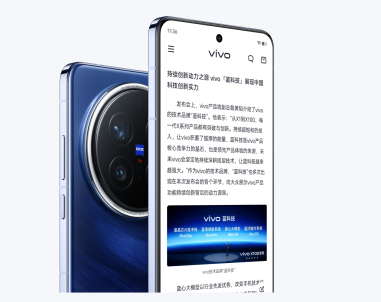
Image source: Vivo's official website
So Vivo compromised—or rather, was "compromised." The July 9, 2026, deal cost it control, but at least preserved its brand, channels, and market share. As one industry insider put it: "At least they can still sell phones. At least they're still in the game."
But here's the irony: Indian law may require the joint venture to have just ₹50 million in registered capital while overseeing a ₹3 trillion business. A company with tens of millions in capital controls a manufacturing empire generating nearly ₹200 billion in annual revenue. This lopsided structure essentially places Chinese vendors' capacity and technology into an Indian-controlled shell.
For Vivo, the sole consolation may be that Dixon cannot immediately replicate its manufacturing expertise, supply chain management, or global brand operations. For years, Dixon will remain dependent on Vivo's technical teams to run the factories.
What truly merits observation is the "precedent" this sets.
Xiaomi still has ₹55.5 billion in assets frozen, with India's intentions clear. Vivo's fate today could easily become Xiaomi's tomorrow.
India's calculations are precise. It doesn't need to build factories, train workers, or develop supply chains—Chinese firms have already done that. It merely needs to "transfer" these mature operations onto chosen local partners at the right moment. Once completed, the fruits become India's.
For Chinese smartphone makers, the India narrative has fundamentally changed. What was once a gold rush is now a "harvest." What was expansion is now damage control.
Vivo's 51:49 joint venture may not be an endpoint but the start of a new model—one where Chinese tech firms trade control for survival.
The question remains: After ceding control, how long can the 49% stakeholder remain at the table?
-
![]()
Realme Presses 'Pause': OPPO's Calculated Strategic Move
-
![]()
Gravity-1: The Glorious Journey of a Robust Solid Rocket and Its Pivotal Main Stage
-
![]()
Chip Unicorn Cloud Leopard Intelligence, Backed by Tencent, Sets Sights on IPO
-
![]()
Observation of German Auto Market: Electric Vehicle Market Maturity Ranks 12th in Europe, Chinese Brand Share Rises to 3.7%
-
![]()
He Xiaopeng Responds to a 'Critical Question'
-
![]()
Vivo's Strategic Retreat in India: From Market Dominance to Forced 'Partnership' in a No-Alternative Scenario
-
![]()
Following the Explosive Success of Kimi k3, Moonshot AI is Reportedly in Final IPO Financing Discussions
-
![]()
Baidu Dazi's Ambitious Overtaking with 'Product-Centric' Upgrades