Observation of German Auto Market: Electric Vehicle Market Maturity Ranks 12th in Europe, Chinese Brand Share Rises to 3.7%
 07/22 2026
 560
560
The true picture of the German automotive market can be glimpsed from two sets of data. The 2026 Mobility Guide released by European vehicle leasing and fleet management company Ayvens rates Germany's electric vehicle market maturity at 61/100, placing it 12th among developed European markets. During the same period, the share of Chinese auto brands in new car registrations in Germany surged from 1.7% in 2024 to 3.7% in the first half of 2026, more than doubling in two years. These two figures point to the same conclusion: the German market has scale and purchasing power, but it is far from smooth sailing. For domestic automakers accelerating their global expansion, understanding the market's deep structure is more important than chasing single-digit growth figures.
▍Electric Vehicle Market Maturity: Developed but Not Leading
Ayvens' scoring system is based on five pillars: electric vehicle adoption rate (25%), charging infrastructure (20%), taxation and regulation (20%), total cost of ownership (TCO) comparison between electric and internal combustion engine vehicles (30%), and power sustainability (5%). The study, covering data from over 320,000 leased vehicles in Germany, shows Germany scoring 61 points and joining the "developed market" category, but still lagging significantly behind first-tier markets like Norway (93/100), Belgium (78/100), and the Netherlands (74/100).
From a broader European perspective, Northern and Western European countries continue to lead the transition, benefiting from favorable tax conditions, well-established charging networks, and attractive economic efficiency. Southern and Eastern European markets, such as Italy (54/100) and Spain (53/100), remain in the "transitioning" category due to differences in tax frameworks, charging infrastructure, and consumer acceptance. Germany sits in the middle, with a large market and strong purchasing power, but not the highest electric vehicle penetration or technology adoption rates in Europe.
▍Affordability: Electric Vehicles Gain a Slight Edge
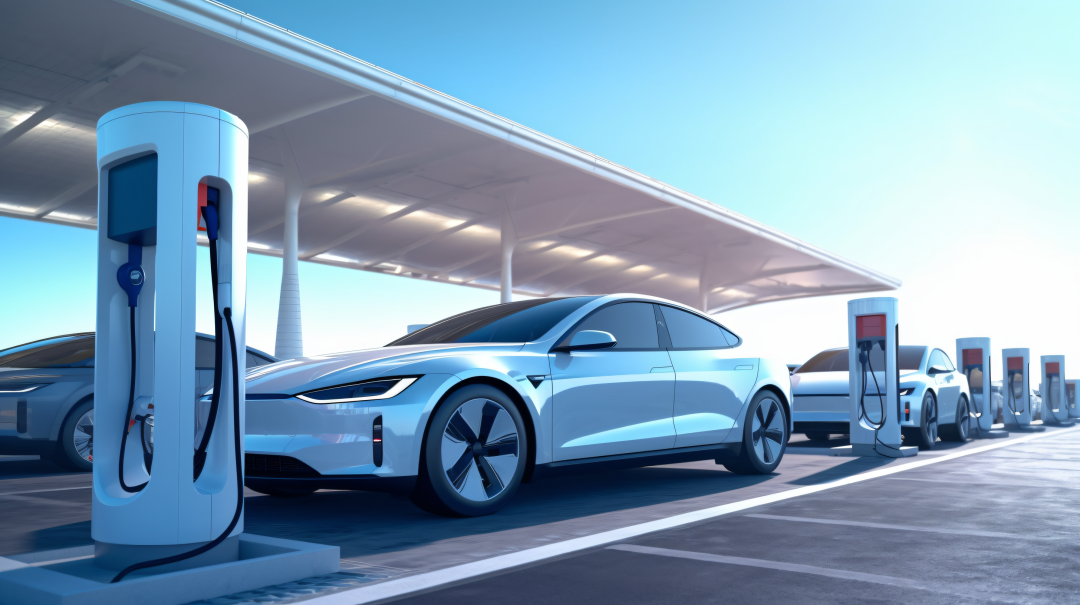
In fleet usage scenarios, the affordability of battery electric vehicles (BEVs) is beginning to show. Ayvens data reveals that the cost per kilometer for BEVs in Germany is €0.35, slightly lower than the €0.36 for internal combustion engine vehicles. The German Federal Motor Transport Authority (KBA) further confirms this trend: in the first half of 2026, new BEV registrations in Germany surged by 48% year-on-year, reaching 368,006 units. In March, monthly new BEV registrations (70,663 units) exceeded those of gasoline vehicles (66,959 units) for the first time, capturing a 24% market share. By June, penetration rose further to 28.4%.
From a pricing trend perspective, the actual price of BEVs in Germany dropped by approximately 18% between 2020 and 2025, while internal combustion engine vehicle prices rose by about 2% over the same period. The cost advantage of electric vehicles continues to widen.
Martin Kössler, Managing Director of Ayvens Germany, commented: "The availability of electric vehicles is no longer the issue; it's an implementation problem. For businesses today, the transition to electric mobility is primarily determined by three factors: total cost of ownership, taxation, and charging infrastructure. If these can be effectively managed, electric mobility in fleets can shift from a sustainability goal to an efficiency lever."
▍Taxation: Replacing Subsidies as the Core Driver
The study suggests that 2025 and 2026 mark a turning point for European countries transitioning from broad subsidies to long-term fiscal incentives. Subsidies for internal combustion engine and plug-in hybrid vehicles are being phased out, while penalties for high-emission vehicles continue to increase.
In Germany, policy adjustments have been particularly pronounced. Starting July 2025, the manufacturer's suggested retail price cap for BEVs eligible for a 0.25% preferential tax rate for official vehicles rises from €70,000 to €100,000. Companies purchasing new BEVs between July 1, 2025, and December 31, 2027, can claim 75% special depreciation in the year of purchase, with the remainder amortized over subsequent years. The 10-year motor vehicle tax exemption for BEVs has also been extended to December 31, 2035. Taxation is transforming from a supporting measure into the core driver of electrification.
▍Charging Infrastructure: A Clear Weakness in the German Market
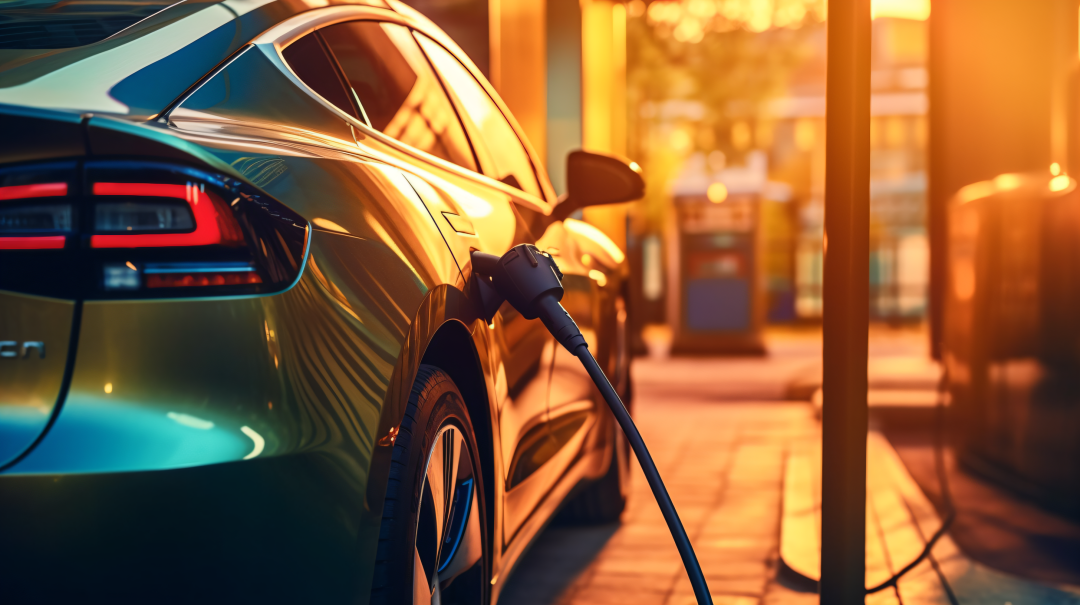
By the end of 2025, Europe had over 1.2 million public charging stations. However, density varies sharply by country. Germany has only 1.9 charging points per thousand people, far behind the Netherlands (10.2) and Belgium (6.5). The inadequacy of charging infrastructure remains a key bottleneck restricting electric vehicle adoption in Germany and directly impacts consumer acceptance of electric mobility.
To address this shortfall, Germany's 2030 Charging Infrastructure Master Plan aims to establish 1 million public charging points by 2030, including 100,000 fast-charging stations. Meanwhile, the federally funded "Deutschlandnetz" (German Charging Network) is expected to be largely completed by the end of 2026, featuring around 900 regional sites and 200 highway sites, totaling approximately 9,000 publicly accessible fast-charging points. While the planning ambition is high, whether implementation speed and coverage density can keep pace with market growth remains to be seen.
▍Competitive Landscape: Chinese Brands Accelerate Penetration
Chinese brands are gaining traction in the German market. In 2025, Chinese brands accounted for approximately 2.3% of new car registrations in Germany; by the first half of 2026, this share had risen to 3.7%. While the absolute share remains low, the growth trend is noteworthy.
BYD is currently the leader among Chinese brands in Germany. In the first half of 2026, BYD registered approximately 26,000 new vehicles in Germany, more than tripling year-on-year. In May 2026, BYD's monthly sales reached 6,168 units, up 232.1% year-on-year, jumping to 12th place, surpassing Toyota and Kia to become the second-best-selling Asian brand in the German market. In June, monthly sales further increased to 6,259 units, up 273.7% year-on-year, entering the overall monthly top 15 for the first time.
Other Chinese brands are also growing rapidly: Leapmotor sold 2,662 units in June, up 366.2% year-on-year; XPENG sold 922 units in June, up 284.2% year-on-year. In May 2026, the overall market share of Chinese brands in Germany rose from 4.0% to 4.9%. From a broader European perspective, in May 2026, five Chinese automakers—BYD, SAIC, Geely, Chery, and Leapmotor—sold a combined 138,400 vehicles across 31 European countries.
However, Chinese brands remain a "minority" in Germany. For comparison, in June, domestic brand Volkswagen held a 17.2% market share, firmly in first place, followed by BMW, Skoda, and Mercedes-Benz. Volkswagen alone outsold the entire Chinese brand segment by several times, highlighting the persistent gap.
▍Supply Chain Dynamics: The Hidden Concern of Battery Dependence
In the battery sector, Germany's dependence on China has increased rather than decreased. Despite German battery production reaching a record €8.1 billion in 2025, data from the German Electrical and Digital Industry Association (ZVEI) shows that reliance on Chinese lithium-ion battery supplies continues to grow. ZVEI battery expert Gunter Kellermann warned: "If these product supplies are disrupted, or if certain regions suddenly halt exports, our vulnerability in critical areas like defense or data centers would be exposed."
The German government has set a target to meet at least 40% of battery cell demand through domestic production by 2030. However, the gap between the pace of local capacity expansion and the maturity of China's supply chain remains significant.
Overall, the German electric vehicle market is in a "mature but not leading" phase—it has scale and purchasing power, but its electrification infrastructure and policy environment still lag behind Northern Europe. For automakers expanding overseas, several key insights emerge:
- Affordability (TCO) and taxation will be the two major levers for penetrating the German fleet market, requiring businesses to fully consider these factors in product pricing and sales strategies.
- The charging infrastructure gap is a structural constraint in the German market, meaning overseas automakers must integrate "charging ecosystems" into product competitiveness rather than relying solely on public networks.
- At the geopolitical level, the widening Sino-German trade deficit and the "China Shock 2.0" public opinion environment (public opinion environment) suggest that Chinese brands' expansion in Germany may face increasingly complex policies and public sentiment. Brand localization, compliant operations, and supply chain resilience will likely be critical for long-term success.
Layout 丨 Zheng Li
Source 丨 VISION Mobility, VDA
Image Source 丨 Qianku.com
-
![]()
Realme Presses 'Pause': OPPO's Calculated Strategic Move
-
![]()
Gravity-1: The Glorious Journey of a Robust Solid Rocket and Its Pivotal Main Stage
-
![]()
Chip Unicorn Cloud Leopard Intelligence, Backed by Tencent, Sets Sights on IPO
-
![]()
Observation of German Auto Market: Electric Vehicle Market Maturity Ranks 12th in Europe, Chinese Brand Share Rises to 3.7%
-
![]()
He Xiaopeng Responds to a 'Critical Question'
-
![]()
Vivo's Strategic Retreat in India: From Market Dominance to Forced 'Partnership' in a No-Alternative Scenario
-
![]()
Following the Explosive Success of Kimi k3, Moonshot AI is Reportedly in Final IPO Financing Discussions
-
![]()
Baidu Dazi's Ambitious Overtaking with 'Product-Centric' Upgrades