Realme Presses 'Pause': OPPO's Calculated Strategic Move
 07/22 2026
 478
478
By Bishan
Source: Bowang Finance
On July 17, the hashtag "#realme exits the Chinese market" took Weibo by storm. Netizens lamented the loss of another smartphone brand, tech influencers rushed to create reaction videos, and second-hand realme phone prices plummeted on trading platforms.
But the real intrigue lay in who was behind the decision to hit the pause button.
On the afternoon of July 16, 2026, OPPO executive Xu Qi posted an open letter on Weibo, announcing realme's suspension of business updates in China. This seasoned leader, whose Weibo bio reads "Vice President of realme, Global Marketing President, and China President," concluded his domestic tenure with a lengthy post.
Behind Xu Qi stood Li Bingzhong.
Eight years prior, Li Bingzhong had handpicked Xu Qi from OPPO to lead a small team in establishing realme, aiming to disrupt China's online smartphone market. Eight years later, Li, now General Manager of the Sub-Series Business Division, personally orchestrated realme's hiatus from the Chinese market.
This was a strategic move that targeted its own subsidiary.
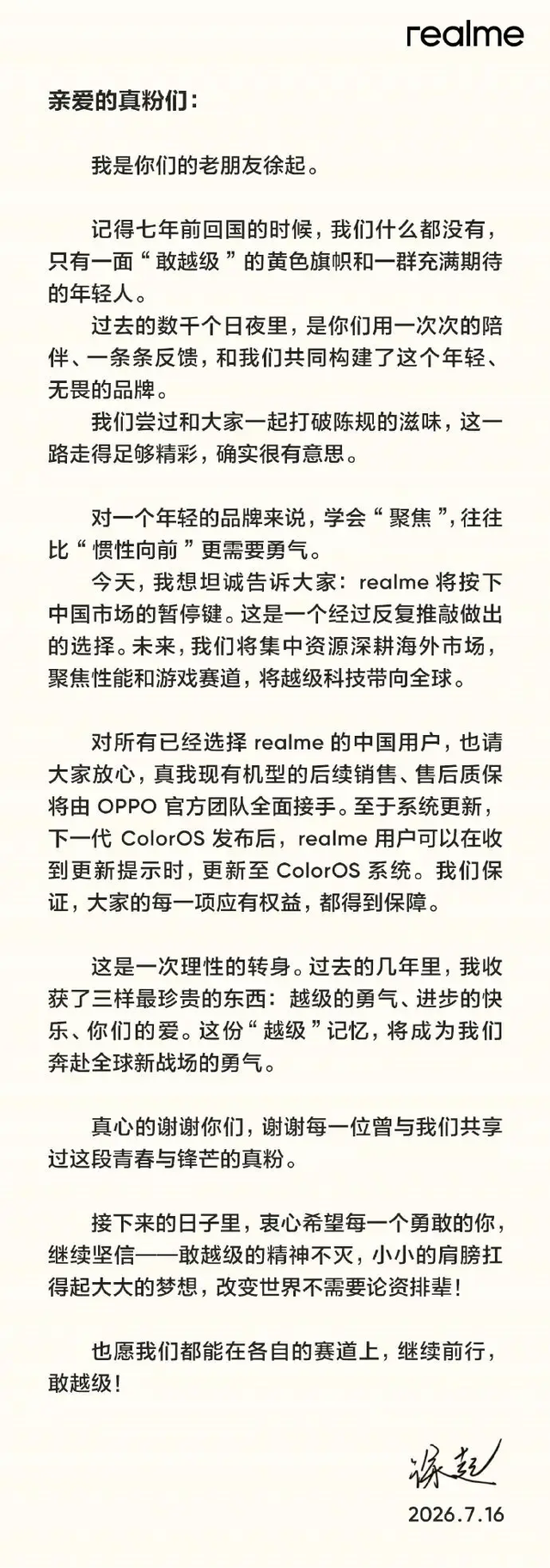
Screenshot of Xu Qi's July 16 Weibo open letter: "realme will hit pause in the Chinese market" (Source: Weibo @Xu Qi Chase, July 16, 2026, 17:15)
01
A Strategic Cut That Targeted Its Own Subsidiary
Let's rewind to the summer of 2018. Li Bingzhong left OPPO with a team that included Xu Qi to establish realme. At the time, China's online smartphone market was a fierce battleground between Xiaomi and Honor, with little room for newcomers.
But Li defied the odds. In 2019, he penned a famous long Weibo post titled "In an Era of Radical Change, We Leap Upward," featuring a line that still resonates: "realme will bring new excitement to China's fiercely competitive online smartphone market."
"New excitement" sounded ambitious back then. Now, it reads like a prophecy—albeit in reverse.
Realme did shake up the market, just not as intended. The shockwave ultimately reverberated back to Li Bingzhong himself.
Xu Qi's career trajectory epitomizes this eight-year journey. Joining OPPO's Brand and Strategy Management Department in 2010, he rose through the ranks, overseeing marketing for the Find, R, and Real series. By 2018, he was a mid-level OPPO executive. Over the years, his titles multiplied—Global Vice President, Marketing President, and China President since 2020.
On April 25 of this year, realme's online store quietly disabled shopping functions, retaining only order tracking while migrating member benefits to OPPO's platform. Three days later, on April 29, OPPO announced the establishment of the "Sub-Series Business Division." By July 16, Xu Qi's open letter formally marked the end of realme's independent operations in China.
Looking back, OPPO's internal restructuring in March had already hinted at this outcome—Xu Qi's title shifted from "China President" to "Sub-Series Marketing Head," reporting to Li Bingzhong.
From regional leader to functional subordinate, Xu Qi never publicly complained. But the power shift was unmistakable.
In January 2026, realme formally reintegrated into OPPO. The Neo8, released that month, became its swan song in independent Chinese operations. No grand farewell ceremony—just a fleeting mention in Xu Qi's July letter. A single announcement ended eight years of struggle. Such is the ruthlessness of business—even goodbyes are silent.
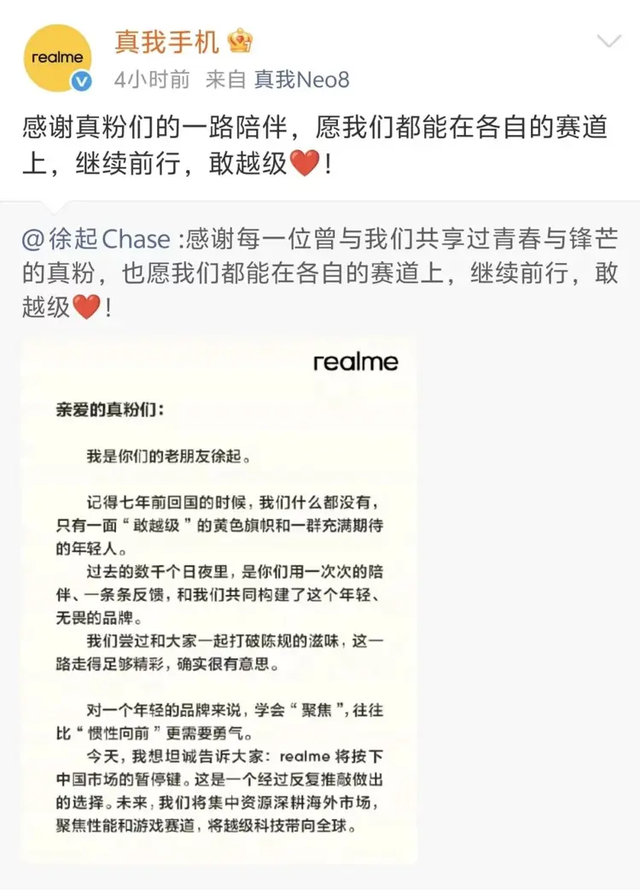
realme's official account reposts Xu Qi's open letter: "Thank you, true fans, for your journey with us" (Source: Weibo @realme China, July 16, 2026)
02
Why the Cut?—OnePlus Thrives, So realme Must Step Aside
Many frame this as "OPPO's sub-brand strategic adjustment," as if executives casually redrew a mind map in a boardroom. But the data reveals this wasn't an "adjustment"—it was a "strategic sacrifice."
The sacrificial pawn: realme. The king: OnePlus.
Consider the numbers. OnePlus's 2025 sales grew 44% year-over-year (YoY), with 27.4% growth in the first half of 2026—industry-leading. Meanwhile, realme's domestic presence waned despite trending topics; sales stagnated. Their main product lines—OnePlus Ace and realme GT/Neo series—clashed fiercely in the 2000-3000 yuan mid-range segment.
Having two internal brands compete made sense in growth markets as "more kids mean more fights." In stagnant markets, it's "self-cannibalization."
Omdia analyst Zhong Xiaolei puts it bluntly: After OnePlus Ace's price cuts (market penetration), product overlap with realme in the 2000-3000 yuan range surged. Focusing reduces internal friction.
In plain terms: The product lines were too similar. One had to go.
Why realme? Simple—OnePlus's growth was too impressive. With 44% and 27.4% YoY gains, the decision was obvious. OnePlus survived and thrived, making realme the "necessary sacrifice."
A macro trend many overlook: Memory chip prices skyrocketed over the past year, pushing global smartphone average selling prices (ASPs) up while shipments fell. This hits mid-to-low-end brands hardest—costs can't drop, prices can't rise, and profit margins vanish.
Realme's sweet spot was the vulnerable 1500-2500 yuan range. It battled Xiaomi's Redmi here, with the GT5 Pro scoring 9.7 on Coolapk—a domestic milestone. Achieving 100 million global sales in 37 months was industry legend. But now, margins in this segment are paper-thin.
Realme's offline presence in China was also weak. Without offline channels, a brand withers—appearing alive but already dead.
OnePlus's moves are telling. It paused new product launches in Europe and North America while maintaining India. This signals OPPO's global "resource reallocation"—concentrating OnePlus's firepower in core markets while strategically retreating elsewhere. The logic mirrors realme's domestic cut: Avoid losing battles; double down on winning ones.
This is OPPO's subtraction logic. In a stagnant market, overextending is wasteful; precision is wisdom.
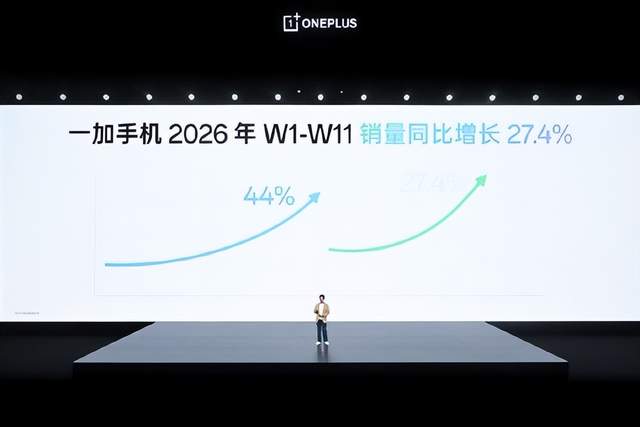
OnePlus launch data: 2025 sales +44% YoY, 2026 W1-W11 +27.4% YoY (Source: OnePlus launch/Sina Finance, March 24, 2026)
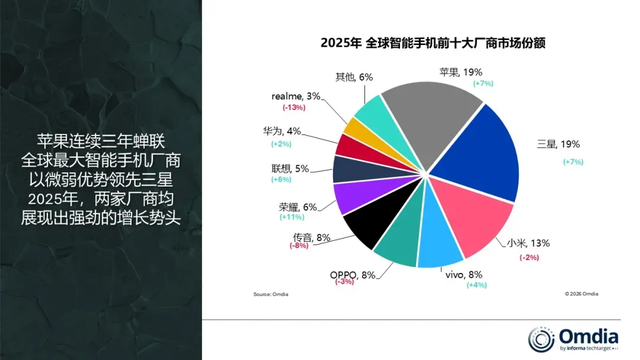
Omdia data: 2025 global smartphone market share—OPPO 8%, realme 3% (Source: Omdia/Mobile Die-Cutting Network, February 2026)
03
With realme Gone, Who Fills the 1500-2500 Yuan Void?
After realme's domestic pause, the first question is: Who inherits its market?
The 1500-2500 yuan segment was realme's core battleground. Not huge, but significant—stretching toward flagship experiences at 3000 yuan while securing volume at lower tiers. Chinese online users here have mixed feelings: "Limited budget" on their lips, but secretly craving "premium experiences."
Realme exploited this psychological gap. Now that it's gone, the market won't vanish.
Can OnePlus capture it all? Not necessarily.
OnePlus Ace covers 2000-3000 yuan, with its Number series above. But the 1500-2000 yuan gap lacks strong OnePlus products. Xiaomi's Redmi Note Turbo and vivo's iQOO Z series will likely seize this void.
Xiaomi acts fast. When realme's store disabled shopping on April 25, Xiaomi adjusted Redmi's inventory accordingly. vivo was slower, but iQOO Z's pricing perfectly fits realme's departure.
OPPO's internal dynamics shift too. From OPPO + OnePlus + realme to OPPO + OnePlus, this "3→2" change means recalibrating resource allocation, channel leverage, and supply chain bargaining power.
But one thing is clear: Unified ColorOS expands the pie.
OPPO previously maintained three systems—ColorOS, OxygenOS, and realme's UI. Engineers complained about tripling fixes, features, and software sellpoints for releases. Now, global realme and OnePlus devices can update to ColorOS, with OnePlus's global products fully adopting it—finally ditching OxygenOS after years.
ColorOS has over 740 million monthly active users. OPPO's 2025 global share was 11% (4th place), with an ASP of $284—behind only Apple and Samsung. Its China sales ranked top three in the first half of 2026. With 740 million MAUs and 11% global share, OPPO's software ecosystem clout now matches its hardware sales. Running all devices on one system boosts ad distribution, app store, and cloud service monetization exponentially.
Sacrificing realme for a unified ecosystem was a calculated trade.
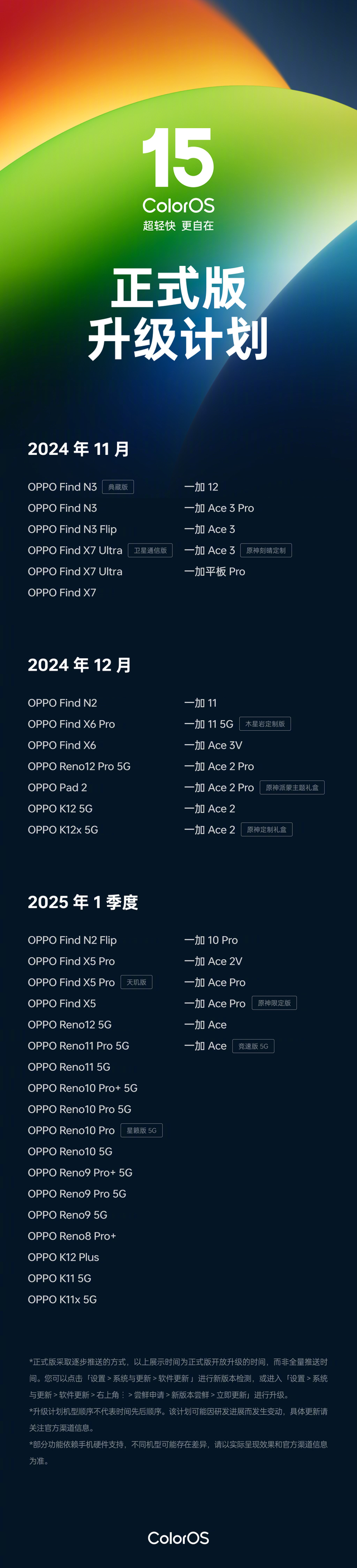
OPPO data: ColorOS surpasses 700 million global users (October 2024, >740 million by 2026) (Source: OPPO official/Sina Finance, October 17, 2024)
04
Gaming Performance—OPPO's Last Gamble
If you think OPPO cut realme just to "retrench," you're missing the bigger play.
While axing realme's domestic business, OPPO doubled down on gaming performance. This seemingly contradictory move is logically sound—not abandoning affordability, but refining its approach.
The smartphone industry's "imaging arms race" has hit diminishing returns. One-inch sensors, periscope zooms, computational photography—consumers grow indifferent. Even crystal-clear moon shots can't fill stomachs.
Meanwhile, mobile games demand rising performance. Titles like Genshin Impact and Honkai: Star Rail push phones to optimize for 120fps at max settings—no longer just for enthusiasts but mid-range users' daily expectations.
Realme's global footprint covers entry-to-mid-tier gaming performance. OnePlus targets premium performance flagships domestically. Together, they form a global gaming performance net.
Realme achieved 100 million global sales in just 37 months—an industry miracle. Overseas markets were its true foundation; domestic operations dragged it down.
Global mobile gaming revenue is projected to hit $121.1 billion in 2026. India alone has 600 million active mobile gamers. These numbers explain why OPPO sacrificed realme's domestic business to protect its global gaming footprint—not retrenching, but pivoting.
The Sub-Series Business Division integrates realme and OnePlus's gaming capabilities under one roof, with unified scheduling and messaging. Li Bingzhong's appointment as GM shows OPPO's trust—despite cutting his domestic base, they need him for overseas operations.
Xu Qi fared worse. From realme China President to "Sub-Series Marketing Head," his title grew longer but power shorter. His open letter phrased it gracefully: "This isn't an end—it's a new beginning." But everyone knows when a founding team's core member is absorbed into a parent company's division, the "new beginning" often means a dignified exit.
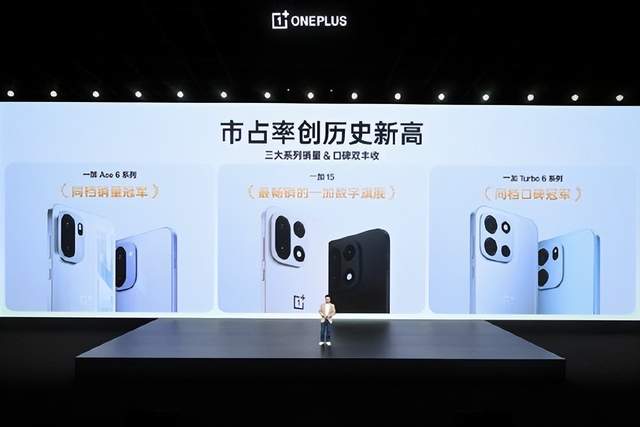
OnePlus Conference: "Market Share Hits All-Time High" – Three Major Series Achieve Double Success in Sales and Reputation (Source: OnePlus Conference/Sina Finance, March 24, 2026)
Eight years ago, Li Bingzhong took realme away from OPPO, like taking away a child he had raised himself. Eight years later, he personally pressed the pause button on this child.
This is not betrayal; it's business. In a saturated market, the only thing a founder can do is to be even more ruthless than the market—even if it means cutting down the brand they founded themselves.
Xu Qi wrote a sentence at the end of his open letter: "Thank you to every realme user for your companionship."
I read this sentence several times. The more I read it, the more I felt that he might not be thanking just the users, but also himself from that summer of 2018 when he walked out of the OPPO building with Li Bingzhong.
Back then, they all thought entrepreneurship was an infinite game. Now they realize that all games have an end—the only difference is whether you're the one who keeps playing or the one who gets eliminated by the rules.
Data Sources:
·Xu Qi's Weibo Open Letter (July 16, 2026)
·Announcement on the Establishment of OPPO's Sub-Series Business Division (April 29, 2026)
·Omdia Global Smartphone Market Tracker Report (Q2 2026)
·Official OnePlus Sales Data (2025-2026)
·Li Bingzhong's 2019 Weibo Long Essay "Leaping Forward in an Era of Great Change"
·Public Market Data and Institutional Research Reports
-
![]()
Realme Presses 'Pause': OPPO's Calculated Strategic Move
-
![]()
Gravity-1: The Glorious Journey of a Robust Solid Rocket and Its Pivotal Main Stage
-
![]()
Chip Unicorn Cloud Leopard Intelligence, Backed by Tencent, Sets Sights on IPO
-
![]()
Observation of German Auto Market: Electric Vehicle Market Maturity Ranks 12th in Europe, Chinese Brand Share Rises to 3.7%
-
![]()
He Xiaopeng Responds to a 'Critical Question'
-
![]()
Vivo's Strategic Retreat in India: From Market Dominance to Forced 'Partnership' in a No-Alternative Scenario
-
![]()
Following the Explosive Success of Kimi k3, Moonshot AI is Reportedly in Final IPO Financing Discussions
-
![]()
Baidu Dazi's Ambitious Overtaking with 'Product-Centric' Upgrades