2026 Semi-Annual Report | Electric Two-Wheelers: Domestic Sales Drop 12.6% in H1—Which Brands Are Defying the Downturn with Explosive Growth?
 07/29 2026
 460
460
I. Macroeconomic Pressures and Industry Restructuring
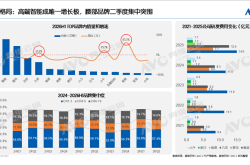
In the first half of 2026, China’s electric two-wheeler sector faced significant headwinds, contracting sharply under three key macroeconomic pressures: the full enforcement of the “strictest-ever national standards,” the exhaustion of pent-up replacement demand, and rising compliance costs for manufacturers. Data from AVC PSI revealed a 12.6% year-on-year decline in domestic sales from January to June. A quarterly breakdown showed a steeper 17.4% drop in Q1, with sales plummeting to 12 million units—a stark “cliff-like” downturn at the year’s outset. This decline underscores the industry’s rapid shift from rapid expansion to refined, stock-focused competition.
II. Fragmented Brand Landscape and the Rise of Smart Technology
Amid market contraction, product innovation and brand repositioning are reshaping competition. Premium smart brands like Ninebot, Niu Technologies, and Zeekr have captured Gen Z and tech-enthusiast audiences through advanced smart control systems and immersive human-machine interaction, emerging as the sole growth segment in H1. Industry competition has evolved from channel expansion alone to a “trinity” model integrating intelligent technology, emotional value via aesthetic design, and precision-targeted scenario marketing.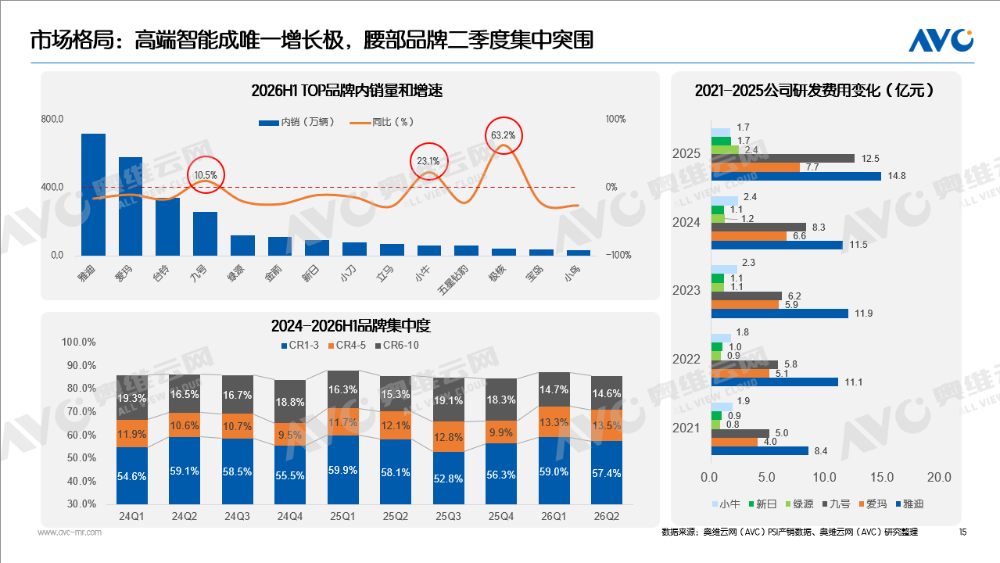
III. Gender-Driven Aesthetics: Female Consumers Unlock New Market Frontiers
Brand strategies in H1 2026 revealed a polarized approach to vehicle design: male-oriented models embraced futuristic, cyber-aesthetic “mecha” styles, while products targeting young women gained traction. By June 2026, female-focused models accounted for nearly 10% of online retail sales, featuring vibrant, cute designs and strong IP collaborations. This trend highlights the rising influence of female consumers, who are now primary decision-makers rather than secondary buyers. Leading brands like Yadea (Modern Series), Ai-ma (Metaverse), and Ninebot (Q Series) have prioritized women’s product lines, confirming the industry maxim: “Winning female users means capturing incremental markets.”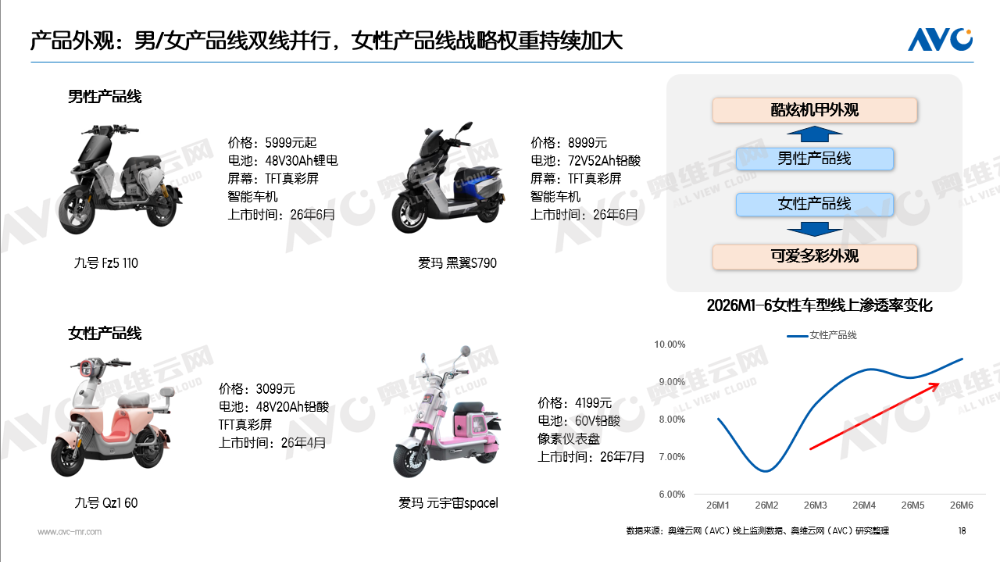
IV. From Price Wars to Value-Driven Competition: Hardcore Verification and Brand Nights
In 2026, “hardcore marketing” campaigns and brand night events have become pivotal strategies for elevating industry marketing. These dual approaches—rooted in scenario-based content and immersive brand experiences—are shifting competition from price wars to value creation, enhancing trust and consumer engagement while raising marketing standards and conversion rates.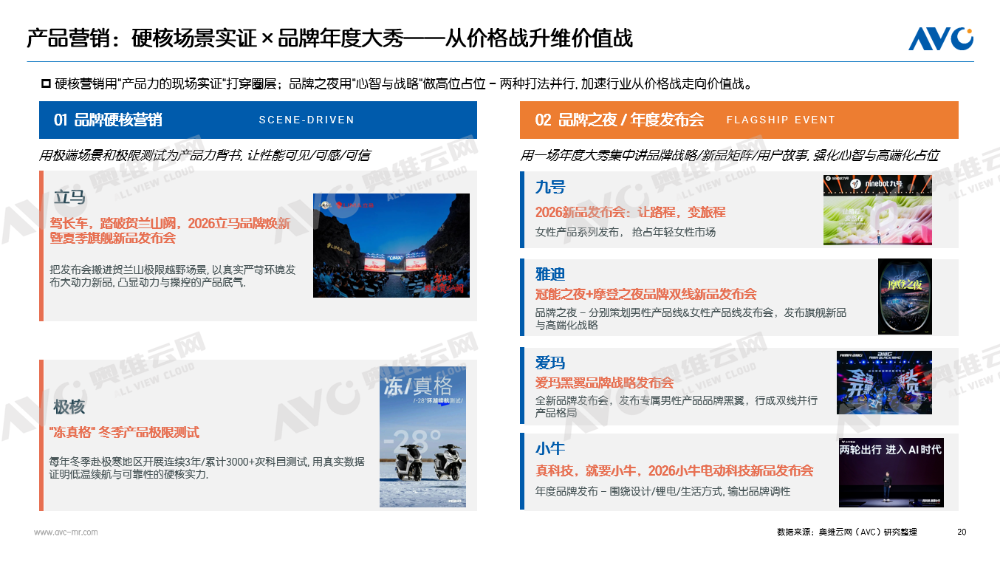
V. Future Outlook
As stock competition intensifies, channel transformation is moving from traditional multi-tier distribution to refined, service-oriented models. The industry has identified four core pathways for restructuring channel value chains, transitioning from “product sales” to “service and experience sales.” Looking ahead to H2 2026, the market will enter a phase of deep differentiation, with established firms weathering pressure, newcomers seizing opportunities, and smart technologies driving growth. Future success hinges on brands’ ability to align with emotional values and aesthetic preferences while democratizing AI large models and battery-swapping ecosystems for mass-market affordability. Brands achieving breakthroughs in both technological accessibility and emotional resonance will dominate H2.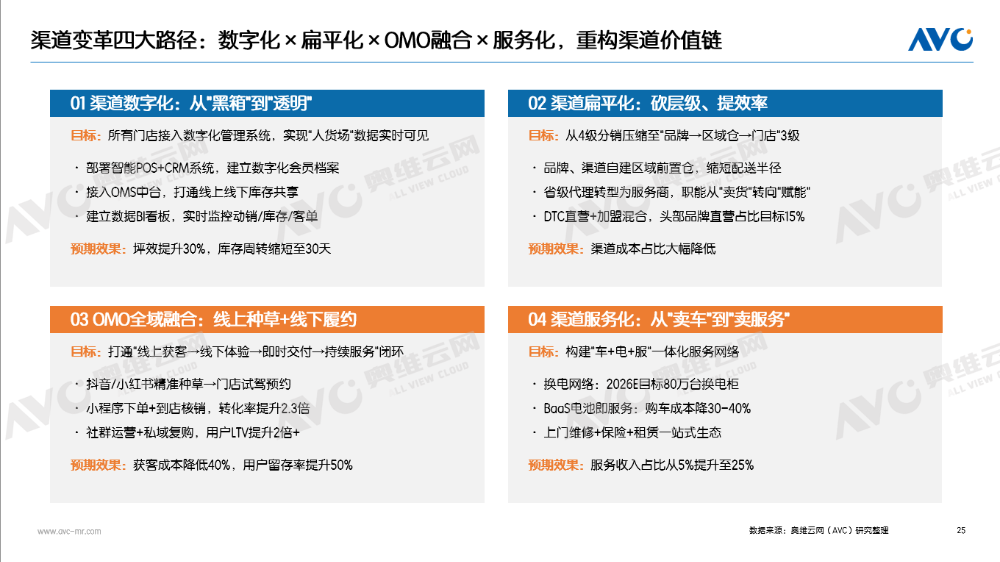
Original article by AVC Cloud. Unauthorized reproduction or data scraping by any organization or individual for training purposes is strictly prohibited.
-
![]()
2026 Semi-Annual Report | Electric Two-Wheelers: Domestic Sales Drop 12.6% in H1—Which Brands Are Defying the Downturn with Explosive Growth?
-
![]()
Exclusive Insight from Qualcomm! The 'Affordable VR Dream' Teeters on the Edge
-
![]()
McKinsey 2026 Mobility Report: Consumers Are Redefining What Makes a 'Good Car'
-
![]()
Duan Jianjun Spearheads Premium Project as Volvo Sets Sights on Rivaling Zunjie with New Flagship Model
-
![]()
Absent from New Energy Vehicle Rural Promotion, Leapmotor Turns Its Gaze Overseas
-
![]()
Reclaiming Global Dominance! Apple’s Market Cap Surges to $5 Trillion in Cook’s Epic Finale
-
![]()
Sales Soar: Has Ora Staged a Remarkable Comeback?
-
![]()
What Kind of AI Phones Do We Actually Need?