Agent Smartphones Move Towards Mass Production, First Bow to Apps
 07/29 2026
 538
538
It is reported that the new generation of Doubao smartphones has increased its stock from 30,000 units to several hundred thousand units, while the GUI capability that garnered the most attention in the previous generation has been withdrawn. The new product will no longer read the screen or simulate clicks on top apps like WeChat, Taobao, and Alipay; instead, Doubao smartphones can only connect after apps actively provide MCP services and open corresponding data and operation permissions.
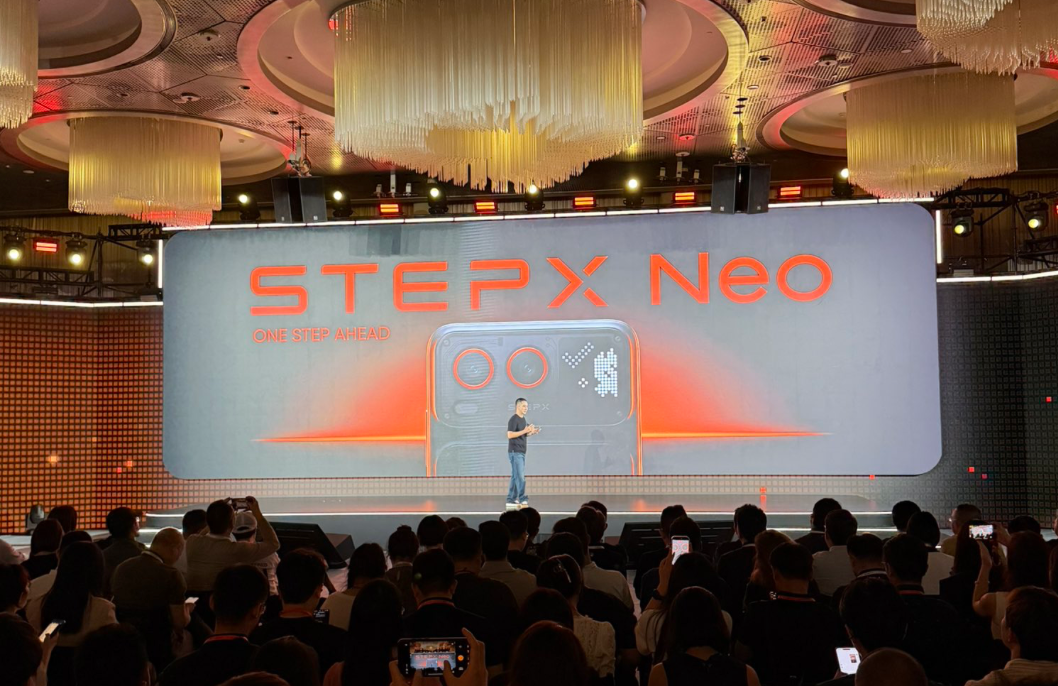
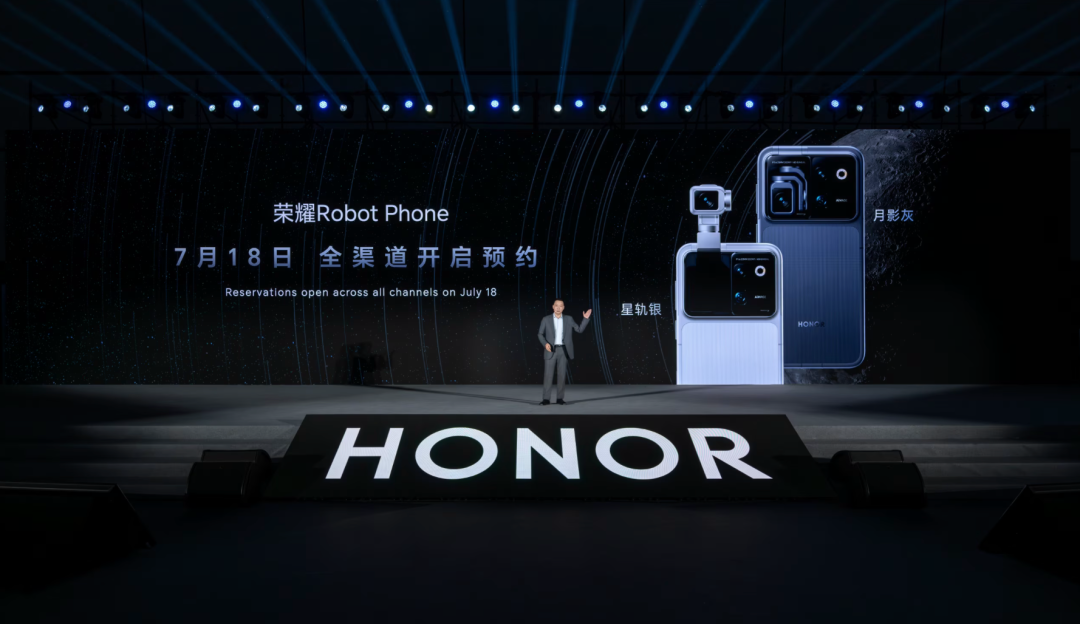
Before and after Doubao adjusted its route, Agent smartphones collectively stepped into the spotlight. On July 13, Jieyue Xingchen released the STEPX Neo, the intelligent agent operating system Step AOS, and the personal intelligent agent Amoo; on July 15, the National Cyberspace Administration announced the filing (filing) of seven mobile-side generative AI services; on July 18, Honor showcased the Robot Phone at WAIC and further advanced MagicOS towards an Agentic OS.
The three companies have chosen three different paths. Doubao collaborates with Nubia to integrate model capabilities into an existing smartphone brand; Jieyue develops its own models, operating systems, and hardware; Honor focuses on the smartphone system while bringing in model and service partners like Alibaba from the outside.
The three products are at different stages but simultaneously push the industry towards the same question. Large model companies can understand users, and smartphone manufacturers control devices, but the social, payment, shopping, and local life services people use daily belong to another group of companies. The first step towards commercialization for Agent smartphones is not to acquire more permissions but to acknowledge that some permissions never belonged to them in the first place.
Typically, as a technology matures, its functionality becomes more complete, but Agent smartphones are undergoing the opposite process.

In the years since large models emerged, AI has been integrated into glasses, earphones, pendants, recording cards, and other new devices. They occupy specific scenarios but struggle to simultaneously possess what smartphones already have—stable large-scale user bases, continuously online sensors, personal contexts like photo albums, schedules, contacts, and locations, payment and communication capabilities, as well as channels and supply chains to deliver products to ordinary users.
Large model companies first chose smartphones because, at this stage, only smartphones can integrate users, permissions, payments, and services onto a single device. Yin Qi stated bluntly at the July 13 event: Any model company that does not possess an application capable of sustaining it will struggle to survive in the long run. This explains why Jieyue, in addition to its foundational model, simultaneously launched Step AOS, Amoo, and STEPX Neo.
Model APIs can generate revenue through usage but do not directly bring user relationships. Independent AI applications can acquire users but struggle to obtain complete device permissions and personal contexts. For an agent to complete a real task on behalf of a user, it needs to know the user's identity, location, schedule, and preferences, call on third-party services, and receive feedback from task results. The terminal connects all these links.
Jieyue's expectations for STEPX Neo do not involve setting sales targets first and then selling. Yin Qi stated that the current product is about 70% complete, with the remaining parts to be filled in through user usage, including authorization, trust, end-cloud division of labor, and specific scenarios.
This is one way model companies enter the smartphone market: first create their own terminal, then use it to validate the relationships between the operating system, model, and services.
Doubao's approach is lighter. ByteDance provides the model and agent capabilities, while ZTE and Nubia handle hardware, manufacturing, sales, and after-sales support. Compared to building a supply chain from scratch, this route is faster; compared to merely selling models to smartphone manufacturers, it allows deeper involvement in product experience.
The goals of both parties are not entirely aligned. ByteDance needs real users, task data, and new service entry points. Nubia needs a differentiator that users can perceive in the highly homogeneous Android market. Model companies aim to establish long-term services, while smartphone companies must first sell devices. The former focuses on usage, memory, and subscriptions, while the latter also considers inventory, channels, and hardware gross margins.
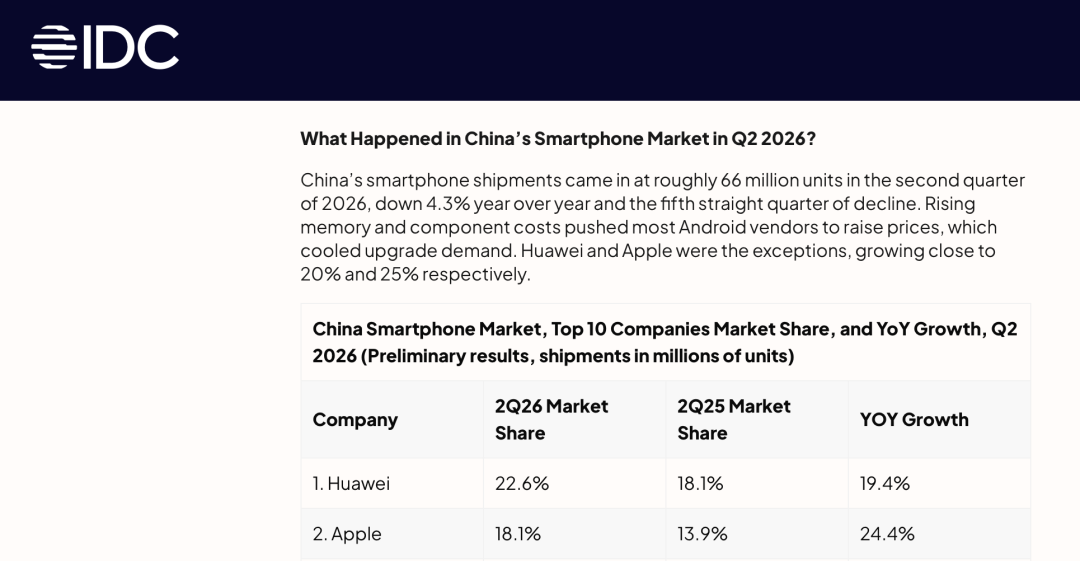
Compared to software vendors, smartphone manufacturers' reasons for entering the Agent space are closer to a changing cost sheet. Storage and other core component prices began rising in late March, leading most Android manufacturers to raise prices, further dampening users' willingness to upgrade. Preliminary data released by IDC on July 14 showed that Chinese smartphone shipments in the second quarter of 2026 were approximately 66 million units, down 4.3% year-over-year, marking the fifth consecutive quarter of decline; first-half shipments were around 134 million units, down 4.2% year-over-year.
In the past few years, smartphone manufacturers have used imaging, fast charging, foldable screens, and satellite communication to justify premium pricing for high-end products. This time, the turn has come to Agents. A smartphone continuously running an Agent requires larger memory to store models and contexts, stronger chips for on-device inference, and complex task scheduling between the device and the cloud. These investments can justify price hikes but will also continue to raise hardware and service costs. However, if users ultimately only gain a summary, photo editing, and Q&A entry point, it will be difficult to sustain a new upgrade cycle.
Agents are thus tasked with a dual mission. They must help smartphone manufacturers establish new product premiums while proving that the experience they deliver justifies the added costs.

Smartphones face another layer of limitation: existing operating systems are built around "people using apps." Each app has its own data, accounts, and permissions, with the system using sandboxes to prevent them from overstepping boundaries. Payment, social, and banking apps have their own identity verification and risk control measures.
An agent's workflow is the opposite. When a user says, "Help me arrange a business trip," the agent needs to read the calendar, confirm travel companions, check flights and hotels, and then call on payment tools. The task is singular, but the required data and services are distributed across multiple apps. The model can break down the task but cannot decide how Ctrip, Fliggy, and banking apps should cooperate solely through system permissions.
Smartphones possess everything an agent needs but also centrally store all the boundaries formed over more than a decade of mobile internet development. This makes them the most realistic entry point but also the hardest to transform.
GUI allowed Doubao smartphones to quickly prove that AI can use apps like humans. This technology does not require apps to provide dedicated interfaces; instead, the model observes pages through screenshots, locates buttons, input fields, and pop-ups, then simulates clicks, swipes, and inputs. Theoretically, AI can attempt any operation a user can perform.
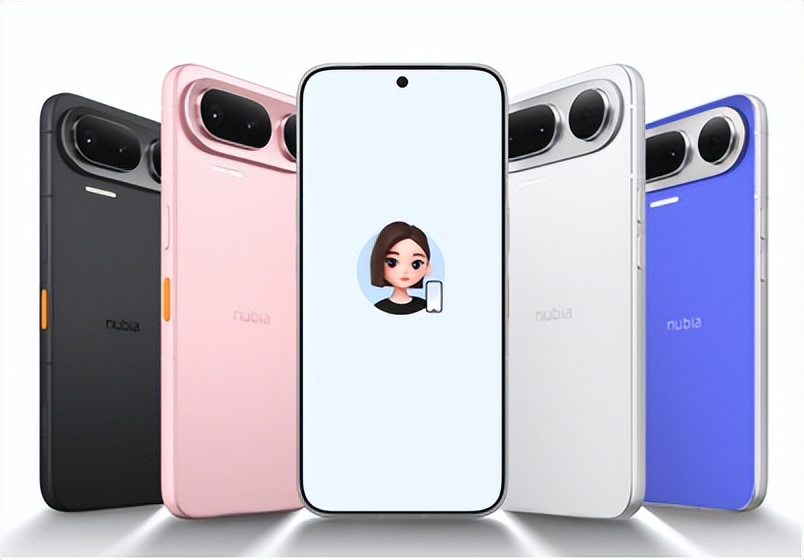
There are millions of apps on smartphones, and waiting for developers to transform (transform) interfaces one by one would take a long time. Having AI directly understand existing pages allows for rapid coverage of numerous scenarios. Users can also intuitively see the AI at work—opening one app, switching to another, and bringing back results.
However, for app developers, user authorization for AI to read the screen does not equal platform consent for AI to bypass their interfaces. Apps cannot determine why AI reads a page, what information it actually needs, or distinguish between user-authorized assistants and mass automation tools.
Technically, Doubao can click on behalf of users; commercially, apps have not accepted an external agent acting freely within them. According to LatePost, WeChat, Taobao, Alipay, and some banking apps have restricted these capabilities. Public information shows that Doubao subsequently disabled the ability to operate WeChat, banking, and internet payment apps.
MCP brings this relationship back to the table. Under the new scheme, apps must proactively declare the data and actions they are willing to open. They can allow agents to query orders but not modify them; permit filling in purchase information but leave payment confirmation to users; call on a service while not opening complete account data to the system.
The scope of usage, previously determined by AI, is now jointly defined by model companies, smartphone manufacturers, and apps. Agents gain more stable execution paths, while apps regain control over permissions, risk management, and data boundaries.
Jieyue's approach has been closer to this route from the beginning. STEPX Neo's initial partners include Alipay, Baidu, Meituan, JD.com, Didi, Ctrip, and Gaode, with app capabilities connected through protocol interfaces rather than GUI.
In the WAIC demonstration, a user told Amoo, "Help me send the contract to the office; Frank needs it urgently." The system found the address from contacts and context, called on Meituan's errand service, and generated an order filled with item details, fees, and delivery time. Most of the process was completed within the Amoo interface; when it came time to pay, the task paused on the Meituan page, waiting for user confirmation. The system agent understood the intent and organized the information. Meituan retained fulfillment and payment, while the user retained final decision-making power.
Apple is also encoding these boundaries into its system. According to Apple's 2026 developer documentation update, apps must proactively declare actions and data callable by Apple Intelligence and Siri through App Intents; private content in app interfaces will not automatically open to the system, and sensitive or destructive actions can require user reconfirmation.
Alipay calls this cross-end collaboration interface AHA. On July 15, "Abao" achieved cross-end connectivity with OPPO's "Xiaobu Assistant," with Xiaobu handling Requirement Understanding (need understanding) and Abao calling on nearly 200 of Alipay's internal life services, while critical authorizations and payments remained user-confirmed.
MCP, App Intents, AHA, and other structured interfaces are becoming the answers provided by different companies. They are not the same protocol but solve the same problem: letting apps proactively decide which capabilities can be called by agents, rather than having system agents enter apps, read pages, and complete operations on their own.
Alarms, photo albums, calendars, and files within the system can be broken down into atomic capabilities by smartphone manufacturers; payment, social, e-commerce, and local life services are opened by apps through formal interfaces; long-tail apps that have not yet adapted may still rely on GUI as a supplement.
Thus, GUI will not disappear immediately. It remains a shortcut for covering old apps and low-risk tasks. However, the closer an agent gets to payment, social, and transactions, the more it needs a path recognized by apps—one that is auditable and accountable.
Engineering prototypes focus on whether AI has "hands"; mass-produced products must first determine how far those hands can reach.

Super apps are not resist (resistant) to agents.
Alipay is developing Abao, Alibaba has integrated Qianwen into Taobao, and WeChat has begun small-scale testing of "Xiaowei." Smartphone manufacturers are also upgrading their voice assistants into system agents. Companies are vying to be the first to catch a user's request and decide which service to call.
On May 11, Alibaba connected the Qianwen app with over 4 billion products on Taobao and Tmall. Users can query products, compare options, manage orders, track logistics, and handle after-sales within Qianwen; a Qianwen shopping assistant has also been launched within the Taobao app. Alibaba is willing to let agents shop on behalf of users, but the agent first belongs to Alibaba, with products sourced from Taobao and Tmall and payments and after-sales remaining within the Alibaba ecosystem.
The traditional mobile internet commercial chain begins when a user opens an app. The platform influences choices through the homepage, search, recommendations, and ads, then completes transactions and subsequent marketing. System agents attempt to move this choice upstream. Users no longer open Meituan, Taobao, or Ctrip; they simply say, "Get me a coffee" or "Book a nearby hotel." The agent understands the request, compares services, and returns results, with apps fading into the background to fulfill orders.
For users, this means fewer steps. For platforms, it may mean losing homepage exposure, search ads, recommendation rankings, and behavioral data. Apps still complete transactions but may no longer control where those transactions begin. A user's coffee could come from Taobao Flash Sale, Meituan, or a brand's own mini-program; a hotel could be booked through Ctrip, Fliggy, Meituan, or direct channels. Which service the system agent ranks first determines where orders, commissions, and user data flow.
Thus, super apps will not unconditionally surrender this initiative to smartphone systems.
A more likely future structure involves division of labor between system agents and app agents. The system agent stays close to the device, knowing the user's location, schedule, contacts, and current intent; the app agent stays close to the business, managing products, accounts, social relationships, payments, and fulfillment. Model companies provide understanding and planning, smartphone manufacturers handle system permissions and end-cloud scheduling, and users confirm actions like payments, deletions, and message sending.
Honor summarizes this as "one primary, multiple specialized" agents. In Honor's Agentic OS framework announced on July 18, a primary Portable intelligent agent (personal intelligent agent) understands the user and coordinates with vertical agents, terminal, and cloud models. Honor also announced a joint model development with Alibaba's Qianwen for smartphone scenarios.
This structure appears more acceptable to all parties, as no single company needs to surrender all its capabilities at once. Smartphone manufacturers retain system entry points; model companies enter user tasks; internet platforms continue to control services and transactions; users gain a unified interaction interface.
However, interfaces are technical protocols, not commercial agreements. New ranking rules are needed for which service a system agent prioritizes, whether apps pay for system distribution, whether smartphone manufacturers participate in transaction revenue sharing, and who bears the model calling costs—no ready answers exist.
Long-term memory adds another layer of competition. Whether contacts, consumption preferences, and historical tasks are saved on the phone, model account, or within the app will determine which relationships can be taken away by users after they switch devices or services. Interfaces determine what an Agent can invoke, while memory determines which service users find harder to leave.
The mobile internet did not make the previous generation of infrastructure disappear, but it changed the way users access services. The changes brought by Agents may not necessarily eliminate Apps, but rather shift the first step of users initiating tasks to the system layer.
For super Apps, what truly needs to be defended are ranking, transactions, and user relationships.

Agent phones will not quickly converge to a single path. Three routes—model companies partnering with phone brands, model companies developing full-stack terminals, and traditional phone manufacturers maintaining their systems—will coexist in the short term, but all will ultimately need to negotiate with the same group of super Apps.
The icons and pages of Apps may see fewer direct openings by users, but the commodities, social relationships, payments, transactions, and risk controls managed by platforms will not disappear. They are more likely to transition from front-end applications on phones to back-end service systems for Agents; the GUI will not disappear immediately either. It will continue to handle long-tail applications that have not yet undergone interface transformations; high-risk tasks such as payments, social interactions, and transactions will gradually shift toward protocol interfaces, permission hierarchies, and user confirmations.
According to "New Position," what is worth observing next is how many times a cross-application task can be completed and how many times user intervention is required midway; what capabilities WeChat, Taobao, Meituan, and Alipay have opened up; how much cloud computing power an active user consumes and whether they are willing to pay for these services.
The "hand" that Doubao pulls back is where the real business begins.
*The featured image and illustrations in the text are sourced from the internet.
-
The WEY V8X Hasn't Been Launched Yet, But Its Marketing Team Has Already Disbanded
-
![]()
Agent Smartphones Move Towards Mass Production, First Bow to Apps
-
![]()
2026 Semi-Annual Report | Electric Two-Wheelers: Domestic Sales Drop 12.6% in H1—Which Brands Are Defying the Downturn with Explosive Growth?
-
![]()
Exclusive Insight from Qualcomm! The 'Affordable VR Dream' Teeters on the Edge
-
![]()
McKinsey 2026 Mobility Report: Consumers Are Redefining What Makes a 'Good Car'
-
![]()
Duan Jianjun Spearheads Premium Project as Volvo Sets Sights on Rivaling Zunjie with New Flagship Model
-
![]()
Absent from New Energy Vehicle Rural Promotion, Leapmotor Turns Its Gaze Overseas
-
![]()
Reclaiming Global Dominance! Apple’s Market Cap Surges to $5 Trillion in Cook’s Epic Finale