From Dominance to Decline: The Gradual Fading of Black Shark Phones and the Predicament of Devoted Fans
 07/30 2026
 380
380
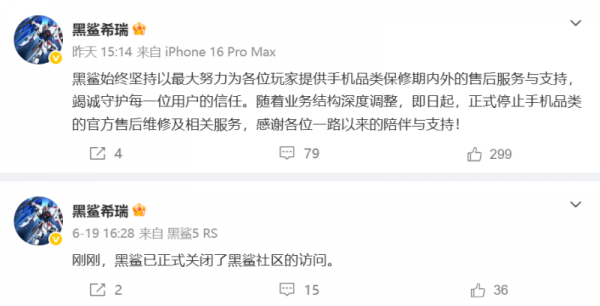
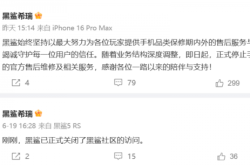
Yesterday, a technical support engineer from Black Shark, known as “Black Shark Xirui,” revealed on a social media platform that official after-sales repair and related services for mobile phones would be discontinued from that day forward. This decision means that users still relying on Black Shark phones will no longer have access to repair or component replacement services through official channels. Instead, they will need to seek out third-party repair services or attempt to resolve issues on their own.
In truth, the downturn in Black Shark's mobile phone business did not occur abruptly; rather, it followed a long, steady decline:
2018–2022: From its debut product to the Black Shark 5 series, Black Shark once reigned supreme in the gaming phone market, boasting a market share as high as 47% in 2019, with personal endorsement from Lei Jun.
2022: The Black Shark 5 series marked the last mass-produced phone, with the planned successor, the Black Shark 6 series, delayed indefinitely and never seeing the light of day.
2022–2025: Tencent's planned acquisition of Black Shark for 2.7 billion yuan stalled, and by April 2025, Xiaomi-affiliated capital had completely withdrawn from the shareholder list. Black Shark products were removed from Xiaomi Mall and Xiaomi Youpin, effectively cutting off key sales channels.
2026: In February, Black Shark was repeatedly listed as a subject of enforcement; in July, it was added to the list of entities with abnormal business operations (unable to be contacted at the registered address).
June 2026: Access to the Black Shark community was terminated, with officials citing a “platform upgrade” and stating that functions would be migrated to the Black Shark Gear App.
July 28, 2026: Official after-sales support for mobile phones officially ended, signaling the demise of the mobile phone business.
For current users, the discontinuation of Black Shark's official after-sales repair services represents a betrayal of trust and unfulfilled commitments, which is deeply regrettable. Black Shark had previously announced in June that the Black Shark Gear App would introduce a new after-sales service section, including support for trade-ins of older models. However, as of the announcement of the cessation of after-sales support, the App had not yet launched any after-sales portal, and no specific timeline was provided by officials.
Users still in possession of models like the Black Shark 5 Pro will now face unresolved issues such as battery degradation, cracked screens, and motherboard failures, rendering the so-called “trade-in” promise a hollow gesture with no clear fulfillment date.
For Black Shark itself, discontinuing mobile phone after-sales support was a desperate measure to stay afloat, essentially a strategic retreat under severely constrained resources, with a full pivot towards peripherals. Currently, the company has completely redirected its business focus to peripheral products such as cooling back clips, gaming headsets, power banks, and eSports keyboards and mice, with plans to exhibit at the 2026 ChinaJoy.
From a business standpoint, the peripheral sector offers lower barriers to entry and more manageable profit margins. For a small company that has lost both capital and channel support, this may be the only viable path to survival.
For the industry, the collective decline of the gaming phone sector is an undeniable reality. In fact, Black Shark's downfall is not an isolated incident but rather a microcosm of the entire gaming phone niche market. In March 2023, Lenovo Legion officially discontinued its mobile phone business; ASUS ROG Phone canceled all research and development plans for its new model scheduled for release in 2026. As for Nubia RedMagic, it remains the only brand in the mainstream market still consistently releasing gaming phones.
The reason gaming phones have fallen out of favor is straightforward: the performance of ordinary flagship phones can already fully support most popular mobile games at full frame rates, while the bulky models specifically designed for gaming scenarios cater to a very narrow audience, making it increasingly difficult to sustain long-term, large-scale brand development.
In my view, Black Shark's decision to discontinue mobile phone after-sales support is not a sudden move but rather the culmination of a slow, four-year decline. From its peak with nearly half of the market share and personal endorsement by Lei Jun to its current state where it cannot even provide official after-sales repair services, Black Shark's rise and fall reflect the inherent limitations of the gaming phone niche market.
When mainstream flagship phones can adequately meet gaming needs, gaming phones transition from a distinct category into a nostalgic relic. For Black Shark, setting aside mobile phones and focusing on peripherals may not be the ideal outcome, but it might be the only viable path forward. For the loyal users still clinging to their Black Shark phones, we can only hope that the promised after-sales service via the Black Shark Gear App is implemented soon, even if it's just a dignified conclusion. What are your thoughts?
-
![]()
Hongqi CEO 'Gap' Filled: Marketing Veteran Nie Qiang Steps Up to the Plate
-
![]()
Has Chongqing Outstripped Guangzhou Once Again? The Top Ten City Rankings Take an Unexpected Turn!
-
![]()
Blasting into the Global Top 100! Tencent's 'AI Powerhouse' Unleashed
-
![]()
Half-Year Profit Plummets by 30%! Volkswagen Group's 5-Hour Supervisory Board Showdown Rejects Plant Closures and 100,000 Job Cuts
-
![]()
Memory Prices Soar 300%, Disrupting the Smartphone Market! SoC Shipments Plummet 15% in the First Half of 2026
-
![]()
From Dominance to Decline: The Gradual Fading of Black Shark Phones and the Predicament of Devoted Fans
-
![]()
Honor's 'Alpha' Ambitions and the 'Phone Case' Quandary: Securing Legal Victory, Yet Risking Public Favor
-
![]()
Chinese Automakers Sweep Across Europe but Are Trapped by 'Electricity Price Shackles'