Honor's 'Alpha' Ambitions and the 'Phone Case' Quandary: Securing Legal Victory, Yet Risking Public Favor
 07/30 2026
 570
570

Introduction: Don't Let a Flawless Legal Win Turn into a PR Nightmare
Recently, an interview conducted by Haibao News has once again thrust Honor into the limelight.
What sparked the controversy? An e-commerce merchant, Lin Jian (a pseudonym), sold a 7.9 RMB phone case with free shipping, labeled as compatible with "Honor 80/70/60/40/50/20/10 models." Honor took legal action for trademark infringement, demanding a hefty compensation of 380,000 yuan.
The news ignited a firestorm. Some accused Honor of "bullying consumers" and "having insatiable greed," stating, "A renowned national brand deliberately targeting the vulnerable—this tarnishes its reputation." Others rallied behind Honor, arguing, "Well done," "It's high time these infringing merchants faced consequences," and "Industry standards aren't a refuge, and ignorance of the law doesn't justify weakness."
Nonetheless, Honor, previously focused on its "Alpha Plan," found itself embroiled in a heated debate. With precedents like Meet Fresh Noodles and LV facing public backlash, why would Honor pursue a lawsuit that offers "no reward for victory but punishment for defeat"?
I. Why is Honor 'Fixated' on a Phone Case?
Many are puzzled as to why a leading smartphone manufacturer would concern itself with small merchants selling phone cases.
For compensation? That seems unlikely.
In 2025, Honor's smartphone shipments surpassed 71 million units for the first time, marking a 9% year-on-year increase. Meanwhile, overseas sales skyrocketed by nearly 50%, placing Honor among the top ten smartphone vendors globally in terms of growth.
Honor's performance last year was remarkable. Pursuing legal action over such a minor compensation seems disproportionate.
From Honor's perspective, there was underlying anxiety.
The e-commerce store in question not only prominently featured "Honor" in its product listing but also claimed "1.02 million units sold nationwide."
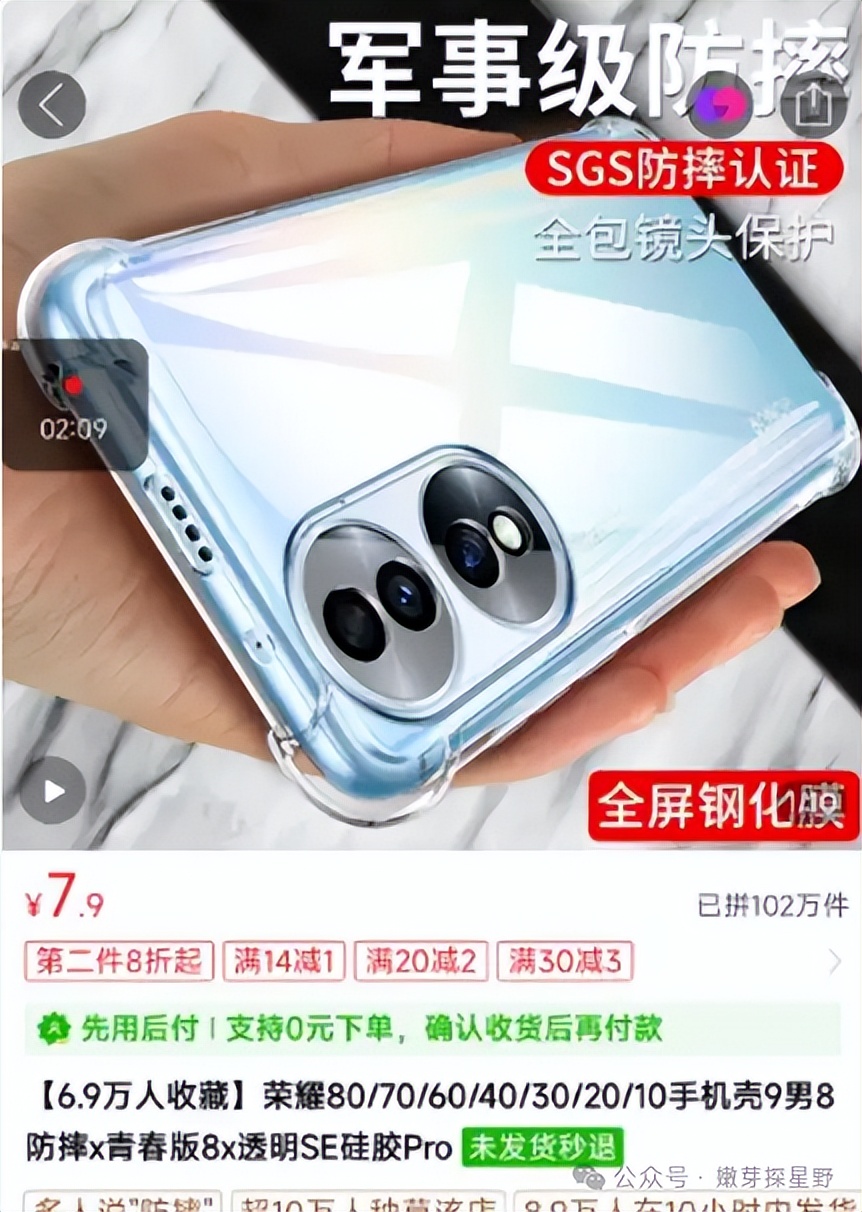
Although subsequent interviews revealed that the "1.02 million" figure was exaggerated (actual sales: a mere 7 units), Honor was unaware of this before filing the lawsuit.
Given the claimed sales volume, a robust response seemed warranted.
If the controversy had escalated, akin to the Meet Fresh Noodles incident, it wouldn't be surprising for Honor to claim that an authorized law firm "acted recklessly."
To grasp the true significance of this incident, we must look beyond the phone case and examine Honor's impressive resurgence in recent years.
Last year, Honor's "Alpha Strategy" yielded enviable results: the foldable Magic V series solidified its position in the premium market, overseas markets like Europe and the Middle East experienced renewed high growth, and the cross-device experience promised by the "Alpha Strategy" is transitioning from conceptual slides to everyday user reality.
With simultaneous advancements in hardware, software, and ecosystem development, the "Alpha Strategy" is clear, ambitious, and far-reaching.
The third phase of the "Alpha Strategy" emphasizes seamless AI-driven connectivity across devices. In this ecosystem, centered on smartphones and extending to tablets, PCs, wearables, and even smart homes and cars, accessories serve as the "capillaries" that reach users most intimately and frequently.
In this grand vision, safeguarding brand integrity is understandable. One could even argue that Honor is laying the groundwork for the future of its Alpha ecosystem. The phone case might just be the first indicator of a broader experiment.
Thus far, Honor's motivations are comprehensible, even visionary.
The real issue lies in its execution, revealing tactical ineptitude and a lack of PR sensitivity.
Honor opted for the legally most efficient—yet emotionally damaging—approach, allowing its strategic ambitions to be overshadowed by avoidable public backlash.
Victory in the business realm is never determined solely in court.
When a brand wins legally but loses public sentiment, such victories are often shortsighted and costly.
The term "hefty compensation" evokes memories of Visual China's black hole photo controversy and the "Tongguan Roujiamo" geographical trademark dispute.
The former, overreaching with legal claims, sparked public outrage, a stock price collapse, and years of reputational damage. The latter, suing small vendors en masse, was labeled "trademark extortion" until local authorities intervened.
Their lesson: Behind legal gray areas or formal legitimacy lies the public's fundamental sense of fairness.
II. Winning the Lawsuit, Losing Hearts: A More Emotionally Intelligent Approach Than Litigation
The social psychology behind this resistance is straightforward:
First, the stark value disparity between high-priced official cases and cheap alternatives creates a sense of coercion among users, who feel their ownership rights are infringed upon when manufacturers regulate even personal choices like screen protectors or cases.
Second, the phrase "hefty compensation" inherently triggers sympathy for the underdog in a David-vs.-Goliath narrative.
Worse, Honor's pre- and post-lawsuit PR communication was nearly nonexistent. There was no clear messaging about "cracking down on counterfeit sources to protect original designs," nor explanations for the compensation demands. This allowed rumors like "Honor aims to monopolize and eliminate all third-party cases" to spread unchecked on social media.
In reality, these stores could have avoided legal action by simply adding "compatible with" to their descriptions.
The legal team pulled the trigger, but the PR team failed to clean up the battlefield. The lack of synchronized communication—only the "shot" without the "sound"—risks cracking the hard-earned, consumer-win-win atmosphere Honor has cultivated since independence.
Moreover, this resistance could spill over into the "Alpha Strategy’s" rapid advancement, becoming a new obstacle.
Is there a better approach—one that protects Honor’s original design assets while winning consumer understanding, even applause, by balancing legality with empathy?
Absolutely.
Apple’s MFi certification system is a perfect model for Honor to emulate.
Instead of suing third-party cable manufacturers into bankruptcy, Apple designed an authorization mechanism: pass testing, purchase certified chips, and legally produce products labeled "Made for iPhone." These can be priced and sold normally.
This system spawned global brands like Anker and Belkin, offering Apple users diverse, reliable, and affordably priced options. Apple gains licensing fees, strengthens its ecosystem, reduces production pressure on its own accessories—and crucially, users don't feel deprived of choice but trust Apple’s ecosystem.
If Honor launches a "Honor Certified Accessories Program" for phone cases, open-sourcing compatibility specs like precise camera module tolerances and setting reasonable authorization thresholds (even symbolic fees), it would foster a vibrant market for original design cases.
These third-party case makers would become co-creators and advocates of Honor’s design culture, not hidden "infringers."
Second, prioritize targets. Much of the public’s resistance stems from confusion over who is being sued.
Honor could clarify during litigation: We’re targeting counterfeit factories and large wholesalers that mass-produce fake official cases, use stolen promotional materials, and sell low-quality products that scratch lenses or damage phones with corrosive glue. These acts harm both intellectual property and user interests and deserve legal punishment.
For independent studios creating original designs, small-batch craftsmanship, or cases that merely align with camera shapes for functional necessity, Honor could adopt a "courtesy first, enforcement later" approach. Proactively invite collaboration, even host a "Honor Official Case Design Contest," giving outstanding third-party designs a chance to join the official ecosystem.
Like Elon Musk opening all Tesla patents to accelerate EV industry progress, this "unafraid of imitation, eager for partnership" mindset didn’t weaken Tesla’s leadership but made it an industry catalyst.
If Honor adopts a similar stance, transforming phone cases from a zero-sum battleground into an open platform for public creativity, that would align with the Alpha Strategy’s vision of "co-creating smart living."
Ultimately, Honor’s PR team must not trail its legal team, reducing the brand’s romantic narrative to cold legal claims.
Honor’s Alpha Strategy proves it’s a tech company capable of stunning products and compelling storytelling. Its "underdog-to-leader" aura and resilience in climbing the premium ladder position it as a key player in the global smart device market for the next decade.
But precisely for this reason, it cannot let tactical ineptitude undermine its strategic vision.
A phone case is small, but it reflects how Honor views its users, ecosystem partners, and its commitment to "openness, win-win collaboration, and consumer-centricity" in the Alpha Strategy.
The "Alpha Strategy" advocates ecosystem co-construction and open innovation. Yet when Honor tries to define accessory market rules through lawsuits and exorbitant compensation, it risks appearing as an ecosystem organizer that excludes partners rather than invites them.
It’s hard to reconcile a tech brand promoting "smart omni-scenarios and open capabilities" with the rigid, uncompromising approach seen in its phone case litigation.
This gap between strategic narrative and tactical execution is the root cause of the public relations crisis. Before pulling the legal bowstring to its fullest, leave room for empathy and wisdom.
Winning a lawsuit takes months; winning back hearts takes years.
If the Alpha Strategy aims for the stars, don’t let a small stone—easily stepped over—damage the brand’s most precious asset: public trust. This isn’t retreat; it’s calibrating the steering wheel for a longer journey.
Disclaimer:
Please note: This analysis is based on publicly disclosed information (financial reports, announcements, etc.). The author does not guarantee the sufficiency or currency of the sources. Stock markets involve risks; principal may be lost. Exercise extreme caution in investment decisions! All views expressed are the author’s comments only, not trade recommendations. Investors must conduct independent research and judgment based on their circumstances and assume all risks.
-
![]()
Hongqi CEO 'Gap' Filled: Marketing Veteran Nie Qiang Steps Up to the Plate
-
![]()
Has Chongqing Outstripped Guangzhou Once Again? The Top Ten City Rankings Take an Unexpected Turn!
-
![]()
Blasting into the Global Top 100! Tencent's 'AI Powerhouse' Unleashed
-
![]()
Half-Year Profit Plummets by 30%! Volkswagen Group's 5-Hour Supervisory Board Showdown Rejects Plant Closures and 100,000 Job Cuts
-
![]()
Memory Prices Soar 300%, Disrupting the Smartphone Market! SoC Shipments Plummet 15% in the First Half of 2026
-
![]()
From Dominance to Decline: The Gradual Fading of Black Shark Phones and the Predicament of Devoted Fans
-
![]()
Honor's 'Alpha' Ambitions and the 'Phone Case' Quandary: Securing Legal Victory, Yet Risking Public Favor
-
![]()
Chinese Automakers Sweep Across Europe but Are Trapped by 'Electricity Price Shackles'