Memory Prices Soar 300%, Disrupting the Smartphone Market! SoC Shipments Plummet 15% in the First Half of 2026
 07/30 2026
 334
334
Kuaikeji, July 30 - Counterpoint released its latest report, stating that affected by multiple factors such as soaring memory chip prices, smartphone manufacturers controlling inventory, and extended user replacement cycles, global smartphone main chip SoC shipments declined by 15% year-on-year in the first half of 2026, with the industry as a whole entering a contraction cycle.
The competitive landscape among chip manufacturers has shown significant divergence. The two major Android chip suppliers, Qualcomm and MediaTek, both saw year-on-year shipment declines exceeding 25% in the first half of the year. In contrast, Apple, Samsung, Google, and Unisoc achieved simultaneous growth in shipments and market share, with each company having its unique growth logic.
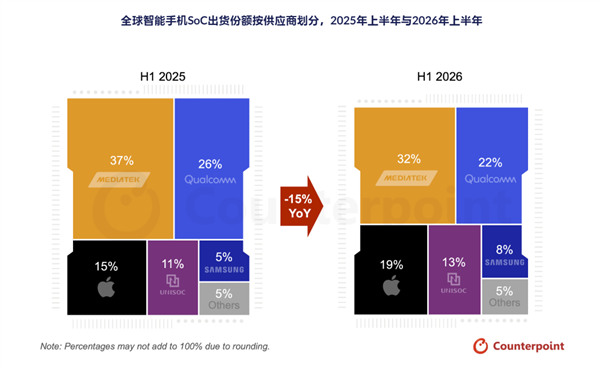
Counterpoint's senior analyst, Shivani Parashar, analyzed that Apple's market share growth was mainly driven by the strong performance of the iPhone 17 series.
Qualcomm's share in the high-end market has been squeezed. On one hand, Samsung's Galaxy S26 series adopted both the Snapdragon 8 Elite Gen 5 and its own Exynos 2600 chip, unlike previous models that relied entirely on Qualcomm. On the other hand, weak sales of the Xiaomi 17 series also put pressure on Qualcomm's high-end chip shipments.
MediaTek was primarily impacted by the memory crisis on its low-end and entry-level 5G chips. However, its high-end Dimensity 9500 series performed well, thanks to design wins with brands like vivo and OPPO.
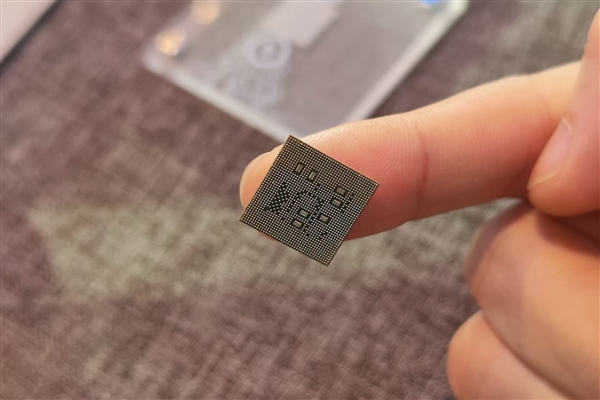
Cost pressures have become a core pain point for the industry. In the second quarter of 2026, smartphone memory prices soared by over 300% year-on-year, with storage costs exceeding those of main chip SoCs across all price segments, becoming the largest expense item in smartphone BOMs. Major smartphone brands have signed long-term supply agreements to secure sources.
Notably, despite the overall weak industry demand, smartphone SoCs equipped with on-device generative AI achieved counter-trend growth, with shipments rising by 24% year-on-year in the first half of the year.
The institution predicts that global smartphone SoC shipments will decline by 14% year-on-year in 2026, with shipments of chips for entry-level models falling by over 30%.
The current tight supply-demand situation for memory is unlikely to ease in the short term, with the supply gap expected to persist until the second half of 2027. This means that the smartphone supply chain will continue to face high cost pressures in 2027, prolonging the industry's profitability recovery cycle.
-
![]()
Hongqi CEO 'Gap' Filled: Marketing Veteran Nie Qiang Steps Up to the Plate
-
![]()
Has Chongqing Outstripped Guangzhou Once Again? The Top Ten City Rankings Take an Unexpected Turn!
-
![]()
Blasting into the Global Top 100! Tencent's 'AI Powerhouse' Unleashed
-
![]()
Half-Year Profit Plummets by 30%! Volkswagen Group's 5-Hour Supervisory Board Showdown Rejects Plant Closures and 100,000 Job Cuts
-
![]()
Memory Prices Soar 300%, Disrupting the Smartphone Market! SoC Shipments Plummet 15% in the First Half of 2026
-
![]()
From Dominance to Decline: The Gradual Fading of Black Shark Phones and the Predicament of Devoted Fans
-
![]()
Honor's 'Alpha' Ambitions and the 'Phone Case' Quandary: Securing Legal Victory, Yet Risking Public Favor
-
![]()
Chinese Automakers Sweep Across Europe but Are Trapped by 'Electricity Price Shackles'