Hongqi CEO 'Gap' Filled: Marketing Veteran Nie Qiang Steps Up to the Plate
 07/30 2026
 478
478
Recently, an order of personnel reassignment from FAW Group has promoted Nie Qiang, the former Deputy General Manager of FAW Toyota, to the helm as CEO of the Hongqi brand. In this new role, he will have full control over sales, after-sales services, distribution channels, and brand marketing. While this personnel appointment may seem routine, it is notable for one intriguing detail: the CEO position had remained vacant for 15 months following the departure of the previous CEO in April 2025. This prolonged vacancy reflects Hongqi's hesitation at a critical juncture of transformation—until the arrival of this "marketing veteran," who has honed his expertise across four major business sectors within the FAW system.
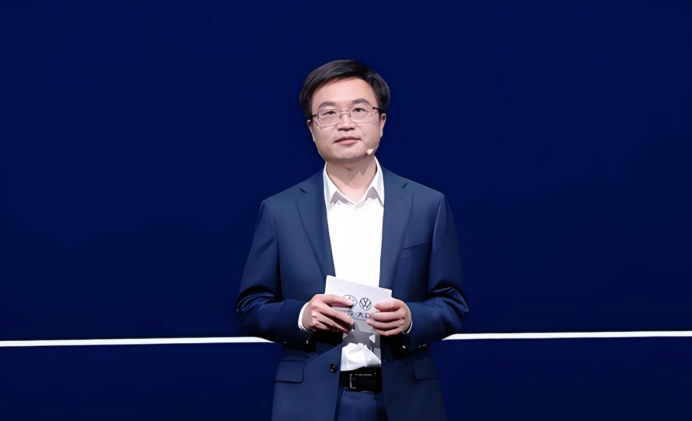
Nie Qiang's career trajectory is almost a microcosm of FAW's marketing endeavors. He joined FAW in 2001, starting with FAW Jiefang commercial vehicles, then moving on to network and sales management at FAW-Volkswagen. In 2021, he first joined Hongqi Sales Company as Deputy General Manager. He later returned to FAW-Volkswagen to oversee sales before moving to FAW Toyota as the Chinese head. Over the past 25 years, he has navigated between commercial vehicles, joint-venture passenger cars, and independent luxury brands, forming a closed loop in his career: "FAW-Volkswagen—Hongqi—FAW-Volkswagen—FAW Toyota—Hongqi." This cross-sector experience is particularly valuable at a time when Hongqi needs to integrate the refined management practices of joint ventures with the market savvy of independent brands.
A review of Hongqi's recent leadership succession reveals a clear pattern: from "pioneers" to "consolidators," and now to "challengers."
The tenure of Chen Xu (2018-2022) marked the "mythical period" of Hongqi's revival. Brought in by Xu Liuping from Changan Automotive, Chen Xu orchestrated a remarkable leap in annual sales, from 33,000 to 300,000 units. With a 479% year-on-year growth in 2018, surpassing 100,000 units in 2019, crossing 200,000 in 2020, and reaching 300,000 in 2021, these figures underscore the strategic commitment to "revive Hongqi with the collective efforts of the entire group" and the tenacious execution of the marketing team's "100-day decisive battle to achieve 200,000 sales." Chen Xu's legacy lies in his four-year effort to reposition Hongqi as a mainstream luxury brand, rather than just a symbolic entity.
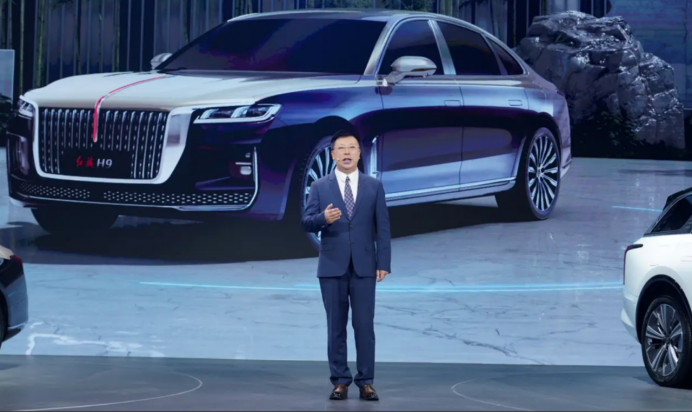
Under Wang Shengli's leadership (2022-2025), Hongqi entered a phase of "stable volume growth." Annual sales exceeded 400,000 units in 2024, marking seven consecutive years of positive growth, with new energy product sales reaching 115,000 units, a 43.7% year-on-year increase. However, challenges emerged: sales in the first half of 2026 were only 136,000 units, far short of the annual target of 550,000; dealer inventory depth ranked among the top three in the industry; and monthly sales of new energy models like the EH7 and Tiangong series, which represent the future direction of transformation, were in the tens to hundreds, while the main contributors remained fuel-powered vehicles like the H5 and HS5.
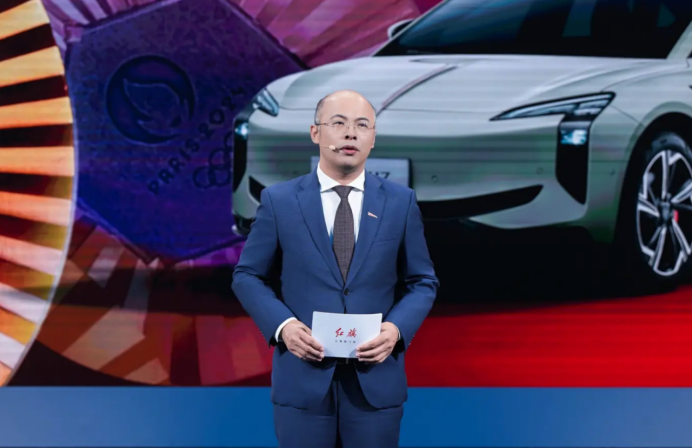
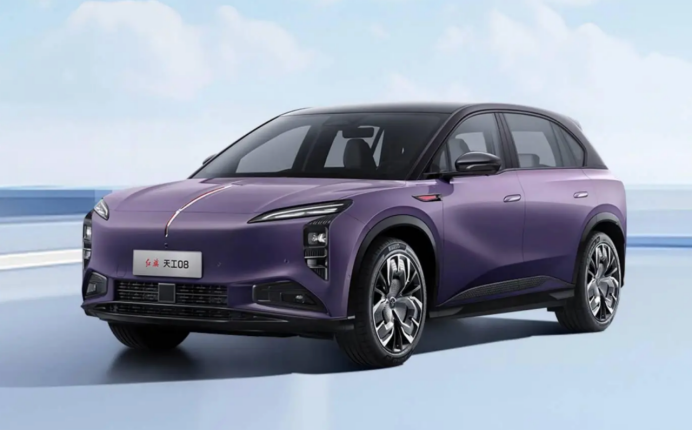
This is the reality Nie Qiang now faces. If Chen Xu achieved the breakthrough from 0 to 1 and Wang Shengli consolidated the foundation, then Nie Qiang's mission is to drive Hongqi's qualitative transformation from 1 to N—particularly in the new energy sector. In January 2023, Hongqi boldly announced its "All in New Energy" strategy, but its implementation has been criticized as "all thunder and little rain." With technical foundations like the Tiangong pure electric platform and Jiuzhang intelligent platform in place, and a plan to launch 30 new products, converting technical potential into market momentum has become the key challenge for Nie Qiang.
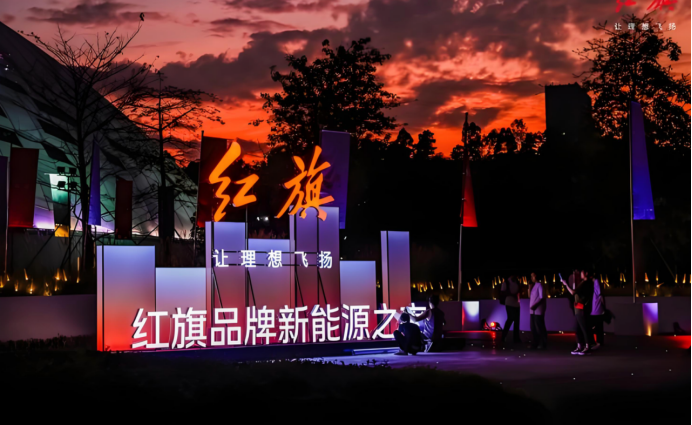
From a job fit perspective, Nie Qiang possesses unique advantages. He directly participated in the operations of Hongqi Sales Company from 2021 to 2022, gaining familiarity with Hongqi's distribution channels and brand characteristics. Later, he oversaw sales at FAW-Volkswagen and FAW Toyota, acquiring deep insights into the refined standards of joint-venture systems. This dual perspective—understanding both Hongqi and joint ventures—aligns precisely with the transformation logic Hongqi needs now: maintaining the speed and flexibility of an independent brand while introducing the system strength and efficiency of a joint-venture system.
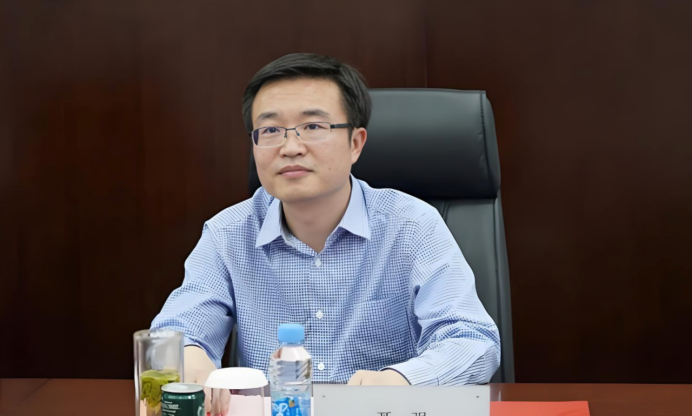
However, the challenges are equally formidable. The new energy market penetration has exceeded 50%, competitors are moving swiftly, and Hongqi's Tiangong series has yet to produce a blockbuster model. Meanwhile, Hongqi is advancing its brand expansion from a "national car" to a "people's car," testing the marketing system's refined operational capabilities in positioning and synergizing the three sub-brands: Jinkuihua, Hongqi, and Tiangong. Whether Nie Qiang's channel management experience accumulated in the joint-venture sector can take root in the soil of an independent brand remains to be seen over time.
The appointment after the 15-month gap in the Hongqi CEO position is essentially a strategic declaration: FAW Group hopes to leverage a "trusted insider" with cross-sector experience to coordinate the entire value chain of sales, after-sales services, distribution channels, and branding, supporting the brand's next phase of breakthrough with efficient decision-making on the marketing front.
Nie Qiang's "coming and going" marks a footnote in Hongqi's shift from "scale expansion" to "high-quality transformation." Chen Xu accomplished the brand's revival "from nothing to something," Wang Shengli maintained the scale "from something to big," and now Nie Qiang must answer the era's question of "from big to strong." This is not merely a personnel adjustment but a critical moment for a Chinese luxury brand with 1.66 million users to find its new direction amid the new energy wave. On this turbulent transitional journey, can the returning veteran steer the ship steadily? It all hinges on whether the Tiangong series can truly "open up a new path."
(Images sourced from the internet, removed if infringing)
-
![]()
Initiation of Control over Access for Intelligent Driving's 'Little Blue Lights'
-
![]()
Is the Intelligent Driving Blue Light, a Source of Pride for Lixiang and AITO Owners, Facing a Ban?
-
![]()
Embarrassing Meta: Promises Made, Money Invested, but No 'Fruits' Yet
-
![]()
BMW Announces Thousands of Job Cuts via 'Voluntary Exit Scheme'
-
![]()
Official Announcement: Intelligent Driving Blue Light Banned Due to Safety Concerns; Automakers React Swiftly | Mirror Pro
-
Each Truck Can Cut Fuel Costs by 200,000 Yuan Annually! Why Are New Energy Vehicles Scarce in the Booming Electric Heavy Truck Market Led by CNHTC, Sany, and Dongfeng?
-
![]()
Kingsoft Office Triples Performance Amidst Trust Controversy
-
![]()
The Leading Self-owned Brand Changes Hands in the First Half of the Year, with the Top Five Automakers Showing Diverse Trends