Chinese Automakers Sweep Across Europe but Are Trapped by 'Electricity Price Shackles'
 07/30 2026
 386
386
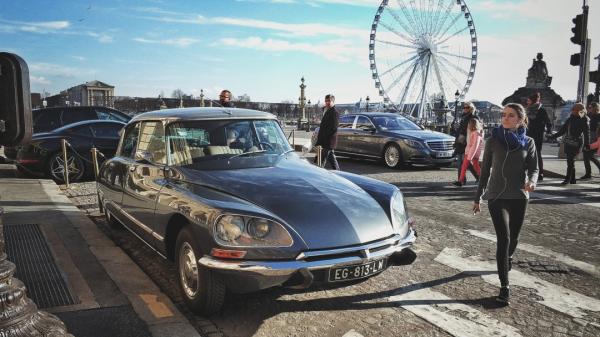
In Europe, the birthplace of modern automobiles and a technological hub for the automotive industry, Chinese automakers are engaging in a fierce competition.
Entering 2026, companies such as Geely, Chery, Leapmotor, and Xiaomi are collectively flooding into the European market. They are not only establishing research and development institutions and integrating technical resources in core cities across various countries but also accelerating the localization strategy process by building their own factories or forming joint ventures. Just a few days ago, Geely SPV, a wholly-owned subsidiary of Geely, signed an agreement with Ford NL (a wholly-owned subsidiary of Ford Motor Company) to acquire a 34% stake in Ford's Valencia plant in Spain for 221 million euros.
This factory, established in 1976, has an annual design capacity of 400,000 to 500,000 vehicles and is one of the largest and most technologically advanced vehicle manufacturing bases in Europe.
The dense layout, coupled with opportunities arising from the surge in oil prices due to geopolitical conflicts, has enabled Chinese automakers to make significant inroads in the European market. The latest statistical data from European automotive research institution Dataforce shows that in June, new car registrations in Europe increased by 13% year-on-year, with overall sales of plug-in hybrid models growing by 25%. Among them, overall new car sales of Chinese brands surged by 118% year-on-year, far outpacing the growth rates of local automakers such as Volkswagen and Renault.
In the vast overseas market, no place holds more strategic value than Europe. However, after years of hesitation over electrification, can Europe truly accommodate the growing number of Chinese automakers? In reality, at the consumer level, compromising with high oil prices does not mean they have shifted their focus to electric vehicles.
After all, electricity prices are also rising.
The Plight of Electricity Prices
Why have electric vehicles been unable to rapidly penetrate the European market for a long time? A key reason is that the cost of purchasing and using electric vehicles is higher than that of traditional fuel-powered vehicles. However, this year, influenced by the international situation, oil prices have soared, and oil prices in European countries have remained high, suddenly making electric vehicles more cost-effective in terms of usage compared to traditional fuel-powered vehicles. Therefore, we have seen a surge in sales of hybrid and pure electric vehicle models in the new car market, while fuel-powered vehicles have declined significantly.
However, does the change in oil and electricity prices mean that the electric vehicle market across Europe is truly experiencing a breakthrough? The answer is probably no for now.
On the one hand, for many consumers considering switching from fuel to electric, if oil prices remain at current high levels in the long term, they indicate they would switch to buying electric vehicles. However, future oil price fluctuations are unpredictable. Once oil prices fall, the advantage of electric vehicles disappears;
On the other hand, it still comes down to the question of whether electric vehicles are truly cost-effective. Although the current comparison between oil and electricity prices suggests that the cost of driving an electric vehicle is lower than that of a fuel-powered vehicle, the electricity prices vary greatly across different countries, regions, and even time periods in Europe. Coupled with the current rise in electricity prices, how much can be saved by driving an electric vehicle actually requires detailed calculations for each household, directly affecting their choices.
Currently, households without home charging stations may not save much money by purchasing electric vehicles, as the cost of charging at public charging stations is sometimes twice that of charging at home.
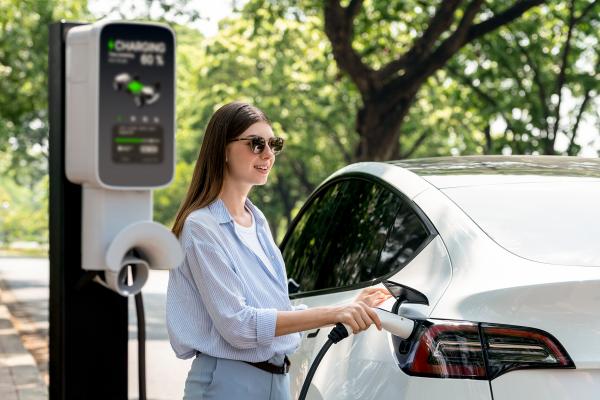
Taking Germany as an example, according to an assessment by energy supplier LichtBlick in early 2025, based on the Volkswagen ID.3 Pro S's energy consumption of 20 kWh per 100 kilometers, the average cost for 100 kilometers of travel when charging at a public regular charging station is 10.45 euros; whereas if public fast charging is chosen, the cost per 100 kilometers is 12.06 euros.
In comparison, a fuel-powered vehicle using Super E10, with a fuel consumption of 6 liters per 100 kilometers and a price of 1.701 euros per liter in early 2025, has a refueling cost of 10.21 euros per 100 kilometers. This year, oil prices in Europe have generally entered the 'two-euro era,' with a refueling cost of 12 euros per 100 kilometers at a price of 2 euros per liter, roughly the same as the cost of using fast charging.
It is worth mentioning that electricity prices fluctuate greatly on a daily basis in many European countries. In other words, if public fast charging is used during high-price periods, the cost will be even higher. During the evening peak electricity usage period in late June, the real-time electricity price in Belgium once surged to 1,038 euros per megawatt-hour (about 8 yuan per kilowatt-hour), while Germany reached 747 euros.
For ordinary households in Europe, electricity bills amounting to thousands of euros have always been a significant pressure, and adding an electric vehicle only increases this pressure. Of course, the cost of charging at home for vehicle owners is much lower, but households need to build their own charging stations and install photovoltaic equipment to control electricity costs, which itself requires a significant upfront investment.
A German vehicle owner stated that after the announcement of the details of the new national subsidy policy this year, he considered whether to purchase a 'second vehicle.' However, even with subsidies, he ultimately decided against buying an electric vehicle as his second vehicle and continued to use the two electric bicycles they already had for transportation.
Both he and his wife believed that purchasing an electric vehicle was purely a 'luxury consumption.'
Not Enough Electricity for Making Cars?
Since the beginning of this year, Chinese automakers in Europe have been accelerating their transition to 'localized production.' They are looking to take over existing European factories or collaborate with local European automakers to achieve localization at a lower cost and faster speed. For example, the Ford Valencia plant in Spain mentioned earlier is one of the largest vehicle manufacturing bases in Europe.
However, Chinese automakers may be entering the European automotive manufacturing scene at an inopportune time. Over the past few years, without access to cheap and stable Russian gas, Europe's era of low-cost industrial prosperity has ended, and this year, natural gas prices have surged again due to the conflict between the United States and Iran. Because the European electricity market generally adopts a marginal pricing mechanism, making electricity prices highly correlated with natural gas prices, high natural gas prices have directly driven up electricity prices in Europe.
The impact is naturally not limited to ordinary citizens but also affects industrial development.
Taking the United Kingdom as an example, British companies face the highest electricity costs among developed countries. According to the UK Energy Association, the current electricity costs for British companies are 70% higher than before the Russia-Ukraine conflict, and natural gas prices are 60% higher. A survey by the Confederation of British Industry also found that nearly 90% of companies have experienced an increase in energy bills over the past five years, with 40% of companies reducing investment as a result. For example, Nissan manufactures complete vehicles for Chery at its Sunderland plant in the UK in the future.
German manufacturing is also experiencing significant energy price increases, and the sluggishness of its automotive industry in recent years can be said to be closely related to this. More pessimistically, this energy crisis may persist. Last month, Bloomberg, citing data from the European Power Exchange (EPEX Spot), stated that the average electricity prices in Germany and the UK this month are expected to reach their highest levels for the same period since the 2022 energy crisis.
In recent years, European countries have been desperately developing wind and photovoltaic power, hoping to fill the gap left by natural gas with new energy sources. However, the reality is harsh. New energy sources are inherently unstable and cannot support heavy industrial production. Therefore, Europe's high-cost dilemma has no short-term solution.
Moreover, an unfavorable change is emerging: more and more AI data centers may compete for electricity with traditional automotive manufacturing.
The ultimate form of AI is computing power, and the ultimate form of computing power is electricity. Last year, the European Commission launched the 'AI Continental Action Plan.' Within this framework, the European Commission set a goal to triple the data center capacity of the European Union within five to seven years. However, existing data centers in Europe have already placed enormous pressure on local power grids. According to Savills, the electricity consumption of data centers accounts for a significant proportion in various European countries, with the highest proportion reaching 18% and the lowest at 1%.
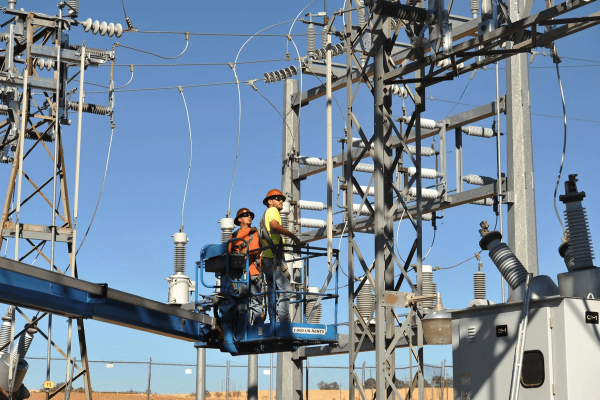
The construction of a data center means adding a vast and concentrated source of electricity demand. Against the backdrop of European traditional manufacturing already deeply affected by the energy crisis, this undoubtedly adds to their anxiety.
Conservatism Outweighs Change
In 2023, Europe passed the 'Zero-Emission Agreement for New Fuel-Powered Passenger Cars and Vans Sold in Europe by 2035' (referred to as the 'Ban on Fuel-Powered Vehicles Bill'), which was once seen as the world's most determined car decarbonization roadmap, set to significantly advance Europe's electrification process. However, at the end of last year, things took a turn, and the European Commission significantly relaxed the constraints on the original policy of a complete ban on the sale of new fuel-powered vehicles by 2035.
From this incident, we can intuitively see that the European Union's attitude has always wavered between supporters and opponents, and this upper-level controversy is also reflected in the attitudes of ordinary consumers.
In the European market, the attitude of most people towards switching from fuel to electric has remained lukewarm. A survey conducted by the polling agency Civey among approximately 5,000 Germans showed that 68% of respondents believed that the European Union's decision to allow the continued sale of new fuel-powered vehicles after 2035 was 'correct or relatively correct.' This attitude has remained largely unchanged over the past two years. An earlier survey also showed that 73% of fuel-powered vehicle owners hoped to continue using fuel-powered vehicles for as long as possible.
This is not only because the usage cost of electric vehicles was higher than that of fuel-powered vehicles at the time but also because many European consumers are inherently skeptical of electric vehicles and electrification. This skepticism partly stems from concerns that automotive electrification may lead to the loss of a large number of jobs and partly from a lack of full agreement with the claim that 'electric vehicles are more environmentally friendly than internal combustion engines.'
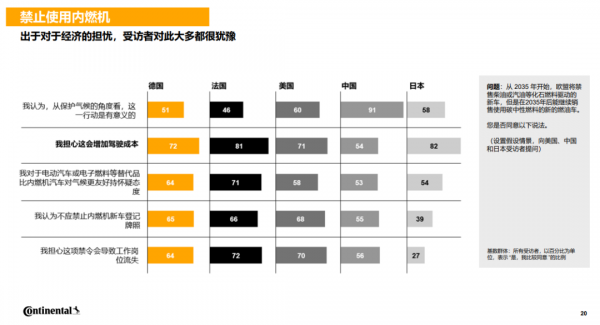
According to the '2024 Future Mobility Trends Survey Report,' more than half of German and French users are skeptical of the view that 'electric vehicles are more environmentally friendly than internal combustion engines,' while the proportions are significantly lower in the United States, China, and Japan. Additionally, regarding the view that 'this action is meaningful from the perspective of climate protection,' 91% of users in China expressed agreement, whereas in Germany, only 51% agreed, and in France, an even lower 46%.
As early as 2023, Rowan Atkinson, a British national treasure comedian and the performer of Mr. Bean, published an editorial in The Guardian, publicly questioning electric vehicles and stating that they are not actually environmentally friendly.
Nowadays, although changes in oil prices have pushed many European consumers towards electric vehicles, the market development of 'a surge in plug-in hybrids and a slowdown in pure electrics' indicates that their conservative attitude towards electric vehicles remains evident, which is starkly different from the Chinese market dominated by pure electric vehicles.
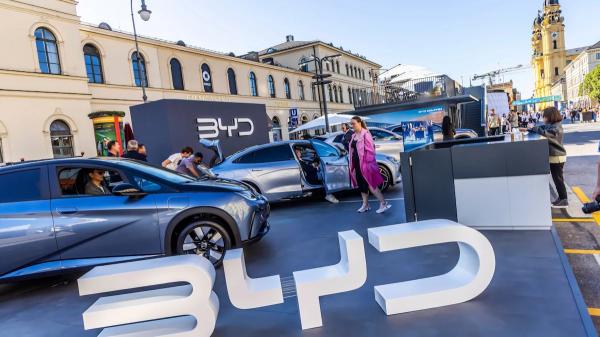
Data from the industry data service provider Dataforce, cited by Handelsblatt, shows that in the first five months of this year, BYD's plug-in hybrid vehicle registrations in the European Union surged by 260%, while its pure electric vehicle growth was only 78%. Chery's plug-in hybrid vehicle deliveries even skyrocketed by 668%, reaching over 28,000 units, while in the same period, the automaker only delivered 2,247 pure electric vehicles.
Additionally, according to data from the European Automobile Manufacturers Association, from January to November 2025, pure electric vehicles accounted for only 16.9% of newly registered passenger vehicles in the European Union, significantly lower than the growth path envisioned in previous policy assumptions.
European vehicle owners are much more accepting of hybrid models than pure electric models, which seems to be a compromise choice they have made due to high oil prices rather than a true recognition of electric vehicles. If we delve deeper into the reasons, besides concerns about the range, charging costs, and convenience of electric vehicles, the more important factor is probably their emotional attachment and strong nostalgia for fuel-powered vehicles that they still find hard to part with.
This also means that to conquer this market, we still need more time and opportunities.
-
![]()
Hongqi CEO 'Gap' Filled: Marketing Veteran Nie Qiang Steps Up to the Plate
-
![]()
Has Chongqing Outstripped Guangzhou Once Again? The Top Ten City Rankings Take an Unexpected Turn!
-
![]()
Blasting into the Global Top 100! Tencent's 'AI Powerhouse' Unleashed
-
![]()
Half-Year Profit Plummets by 30%! Volkswagen Group's 5-Hour Supervisory Board Showdown Rejects Plant Closures and 100,000 Job Cuts
-
![]()
Memory Prices Soar 300%, Disrupting the Smartphone Market! SoC Shipments Plummet 15% in the First Half of 2026
-
![]()
From Dominance to Decline: The Gradual Fading of Black Shark Phones and the Predicament of Devoted Fans
-
![]()
Honor's 'Alpha' Ambitions and the 'Phone Case' Quandary: Securing Legal Victory, Yet Risking Public Favor
-
![]()
Chinese Automakers Sweep Across Europe but Are Trapped by 'Electricity Price Shackles'