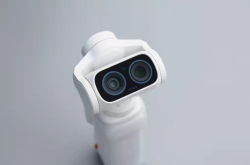
From Luna Ultra to See Insta360's Gimbal Strategy: Profit or Growth?
 07/31 2026
 544
544
Produced by | Company Research Lab
Author | Li Jian
On July 22, Insta360 announced a bond issuance plan of no more than 2 billion yuan, with the proceeds to be used for R & D investment, supplementing working capital, early debt repayment, etc.
If goods sell well but profits are hard to come by, external bond issuance becomes necessary, which is a significant dilemma for hardware makers.
This situation is reflected in Insta360. This summer, the Luna Ultra was launched at a price of 3,999 yuan, leading many to sigh with emotion (this Chinese word means people express their feelings and thoughts, so here use the original word to retain the meaning) that Insta360 could finally enter the gimbal market with this new product.
But upon closer inspection, is this really the case?
The hardware sector is an industry that places great emphasis on the return on investment (ROI) of products throughout their entire lifecycle. This return can be measured in terms of sales volume and market share, but in the eyes of the capital market, the investment return rate may be even more crucial.
Can this single product generate substantial profits? When intense competition in the sector arises, should the founder continue to gamble the company's profits on the future of gimbal cameras?
High volume with low margins?
It's a calculation that needs to be made clearly.
In theory, people often assume that selling more naturally leads to higher profits, but this is not necessarily the case. Taking the automotive industry as an example, in the first half of this year, the average profit margin for domestic automakers was only 3%, corresponding to production and sales volumes in the tens of millions.
The same principle applies to the Luna Ultra. Although Insta360's new camera may seem expensive, after deducting various fixed costs, the profit margin left for the company may not be as optimistic as imagined.
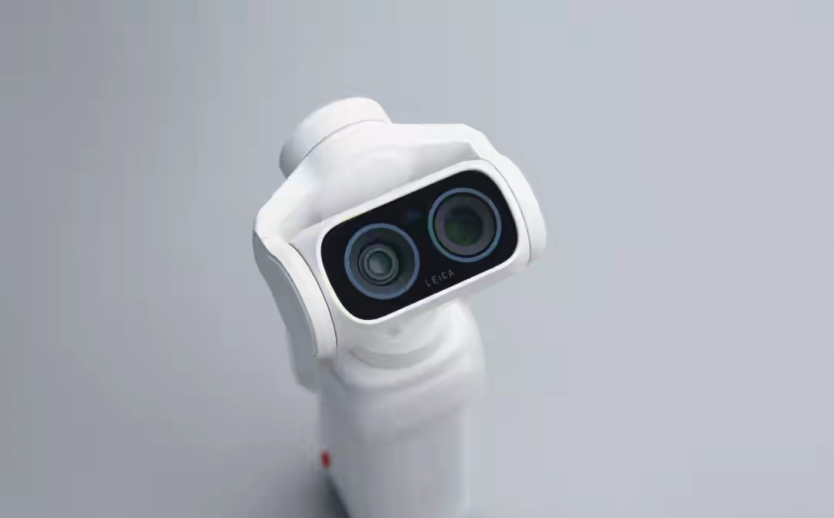
In terms of market performance, Insta360's latest move was the release of the handheld gimbal camera, Luna Ultra, in June. The initial sales performance of the Luna Ultra was indeed impressive: it sold out within five minutes of launch.
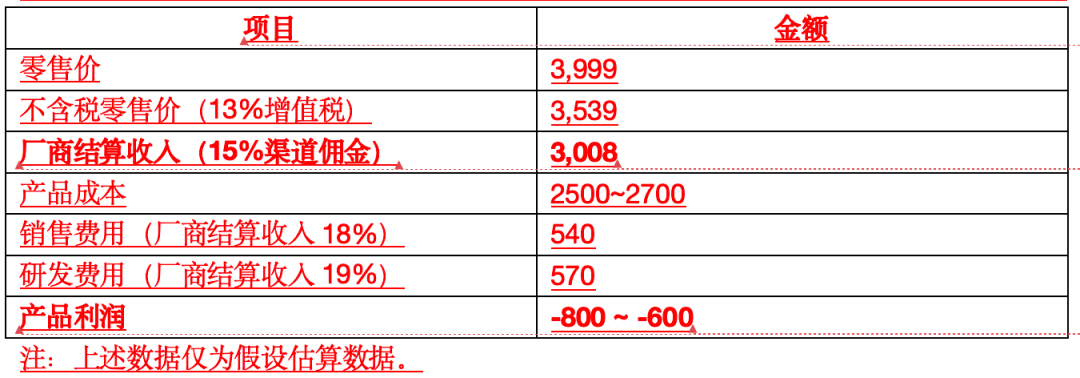
However, sales volume ultimately needs to translate into profits to complete the business cycle. If we consider the standard version priced at 3,999 yuan on the official online store, deduct the 13% domestic value-added tax first, and then account for the 15% combined channel commission for offline and online distributors, the final factory settlement price that Insta360 receives is approximately 3,000 yuan.
Of course, some may raise doubts about whether using domestic pricing to calculate is reasonable, given that nearly 70% of Insta360's revenue comes from overseas. In fact, contrary to popular belief, gimbal cameras have only achieved widespread popularity in China at this stage. According to a Jiuqian report, based on global e-commerce data for gimbal cameras, the domestic market now accounts for 90% of the total.
At the same time, one thing is certain: its fixed costs. Citing a report from Jiege Technology Eye, it is speculated that the combined hardware material costs for this split-screen dual-camera alone are estimated to be around 2,500-2,700 yuan per unit.
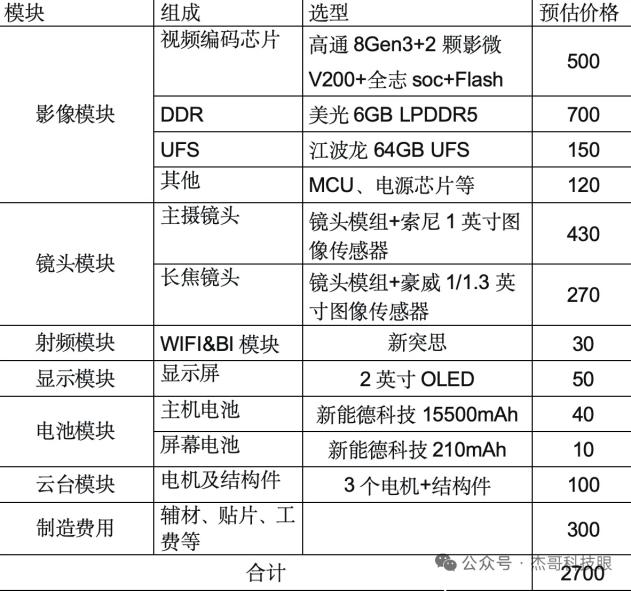
Assuming that the Luna Ultra has high costs, achieving substantial profits is not so straightforward. With a factory settlement price of 3,000 yuan and a comprehensive cost per unit of 2,500-2,700 yuan, the gross profit margin per unit is only 10%-15%, far lower than that of Insta360's existing products.
Meanwhile, according to the annual report, the company's handheld portable Vlog project is expected to invest 300 million yuan in R & D. Based on Insta360's first-quarter financial report for 2026, the company's overall sales expenses are 18% and R & D expenses are 19%. Assuming that the Luna Ultra also has sales and R & D expense ratios at this level, the product's net profit may turn negative, meaning that for every unit sold, the company could incur a loss.
Moreover, Insta360 is currently in a low-profit cycle. According to public financial reports, from the second to the fourth quarter of 2025, Insta360's revenue increased from 2.316 billion yuan to 3.130 billion yuan, but its net profit attributable to the parent company declined from 343 million yuan to 137 million yuan. In the first quarter of 2026, revenue fell back to 2.481 billion yuan, and net profit attributable to the parent company was only 85 million yuan.
Therefore, the Luna Ultra is unlikely to significantly change the company's profit landscape in the short term, and its own profit level is probably not going to be very high. As the saying goes, "Success comes to those who plan," and for a new product to establish itself in the long run, the first thing that must be calculated is the profit and loss. Once the cost of a single product is accounted for, the greater market challenges are just beginning to confront this high-end camera.
Market Growth Slows Down
Single Products Can No Longer Offset Costs Through Scale
For Insta360's Luna Ultra, simply calculating the profit and loss of a single unit is far from sufficient. The growth momentum of the entire gimbal camera sector has long since faded, and expecting to dilute costs by relying on massive sales of a single high-end model is not as easy as imagined.
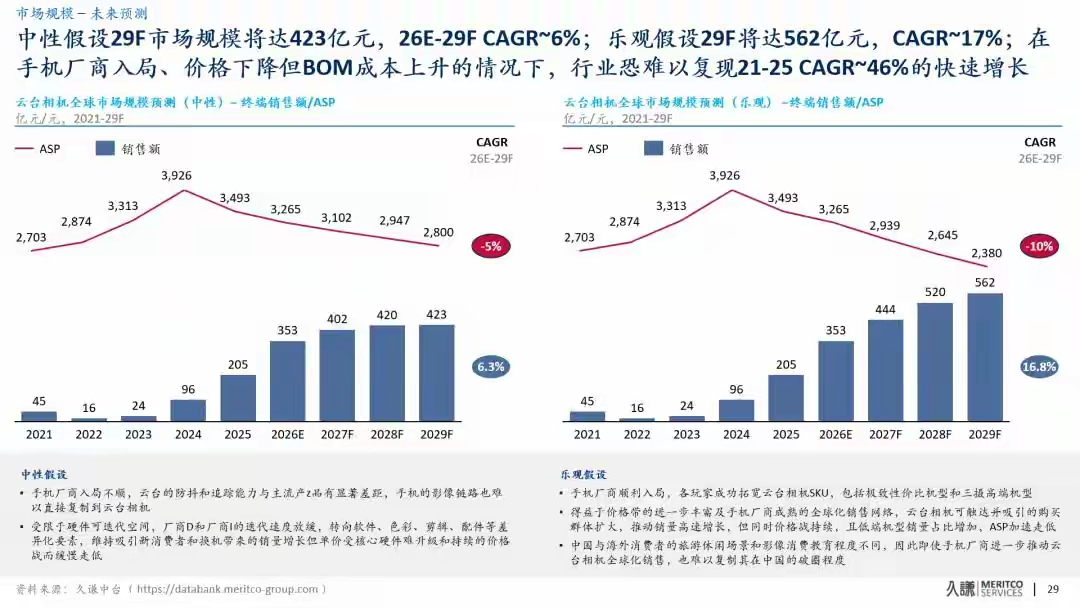
Jiuqian predicts that by 2029, the growth rate of gimbal cameras will significantly decline, dropping to 16.8% in an optimistic scenario and only 6.3% in a neutral scenario. The incremental dividends are gradually turning into a battleground for inventory (this Chinese word means the existing amount, so here use the original word to retain the meaning) competition.
Looking at the Luna Ultra's price of 3,999 yuan, it firmly positions itself in the high-end segment, naturally excluding budget-conscious entry-level creators. Even if the initial sales were popular (this Chinese word means a product or an event is extremely popular and sells very well, so here use the original word to retain the meaning), there may still be a ceiling on overall sales volume in the long run.
The entry of competitors is also a phenomenon worthy of vigilance. Previously, it was reported that Vivo had early on decided to launch a dedicated Vlog camera, and OPPO's gimbal project, codenamed Fuyao, had officially commenced. In the second half of the year, multiple self-developed models from smartphone manufacturers are expected to debut. With their massive user bases and mature imaging algorithms, smartphone makers have a natural advantage in price wars, instantly doubling the level of competition within the gimbal camera sector.
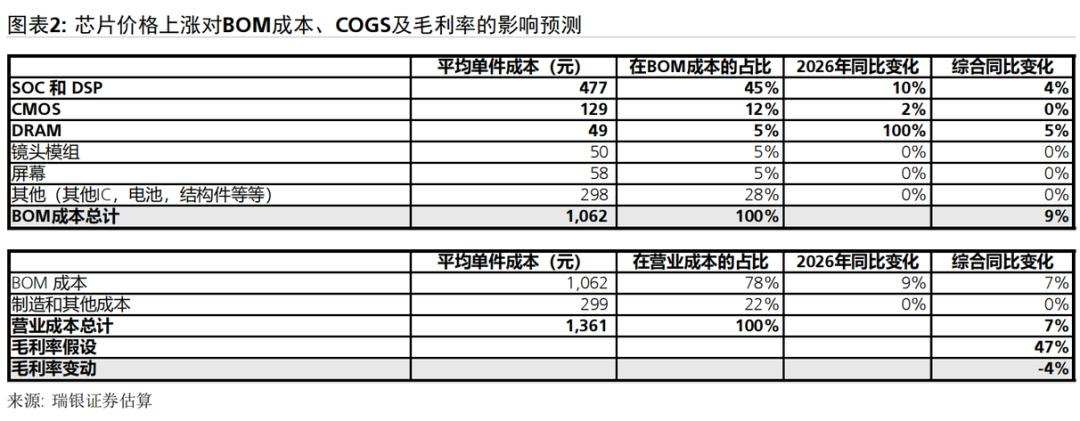
Externally, on the other hand, the supply chain prices of Qualcomm's storage chips and image sensors continue to rise, with a high likelihood of further increases in the cost of core components. According to UBS estimates, affected by chip price hikes, Insta360's bill of materials (BOM) cost is expected to increase by 9% year-on-year in 2026, dragging down the gross profit margin by about 4 percentage points.
Insta360 now faces the dual challenges of price competition from peers and upstream cost pressures. Therefore, relying solely on a single hit product is unlikely to sustain long-term cost pressures. The market environment is rapidly changing. Of course, ultimately, all these challenges will be placed in the hands of Insta360's leader, Liu Jingkang, who must make difficult choices.
Liu Jingkang Needs to Double Down on R & D and Technology
A review of Insta360's financial reports in recent years reveals that Liu Jingkang seems to have consistently been willing to sacrifice current profits for long-term technological advancement. However, with the increasing pressure in the gimbal camera sector, this gamble of trading profits for technological progress has become more daunting than ever.
In the first quarter of 2026, Insta360's quarterly R & D investment once again exceeded 400 million yuan, marking a year-on-year increase of over 100%, as the company continues to reinvest its earnings into new technologies and markets.
Insta360 has never shied away from this strategy, willing to proactively compress short-term profitability to build a technological moat for the company in the coming years. The early success of its panoramic cameras was achieved through technological investments made years in advance, without immediate returns.
Now, on this new front of gimbal cameras, the Luna Ultra has already consumed a certain amount of R & D funds in its early stages. Moving forward, continuous iteration of new models, improvement of AI shooting algorithms, and the establishment of a creator ecosystem will all require ongoing investment.
Liu Jingkang faces two paths: either reduce the gimbal R & D budget to protect current, visible profits and maintain the status quo of its existing action camera business; or continue to divert profits from existing businesses to double down on the gimbal sector, competing fiercely with DJI and various smartphone manufacturers, betting that gimbal cameras will become Insta360's second pillar of growth.
From the signs, it seems unlikely that Insta360 will reduce its overall R & D investment. However, the current industry landscape is vastly different from before, with the number of competitors multiplying and cost pressures remaining high. Continuing to invest heavily in new sectors means that the profits from existing mature businesses will be continuously diluted, putting short-term financial performance under sustained pressure. If investment is reduced midway, the advantages of the Luna Ultra, which have been hard-won, will quickly be overtaken by competitors, rendering much of the earlier billions of yuan in R & D investment largely wasted.
In the past, Insta360 achieved success by relying on scale-driven revenue and technological investment to secure its future. Now, with the chaotic landscape of the gimbal sector, whether to continue this strategy will not only determine the fate of a single camera but also influence the company's position in the industry for years to come.
Liu Jingkang is accustomed to betting short-term profits on long-term layout (this Chinese word means overall planning or strategic arrangement, so here use the original word to retain the meaning). This time, the stakes in the gimbal battlefield are higher, and the variables are greater, but no one can be certain of the final outcome. For Insta360, relentlessly focusing on product development and creating products with disruptive innovation may be the best way to spread costs and increase market share, but this will require time to Verification (this Chinese word means to confirm the truth, validity, or effectiveness of something through examination, observation, or testing, so here use the original word to retain the meaning).
-
![]()
Mobile Phone Manufacturers Bet on AI: A New Game of 'Who Controls the Users'
-
![]()
US Space Force Shells Out $1.6 Billion: SpaceX Clinches 18 Falcon 9 Launch Contracts Once Again
-
![]()
Five to six hundred new car models flood into a shrinking market every half year, leaving many automakers crying out amidst fierce internal competition.
-
![]()
German Media: Will Volkswagen Be Taken Over by Chinese Automakers?
-
![]()
"High Installation Costs" and "Rising Mobile Phone Prices": Do Huaqiangbei's Counters Hold the Answers?
-
![]()
From Luna Ultra to See Insta360's Gimbal Strategy: Profit or Growth?
-
![]()
GPT-5.6 Announces Price Reductions! Save Up to 80%!
-
![]()
Memory Price Surge Fuels Apple’s 27% Profit Jump, With Chinese Consumers Propelling 22% Revenue Growth