German Media: Will Volkswagen Be Taken Over by Chinese Automakers?
 07/31 2026
 333
333
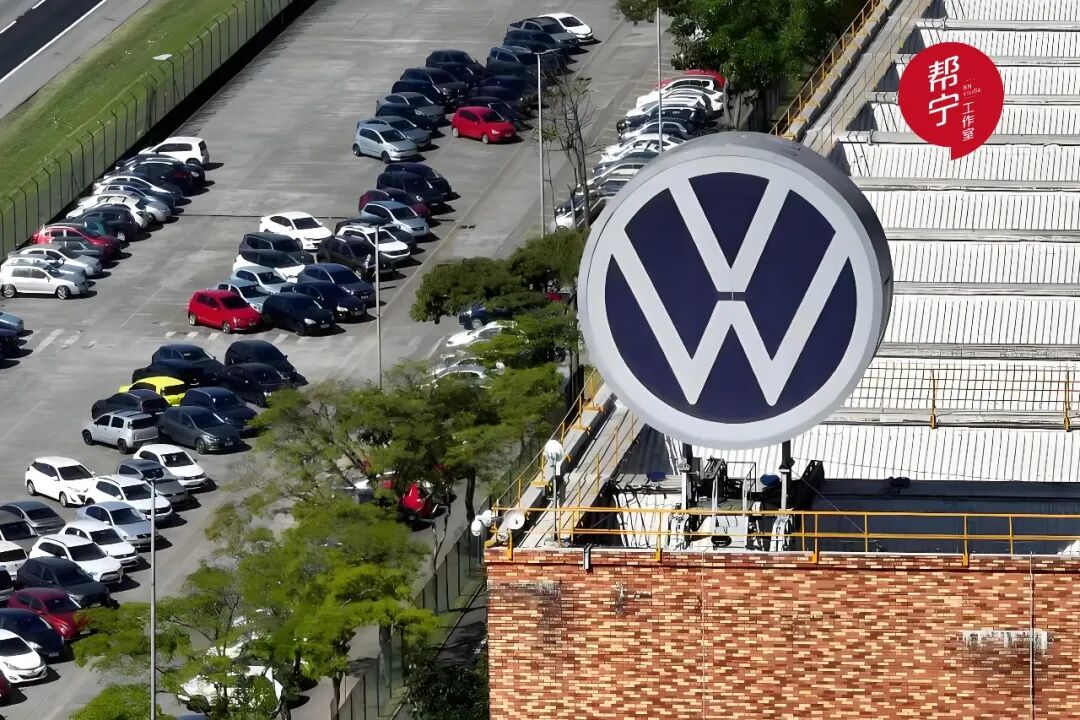
"The only way out is to cooperate with Chinese companies"
Compiled by | Yang Yuke
Edited by | Li Guozheng
Produced by | Bangning Studio (gbngzs)
Could Volkswagen Group become the "Nokia" of the automotive industry?
It is planning the largest layoffs in its history, with thousands of jobs and several German factories at risk. The company is being hit by weak demand, high costs, U.S. tariffs, and fierce competition from Chinese electric vehicle manufacturers.
The second-quarter financial report adds a complex picture for the future. On July 24, the group lowered its full-year revenue forecast: second-quarter profit fell by 32.9%, operating profit declined by 9.5% year-on-year, and the operating profit margin dropped to 4.2%.
For decades, Volkswagen Group has been a shining example of precision engineering and stable German employment. Now, that honor is crumbling.
Worse still, behind its crisis lies a bigger issue—the German automotive industry is facing cheaper and faster competitors from China, eating into markets where it once dominated.
What happens next could determine the future of the German automotive industry.
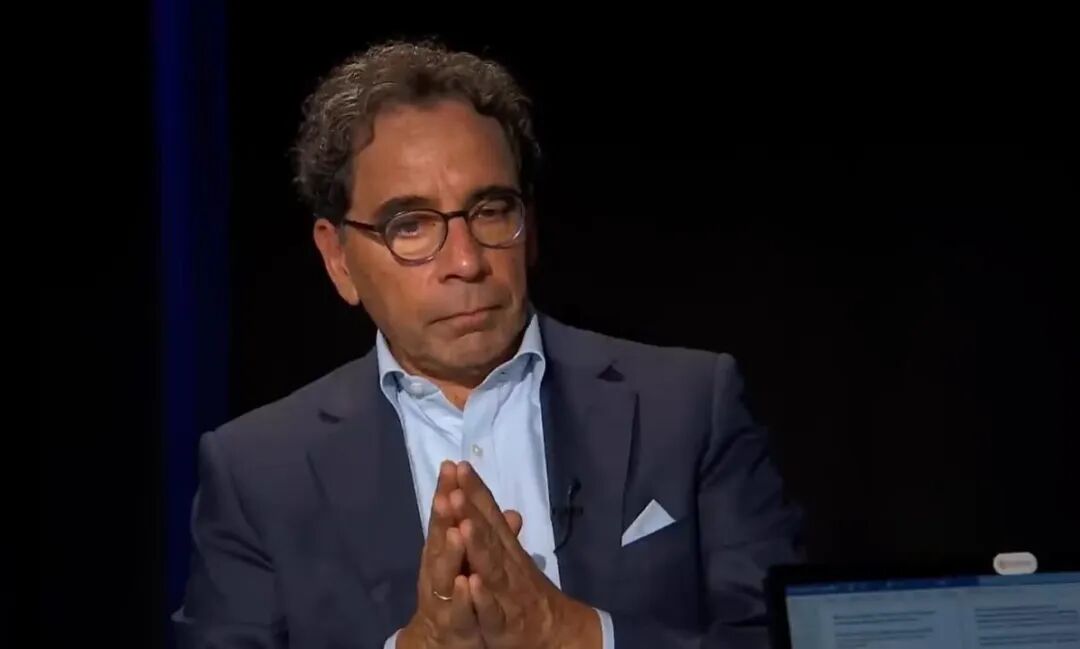
Recently, Daneil, the host of the podcast "the Dip" under Deutsche Welle (DW), invited Dr. Manuel Vermeer, a German Sinologist, to discuss Volkswagen Group's crisis, the predicament (dilemma) of the German automotive industry, and the only way out—cooperation with China.
Dr. Vermeer is German and specializes in comparative economics between Europe, China, and India, as well as cross-cultural management. He came to China in 1982 to study Chinese, served as an interpreter for Sino-German leadership meetings from 1985-1986, taught East Asian marketing and Chinese at German universities starting in 1988, and founded the consulting firm "Dr. Vermeer Consult" in 2013.
The following is an edited excerpt from the interview by Bangning Studio.
Daniel:
Professor Vermeer, thank you very much for taking the time to meet with us today.
Volkswagen Group says it will voluntarily reduce profits to drive greater sustainability. For what was once the world's largest automaker, this is a huge mindset shift. Volkswagen is not the only company doing this. More than a dozen German manufacturers, including BASF, Bosch, and Continental, have closed one or more factories in the past four years.
So, is this really just a Volkswagen story, or is Volkswagen just a microcosm of a longer German industrial decline?
Vermeer: Yes, the tone has changed dramatically. Over the past 30 or 40 years, I have been dealing with China and other East Asian countries. I saw a lot of arrogance—Germany was definitely superior, believing that China could never build cars on its own. Ten years ago, they even mocked Tesla and dumped their Tesla shares.
Now things have changed. They are either afraid or still arrogantly say this shouldn't be happening. Or that we need help from the German government. But in reality, they are denying their own responsibility. I think many German companies are actually afraid of what China is doing.
But they still haven't found their way out. They should have done this 10 or even 20 years ago.
Daniel:
Stefan Bratzel (German automotive industry expert, Director of the Center of Automotive Management) once said that unless Volkswagen establishes a completely new structure now, we will truly be discussing Volkswagen's liquidation in 2 to 3 years. Is this an existential crisis for Volkswagen?
Vermeer: Yes. I'm not sure if it's 2 years, 3 years, or 5 years. Also, another colleague predicted that maybe BYD will take over Volkswagen in a few years. I think that's a very realistic scenario. They now want to take measures against more than 100,000 people—they are laying off staff.
This could be a matter of life and death; otherwise, it's a dead end.
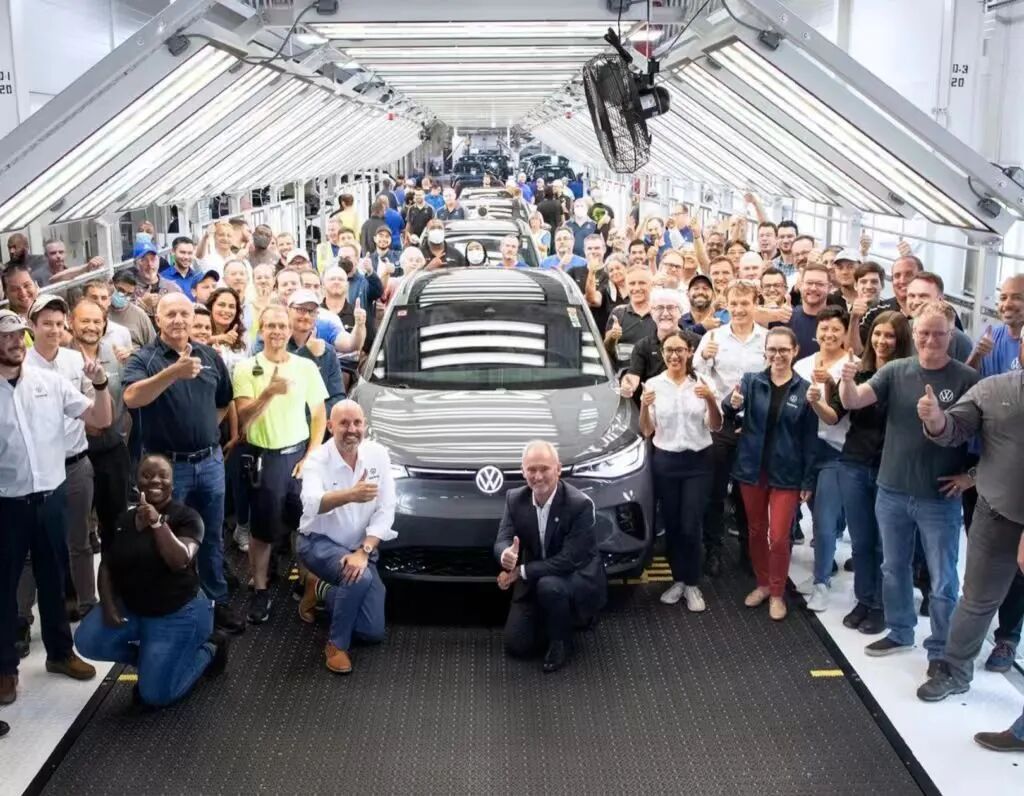
Daniel: You mentioned that German companies were arrogant toward Asia, China, and India in the past. Was Volkswagen too arrogant?
Vermeer:
Absolutely. Twenty years ago, no one in Germany was talking about electric vehicles. China already had a five-year plan.
They just mocked China, saying, "No one can build cars like us yet." That's arrogance.
This wasn't just 20 years ago—it was still the case 15 and 10 years ago. Yes, Volkswagen's management made many mistakes, and now employees are suffering and being laid off.
Daniel: So why are German companies so complacent? They've always been that way in the past.
Vermeer:
Because we invented the car, so of course we're the best—that was the mindset. No one could build cars like BMW. Then the Japanese came, the Koreans came, but those were small, cheap, comfortable cars—they couldn't match the quality of Audi or Porsche.
Germans didn't believe the Chinese could do it. When we went to China in the 1980s, we had to have joint ventures. The Chinese were observing, learning. We taught them how to build a good car. Now they're surpassing the teacher—that's obvious.
Until now, that arrogance that "our cars are the best in terms of manufacturing and quality" still exists. Especially many German managers still don't understand that Chinese quality is now excellent, and they have different priorities in building cars. It's not about putting an iPad into a car while building it—it's about directly building an iPad with four wheels. That's another way to approach the market.
Daniel: This seems like a completely different mindset, one that Germany took a long time to catch up with, or maybe still hasn't. But looking the other way, how do countries like China and India view German cars?
Vermeer:
In fact, our image is still good in China. If we talk about car manufacturing, especially from China, most young people would say, "I think these are good cars, but my parents are from a different generation—we want smart cars, and that's BYD or Geely."
Daniel: You've talked a lot about German companies wanting to enter the Chinese and Indian markets. What about the reverse? Does Volkswagen Group's weak position in the automotive industry create an opportunity for Asian companies to enter Germany and Europe?
Vermeer:
Definitely. We can see BYD building factories in Europe, in Hungary. We see battery companies like CATL even coming to Germany—now they're considering taking over our factories. An European spokesperson said, "We might close four factories; the Chinese will say, 'Okay, I'll buy them.'"
Why not? In the future, they might even buy the whole company. So this is a huge opportunity. Chinese companies coming here, producing in Europe—of course, to avoid tariffs too. I think this is also an opportunity for us to let the "catfish" in.
So this is not just a risk but also an opportunity for cooperation: for some companies, cooperating with Chinese companies might even be the only way to survive.
Daniel: We've talked a lot about Germany's difficulties. High costs are due to high energy prices, bureaucracy, and inflexible labor laws. What can a company like Volkswagen Group do proactively to prevent the current crisis?
Or is it ultimately just a structural issue in the German economy? Even if Volkswagen were better positioned in the market, would it inevitably face these problems?
Vermeer:
I don't think so. It's too easy to blame German policies and then withdraw. That's not how to solve the problem.
Again, going back 20 or 30 years, we should have looked at what was happening in Asia, what was happening in Japan and South Korea. Now, China has arrived.
So they (German automakers) should have adapted earlier, should have focused on electric vehicles 20 years ago, not just 10 or 5 years ago. Just pushing the problem onto the German government is too easy. I think a company is like a person with management skills—they should anticipate.
This is their own fault; I don't think the German government is the problem.
Daniel: But the EU has long complained that there isn't a level playing field in competition with China due to massive Chinese subsidies. Moreover, if you want to emulate the Chinese model, you can't do it in Germany—there's too much regulation, green targets, and China is much more flexible in that regard.
Chinese labor laws are looser than Germany's. You can't imitate China's approach while maintaining the German lifestyle, environmental laws, and all other standards that Germans expect. How do you view this dilemma?
Vermeer:
Yes, I think you're right. We can't maintain our ethics, lifestyle, and other aspects of the Chinese model. It won't work.
If we're unwilling to lower our living standards or adapt more quickly, we'll face a huge problem in the coming years.
Yes, the EU has many issues: too much regulation, too much bureaucracy—we can't change that. But as a company, we can change some things and must adapt faster, maybe unlearn some of our habits.
Daniel: So Germans must accept that things will get worse before they get better?
Vermeer:
Yes. German companies and some managers still don't truly understand how bad the situation is and how much worse it will get in the coming years. Things will get worse before we truly understand that we must change.
Daniel: Especially in Germany. So what's the current situation for German companies? They're increasingly moving abroad to cut costs, right? Because producing in Germany is too expensive.
Vermeer:
Yes. We're seeing cooperation with China. For example, 40 years ago, we had to go to China to build cars. Volkswagen Group took the lead and had a production base in China.
But now, we need Chinese software, artificial intelligence, and batteries—Volkswagen Group is producing in China and providing things like image and dealer networks.
So joint ventures have changed. In the past, we had the technology, they had the market—now maybe we have the market, but they have the software, AI, and we depend on them for data security and batteries. Things are changing. Now there's a new way of joint ventures.
We must accept this—that German companies can now learn from China, must learn from China, and we must cooperate with China. In the next two years, India will be the same.
I think we must enter a race. In many ways, we will definitely lose—we should cooperate with China. Actually, we should cooperate with Asian countries, not just China—we can also learn from Vietnam, Indonesia, India.
Then we can become strong in the future. But if we try to enter a race independently, I think it's too late. Let's find areas where we can cooperate. The Chinese need us too. Without Europe, without this market, China will face huge problems.
So they want to sell to us. They can't sell to the U.S., nor to Africa—they need us. This is a good point for negotiation and cooperation, not just de-risking and decoupling. I think this will be the path to a good future.
But Europe needs to unite—like France, Germany, Italy, the UK—and then speak with one voice to China, saying we can grow together. Not just saying China is a risk, so we must protect our market in some way. That won't work because Chinese cars are already here. In Europe, tariffs don't matter. So cooperation is the way forward.
Daniel: What do you think will happen? Where is Germany headed? Where will Volkswagen be in five years from now? Where will the German automotive industry go?
Vermeer:
The trend has been clear for the past few years—I think about 5 or 8 years—European exports will cease to exist. Maybe a Chinese automaker like BYD will take over. We will lose millions of jobs, not just 100,000, but millions.
I think the outlook for Germany is not bright in the next 2, 3, 4, or 5 years—things will get worse in the coming years.
In the long run, I do see the possibility that not just Germany but other European countries could at least be on the same level, especially given the context of the U.S. decoupling from Europe.
So why not seize this opportunity and cooperate with Asian countries, with China? The word "crisis" implies risk but also opportunity. Why not see this as an opportunity for Europe—that we have the possibility to cooperate more closely with Asian countries and reduce cooperation with the U.S.?
Daniel: Finally, some would say that China has hurt us so far—that's a short-sighted view. I know that's not quite what you're saying, but I think it's what people fear. What would you say to them?
Vermeer:
Usually, I fear what I don't understand. People don't understand China—they just see some Chinese people and 1.4 billion people. Yes, they might cause us to lose a lot of jobs, but just saying that's terrible now doesn't make sense.
So what should we do? Let's look at where the strategy is, what we can do. If we decouple from China and can't cooperate with the U.S., I think Europe has no chance—Europe loses. We don't like how the Chinese do things, but we must cooperate with them too.
I can't think of another way. And India, the next huge market—we all see many opportunities there. I think in the current crisis, we should have a global perspective.
For Europe, this represents a significant opportunity to explore new markets in the East, especially as the United States in the West no longer seems reliable. So, in the long run, I see many possibilities.
Daniel:
Thank you very much, Dr. Willmer. Speaking of Volkswagen, in addition to layoffs, Volkswagen is also seeking buyers for its excess production capacity. It has engaged in negotiations with XPENG Motors regarding the acquisition of one of Volkswagen's factories in Europe. XPENG Motors' European exports are continuously rising, and its contract production line in Austria has now reached its end.
Audi, which is part of the Volkswagen Group, is currently establishing a new Chinese brand. It plans to launch four more models and establish a new technology center in Shanghai. Meanwhile, Volkswagen's software division is collaborating with China's Horizon Robotics to develop autonomous driving systems and artificial intelligence chips for the Chinese market.
It can be said that German industry is being reorganized around Chinese technology on China's terms. Now, more and more German factories are adapting to or succumbing to the current inevitable situation.
(Part of this article is based on reports from DW, and some images are sourced from the internet.)
-
![]()
Mobile Phone Manufacturers Bet on AI: A New Game of 'Who Controls the Users'
-
![]()
US Space Force Shells Out $1.6 Billion: SpaceX Clinches 18 Falcon 9 Launch Contracts Once Again
-
![]()
Five to six hundred new car models flood into a shrinking market every half year, leaving many automakers crying out amidst fierce internal competition.
-
![]()
German Media: Will Volkswagen Be Taken Over by Chinese Automakers?
-
![]()
"High Installation Costs" and "Rising Mobile Phone Prices": Do Huaqiangbei's Counters Hold the Answers?
-
![]()
From Luna Ultra to See Insta360's Gimbal Strategy: Profit or Growth?
-
![]()
GPT-5.6 Announces Price Reductions! Save Up to 80%!
-
![]()
Memory Price Surge Fuels Apple’s 27% Profit Jump, With Chinese Consumers Propelling 22% Revenue Growth