Mobile Phone Manufacturers Bet on AI: A New Game of 'Who Controls the Users'
 07/31 2026
 346
346
Layout | Xiaoxi
The AI large model may truly bring a growth turning point to the mobile phone industry.
In 2025, smartphone shipments in China reached approximately 285 million units, a year-on-year decline of 0.6%. The domestic market fell below 300 million units for the third consecutive year, marking the definitive end of the era of growth.
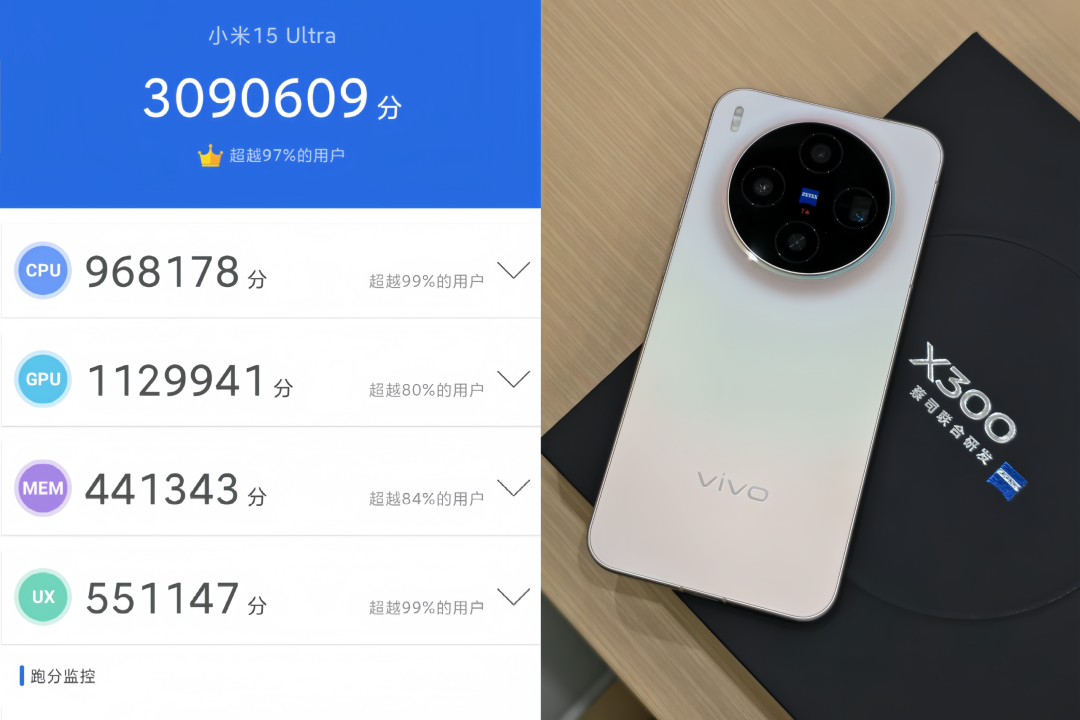
In 2025, the Xiaomi 15 scored nearly 3 million points on AnTuTu, triple that of the 2020 flagship models. The Vivo X300's 200-megapixel main camera, equipped with Zeiss optics, could clearly discern neon signs hundreds of meters away. Every new product launch shouted 'the strongest ever.' But users simply weren't upgrading. According to data from the China Academy of Information and Communications Technology, the replacement cycle had extended to 40.2 months.
Because today's smartphones are no longer 'new devices.' They are merely screens to access WeChat, Taobao, and Douyin. Fingers remember Taobao's shopping paths, eyes are accustomed to WeChat's chat interface, and thumbs know which way to swipe on Douyin. Phone manufacturers created hardware entry points but never fully gave up on competing for users—it's just that in the previous round of competition, super apps ran faster.
IDC's data is stark: In Q2 2026, smartphone shipments in China reached approximately 66.01 million units, a year-on-year decline of 4.3%, marking the fifth consecutive quarter of decline. Meanwhile, the cost of mobile storage chips surged nearly 300% in a year, trapping mid-to-low-end models in an unsolvable equation: adding AI chips sacrifices profitability, while not adding them sacrifices selling points. Xiaomi's Q2 (domestic) shipments fell 21.7% year-on-year, primarily due to storage price hikes eroding profits on low-end models, prompting the brand to voluntarily shrink (contract) its low-end product line to preserve profitability.
This is a structural risk for the entire mobile phone industry. But the variable to change everything had already emerged by late 2025.
| The 'Barbarian' Doubao Phone |
On December 1, 2025, the first-generation Doubao Phone, jointly launched by ByteDance and ZTE, officially went on sale. Priced at 3,499 yuan, the first batch of 30,000 units sold out in 10 seconds.
The value of this phone lies not in hardware specifications but in demonstrating a possibility: AI could become a higher-level interaction interface than apps.
When a user says, 'Help me book the cheapest flight to Shanghai tomorrow,' AI understands the intent, breaks down the task, and executes it across apps—bypassing app homepages, skipping information flow ads, and avoiding recommendation algorithms. This was a first in mobile internet history.
The industry saw a new possibility: future users might access the internet through AI rather than apps. But this change threatened the core interests of super apps. Because an app's value comes not just from functionality but from the traffic, dwell time, and commercial conversions generated after users enter.
If users complete tasks directly through AI, it means fewer ad impressions, shorter recommendation paths, and a potential redefinition of the traffic distribution systems platforms have long built.
Thus, the Doubao Phone quickly faced resistance. WeChat forcibly logged it out under the pretense of an 'abnormal login environment,' Taobao launched human-machine verification, and multiple bank apps restricted interface calls. From selling out instantly to facing functional restrictions, it took only 120 hours.
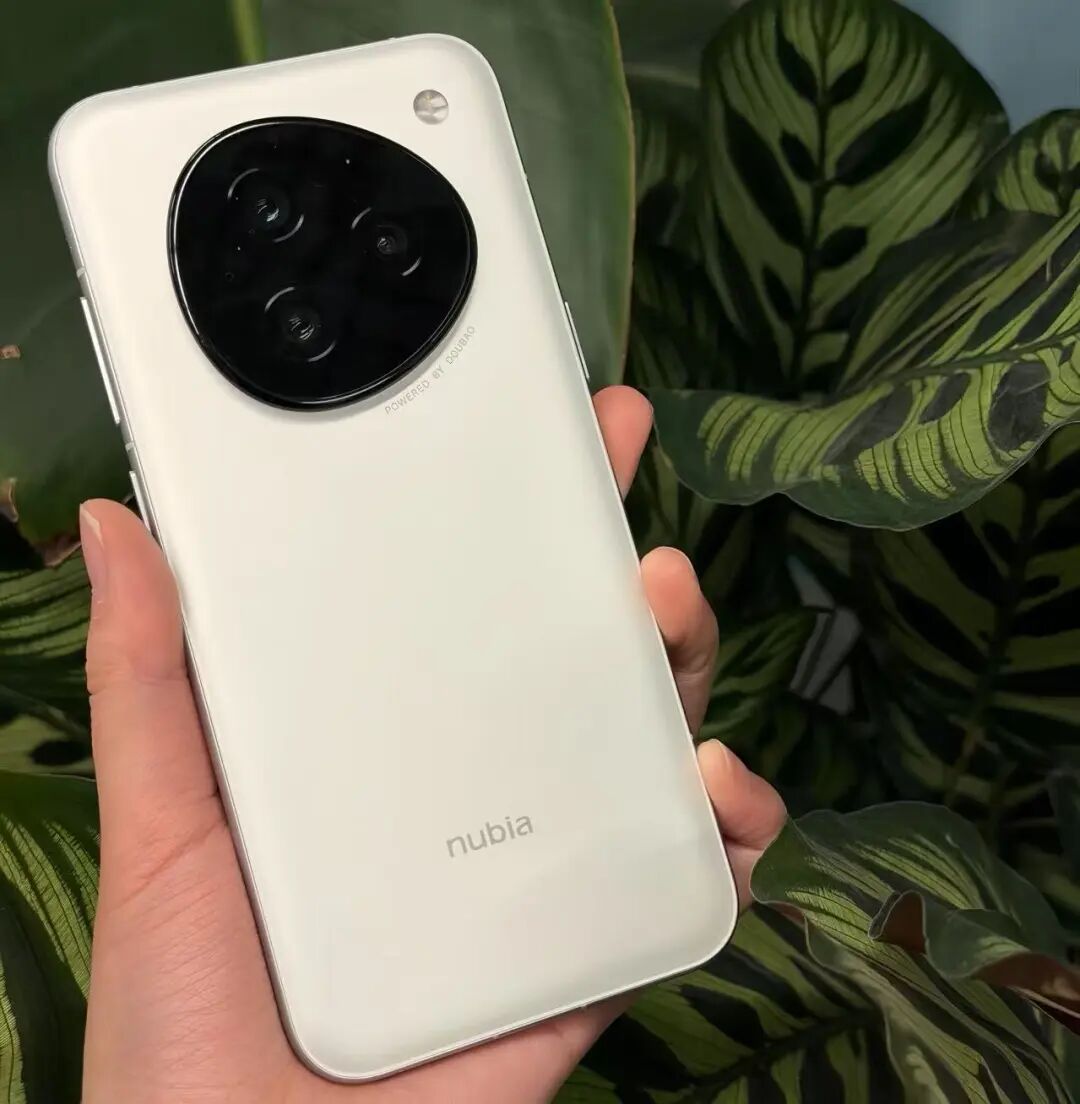
The essence of this controversy was not simply 'super apps besieging phone manufacturers.' WeChat's risk control mechanisms have always been sensitive to abnormal login environments, and the Doubao Phone's cross-app automation triggered existing security protocols. Taobao's human-machine verification was also a standard defense against high-frequency automated operations. More subtly, ByteDance itself was both the driver of the Doubao Phone and the owner of Douyin and Toutiao. When it tried to use AI to break down app boundaries, it first disrupted its own super app ecosystem. This is an instinctive reaction from all players during the transition between old and new rules.
In just five days, AI transformed phones from 'passive containers' into 'active executors,' making phone manufacturers relevant again. The Doubao Phone was not the start of a revolution but a probe. Its conclusion: directly controlling app interfaces was temporarily unworkable, but the proposition of 'AI as a higher-level interaction layer' held merit.
On July 15, 2026, two days before WAIC opened, the Cyberspace Administration of China announced the first batch of seven products passing end-side large model compliance, including mainstream brands like Apple, Huawei, OPPO, Vivo, Xiaomi, Samsung, and ZTE. This meant phone access to large models was no longer a gray area but had a clear compliance path.
Two days later, WAIC 2026 opened in Shanghai, with AI agent phones becoming the hottest category. Models receded from center stage, and agents took the spotlight.
Chinese mobile phone manufacturers collectively bet on AI not because it suddenly became an industry hotspot but because the old growth model for smartphones was failing.
Over the past decade, Chinese phone makers rose on a mature hardware playbook: better screens, stronger imaging, faster chips, lower prices. Hardware innovation drove upgrades, and scale growth diluted costs.
But today, that logic is faltering.
On one hand, user replacement cycles keep lengthening. Flagship phones from three years ago still meet most daily needs. Faster chips, more cameras, and better screens no longer create the same 'must-upgrade' urgency.
On the other hand, cost pressures on manufacturers keep rising. Prices for storage chips, advanced processes, and imaging components have increased, making hardware more expensive—but consumers' willingness to pay premiums is increasingly limited.
The phone industry has entered an awkward phase: hardware keeps improving but is harder to justify as a purchase reason. More importantly, Chinese phone makers' greatest weakness remains unaddressed. They manufacture phones but don't fully control the users within them.
WeChat owns social relationships, Taobao owns consumption scenarios, Douyin owns content distribution, and Meituan owns local services. Phone makers provide the devices connecting these services but don't control how users access the internet daily.
Phone makers desperately need a new variable to reconnect with users. AI became that variable.
Because AI changes not just a single phone function but potentially how users interact with phones. Future users might directly tell AI their needs, shifting the entry point from apps to intent. For the first time, phone makers have a chance to re-enter the core of user relationships.
But for different manufacturers, AI's implications vary. They face the same industry dilemma but with different survival pressures.
| The Second Half's Game |
To understand why Chinese phone makers collectively bet on AI, one must acknowledge an awkward truth: they were the biggest winners of the past decade's global hardware wars but the biggest losers in the ecosystem wars.
Apple also makes phones, but its closed iOS ecosystem keeps distribution rights firmly in the App Store, with service revenue rising as a share of total revenue. In FY2025, Apple's services revenue surpassed $100 billion, up over 13% year-on-year. Users interact with the digital world via Siri, the App Store, and iCloud—Apple doesn't just sell hardware but manages user relationships. In Q2 2026, Apple grew 24.4% in China against the trend, relying not on hardware specs but ecosystem stickiness.
Apple took a notable action in early 2026, expanding its trade-in program to include multiple Android flagships in its official discount system. This was a defensive move to lower barriers and compete for high-end users with ecosystem advantages.
Chinese makers haven't ignored operating systems. MIUI, HarmonyOS, ColorOS, and OriginOS each involved thousands of engineers. But users aren't in the systems. When they open their phones, relationships are on WeChat, time is killed on Douyin, and shopping happens on JD.com or Taobao. Phone makers built the buildings, but apps collected the rent.
In FY2025, Apple's services revenue reached $109.1 billion. Just App Store commissions on digital goods likely generated $25-35 billion annually globally, per industry estimates.
Chinese phone makers' internet service revenues pale in comparison. Xiaomi's 2025 internet services revenue was 37.4 billion yuan. OPPO, Vivo, and Honor didn't disclose figures separately, but industry estimates put pre-installed app fees at 0.8–5 yuan per app. At 300 million annual shipments, the entire industry's pre-install revenue barely reaches the billion-yuan level.
This is the structural dilemma for Chinese phone makers: they own hardware but not user relationships. Apple's closed loop spans hardware, systems, and services—the growth area Chinese makers most covet.
Huawei most urgently needs a complete ecosystem. After overseas ecosystem restrictions, it must get rid of (divest) reliance on Android and rebuild from chips to operating systems to app ecosystems.
HarmonyOS solves the system problem, but systems alone don't automatically generate user stickiness. Users chose iPhones not just for iOS but for the entire ecosystem experience.
Huawei's real challenge is making HarmonyOS not just an alternative but a destination users stay in long-term.
AI becomes critical. Traditional OSes connect devices and apps; AI OSes connect user intent.
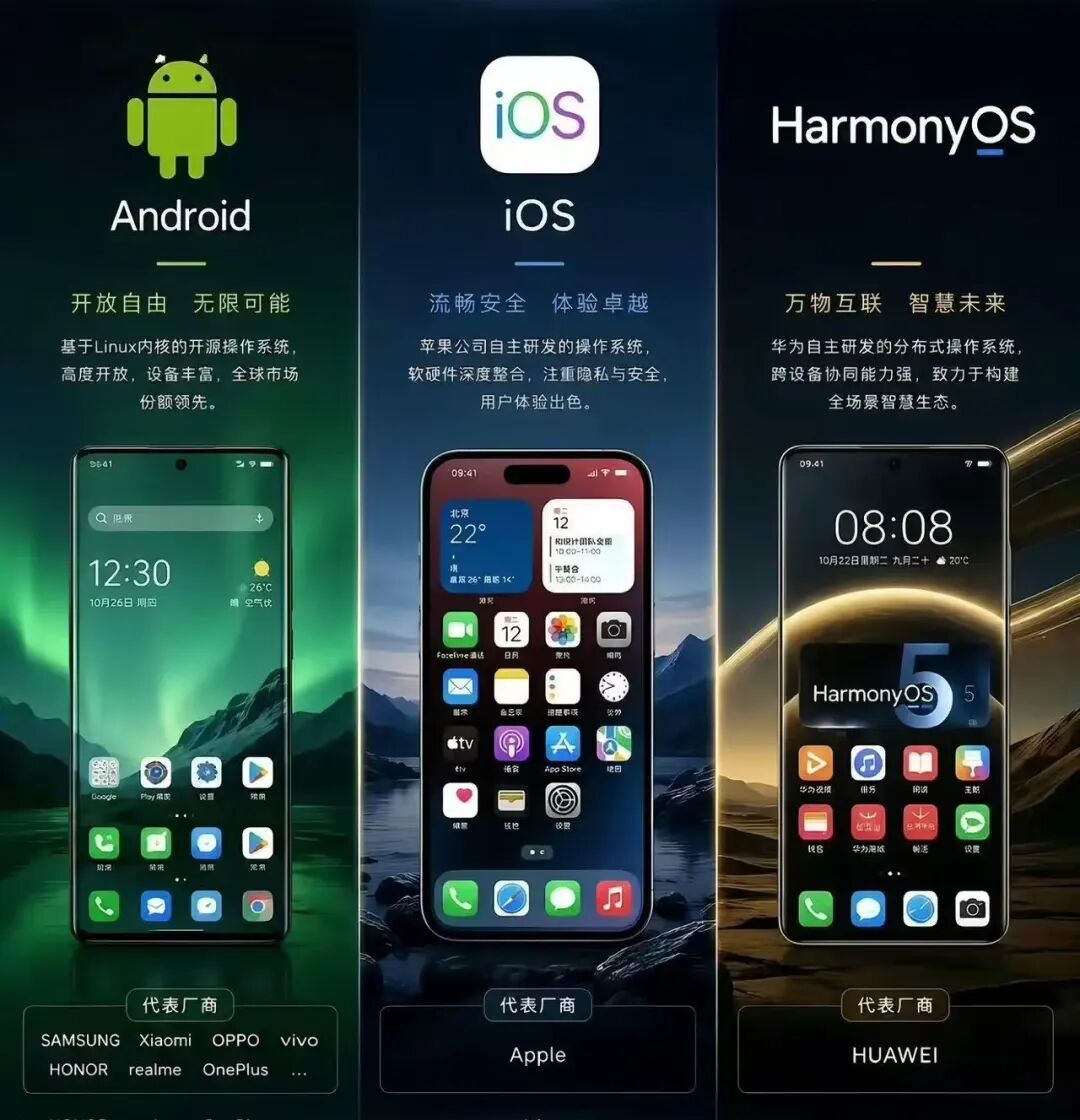
It could become HarmonyOS's core differentiator from Android—akin to what Harmony Intelligent Driving is to new energy vehicles.
Xiaomi faces a different issue. It already has massive devices: phones, TVs, speakers, home appliances, cars.
Its past ecosystem focused on device connectivity. Future competition demands understanding users across devices. Without AI, the Internet of Things risks remaining a showcase of device quantity. AI's role is to transform devices from passive responders to active services. As the maker with the most complete hardware ecosystem, Xiaomi is one AI away from true smart connectivity.
Honor faces another pressure. After splitting from Huawei, it needs its own tech identity. It hopes to compete not just for a system entry point but for the next-gen phone interaction standard.
For OPPO and Vivo, the issue is more practical: when hardware gaps narrow, AI offers richer stories in personalized imaging experiences.
Thus, Chinese phone makers' AI bet isn't just chasing a tech trend. It's an opportunity to rebuild competitive advantages as smartphones enter their second half.
| The Battle for AI Discourse |
For the past 15 years, mobile internet's logic was simple: users got services within apps. Apps were the sole bridge between users and services—who controlled apps controlled users. AI is rewriting this structure: users call AI Agents, which then arrange app services.
Previously, Taobao served consumers directly. Recommendation algorithms decided what products or prices users saw; Taobao managed user relationships and collected traffic fees. Future Taobao might first serve AI Agents negotiating prices, filtering options, and placing orders on users' behalf. Taobao's competitor wouldn't be JD.com but whoever better integrates with AI.
This changes internet companies' identities. Super apps shift from 'direct-to-consumer brands' to 'backend services for AI.' Users might remember 'ordering food via phone AI' but forget which app provided it.
This presents structural opportunities for Chinese phone makers. If AI Agents become the new interaction layer, operating systems are natural AI entry points. Phone makers could evolve from 'landlords' to 'butlers'—not just providing space but managing everything.
In May 2026, three ministries, including the Ministry of Industry and Information Technology, jointly released national standards for 'AI Terminal Intelligence Grading,' attempting to set technical boundaries for this transformation. That itself is a signal.
After WeChat blocked the Doubao Phone, it didn't close all doors. In June 2026, WeChat implemented the A2A protocol, partnering with Honor, Xiaomi, and other mainstream makers. AI could call app services but only within authorized scopes. Apps set the rules and collected the tolls.
Super apps aren't rejecting change—they want to direct it. WeChat wants AI-driven traffic; Taobao fears losing user control if consumers shop via AI.
WeChat launched its AI assistant 'Xiaowei' this year, embedding agent capabilities into social scenarios. Taobao is testing AI shopping guides, letting users compare prices and place orders via conversation. Super apps aren't passive defenders; they're also betting on AI, trying to make Agents new moats rather than disruptors. The real issue isn't 'who controls the entry point' but that when AI becomes a higher-level interaction layer, all players—hardware or software—face reshuffling risks.
This war has just begun. Super apps compete for rule-setting power; large model firms aim to be the layer that 'understands human intent.' Media reports say OpenAI has demonstrated an 'AI phone prototype without traditional app interfaces,' with internal plans to mass-produce it by 2027.
Chinese phone makers won the smartphone manufacturing race but lagged in mobile internet entry points. They built the world's best hardware but let super apps dominate user relationships first.
Yet the competition has never had clear camps. Huawei has HarmonyOS; Xiaomi has IoT and internet services; OPPO and Vivo have app stores and content distribution. They aren't pure 'hardware makers' but hybrids trying to build closed loops across hardware, systems, and services. AI's opportunity isn't about 'reclaiming' anything but letting all players—hardware or software—redefine their relationships with users.
Image sourced from the internet. Rights reserved for the original creator.
-
![]()
Mobile Phone Manufacturers Bet on AI: A New Game of 'Who Controls the Users'
-
![]()
US Space Force Shells Out $1.6 Billion: SpaceX Clinches 18 Falcon 9 Launch Contracts Once Again
-
![]()
Five to six hundred new car models flood into a shrinking market every half year, leaving many automakers crying out amidst fierce internal competition.
-
![]()
German Media: Will Volkswagen Be Taken Over by Chinese Automakers?
-
![]()
"High Installation Costs" and "Rising Mobile Phone Prices": Do Huaqiangbei's Counters Hold the Answers?
-
![]()
From Luna Ultra to See Insta360's Gimbal Strategy: Profit or Growth?
-
![]()
GPT-5.6 Announces Price Reductions! Save Up to 80%!
-
![]()
Memory Price Surge Fuels Apple’s 27% Profit Jump, With Chinese Consumers Propelling 22% Revenue Growth