Full-Spec Power and BOSE Subwoofer: The REDMI K100 Pro Max Performance Review
 08/12 2026
 353
353
In recent years, it has become increasingly challenging for new smartphone models to make a lasting impression.
Processors predominantly come from just two suppliers, and screen options are limited to a handful of choices. A "new flagship" device can often be created by merely changing the back cover color and rearranging the camera module. Manufacturers are acutely aware of this trend, leading modern product launches to increasingly emphasize software, AI, and ecosystems, hoping to carve out differentiation elsewhere.
However, the potential of hardware advancements is far from exhausted.
Take REDMI as an example. The K series is renowned for its top-notch performance and large battery capacity. Last year, the K90 Pro Max made waves by integrating an independent subwoofer unit into its camera module, creating a 2.1 triple speaker system co-developed with BOSE, which left a strong impression on users.
With the K100 Pro Max, REDMI continues to prioritize large screens, performance, battery life, and speaker quality, rather than shifting to a new narrative.
(Image source: Leikeji)
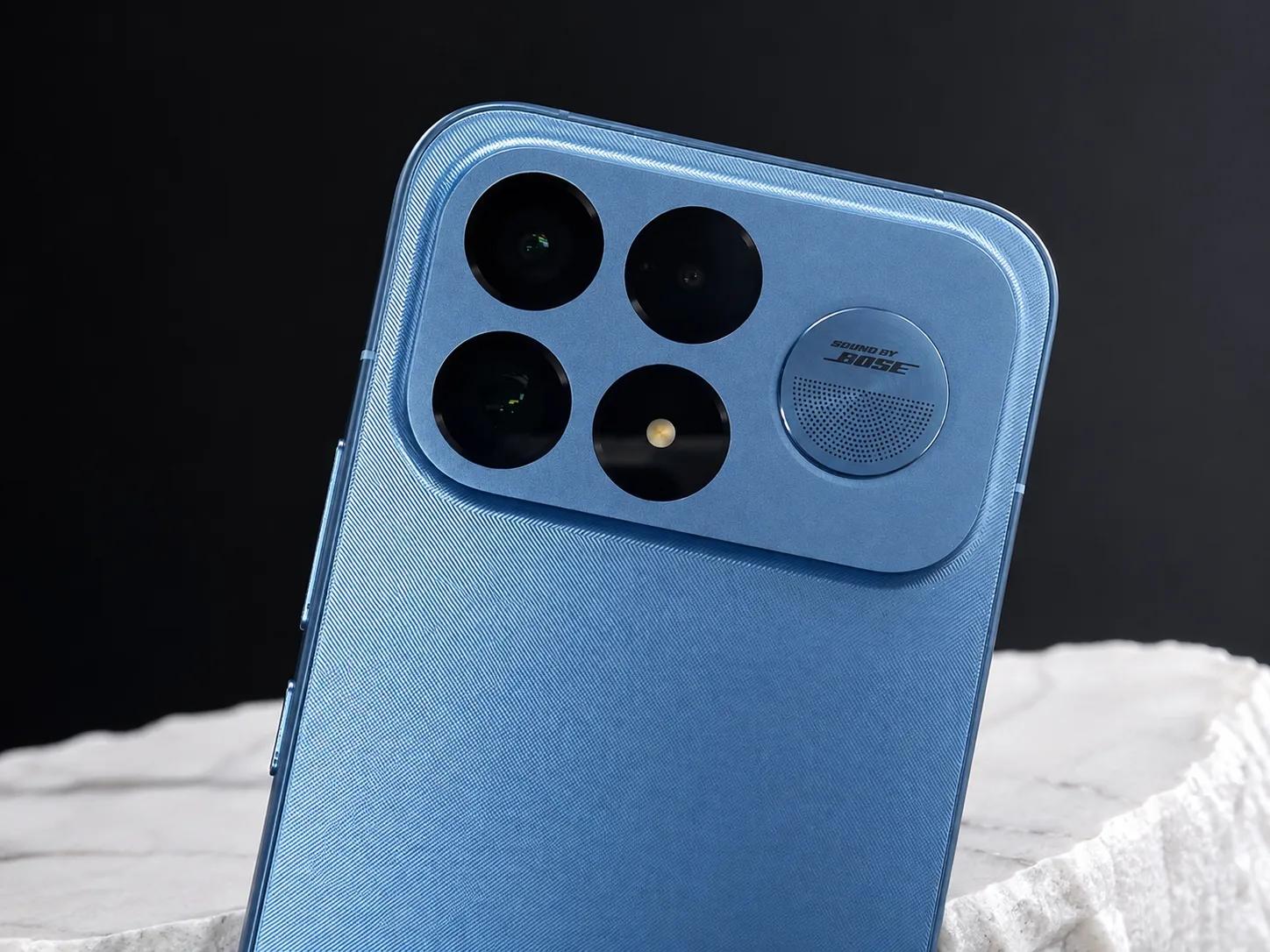
Featuring a full-spec Snapdragon 8 Elite Gen 5 processor, a massive 9070mAh battery, a 200MP main camera, a 185Hz screen, and BOSE 2.1 triple speakers, the specs of the K100 Pro Max remain highly impressive. As the first flagship iteration released in the second half of the year, the REDMI K100 Pro Max carries significant weight in the market.
Leikeji had the opportunity to preview the 16GB+512GB version. Let's dive into its performance.
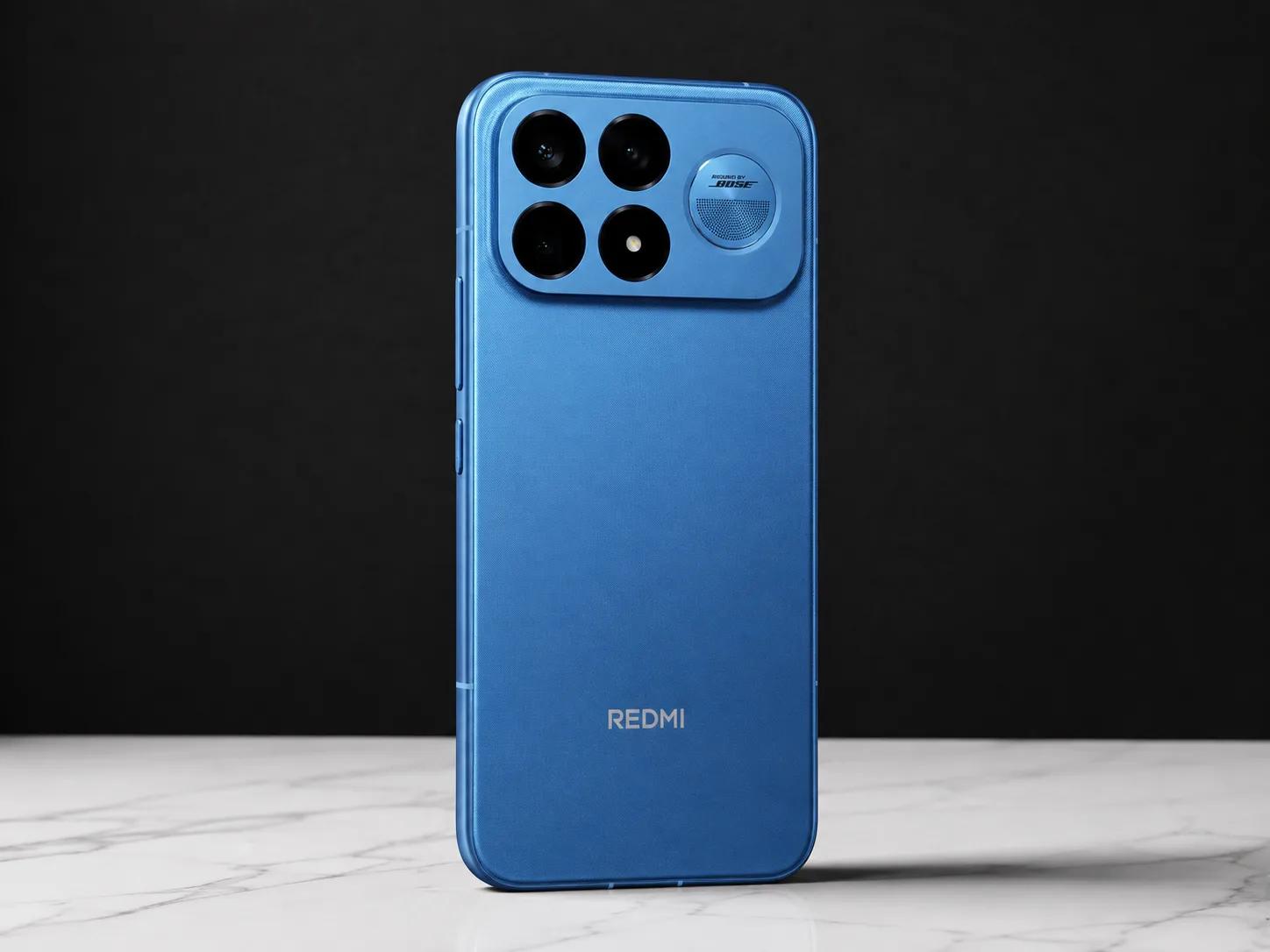
The version we reviewed is blue.
It's not an overly saturated, eye-catching bright blue that can be seen from a block away. Instead, it's closer to a sky blue with a hint of gray. In dim lighting, the color appears relatively subdued, but when light hits the device, the metal frame and camera accent panel take on a light blue sheen.
Additionally, the glass fiber back cover lacks the overly slick, refined feel of some other smartphones. Instead, it features a densely textured surface. Upon close inspection, you can see rows of fine lines, giving it a matte-like feel. Running your fingers across it provides slight resistance, making it less likely to slip from your hand when unprotected and less prone to visible fingerprints.
Personally, I'm a fan of matte back covers. For various reasons, manufacturers have struggled to deliver satisfactory results in recent years, but the feel of the K100 Pro Max deserves praise.
(Image source: Leikeji)
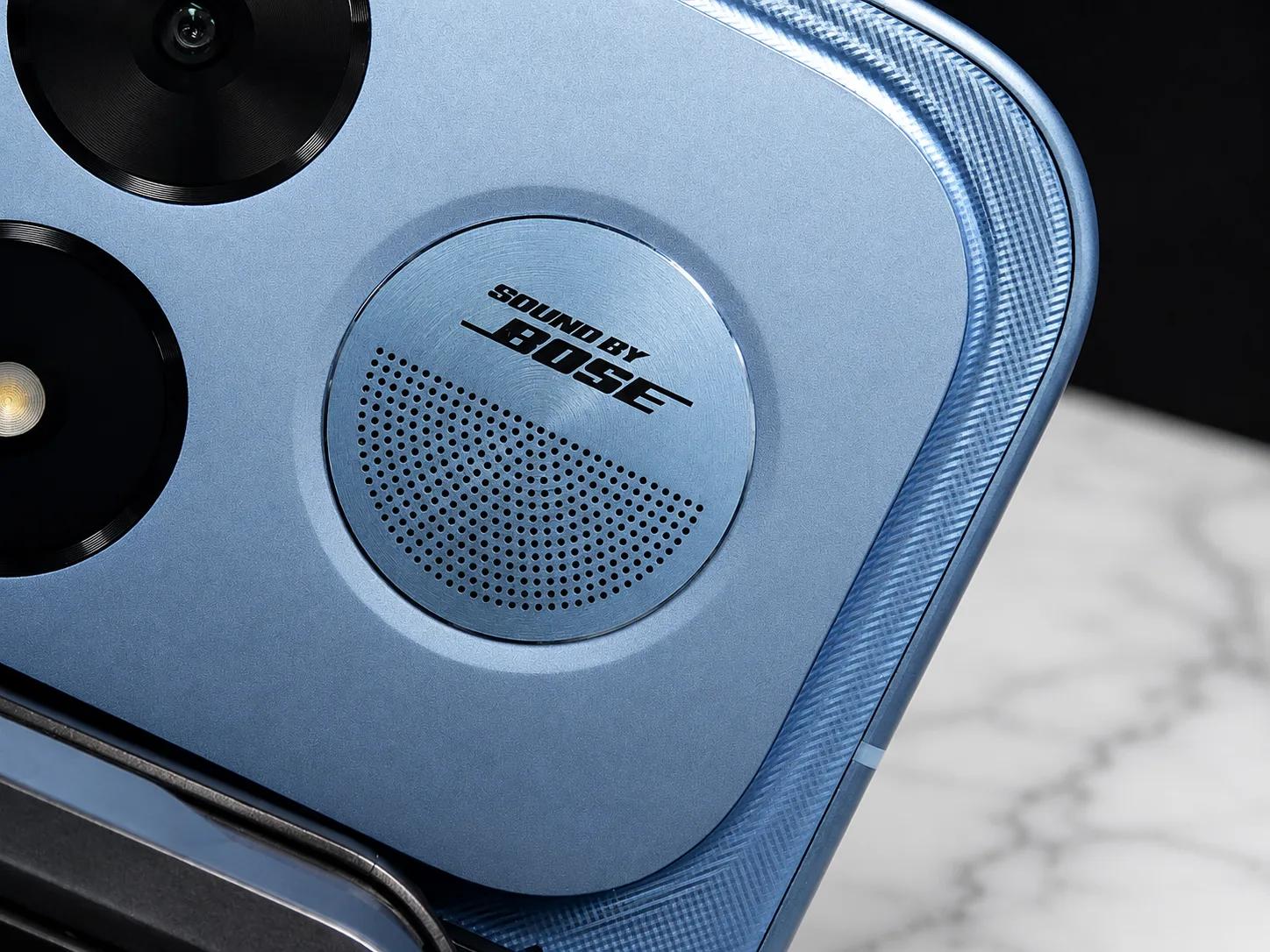
The K100 Pro Max retains a large horizontal camera module, housing three cameras, a flash, and a circular BOSE subwoofer unit on the same accent panel. While the module is sizable, its internal layout is neat, and the blue accent panel matches the device’s body, creating a visually cohesive look without excessive fragmentation.
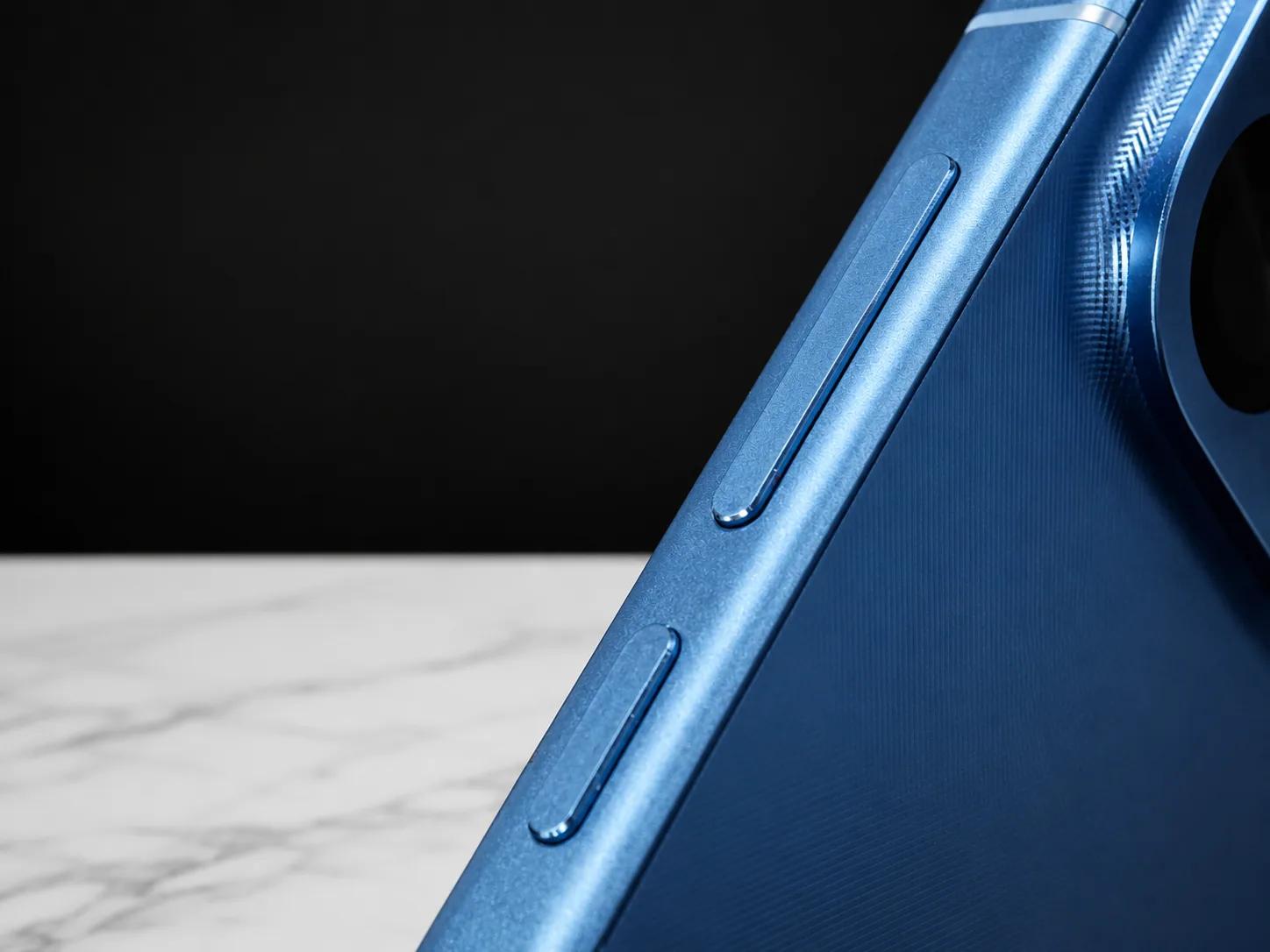
Compared to the back cover texture, I find the improved feel along the edges even more noticeable.
The K90 Pro Max already featured large rounded corners and smooth transitions. The K100 Pro Max further increases the curvature on both sides of the frame and the back cover edges, resembling a digital flagship series. While the device remains wide, the frame no longer presses directly into the palm, and there’s no pronounced step between the back cover and frame when held.
(Image source: Leikeji)
Of course, this doesn’t mean it suddenly becomes a lightweight phone.
Weighing 242g with the factory-applied screen protector, it’s heavier than the foldable phone I commonly use. At approximately 78mm wide, colleagues with smaller hands found it difficult to reach the opposite side of the keyboard or tap the top-left corner of the screen with one hand.
Suffice it to say, true one-handed operation is nearly impossible with large-screen phones like this. Even though the K100 Pro Max features narrow screen bezels and rounded corners, its nearly 7-inch physical size makes one-handed use impractical.
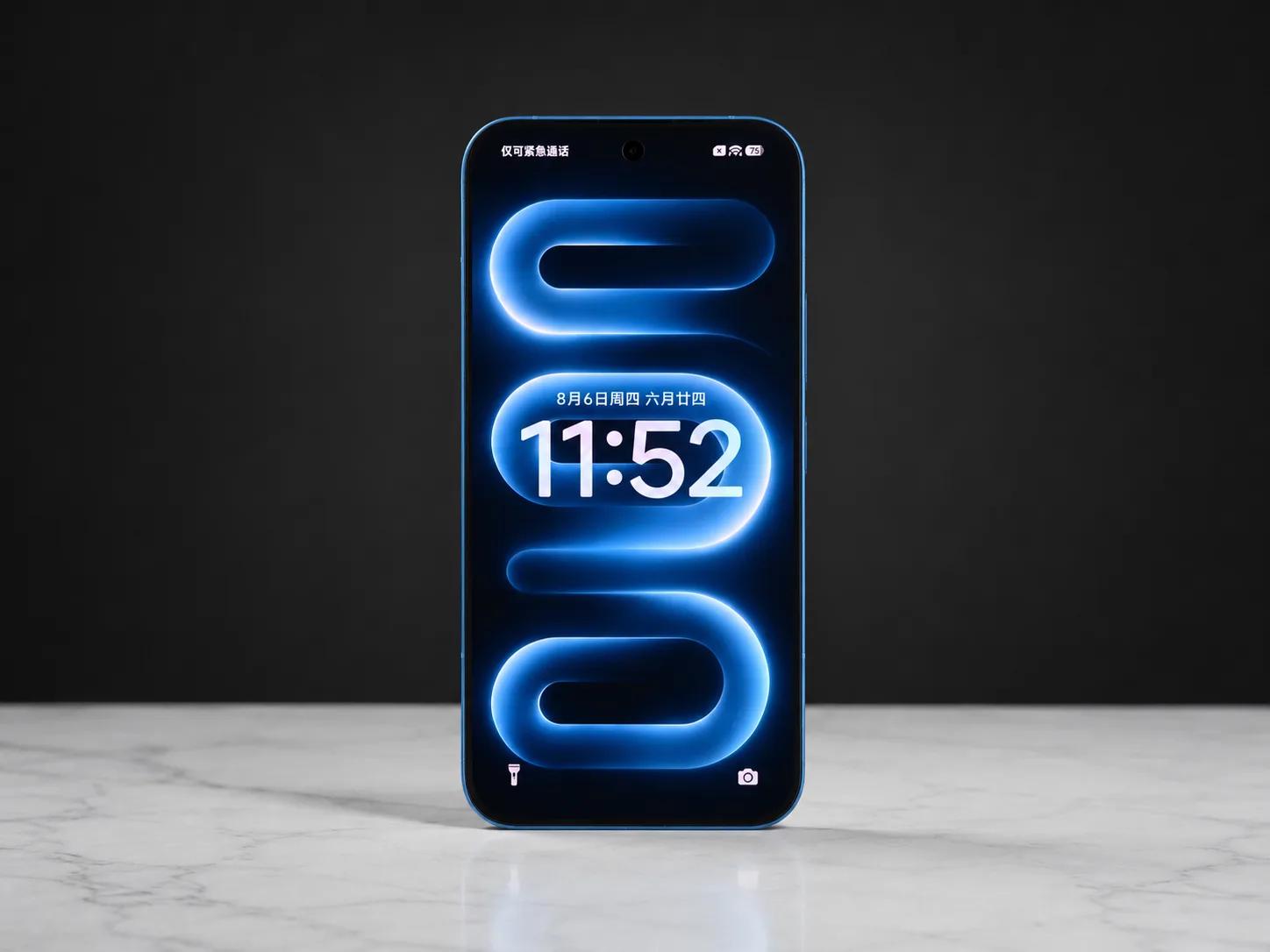
Flipping to the front, the K100 Pro Max sports a 6.9-inch OLED flat screen with a refresh rate of 185Hz.
(Image source: Leikeji)
While 185Hz sounds impressive, few games can actually reach this frame rate. The system dynamically adjusts the refresh rate based on the scenario, mostly running at 120Hz. I couldn’t even find a way to enable 185Hz for apps like Weibo.
Rather than focusing solely on refresh rate, I care more about brightness and low-light performance. The screen performs well outdoors for navigation and framing shots, and at night with the lights off, the minimum brightness is sufficiently low. Combined with full-time DC dimming and circular polarizing eye protection, prolonged screen time doesn’t cause noticeable discomfort.
Visually, this screen has little to criticize.
The K100 series offers two distinct performance configurations this time.
The K100 Pro uses the fifth-gen Snapdragon 8 Elite V Series, with a near-complete CPU specification and adjustments primarily to the GPU, reducing it from 3 Slice units and 18MB HPM cache to 2 Slice units and 12MB. The K100 Pro Max retains the full-spec version without GPU modifications.
For light tasks like scrolling through short videos, replying to messages, or playing casual games like Honor of Kings, the difference between the two is negligible. Only in GPU-intensive games like Wuthering Waves and Zenless Zone Zero does the full-spec version’s advantage become apparent.
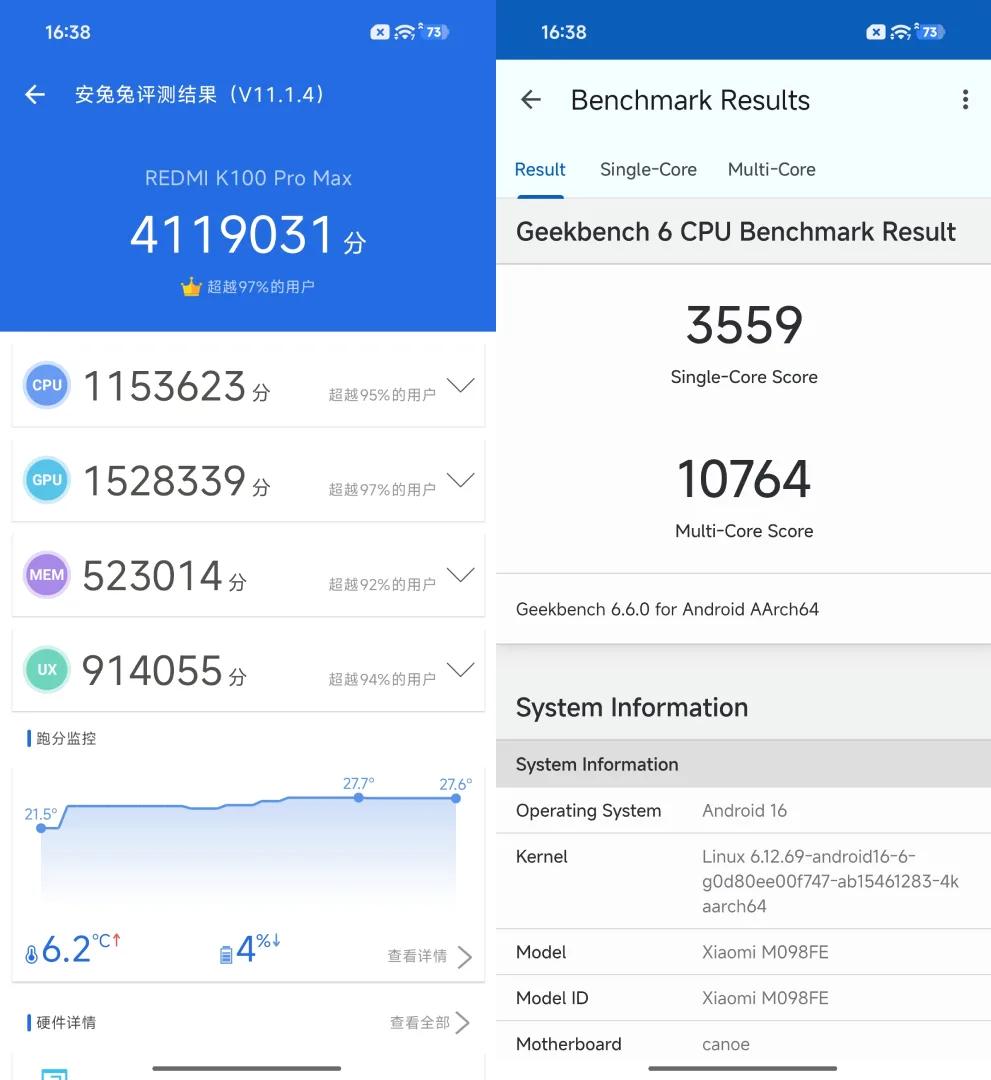
Our K100 Pro Max scored around 4.1 million on AnTuTu, with a Geekbench 6 single-core score exceeding 3500 and a multi-core score approaching 11000, placing it among the top tier of current Android flagships.
(Image source: Leikeji)
However, high benchmark scores are no longer rare for flagships. What truly matters is the gaming experience.
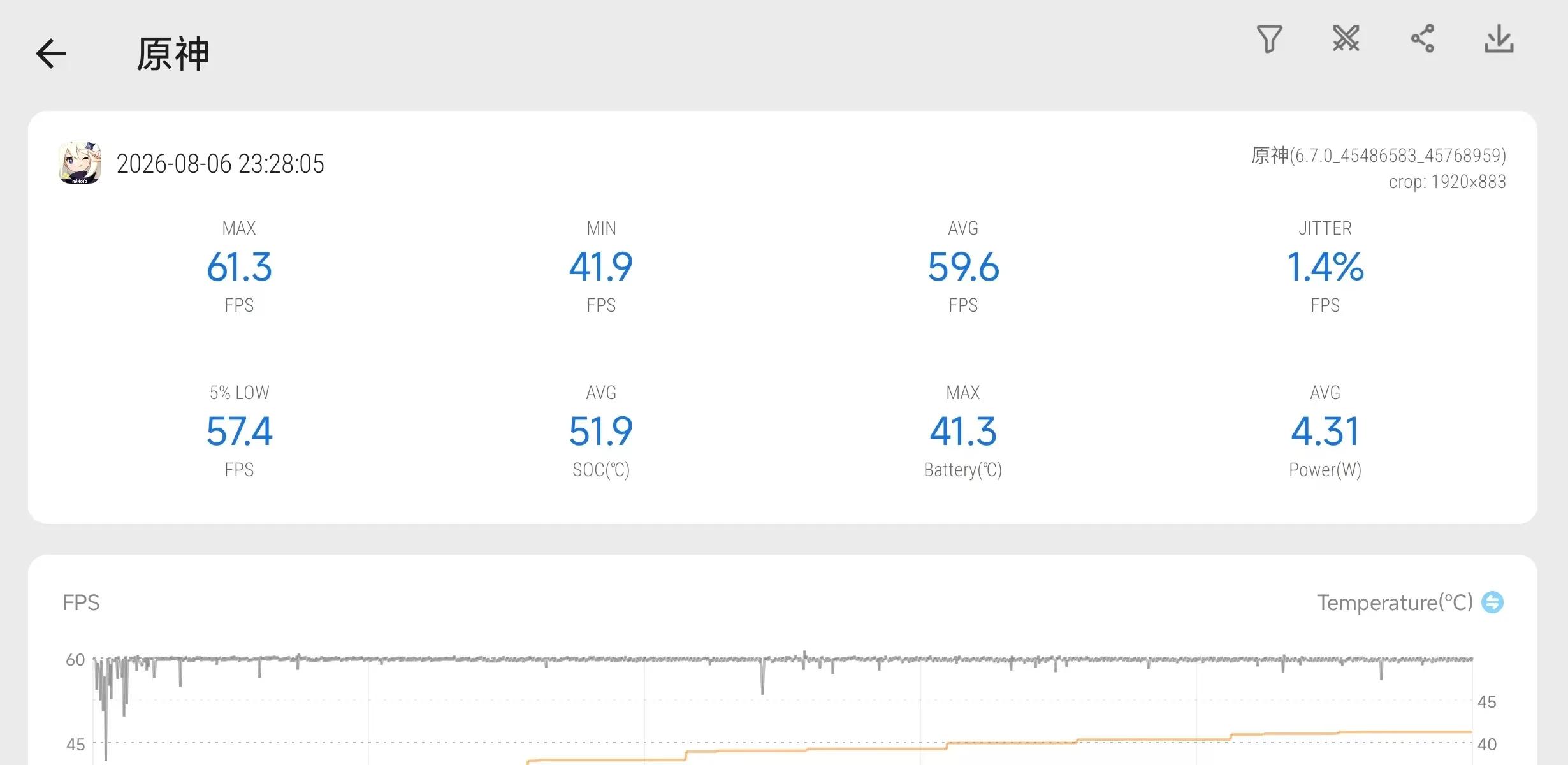
In performance mode, running a half-hour loop through Sumeru City in Genshin Impact maintained an average frame rate of around 59.8fps, with a relatively stable curve. Combat and fast travel caused no sustained frame drops.
(Image source: Leikeji)
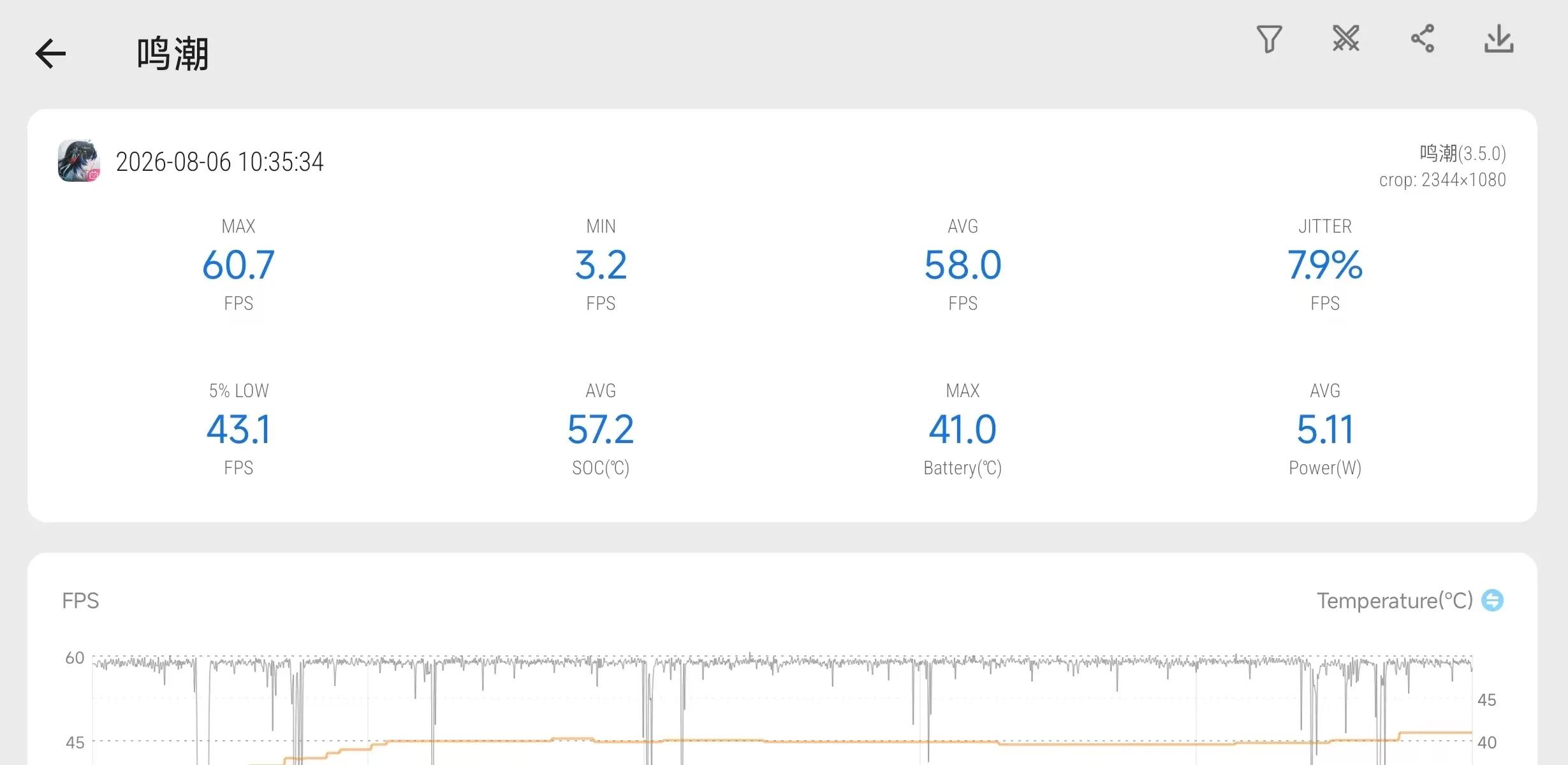
After letting the phone cool, we ran another loop of Wuthering Waves at high settings, where the average frame rate remained near full. While minor fluctuations occurred during fast travel and multiplayer combat, there were no sudden frame locks or significant frequency drops.
(Image source: Leikeji)
After continuous testing, the highest temperature concentrated near the camera module, reaching around 44°C. The grip area felt warm, but the frame remained only slightly hot, not uncomfortable.
This result was expected. While the large body isn’t one-hand-friendly, its ample internal space allows for better heat dissipation. The K100 Pro Max excels at not only delivering peak performance but also maintaining stable sustained performance.
With the 185Hz screen and a dedicated display chip, we can also enable frame interpolation and super-resolution for select games.
Testing with League of Legends: Wild Rift, the gameplay did appear smoother. However, I personally prefer native high frame rates, especially in competitive games, where the smoothness from interpolation doesn’t quite match actual response times.

(Image source: Leikeji)
Currently, REDMI’s issue lies in the limited number of games supporting interpolation, and the ones that truly need it often can’t use it.
After discussing performance, let’s talk about the circular unit on the back.
While it may look like a decorative element on the camera module, it’s actually an independent subwoofer. Combined with the two full-range units at the top and bottom of the phone, it forms the BOSE 2.1 triple speaker system.
(Image source: Leikeji)
Typically, a standard phone’s dual speakers must handle vocals, instruments, and low frequencies simultaneously. When the volume is turned up, the sound tends to thin out, and high frequencies can become harsh. The K100 Pro Max assigns low frequencies to the third speaker, allowing the two full-range units to focus on mid-high frequencies and vocals.
This difference is immediately noticeable when playing videos.
During movies, explosions and background music gain noticeable depth, and vocals aren’t overpowered by low frequencies. For live music, the drumbeats have better impact and depth compared to standard dual speakers, and the soundstage feels more expansive.
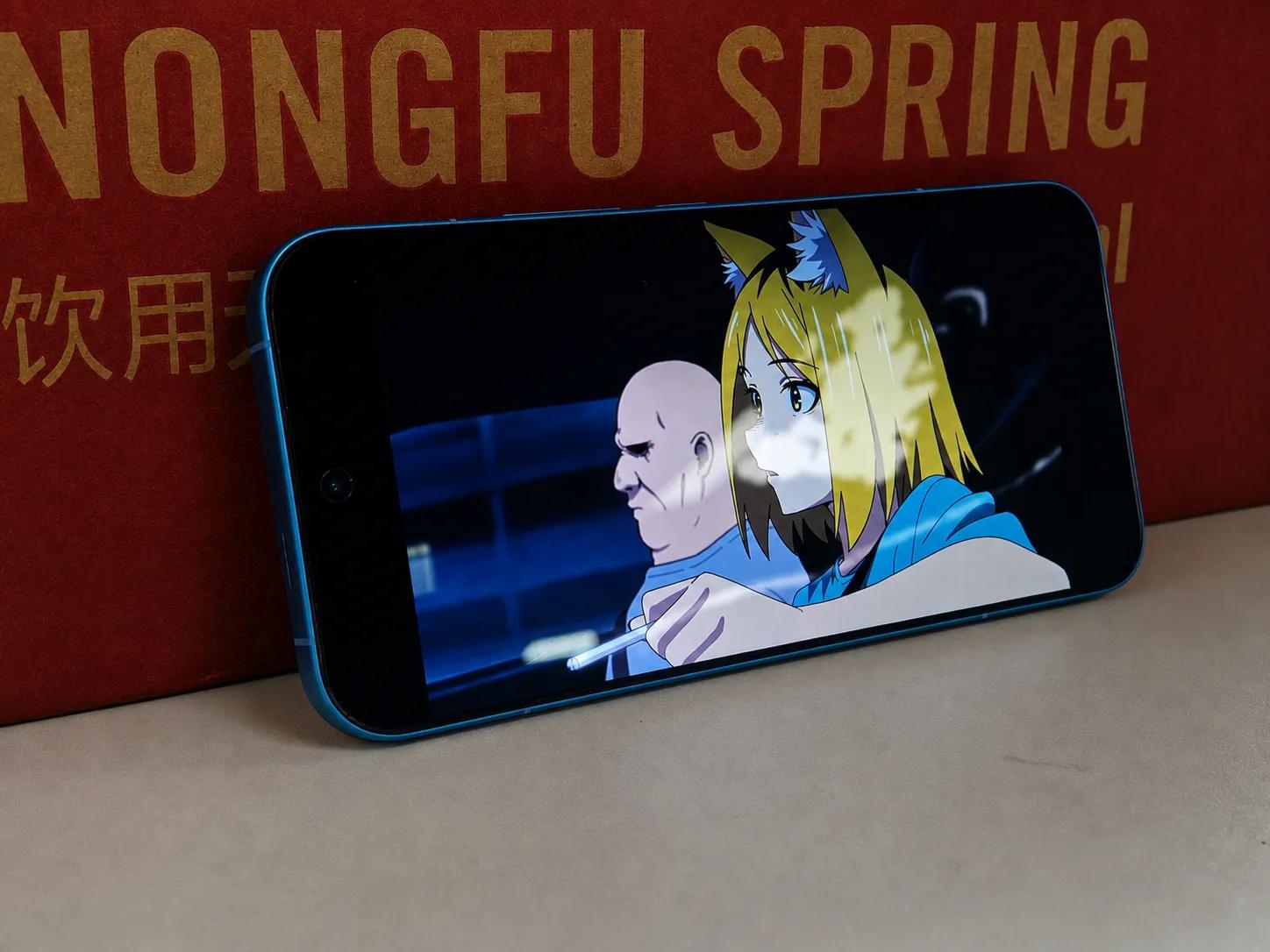
Placing the phone horizontally on a table or near a wall further enhances the low frequencies through the space formed between the back and the surface. Coming home and watching an episode without connecting to a Bluetooth speaker is quite enjoyable.
(Image source: Leikeji)
Of course, it’s still a phone speaker and can’t match a proper Bluetooth speaker in terms of physics. At maximum volume, the layering in complex music diminishes, and low frequencies become slightly loose.
However, for a phone, this speaker setup remains highly competitive.
Nowadays, everyone is focused on imaging, benchmarks, and AI, with few manufacturers dedicating internal space to sound. I believe that for users who frequently watch videos or play games with their phone’s speakers, the improvement from triple speakers is more tangible than many features hyped up in product launches.
For the camera, the K100 Pro Max upgrades the main sensor to 200MP. While there’s no dramatic generational leap in sensor size, improvements focus on resolution, cropping flexibility, and algorithmic processing.
In bright daylight, it captures sharp details in buildings, plants, and street signs.


(Image source: Leikeji)
The newly added 200MP mode retains more texture details and withstands cropping better after enlargement. However, photo file sizes are large, and each shot takes a few seconds to process, so it’s not necessary to leave it on all the time for daily photography.
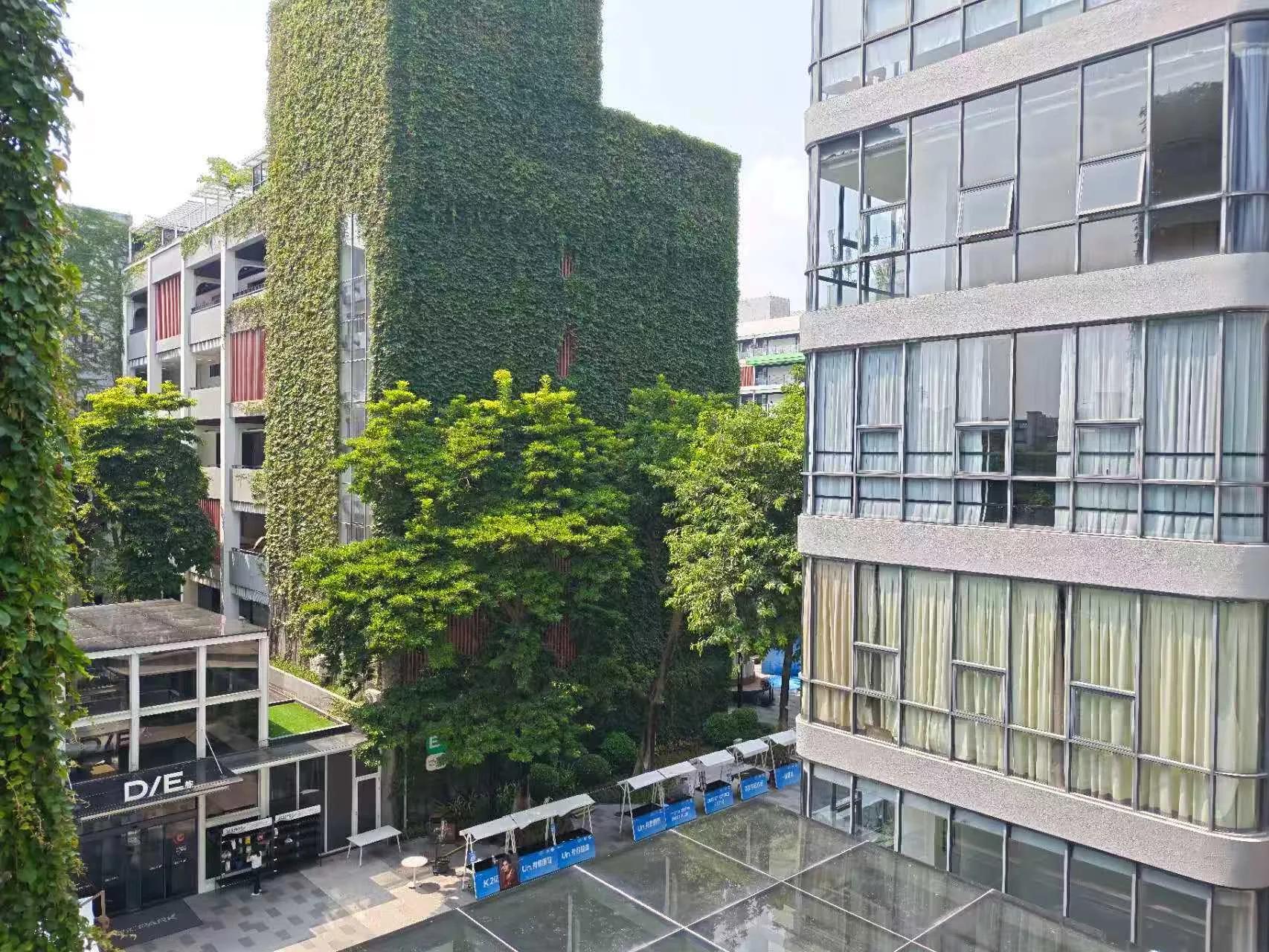
(Image source: Leikeji, 200MP mode)
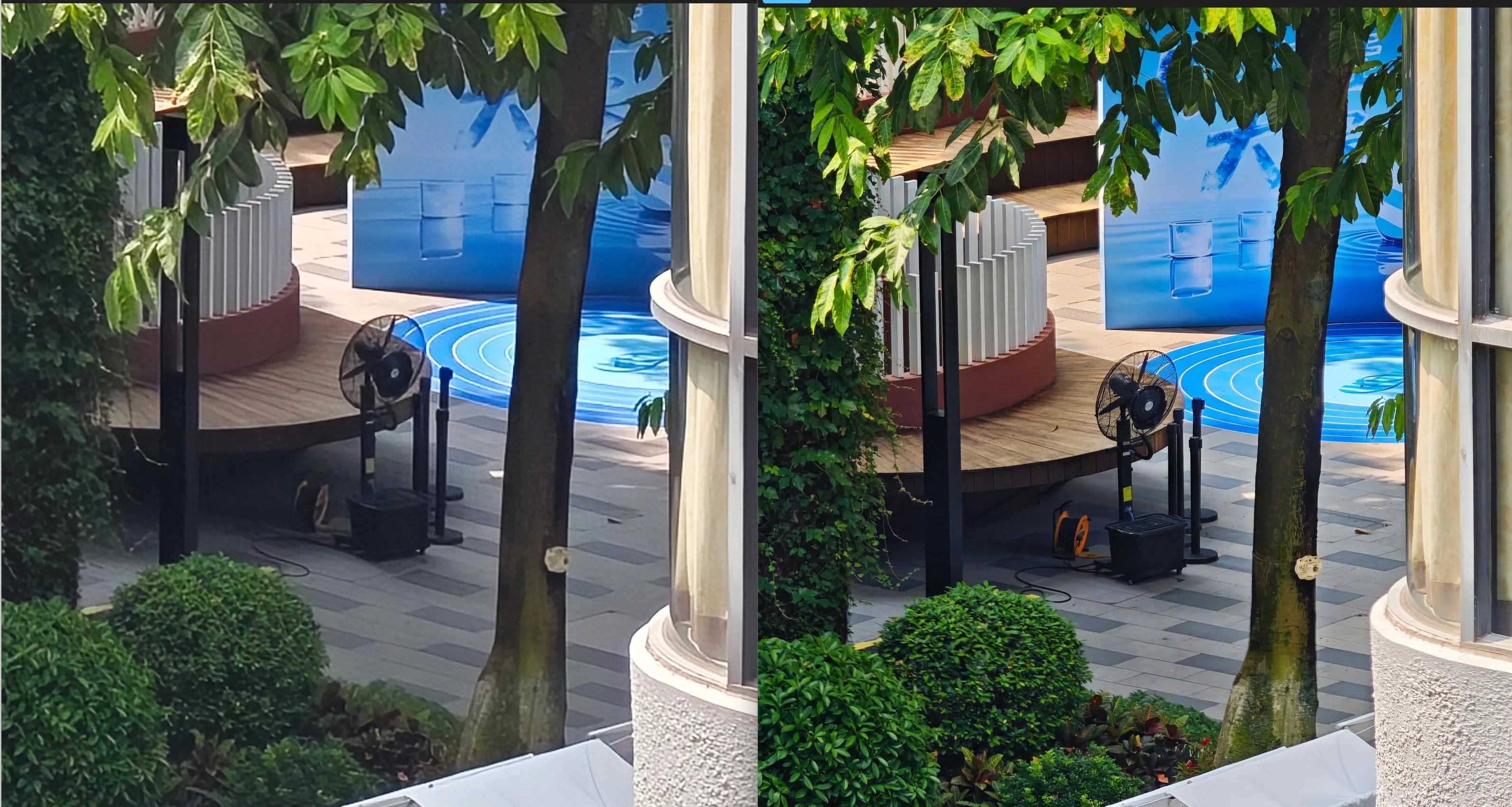
(Image source: Leikeji, left: 200MP zoomed in, right: 10x telephoto)
In my opinion, the default mode, which uses pixel binning to control noise and dynamic range, is more convenient for casual shots. In backlit scenes, highlight suppression is stable, there is no obvious purple edge on the edge of the leaves, and dark areas retain some detail.


(Image source: Leikeji)
REDMI’s sample photos still lean toward vibrant colors this generation, though less so than the previous one. Shooting flowers, food, or cityscapes at night easily yields share-worthy results, though users seeking natural color reproduction might find the hues slightly oversaturated.
As for the periscope telephoto lens... there’s no upgrade. It remains the familiar 50MP periscope telephoto.
For casual daytime shots, resolution remains stable. Even at 10x hybrid zoom, image quality holds up, though higher magnifications show slight traces of algorithmic processing without turning into a blurry mess.


(Image source: Leikeji)
When using the periscope telephoto lens at night, the amount of light entering this lens may not be sufficient, so the system will occasionally switch to the main camera for cropping based on the lighting conditions, which also leads to certain fluctuations in image quality.


(Image source: Leitech)
Judging from its actual performance, the K100 Pro Max is no longer a product that is simply "powerful in performance but barely usable for photography." While it may still fall short of top-tier imaging flagships, it is competent for everyday street photography, travel telephoto shots, and portrait photography, easily meeting the imaging expectations of the vast majority of users.
Of course, the most intuitive upgrade of the K100 Pro Max is its 9000mAh battery.
I left home with a fully charged phone at 9 AM on the day of testing, using dual SIM cards, with high refresh rate enabled. This included extensive
3. Equipped with a 200-megapixel main camera, it significantly enhances imaging practicality.
Cons:
1. The size and weight of the device may still pose challenges for users with smaller hands.
2. Performance enhancements fall short of expectations, and the frame interpolation experience requires refinement.
In essence, the K100 Pro Max, priced attractively at just 3699 yuan with initial sales and national subsidies, demonstrates a clear understanding of its market positioning.
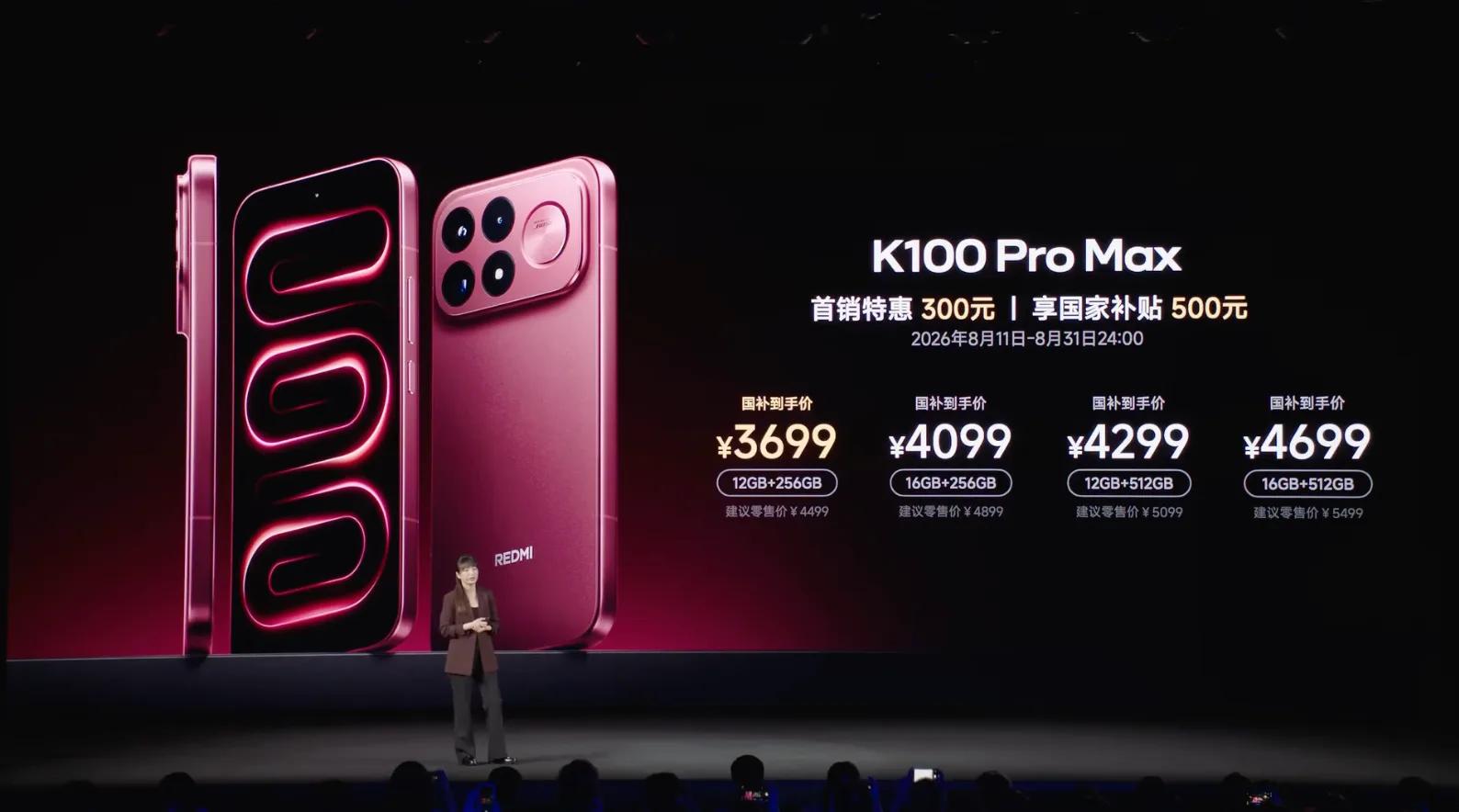
(Image source: Xiaomi)
REDMI is acutely aware that a large-screen phone is, first and foremost, a large-screen phone. Striving for thinness and lightness would be futile, and there's no necessity to compromise on battery life and heat dissipation for the sake of flashy designs. It can be said that nearly every inch of the device's internal space is dedicated to optimizing performance, battery capacity, imaging capabilities, and the inclusion of triple speakers.
This design choice, however, renders the device somewhat cumbersome to hold for extended periods and inconvenient for one-handed use.
Nevertheless, for power users, the benefits derived from this slight increase in weight are substantial. There's no need to carry a power bank when stepping out, gaming sessions remain worry-free in terms of heat dissipation, and the imaging setup is more than adequate for travel photography. These triple speakers can even serve as a viable alternative to your Bluetooth speaker.
For those seeking a large-screen Android flagship without the constant need to compromise on performance, battery life, telephoto capabilities, or external audio quality, the K100 Pro Max is undeniably a product that demands attention.
As for users of the K90 Pro Max, the configuration differences between these two generations are not substantial enough to warrant an upgrade for mere incremental improvements.
-
![]()
Xiaomi's MiMo Stages a Two-Year Comeback to Top Global Inference Volume Rankings
-
Tech Titans' Offline Tussle for Desktop Dominance: The Office Agent Showdown
-
![]()
Full-Spec Power and BOSE Subwoofer: The REDMI K100 Pro Max Performance Review
-
![]()
Yuewen’s Unending Innovation: Navigating Content Industry Shifts
-
![]()
Huawei, Li Auto, XPENG, Xiaomi: After Scrutinizing Seven Papers, What Are 'World Models' and 'VLA' Really Competing For?
-
![]()
Proposed to Raise 955 Million Yuan through Private Placement! Huicheng Vacuum Boosts Localization of Ultra-Precision Optical Coating Equipment
-
![]()
Cash Flow Soars 13-Fold! What Major Strategic Move is Wuhan Five Square Optoelectronics Planning?
-
![]()
Leaked Design of vivo X500: Reverts to Circular Camera Module in Top-Left Corner, Pays Homage to Classic X90 Aesthetic