Robot Phone: Honor CEO Li Jian’s Grand Vision for Machine Intelligence
 08/14 2026
 550
550
In the age of embodied AI, smartphones are poised to become the epicenter of intelligent agents.
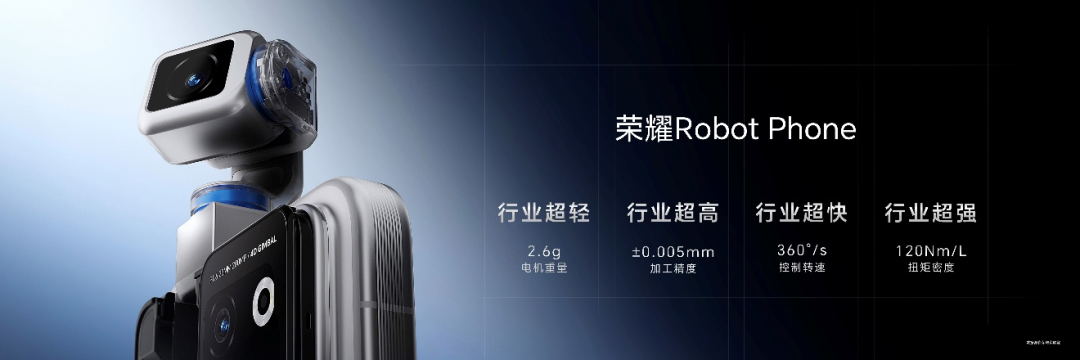
On August 12, Honor unveiled the Honor Robot Phone, the world’s first robotic smartphone, in Guangzhou. Featuring a four-degree-of-freedom titanium alloy agile gimbal, the industry’s first system-level Agent architecture, and film-grade video capabilities co-developed with ARRI—a century-old benchmark in cinematography—the device starts at 9,999 yuan, embodying Honor CEO Li Jian’s ambitious vision for machine intelligence.
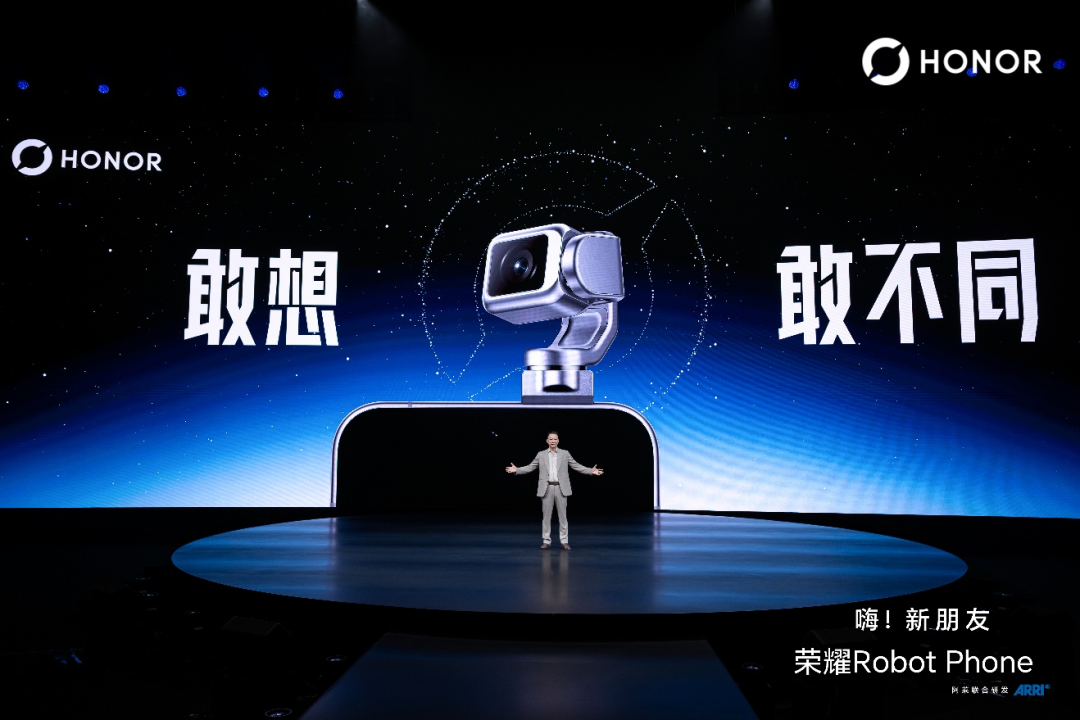
Li Jian assumed leadership as Honor’s CEO in January 2025 and, just two months later, announced the “Alpha Strategy.” This plan outlined a five-year investment exceeding $10 billion to construct an AI terminal ecosystem, encompassing not only smartphones but also AI-powered hardware like computers, earphones, and tablets.
A year later, in March 2026, the Robot Phone made its debut alongside Honor’s humanoid robot lineup. By July 2026, at the World Artificial Intelligence Conference (WAIC), Li Jian announced that the Robot Phone was available for pre-order across all channels. By its official launch on August 12, pre-orders had surpassed 400,000 units.
Amid a broader smartphone market decline—driven by rising memory prices, with Counterpoint Research reporting an 11% year-over-year drop in global shipments in Q2 2026, the lowest Q2 level since 2013—Blue Shark Finance acknowledged the foresight of Li Jian’s Alpha Strategy. This approach has fueled Honor’s resilient growth, with Li revealing in a post-launch media interview that Honor’s global sales rose 9% and revenue increased 11% in the first half of the year.
As CEO, Li Jian must navigate Honor’s IPO while distinguishing the brand in a fiercely competitive, homogenized smartphone market—requiring bold innovation.
On July 15, CITIC Securities disclosed that Honor’s IPO counseling had entered its third phase, focusing on resolving issues like fund allocation post-listing. What narrative will Honor present for its IPO? Xiaomi Corporation, even with Xiaomi Auto boosting its valuation, remains under pressure. If Honor is perceived solely as a smartphone brand, its valuation will remain constrained.
The hottest tech trend today? Embodied AI. This field integrates AI with physical devices such as intelligent vehicles, robots, and drones, aligning with China’s national “AI+” strategy. Honor’s IPO funds should be channeled into its AI terminal ecosystem and embodied AI. The launch of humanoid robots, robotic smartphones, and the evolution of Honor’s super-intelligent agent, YOYO, all reinforce this ecosystem.
Blue Shark Finance’s recent discussions with robotics firms revealed that many are investing heavily in data collection—from folding laundry to cooking, from moving boxes to assembling parts—due to the scarcity of real-world data for training robots.
Blue Shark Finance concurs: In the era of embodied AI, intelligence companies should not collect data for its own sake. Instead, intelligent devices should gather authentic, high-quality data during real-world usage, enabling machines to learn organically—akin to Tesla’s Full Self-Driving (FSD) system.
Currently, only a handful of devices—such as cars, smartphones, and computers—offer high portability. Smartphones, with nearly 1–2 units per person, feature powerful chips, cameras, and sensors, making them ideal primary intelligent agents capable of hosting super-intelligent systems like YOYO. (Smart glasses and earphones, constrained by form factors, lack sufficient computing power, storage, and camera capabilities.) Their portability also allows seamless connectivity with earphones, glasses, rings, computers, robots, and other hardware, positioning them as the intelligence hub of embodied AI. Could a smartphone become the “heart” of a future humanoid robot? This is the vision Li Jian champions.
By hosting the primary AI model, smartphones enable other devices to run lighter edge/terminal models, facilitating effortless AI-physical world interactions. This is the path Li Jian favors.
The Robot Phone may appear to simply add a gimbal to a smartphone, but it represents a significant cross-industry innovation—reminiscent of how smartphones disrupted Kodak’s camera empire and reshaped photography habits. Today, few use standalone digital cameras outside professional DSLRs.
Video offers a more authentic and comprehensive way to document life. The rise of platforms like Douyin and Bilibili has cultivated a culture of spontaneous video recording and sharing. While smartphones already offer photography capabilities, their form limits high-quality dynamic shooting in scenarios like self-driving, outdoor sports, and camping, often necessitating separate action cameras.
The professional action camera brand Insta360 boasts a market value exceeding 54 billion yuan, with Q1 2026 revenue reaching 2.481 billion yuan (up 83.11% year-over-year) and full-year 2025 revenue hitting 9.741 billion yuan (up 74.76% year-over-year).
The Robot Phone transcends traditional smartphone constraints, adopting a robot-like form. Its gimbal, paired with YOYO Pro mode (robot mode), enhances user intention perception and enables a seamless closed loop of perception, planning, reasoning, execution, and feedback. For instance, during a WeChat video call, the “video call tracking” feature automatically follows the user, ensuring they remain in frame while moving. Co-developed with ARRI, the device’s image quality, color grading, camera movements, and professional workflows position it as a portable film camera.
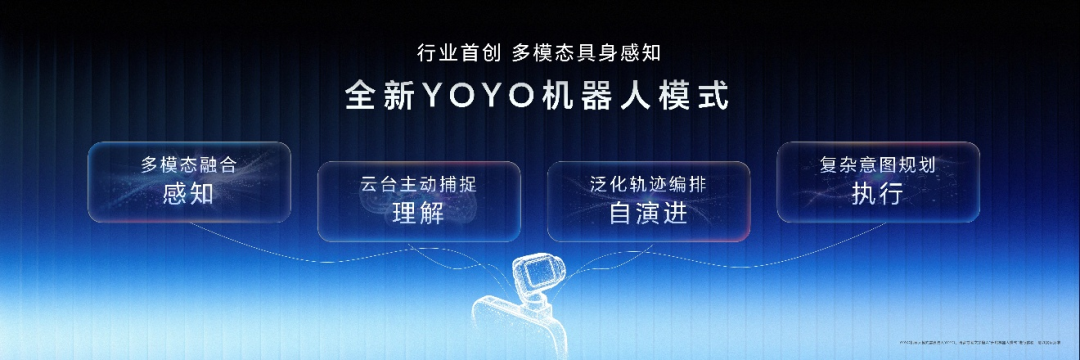
Honor’s pursuit of differentiation through robotic smartphones also aims to avoid price wars with competitors. Engaging in such wars amid rising memory costs would be “suicidal.” To justify premium pricing, Honor is enhancing YOYO’s capabilities while reimagining the smartphone’s form as a “robot.” Consumers are willing to pay nearly 10,000 yuan for a robotic smartphone but resist spending even a little extra on ordinary models.
-
![]()
Did Zhong Shanshan Make a Mistake?
-
![]()
Flash Charging and 'Celestial Eye': Standard Features in Qin MAX, Positioned to Challenge B-Class Sedans
-
![]()
Wey's Quandary: Can't Afford to Lose Blue Mountain, Yet V Series Struggles to Gain Ground
-
![]()
Google AI Sees Personnel Turmoil: Full-Stack as a Moat, but Also a Source of Conflict
-
![]()
Lenovo Group is Making Big Moves: Server Business Takes Off, AI Server Backlog Orders Reach 360 Billion Yuan!
-
![]()
WPS: A Future Plugin in the Making?
-
![]()
Zhang Xue Motorcycle Secures Sole Investment from Sequoia China, Valuation Soars to 6 Billion Yuan Post-Investment
-
![]()
Online Buzz: Alleged Leak of 'Little Blue Light' Rectification Blueprint