The Clash in Instant Retail: More Than a Superficial Speed Race, It's a Core Supply Chain Game-Changer
 12/18 2025
 667
667
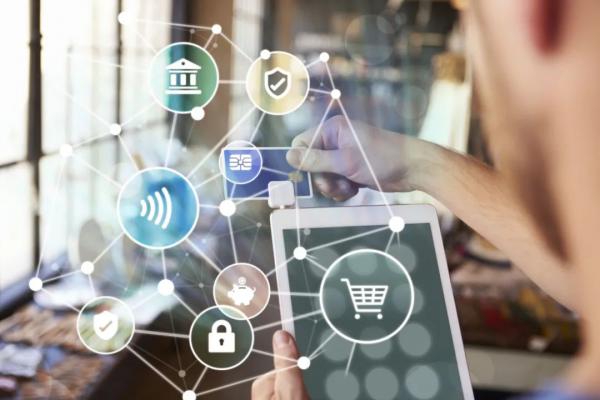
As consumer demands become increasingly diverse, traditional supply models are finding it harder and harder to keep up. Against this backdrop, the rise of instant retail and the integration of AI into e-commerce have become prominent trends. The surge in popularity of instant retail, in particular, warrants our keen attention. Both established e-commerce giants and traditional food delivery services are now setting their sights on instant retail. Consequently, the intense competitive scenes reminiscent of the internet era are resurfacing on the instant retail front.
Many perceive the instant retail battle as a mere repeat of past internet-era clashes, assuming that the competition among players is solely centered around acquiring traffic. However, a deeper dive into the underlying logic of the instant retail battle, especially its role within the broader e-commerce ecosystem, reveals that it is not a mere copycat but possesses its own unique set of internal dynamics.
As the instant retail wave continues to rise, it is crucial to clarify the new development opportunities it presents, the fresh perspectives it opens up, and the new directions it sets for industrial growth. Only by doing so can we truly grasp the significance of instant retail for all stakeholders, rather than simply relegating it to traditional frameworks or viewing it as a fleeting concept.
Instant Retail: The Epitome of Digital-Physical Integration
As the internet's initial dividends start to dwindle, especially when traditional e-commerce platform models hit their growth ceilings, the search for a new e-commerce paradigm has become a top priority for every player in the field. Against this backdrop, new e-commerce models spearheaded by instant retail have emerged. If we were to encapsulate and define instant retail, the author would argue that it represents the epitome of digital-physical integration, rather than a mere extension of traditional e-commerce models.
The rationale behind this assertion lies in the fact that instant retail not only challenges players' abilities to deliver products 'instantly' but also tests their depth and breadth of involvement in the 'retail' process. In this context, relying solely on traditional e-commerce models, where players merely serve as platforms and intermediaries, is no longer sufficient. Only by delving deeper into the retail industry and continuously strengthening the connection between the platform and the industry can instant retail truly flourish.
In other words, under the instant retail scenario, players not only take on traditional roles as platforms and intermediaries but also assume more 'tangible' tasks within the industrial and supply chains. If we consider traditional platforms and intermediaries as a form of digital economy, then the industrial and supply chains represent players' 'physical' deployments. For any player aiming to make a mark in the instant retail sector, continuously enhancing their digital-physical integration capabilities and implementing instant retail with the goal of virtual-real fusion is crucial for its rapid and seamless realization. Therefore, instant retail is not a replica of traditional e-commerce models but rather a paradigm shift towards digital-physical integration.
Instant Retail: A Reflection of Consumption Upgrade
One of the key drivers behind the emergence of instant retail is the evolving consumer landscape; consumers are no longer satisfied with traditional consumption models and are seeking an upgrade. Previously, after shopping online, consumers typically had to wait for a certain period before receiving their purchases. Although e-commerce players have introduced new models like next-day delivery to expedite the process, traditional e-commerce models still struggle to meet the urgent needs of some consumers. As consumption patterns upgrade, especially when e-commerce becomes an integral part of daily life, traditional e-commerce supply models increasingly fall short of meeting consumers' new demands.
While e-commerce platforms grapple with meeting consumers' upgraded demands, offline physical stores also need a more convenient and faster way to deliver goods instantly to consumers to boost sales. Examples include the release of new smartphones, emergency medication delivery, and instant food delivery. In this context, offline physical stores are also beginning to embrace instant retail as a new avenue for growth.
Whether viewed from the perspective of online e-commerce platforms or offline physical stores, traditional models are increasingly inadequate in meeting consumers' new demands amidst consumption upgrades. Against this backdrop, new retail models represented by instant retail have emerged and evolved. From this standpoint, if we were to summarize and define instant retail, it more closely resembles an experience of consumption upgrade. Through it, we witness the diversification of consumer demands and the emergence of new market segments.
Instant Retail: A Byproduct of Industrial Upgrading
Currently, various industries and scenarios are undergoing comprehensive transformations. Instant retail has emerged and evolved against this backdrop. If we were to define instant retail, it more closely resembles an external manifestation of industrial upgrading. Through the popularity of instant retail, we observe new growth opportunities in the existing market landscape and the emergence of new avenues arising from industrial upgrading. Therefore, instant retail is not merely a replica of traditional e-commerce models but an external reflection of internal industrial advancements.
Through instant retail, we witness traditional e-commerce players supplementing their supply models, traditional physical merchants bridging the 'last mile' from stores to consumers, and the gradual maturation of the C2M (Consumer-to-Manufacturer) model, where goods are delivered directly from manufacturers to consumers. Only by viewing instant retail from the perspective of industrial upgrading and genuinely seeking new development opportunities through it can we overcome biases towards instant retail and gain a clear and objective understanding of its potential.
Judging by the popularity of instant retail among major players, it indeed resonates with industrial upgrading and unlocks new development opportunities. However, we must also acknowledge that current instant retail is still constrained by traditional elements and mechanisms; it requires a continuous infusion of new elements and the discovery of new operational logics. At this juncture, instant retail is poised to unveil new development opportunities and release even greater dividends.
Instant Retail: A Testing Ground for Emerging Technologies
When examining instant retail, we must also place it within the broader context of the e-commerce industry rather than viewing it in isolation. We know that a new revolution led by AI is currently unfolding in the e-commerce sector. All e-commerce players are leveraging AI to achieve profound internal and external transformations. For them, seizing AI technologies equates to capturing new development dividends in e-commerce.
Currently, we have already witnessed the significant functions and roles of AI at the consumer and merchant ends. However, this is merely the tip of the iceberg. As AI gradually matures, especially when it begins to forge deeper connections with e-commerce itself, we will witness the release of even more new dividends.
Meanwhile, instant retail represents one of the most promising areas in the current e-commerce landscape. As AI begins to take root, instant retail also serves as an important testing ground for emerging technologies. By implementing and applying new technologies like AI to instant retail, we can unlock even more of its potential. As instant retail begins to unveil more new opportunities, it also opens up new development prospects for emerging technologies. By combining instant retail with new technologies like AI, we can unleash even greater quantities of innovation and open up more new dividends for industry players' development.
Epilogue
As the instant retail wave continues to rise, especially with an increasing number of players entering this sector, there is a lack of relatively objective understanding of instant retail. This significantly underestimates the energy inherent in instant retail and fails to truly grasp its internal logic. By recognizing the essence of instant retail and finding genuine points of integration, we can truly grasp its connotations and uncover new opportunities on the new track of instant retail.
-
![]()
Chevrolet and Skoda Exit China Before Mazda and Peugeot-Citroen
-
![]()
Zuckerberg's Concerns About Superintelligence: Who Holds the Power When the Technology Arrives?
-
![]()
Auto Scene Competition in Full Swing
-
![]()
Just Hit with a $1.4 Trillion Lawsuit, Meta Open-Sources Its 30B "Pocket Rocket" Overnight: Zuckerberg Calls Out DeepSeek, Qwen, Kimi
-
![]()
Samsung Z Fold 8 Ultra Review: A $2,100 Foldable Flagship—What Justifies the Price?
-
![]()
Rocket Lab: Neutron Launch May Be Postponed. How Can RKLB Compete with SpaceX?
-
![]()
The Wealthiest Individual Critiques E-commerce: 'Championing the People' or 'Falling Prey to Business Theft?'
-
![]()
The 10-Trillion-Parameter Behemoth is Still Elusive, but ByteDance is Leading the Charge with a New Top-Tier Department