iQIYI’s Strategic Shift: Gong Yu’s Vision Amidst Uncertainty
 04/30 2026
 714
714
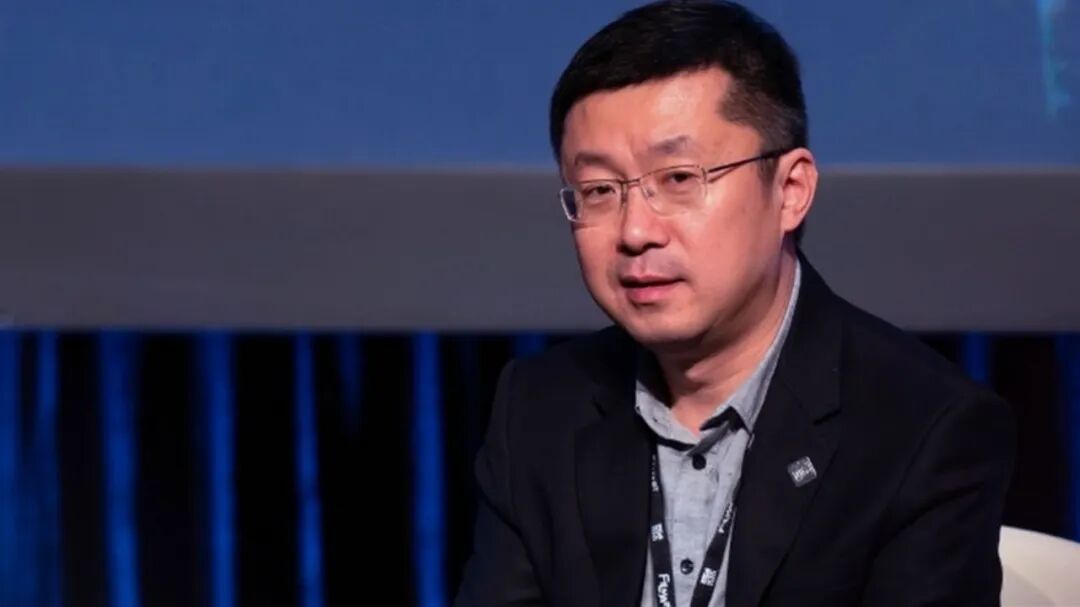
Gong Yu has chosen a promising path, but the platform’s execution remains unproven.
When the CEO of a streaming giant declared to an audience of ten thousand that “future live-action filmmaking may become intangible cultural heritage,” his words transcended mere technological optimism—they signaled a paradigm shift.
At the 2026 iQIYI World Conference in Beijing, iQIYI unveiled the most radical strategic pivot in its 16-year history: transitioning from a centralized video platform to a decentralized social media ecosystem. This transformation was accompanied by the launch of “Nado Pro,” a comprehensive AI-powered film and television creation service system.
On the conference day, “iQIYI has gone crazy” dominated Weibo’s trending list, while multiple frontline celebrities issued urgent denials, clarifying they had “never signed AI authorization agreements.”
Ambition and chaos, resolve and disorder, collided in the spotlight. A publicly traded company with annual revenues of ¥27.29 billion, facing pressure across its core businesses, is attempting to redefine its identity through an aggressive AI narrative.
It aims to narrate a story of platform self-revolution. But beyond the storytelling, risks loom large.
01
The Rise of a “Decentralized” Vision
“Historically, technological innovation first transformed platforms, then content. This time, AI is transforming content itself,” Gong Yu explained at the conference, outlining the rationale behind the shift.
iQIYI envisions its future as a “decentralized social media platform,” where creators leverage Nado Pro to produce content, gain private domain traffic and operational autonomy through new iQIYI accounts, and monetize via a unified “revenue-sharing model based on actual project income, with no upper limit.”
Nado Pro integrates nearly 70 intelligent agents covering screenwriting, directing, art design, and editing, while granting creators access to iQIYI’s IP library, digital asset library, and talent pool accumulated over two decades.
Among the concurrently announced “Three Major Plans,” the “Wildfire Plan” sets an ambitious target: releasing over 40 AIGC films in 2026, with AIGC projects accounting for 50% of future pipelines.
This is no minor adjustment. Gong Yu aims to evolve iQIYI from a “content platform” into a “content ecosystem platform.”
The narrative’s persuasiveness lies in its response to industry anxieties.
First, cost concerns. Gong Yu predicts that within one to three years of large-scale AI adoption, production costs could plummet to one-third or even one-tenth of current levels. Second, efficiency pressures. iQIYI estimates it will release 25,000 short dramas and 35,000 animated dramas in 2026—a volume unattainable through traditional methods alone.
Industry trends align with this vision: Kuaishou’s Senior Vice President Ma Hongbin revealed at the same event that Kling AI has slashed micro-short drama production costs to below one-third of traditional levels, with cycle times reduced by over 60%. AI-driven cost reduction is already an industrial reality.
Gong Yu sees an opportunity: when technological barriers to content creation crumble, whoever provides creators with essential infrastructure can ascend from a “pipeline” to a “hub.”
It’s a compelling story, but its financial foundations warrant scrutiny.
Shifting focus from the conference’s central PPT presentations to financial reports released four quarters earlier reveals a different iQIYI.
In 2025, iQIYI’s total revenue was ¥27.29 billion, down 7% year-on-year; under U.S. GAAP, net loss attributable to the parent company was ¥206 million, compared to a ¥764 million profit in 2024. Under non-GAAP, net profit stood at just ¥280 million, an 81% plunge from the previous year’s ¥1.51 billion.
More alarmingly, all three core businesses retreated simultaneously: membership revenue was ¥16.81 billion (-5%), advertising revenue was ¥5.19 billion (-9%), and content distribution revenue was ¥2.5 billion (-12%).
A noteworthy detail: iQIYI still led the industry in total effective viewership market share for dramas in 2025, with five series surpassing 10,000 in heat (popularity). However, Yunhe Data shows that among the top 10 new dramas by effective viewership in 2025, iQIYI claimed four spots but none reached the top three. Overall effective viewership for the top 20 dramas shrank by 20% year-on-year.
What did it sacrifice for that market share leadership? Scale without blockbusters.
This is not unique to iQIYI. The entire long-form video industry is grappling with “attention inflation.” According to the China Network Audio-Visual Development Research Report (2026), the average daily usage time per person for micro-short drama apps reached 129 minutes in December 2025, surpassing long-form video. DataEye data shows that total viewership for AI dramas/animated dramas neared 130 billion in Q1 2026, with Hongguo Free Short Drama App’s MAU exceeding 300 million. Viewers aren’t spending less time—they’re just going elsewhere.
In this context, iQIYI’s AI narrative gains another layer of interpretation: it’s not merely a strategic move but a repositioning amid capital market and industry pressures.
With revenue under pressure, profits bottoming out, and competition intensifying, a narrative that explains past difficulties and anchors future direction holds strategic value.
02
Talent Pool Controversy: Long-Form Platforms’ Collective “Right Turn”
But a compelling story requires flawless execution. iQIYI stumbled here.
On the conference day, iQIYI announced that over 100 collaborating artists had agreed to join the Nado Pro talent pool, displaying a star-studded list on a large screen. However, before the press conference ended, Zhang Ruoyun’s studio issued the first denial: “No AI-related authorization agreements have been signed. Legal is handling this urgently.” Yu Hewei, Wang Churan, and Li Yitong followed suit. More dramatically, some artists on the list were unaware of their inclusion. Thus, a platform’s PR team was hoisted by its own petard.
iQIYI later clarified: “Inclusion in the talent pool means artists are open to AI film and television projects, but participation in specific projects or roles requires separate negotiation and authorization.” But this explanation only told half the story. If “agreeing to join” merely expresses willingness, what criteria were used to count “over 100 already joined” on the screen? How did artists whose right to know wasn’t respected “express willingness”?
In other words, beyond technical ethical controversies, this is a fundamental business ethics issue. For a platform seeking to attract countless creators, its crude and arrogant handling of core talent assets hurts more than any quarterly loss.
“Audiences want to see real people with sweaty pores and reddened eyes, not perfectly stitched-together fake faces,” Feng Yuanzheng’s remark was widely quoted: “AI actors’ tears are painted on, but mine flow from within, with warmth and taste.”
Gong Yu likely understands this. In a pre-conference interview, he explicitly stated that actors’ digital portrait rights are essentially “performance migration,” with authorization limited to specific projects and not granting platforms blanket usage rights.
This statement is legally sound. But in execution, the signals from the market and team diverged sharply. When a CEO tries to define rights boundaries with precise technical language, the market responds via trending topics: “Users don’t care how you define it; they care whether artists were ‘represented’ without consent.”
Focusing solely on iQIYI might suggest this is an isolated gamble by a platform in distress. But a broader view reveals nearly the entire industry making similar choices simultaneously.
Just days before the iQIYI World Conference, at the 13th China Network Audio-Visual Conference, Tencent Vice President Sun Zhonghuai announced a major initiative: Tencent Video is advancing AI-powered full-process production for a dozen-episode series and 90-minute film projects, expected to launch in Q3 2026.
Sun admitted that his previous predictions about AI long-form dramas now seem conservative.
Kuaishou’s Senior Vice President Ma Hongbin disclosed that Kling AI had deeply participated in virtual scene production for the TV drama Peaceful Years, compressing traditional two-month tasks into under two weeks. ByteDance’s Seedance 2.0 video generation model fully integrated into Doubao and Jimeng products in February 2026, achieving the world’s first deep application via the 2026 CCTV Spring Festival Gala. Even ByteDance, more cautious on compliance, officially launched real-person digital avatar functions in Jimeng and Doubao Apps.
These companies follow distinct paths: Tencent goes big, starting with long-form dramas and theatrical-quality works, leveraging heavy resources for high momentum. Kuaishou adopts a pragmatic strategy, cutting into costs for micro-short dramas and pushing directly to creators. ByteDance starts from the user side, empowering ordinary people to generate AI video content with technical capabilities.
In comparison, iQIYI’s path is the most complex and aggressive—attempting to simultaneously build tool layers, content layers, asset layers, and ecosystem layers, transforming the platform into a foundational operating system.
Pony Ma previously commented: “The key to sustaining long-form video membership lies in a few blockbuster dramas.”
To some extent, iQIYI seeks to overturn this logic. In its new narrative, the future may not require “a few blockbusters” to bet on luck but rather massive AI content to form a baseline. This represents a mindset shift from “gambling on hits” to “building infrastructure”—its correctness remains to be verified by time, but the direction is clear.
03
Gong Yu’s Bet: Vision vs. Execution
Before the AI narrative, iQIYI had already pursued a “second growth curve” through overseas business.
In 2025, iQIYI’s overseas membership revenue grew over 30% year-on-year, accelerating to 40% in the second half, with membership scale reaching a record high. In Brazil, Mexico, Indonesia, and multiple Spanish-speaking markets, membership revenue doubled. Particularly noteworthy is Thailand: according to Dataxis, Chinese streaming platforms now hold about 40% of Thailand’s market share, surpassing U.S. platforms led by Netflix.
iQIYI’s strategy in Thailand warrants closer examination. The self-produced Thai drama Soul Rebirth in Q3 became a hit, setting international Thai drama records for membership revenue and topping Google and Twitter trends. More interestingly, after adding subtitles for global distribution, its revenue in the U.S. and other overseas markets surpassed Thailand’s domestic market.
Thai dramas have become the second content category with international reach after Chinese-language dramas. Meanwhile, the foundation of Chinese-language content remains solid: Chaoxue Lu ranked first in Google Trends heat (popularity) across five markets including Thailand, Malaysia, and South Korea, with Thai-dubbed versions setting new records for watch time and revenue peaks.
From Thailand’s experience, succeeding overseas relies not on disruptive technological revolutions but on two simple things: finding the right local partners and grasping local cultural preferences. The “Thailand Model” centers on deep localization rather than aggressive Chinese-style replacement.
AI transformation faces similar issues. Regardless of technological evolution, whether a work resonates with audiences ultimately depends on whether it provides genuine emotional connection.
Just as in overseas markets, what moved Thai local users wasn’t a Chinese narrative template but stories told in local language with deep localization. For AI, what moves users won’t be the technology itself but whose expressions it carries.
Returning to the original question: What is iQIYI trying to convey?
It aims to communicate an AI-driven self-revolution reshaping the company at a genetic level; to tell the capital markets it has found a new trajectory beyond traditional long-form video growth logic; to tell the content industry that joining this transformation is the future.
But a story’s validity depends not just on its grandeur but on the storyteller’s posture. What does the talent pool controversy reveal? A clear disconnect between grand narrative and daily operations. On one side, the CEO discusses “exponential growth” in future film and television content production; on the other, the legal team handles cooperation confirmations in the least efficient manner.
Gong Yu attempts to aggregate all creative elements under decentralization, but faces a paradox about “centrality”: iQIYI wants to be a decentralized platform yet remains highly dependent on centralized rules and authority. It seeks to activate creators’ autonomy but first shows disrespect for that autonomy when dealing with artists.
This internal tension cannot be masked by a single PR crisis.
From a broader perspective, iQIYI must answer more fundamental questions: When redefining itself from a video platform to a decentralized social media platform, what truly differentiates it from Douyin, Kuaishou, and Bilibili?
When AI reduces content production barriers to near-zero, how will value coordinates be established among massive content volumes? When all platforms tell the same “technology empowers creation” story, what is iQIYI’s moat? Is it the toolchain of nearly 70 intelligent agents, the two-decade IP asset library, or something else?
These questions have no immediate answers.
For Gong Yu, the most difficult moment may not be the 2025 loss-reporting quarter but now: having declared the transformation’s direction across all dimensions, every quarterly metric, every work’s quality, every artist’s contract, and every creator’s experience will now serve as yardsticks to test this narrative.
Technology is all about providing certainty, whereas its execution is fraught with uncertainty. iQIYI harbors the ambition to evolve from merely being a survivor of the bygone era into a trailblazer forging a new order. However, before anything else, it needs to confront a fundamental question: Are the architects of this new order truly deserving of the rules they establish?
— END —
-
![]()
Proposed to Raise 955 Million Yuan through Private Placement! Huicheng Vacuum Boosts Localization of Ultra-Precision Optical Coating Equipment
-
![]()
Cash Flow Soars 13-Fold! What Major Strategic Move is Wuhan Five Square Optoelectronics Planning?
-
![]()
Leaked Design of vivo X500: Reverts to Circular Camera Module in Top-Left Corner, Pays Homage to Classic X90 Aesthetic
-
![]()
DeepSeek Shows Signs of Foraying into Code Agents, Launches WeChat Official Account Focused on Harness
-
![]()
Auto Companies Deny Claims That ‘Cooperation with Huawei Is Non-Essential’, as Huawei Transforms into a ‘Public Platform’
-
![]()
Starship to Independently 'Return to the Launch Tower': SpaceX's Ambitions Extend Beyond Rocket Building to Dominating Space Transportation
-
![]()
Starship Set to Independently 'Return to the Launch Tower': SpaceX is Revolutionizing Space Transportation, Not Just Building Rockets
-
![]()
Anthropic and OpenAI Face Off Against Deepseek