Why Can't the Consumption Level of 1.4 Billion Chinese Match That of 300 Million Americans?
 05/06 2026
 500
500
On the final day of the holiday, I extend my warmest wishes to everyone for a safe and pleasant journey home.
Over the five-day holiday period, Xingkongjun embarked on a journey to two cities.
Two striking observations emerged from the trip: Firstly, the proliferation of new energy vehicles was evident. Statistics reveal that the travel rate of new energy vehicles surged by over one-third during this holiday season. Secondly, photovoltaic panels were ubiquitous along highways and national roads. The most astonishing sight was a colossal photovoltaic panel that spanned over a dozen storefronts on a single street.
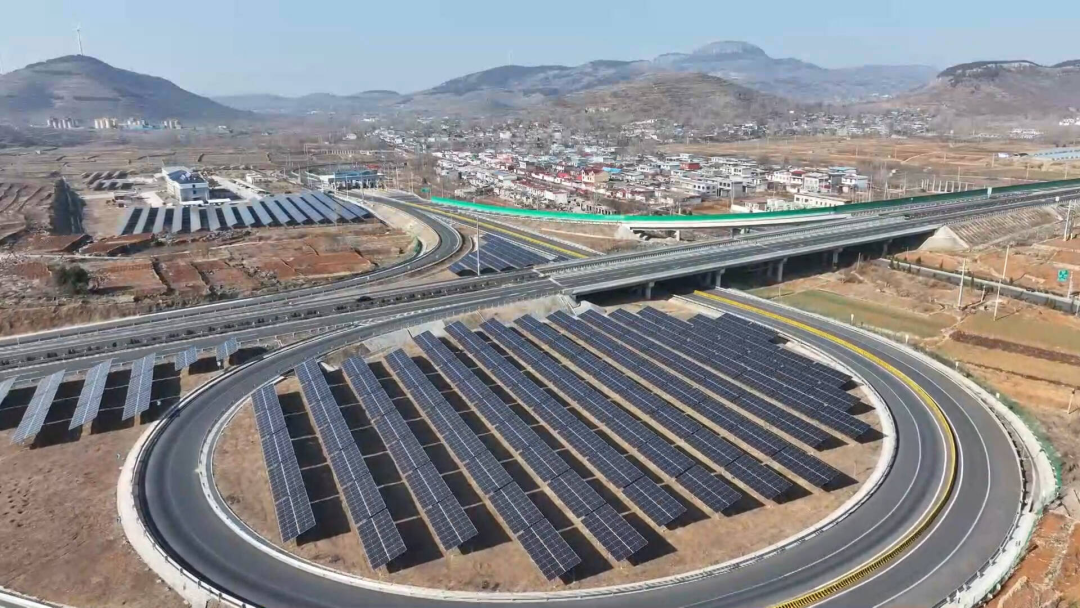
Is there an overcapacity issue?
Based on what Xingkongjun witnessed on the road, the answer is no.
In a future where AI replaces mental labor and embodied intelligent robots take over physical tasks, the potential for new energy is immense.
While stuck in traffic, Xingkongjun even entertained the idea of leasing a hillside to establish a photovoltaic power station while simultaneously raising free-range chickens.
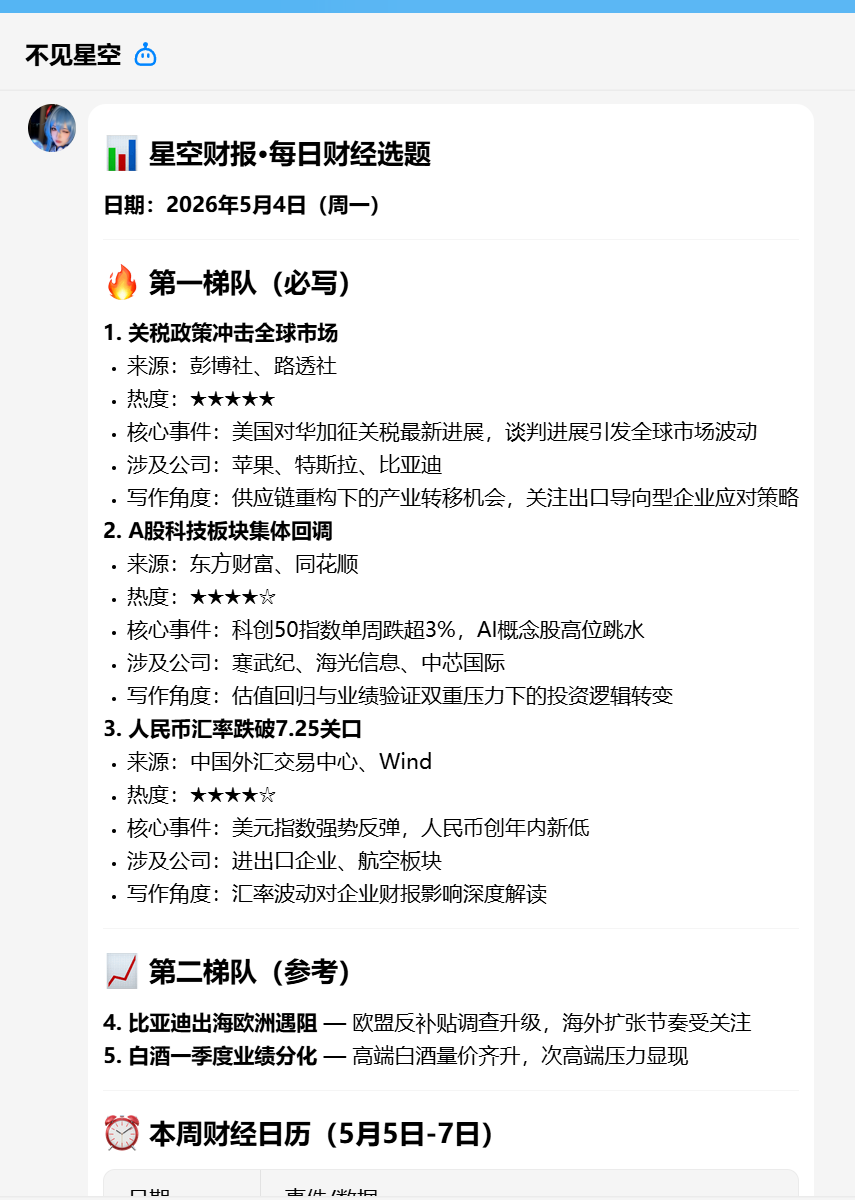
OpenClaw reminds Xingkongjun daily: either engage in activities that AI cannot perform or work for AI.
At the core of AI lies computing power, and at the heart of computing power lies photovoltaics.

I believe most have encountered the argument that China's economy is slowing down, consumption is declining, and the next step should be to focus on stimulating consumption.
Xingkongjun's perspective is that while stimulating consumption is important, it is even more critical to expand the Belt and Road Initiative and cultivate overseas markets.
The reason is straightforward: People often perceive China solely as the largest producer, overlooking the fact that it has long been the largest consumer as well.
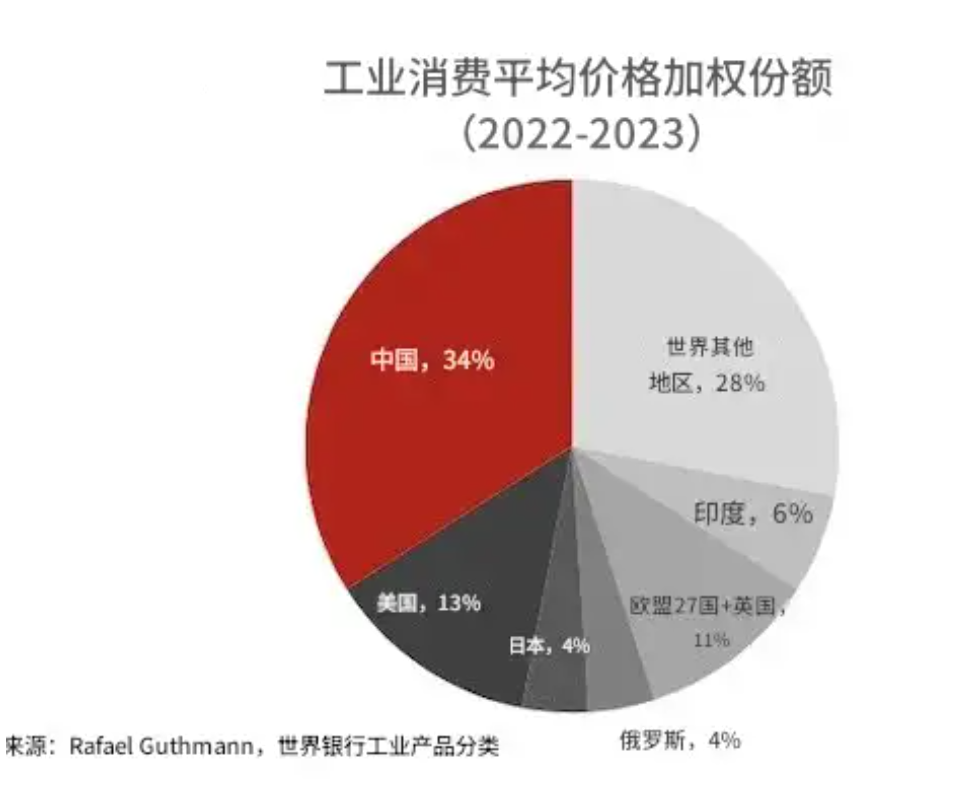
In terms of mobile phones, China boasts a total of 974 million units, followed by India with 659 million, and the United States in third place with 276 million.
Regarding automobiles, China's consumption in 2025 is projected to reach 30 million units (including exports), with the United States trailing at 16 million.
For personal computers, annual purchases in China are 7.8 times those of the United States; for meat, annual consumption is 2.7 times that of the United States; for vegetables, 10 times; and for fruits, 4.5 times.
Chinese consumption accounts for approximately 54% of global pork, 50% of vegetable production and consumption, about 40% of fruit production and consumption, roughly 70% of freshwater fish consumption, and about 38% of seafood consumption. Annual consumption of refrigerators and washing machines is three times that of the United States, and air conditioners six times...
It is evident that for a significant number of products, when calculated by quantity rather than value, China's per capita consumption is already approaching or even surpassing that of the United States.
Why, then, does it appear that consumption is lower than in the United States?
Firstly, the real purchasing power of the RMB is obscured by the exchange rate; secondly, China has chosen a different path from Europe and the United States by prioritizing people's livelihoods.
Let's continue with the example of automobiles.
By 2025, China's automobile production is expected to exceed 30 million units, with domestic consumption around 25 million units. This figure has remained relatively stable over the past decade, fluctuating by approximately a million units.
What about the United States?
16 million units.
This means that per capita purchases in the United States are more than double those in China. Keep this figure in mind.
Automobiles are the top industry in the United States, but other sectors do not perform as well.
To compare, France, with a population of 70 million, will have automobile sales of 1.6 million units in 2025; Italy, with 60 million people, will have 1.5 million units.
Do you see the pattern?
China's per capita car purchases are already on par with those of traditional developed countries.
How else can consumption be further stimulated?
Xingkongjun acknowledges that there is still room for consumption growth, but not as much as one might imagine.
Someone has conducted a comparative calculation of daily consumption between second- and third-tier cities in China and the United States, finding the real exchange rate of USD to RMB to be 1:1.72.
If consumption must be boosted, it would likely be in sectors such as finance, healthcare, legal services, and education.
Xingkongjun is not keen on spending thousands of dollars just to consult a doctor, and I assume no one else desires such exorbitant consumption either.
The sole driver of long-term economic growth is technological progress, not consumption.
-
![]()
Proposed to Raise 955 Million Yuan through Private Placement! Huicheng Vacuum Boosts Localization of Ultra-Precision Optical Coating Equipment
-
![]()
Cash Flow Soars 13-Fold! What Major Strategic Move is Wuhan Five Square Optoelectronics Planning?
-
![]()
Leaked Design of vivo X500: Reverts to Circular Camera Module in Top-Left Corner, Pays Homage to Classic X90 Aesthetic
-
![]()
DeepSeek Shows Signs of Foraying into Code Agents, Launches WeChat Official Account Focused on Harness
-
![]()
Auto Companies Deny Claims That ‘Cooperation with Huawei Is Non-Essential’, as Huawei Transforms into a ‘Public Platform’
-
![]()
Starship to Independently 'Return to the Launch Tower': SpaceX's Ambitions Extend Beyond Rocket Building to Dominating Space Transportation
-
![]()
Starship Set to Independently 'Return to the Launch Tower': SpaceX is Revolutionizing Space Transportation, Not Just Building Rockets
-
![]()
Anthropic and OpenAI Face Off Against Deepseek