2026 Beijing Auto Show Observations: Unveiling the New Competitive Logic in the Auto Market Amidst Order Surge
 05/06 2026
 623
623
The 2026 Beijing International Auto Show not only delivers a profound and refreshing insight into the automotive industry but also prompts us to confront a pivotal question: What future trends in the auto market does this 'world's largest auto show' reveal, and what factors are truly driving the surge in orders?
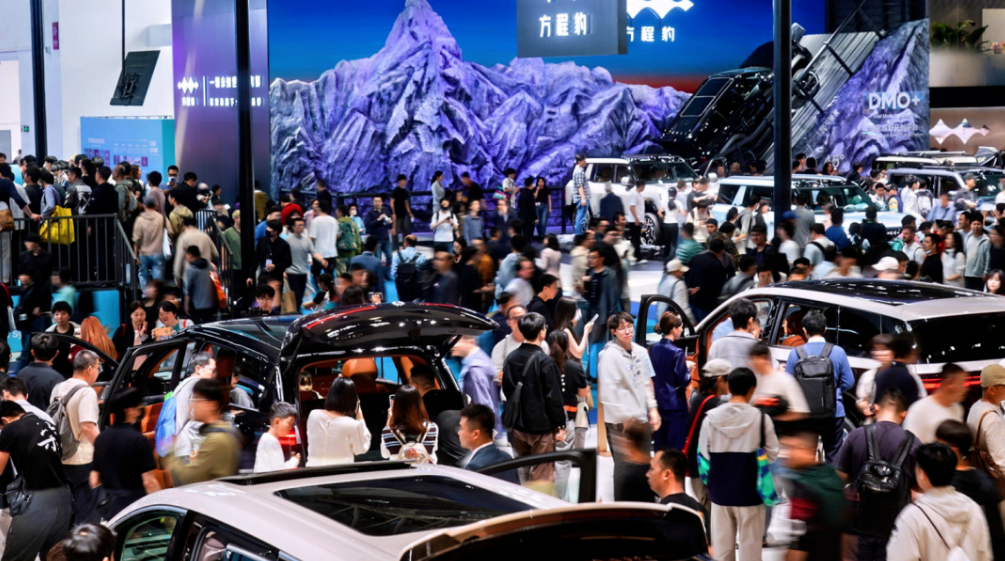
Following the 'traffic war' of 2024 and the 'price war' of 2025 in the auto market, the 2026 Beijing Auto Show unveils a more intricate and mature competitive landscape. While technologies are becoming increasingly homogeneous, the order data narrates a different story.
What is truly at stake at this auto show? Behind the order surge, which brands have truly cracked the code to captivate consumers? Who are the potential winners in the future market?
Which Brands Have Secured 'Tangible' Orders?
Hongmeng Zhixing's five new models have made a notable impact. The Shangjie Z7 series, launched prior to the auto show with a starting price of 219,800 yuan, secured over 12,000 firm orders within 27 minutes of its debut. With the auto show's added exposure, preliminary orders soared to over 80,000. Positioned in the 220,000-260,000 yuan range, it targets the upper echelon of family car upgrades and high-end pure electric budgets, avoiding the fierce competition in the luxury segment above 300,000 yuan.
As Hongmeng Zhixing's inaugural MPV, the Zhijie V9, with a pre-sale price starting at 399,800 yuan, was showcased for public experience for the first time at this Beijing Auto Show. Its large size, spacious interior, and rich configurations led to over 12,500 orders within an hour of pre-sale, accumulating 22,500 orders within 72 hours.
The all-new Aito M9, with a pre-sale price starting at 499,800 yuan, boasts multiple cutting-edge features such as six LiDAR sensors, the new-generation ADS 5, and a 32-inch retractable projector. Within 72 hours of pre-sale, it received 25,000 reservations. This model, consistently topping the sales charts for SUVs priced above 500,000 yuan, continues to garner high attention and appeal post-upgrade.
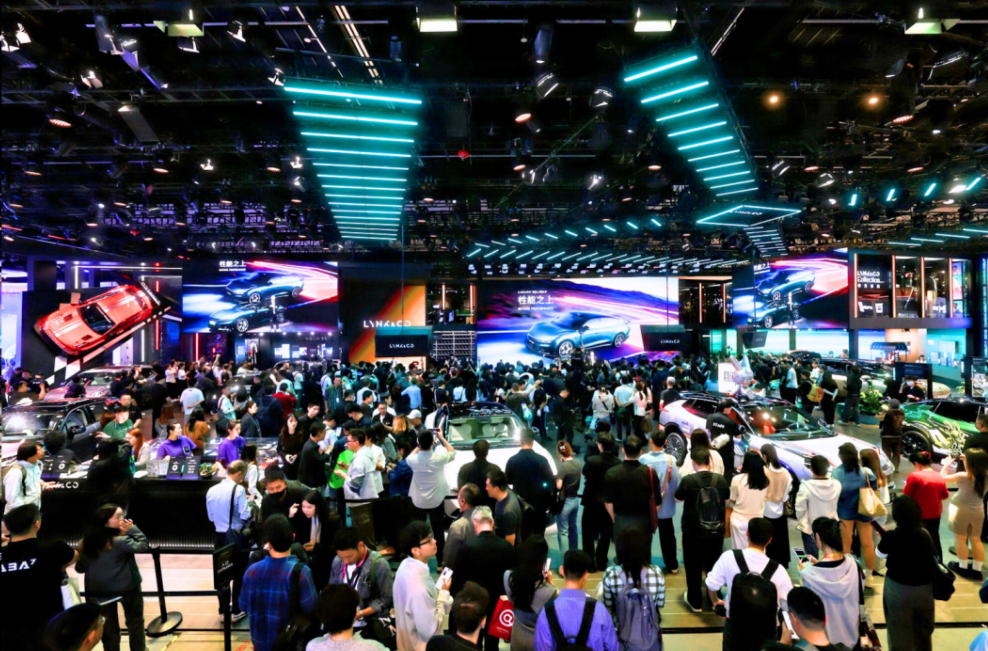
BYD's flagship full-size SUV, the 'Datang,' opened pre-sales on the first day of the auto show, priced between 250,000-320,000 yuan. Equipped with cutting-edge technologies like the second-generation Blade Battery, flash charging, rear-wheel steering, Yunlian-A dual-chamber air suspension, and the 'Divine Eye' 5.0, it offers a maximum range of 905 km and accelerates from 0 to 100 km/h in just 3.9 seconds. Within 24 hours of pre-sale, orders exceeded 30,000. BYD's systematized competitiveness, encompassing manufacturing capabilities, charging network, and technological architecture, underpins the '30,000 orders in a day' achievement for the Datang.
SAIC Volkswagen's ID. ERA 9X stands out with impressive data. Since pre-sales commenced at the end of March, orders have surpassed 10,000, with over half from users of other brands. Within the first hour of its launch, 11,079 firm orders were secured. Firm orders, representing the final purchase confirmation by consumers, hold significantly more weight than preliminary or firm reservations. Priced at a limited-time offer starting at 299,800 yuan, the ID. ERA 9X comes standard with hardcore configurations like the EA211 golden range extender, dual motors, active rear-wheel steering, and a 192-line LiDAR sensor, achieving 'full configuration from entry-level.' The ID. ERA 9X's success demonstrates that joint venture brands can regain user mindshare through 'deep technological integration + unwavering commitment to quality' in the intelligent electric vehicle era, rather than passively defending market fringes.
The Zeekr 8X, built on the SEA-S super electric hybrid architecture, comes standard with a 900V high-voltage platform. The performance flagship version accelerates from 0 to 100 km/h in just 2.96 seconds, securing over 10,000 firm orders within 29 minutes of its launch. Although the Zeekr 007GT refreshed version was launched before the auto show, its popularity persisted into the event. Within three days of its launch, orders exceeded the total for the previous model's first month, setting a new brand record. This phenomenal performance signals Zeekr's transition from single-model success to breaking through with a luxury product matrix system, a long-term competitive advantage in aggressive market environments.
Common Traits of Models Succeeding in Orders
A systematic analysis of the aforementioned best-selling models reveals four common traits contributing to their order success at this auto show.
Firstly, systematized technological output has replaced single selling points as the driving force. Technological competition at this auto show is no longer about stacking scattered parameters but about presenting concentrated system capabilities.
Secondly, precise user targeting has replaced broad outreach. Brands should identify precise niches between 'broad and comprehensive' and 'narrow and refined' positioning. A more rugged (here meaning 'broad and unfocused') product matrix creates a stronger sense of distance for consumers.
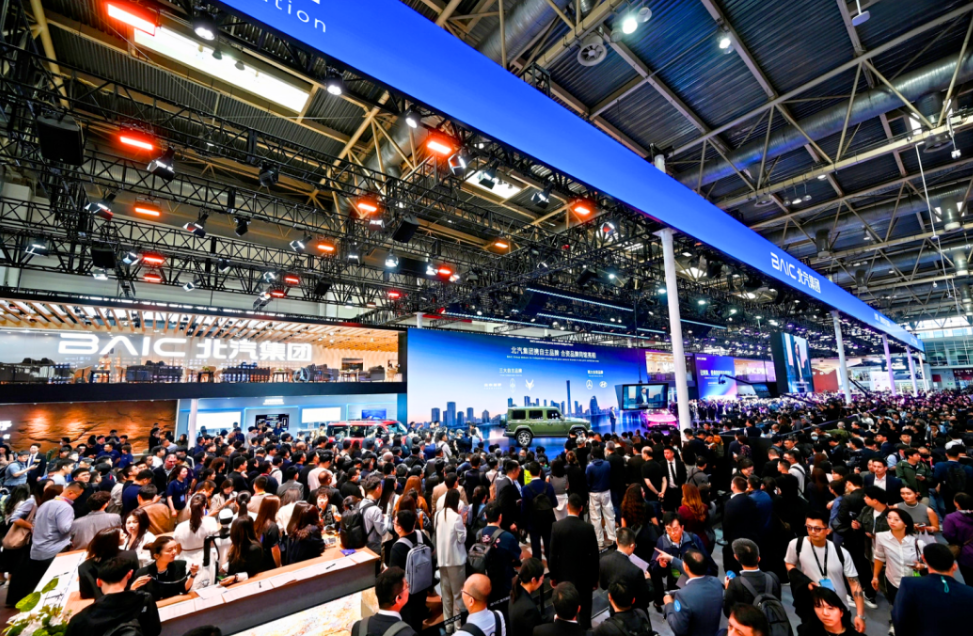
Thirdly, user-centric product definitions surpass parameter stacking. This 'user-centric approach to car manufacturing,' deriving functions from user scenarios, resonates more deeply with consumers than mere configuration lists.
Fourthly, joint venture brands are transitioning from 'followers' to 'game-changers.' The ID. ERA 9X not only exceeds expectations for joint venture enterprises in the high-end new energy market but also proves their ability to create higher-value products in the latter half of the new energy era. The dual drive of traditional joint venture brands returning to the essence of car manufacturing and deep integration with intelligence grants them a top-tier ticket to compete with local brands.
Competitive Landscape Shifts Revealed by Order Data
Behind the grandeur of the Beijing Auto Show, key data reveals greater market challenges: domestic auto sales in the first quarter of 2026 reached 7.048 million units, down 5.6% year-on-year, indicating weak consumer demand. The concentrated release of new models at the show not only injects new vitality into the auto market but also quietly rewrites the logic of market competition.
Firstly, the integration of TMT (Technology, Media, Telecommunications) with the automotive industry is moving from 'concept' to 'mass production.' Automobiles are transitioning from a 'large industry, small ecosystem' to a 'large industry, large ecosystem.' This means the automotive industry is no longer an independent, closed value chain but a fully open ecosystem where AI large model companies, chips, and data service platforms become integral parts of vehicle systems in a more tightly interconnected manner.
Secondly, competition between local autonomous brands and joint venture brands is shifting from 'clashes' to 'coexistence.' The leading tier of local brands has formed an impenetrable double moat of technology and cost, but joint venture brands have found their own leverage points in the triple game theory (here meaning 'competition') of price-technology-user mindshare.
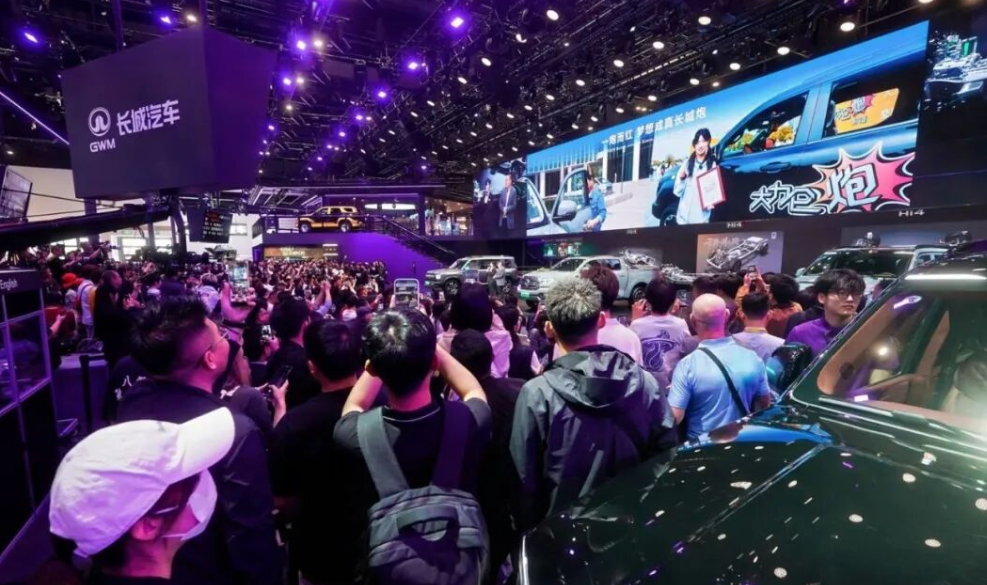
More notably, the 'landing' of flying cars and their mass production signify that the boundaries of automotive product definitions are being broken. Automobiles are no longer just road vehicles but experience systems intertwined with the low-altitude economy, which will have an immeasurable and profound impact on the mobility industry and even urban planning in the next decade.
The 2026 Beijing Auto Show underscores one thing: users are no longer blindly chasing flashy trends; their choices are returning to genuine product quality, technological advancement, economic value, and long-term reliability. When technology fully integrates into system evolution from isolated breakthroughs, user needs will be more precisely dissected and satisfied. This is the inevitable path for the automotive industry as it matures.
-
![]()
XiaoPai Unveils Home AI Brain, Paving the Way for Smart Homes to First Grasp 'Home Understanding'
-
![]()
Is the Future of Extended-Range EVs Pure Electric or Li Auto’s 5C Extended-Range? A Li Auto Executive Shares Insights
-
Ant Group’s New Board of Directors: Signaling a New Era?
-
![]()
Google Initiates TPU Sales, as Industry Leaders Eye AI Chips for 'Cost-Effective Tokens'
-
![]()
Input Methods: The Rising Star in AI! WeChat, Doubao, and Qianwen Lead the Charge into the Voice Input Era
-
![]()
Struggling to Sell? Cut It Out! Toyota, Volkswagen, and Changan Lead the Charge in Streamlining, Eliminating Non-Core Products in the Blockbuster Model Era
-
![]()
Arm China and Volcano Engine Join Forces to Expedite Cloud Computing and AI Infrastructure Rollout
-
![]()
Total Investment Hits Nearly 3.28 Billion! Goertek Launches Mass Production of 12-Inch Transparent Substrate Wafer for AR Glasses’ Micro-Nano Optical Components