Is Nokia Making a Resurgence?
 05/09 2026
 498
498
Source | Jiadpai (Home Appliance Pai)
Author | Xiaoxiao
Last night, as I perused Nokia's financial report, I was taken aback—could it still surpass expectations? After delving deeper, I realized that the Nokia of today is not the one I once knew.
When was the last time the name 'Nokia' crossed your mind? For most, it conjures up images of the once-mighty Lumia phone, which was swiftly eclipsed by Apple, and the Windows Phone platform, which then faded into obscurity.
The phrase 'knocked out by Apple' seems to have sealed Nokia's fate, consigning it to the annals of tech history. But what you may not realize is that the company never truly vanished. It simply pivoted quietly, out of the public eye, and a few months ago, received a substantial $1 billion investment from the world's most valuable chip company.

Nokia? Wasn't it acquired by Microsoft?
Many still associate Nokia with the era of button phones. However, in reality, Nokia sold its mobile phone business to Microsoft back in 2013. Since then, it has ceased to be the consumer electronics brand that was once so familiar to the public.
What truly transformed Nokia's trajectory was its acquisition in 2016. It acquired French company Alcatel-Lucent, fully transitioning into a telecommunications infrastructure provider.
Today's Nokia primarily operates behind the scenes for carriers, providing 5G base stations, optical communications, IP routing, core networks, and more. Its clientele is not the average consumer but rather mobile operators, telecom companies, China Unicom, and major global carriers. It competes directly with Huawei and Ericsson in this arena.
As a result, the general public rarely notices its presence. It's no longer in your pocket but rather forms the backbone of communication networks.
In recent years, Nokia has maintained a low profile. The former mobile phone giant has gradually transformed into a telecom equipment giant focused on business-to-business (B2B) operations—a narrative that may seem less thrilling and thus attracts less outside attention.
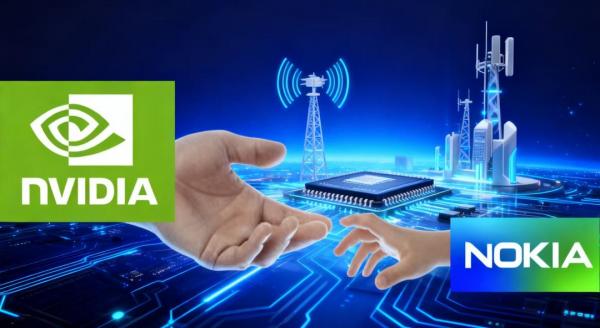
That all changed abruptly on October 28, 2025. On that day, NVIDIA announced a $1 billion investment, acquiring approximately 2.9% of Nokia's shares.
While $1 billion is no trifling sum, for NVIDIA, it feels more like a strategic move. After all, its cash reserves are substantial. The true significance of this investment lies not in 'how much was spent' but in 'why this particular choice was made'.
What's even more intriguing is that among global telecom equipment vendors, NVIDIA chose to invest exclusively in Nokia. Why only them?

Transforming Every Base Station into a Mini Data Center
NVIDIA's vision is to implement AI-RAN, which, in layman's terms, means enabling base stations to run artificial intelligence.
Traditional base stations are single-purpose, focusing solely on transmitting signals for calls and internet access. They're like a pot that only boils instant noodles.
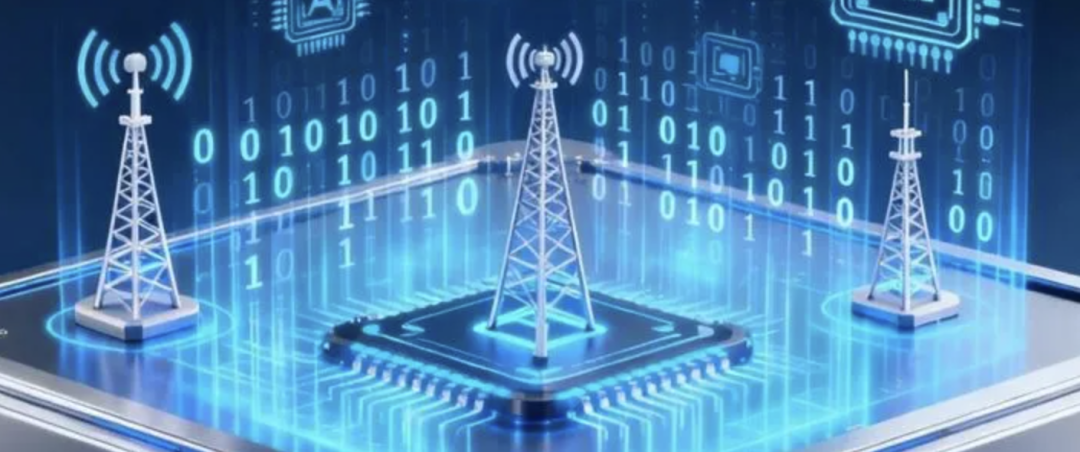
AI-RAN base stations, however, are different. They utilize GPUs. When people aren't making calls or browsing the web (such as late at night), idle base stations can perform AI inference tasks, assisting nearby businesses in running models and processing data. Each base station, originally a communication device, may soon evolve into a mini AI data center.
For carriers, this is a game-changer. Base stations were previously purely cost centers—requiring significant investment in construction, power, and maintenance. Now, they can generate computing revenue. Market analysts predict that this will emerge as a new market worth hundreds of billions of dollars.
Thus, NVIDIA's $1 billion investment is not in 'an old telecom company' but rather a bet on 'the frontier of AI infrastructure'.

Why Nokia? What About Ericsson and Huawei?
Upon further investigation, I discovered that the key factor is not merely 'who's stronger' but rather whose technological ecosystem aligns more closely.
Nokia's current network architecture naturally complements NVIDIA's GPU ecosystem, with many interfaces and underlying designs already compatible, facilitating faster collaboration.
In contrast, Ericsson has been deeply entrenched in Intel's ecosystem in recent years, with much of its hardware and software built around that framework. Now that AI infrastructure is shifting toward GPU dominance, a complete overhaul is not straightforward—it's akin to relocating the foundation of a building.
Huawei's situation is distinct. On one hand, it faces significant restrictions in Western markets, limiting its participation in large-scale projects there. On the other hand, Huawei is not fully following NVIDIA's path but is advancing its own Ascend chips and next-generation communication solutions, essentially constructing an alternative system.
Thus, the current landscape resembles this: within the Western AI communication infrastructure, Nokia happens to be the most compatible piece for NVIDIA to integrate. Not necessarily the absolute leader, but positioned highly favorably.

The New CEO: An 'Outsider'
Another significant signal emerged in April when Nokia appointed a new CEO: Justin Hotard.

This individual is intriguing. He did not come from the telecom industry but rather from Intel's data center and AI division. Essentially, he brings a 'data center mindset' rather than a 'telecom equipment mindset' to lead the company.
The appointment of a data center expert as CEO of a base station seller speaks volumes. Less than a year into his tenure, in November, he merged the original four business units into two, specifically emphasizing AI and data center-related operations under the umbrella of 'Cloud Network Infrastructure'.
The Q1 financial report released today marks the first time this strategy is reflected in concrete numbers: AI and cloud businesses grew nearly 50% year-over-year, with €1 billion in new orders in a single quarter. NVIDIA's investment from six months ago has transitioned from a 'narrative' to a 'balance sheet figure'.

But Don't Rush to Declare a 'Comeback'
Let me temper the enthusiasm here.
Nokia is not 'making a comeback'—it's merely 'back at the table'. Its current market capitalization still pales in comparison to its peak during the mobile phone era.
AI-RAN itself is still in its infancy. GPU-based base stations are significantly more expensive than traditional ones, with some carriers already questioning 'is this truly worth it?' Commercial scalability remains uncertain for years to come.
NVIDIA's $1 billion investment only secured 2.9% of Nokia's shares. It's a strategic entry ticket, not a long-term commitment. If Jensen Huang, NVIDIA's CEO, becomes dissatisfied, he could withdraw at any time.

Finally, let's take a broader perspective. If AI infrastructure is a chain, at the top sit NVIDIA and TSMC, followed by large data centers and cloud providers. Below them? There's another layer: base stations, fiber optics, IP networks.
This layer previously lacked compelling narratives, remaining a 'stable but unexciting' business. Who wants to hear about base station sales? But once AI traffic truly surges, this layer will undergo revaluation.
Thus, Nokia's story is likely just the beginning. It didn't rise on nostalgia but because 'its base stations happen to align with NVIDIA's vision'.
The Nokia that manufactured mobile phones has truly exited the stage. But companies that remain in the race always get another opportunity. This time, at least it has an entry ticket.
-
![]()
Proposed to Raise 955 Million Yuan through Private Placement! Huicheng Vacuum Boosts Localization of Ultra-Precision Optical Coating Equipment
-
![]()
Cash Flow Soars 13-Fold! What Major Strategic Move is Wuhan Five Square Optoelectronics Planning?
-
![]()
Leaked Design of vivo X500: Reverts to Circular Camera Module in Top-Left Corner, Pays Homage to Classic X90 Aesthetic
-
![]()
DeepSeek Shows Signs of Foraying into Code Agents, Launches WeChat Official Account Focused on Harness
-
![]()
Auto Companies Deny Claims That ‘Cooperation with Huawei Is Non-Essential’, as Huawei Transforms into a ‘Public Platform’
-
![]()
Starship to Independently 'Return to the Launch Tower': SpaceX's Ambitions Extend Beyond Rocket Building to Dominating Space Transportation
-
![]()
Starship Set to Independently 'Return to the Launch Tower': SpaceX is Revolutionizing Space Transportation, Not Just Building Rockets
-
![]()
Anthropic and OpenAI Face Off Against Deepseek