LandSpace Revenue Soars 11-Fold, Yet Net Losses Reach RMB 1.1 Billion: When Will Its Commercial Rocket Profit Model Prove Sustainable?
 07/02 2026
 460
460
LandSpace's IPO review has resumed with inquiries, as the company continues to explore its profit model. China's first commercial rocket stock is now at a critical juncture in its listing sprint.
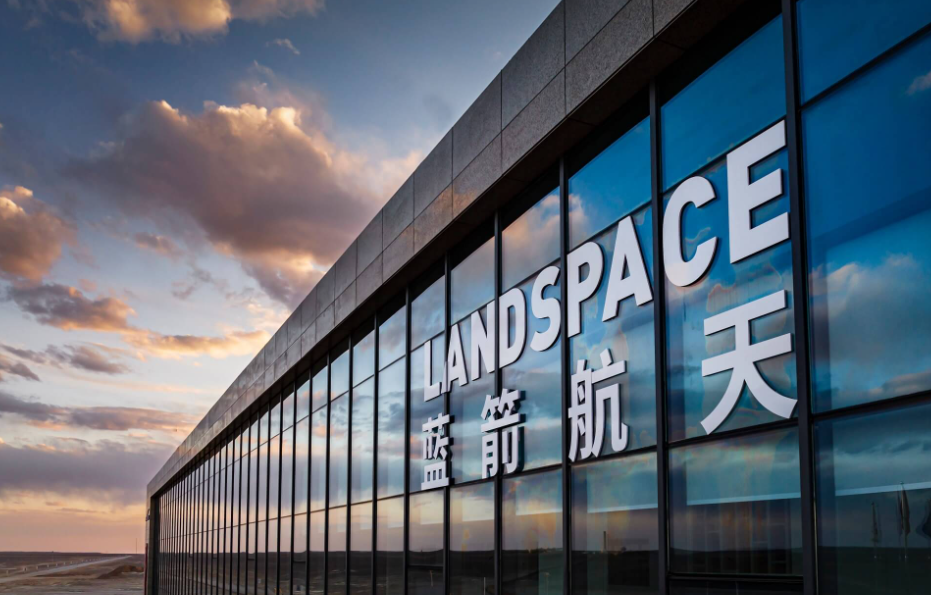
On June 29, 2026, the Shanghai Stock Exchange (SSE) announced that LandSpace Space Technology Co., Ltd. (hereinafter referred to as 'LandSpace') had updated its Sci-Tech Innovation Board IPO review status to 'Inquiry Received,' accompanied by audited financial data for 2025. This leading domestic commercial space enterprise is now making its final push to become China's first listed commercial rocket company.
According to the prospectus, LandSpace plans to raise RMB 7.5 billion through this IPO. Of this amount, RMB 2.77 billion will be allocated to expanding manufacturing bases in Wuxi, Jiaxing, Huzhou, and Beijing, while RMB 4.73 billion will be earmarked for five years of R&D on reusable rocket core technologies, with a focus on the 220-ton full-flow staged combustion liquid oxygen-methane engine. This marks the first time a domestic commercial space enterprise has formally incorporated this type of engine into its R&D plans.
In fact, the Zhuque-3 Yao-2 rocket completed its full-process static firing in late June 2026, successfully concluding all ground verification tests. Spurred by this news, commercial space stocks on the A-share market saw a broad-based strengthening on June 30.
LandSpace founder Zhang Changwu's financial background and the company's governance structure also warrant attention. A former executive in the Asia-Pacific strategic investment divisions of HSBC and Santander Bank, Zhang transitioned into the space sector and established LandSpace in 2015. Through a multi-tier employee stock ownership platform with a voting rights structure, Zhang directly holds 6.73% of the shares, while five holding platforms collectively control 23.47%. This setup risks misalignment between the controller's interests and those of minority shareholders, potentially harming the latter.
LandSpace's financial performance reflects the typical characteristics of a heavy-investment industry. From 2023 to 2025, its revenue surged from RMB 3.95 million to RMB 52.0963 million (an 11-fold year-on-year increase), with 70% derived from Zhuque-2 commercial launches. However, its losses also widened to RMB 1.711 billion.
The manufacturing cost of each rocket launch exceeds RMB 130 million, with core R&D expenditures being substantial. Yet, current launch quotes stand at just over RMB 30 million. Provisions for large loss-making contracts further drag down the balance sheet. As of the end of 2025, consolidated undistributed profits stood at -RMB 4.84 billion. Even after the IPO, delays in constellation deployment or unsuccessful rocket reuse trials could trigger sustained cash flow gaps and liquidity pressures.
Order backlog supports long-term growth. The RMB 223 million launch contract with Yuanxin Satellite still has RMB 146 million pending fulfillment. LandSpace won the bid for Yuanxin's '2025 Launch Service Procurement Project' for an 18-satellite mission and was also included in China StarNet's core supplier list. Business boundaries continue to expand, with the Zhuque series selected as the primary rocket for Aviation Industry Corporation's Haolong cargo spacecraft and shortlisted for Qingzhou cargo ship launches. Networking plans for tens of thousands of satellites in two national low-Earth orbit constellations (GW Constellation, Qianfan Constellation) offer significant long-term growth potential.
Equity incentive performance targets are highly ambitious: revenue is expected to reach no less than RMB 500 million in 2026 and exceed RMB 1 billion in 2027, compared to just RMB 50 million in 2025. This nearly 20-fold growth target imposes immense pressure.
Policy support and industry standing are critical pillars for LandSpace. In late 2025, the SSE issued the 'Listing Review Rules Application Guideline No. 9 - Commercial Rocket Enterprises Applying the Sci-Tech Innovation Board's Fifth Listing Criteria,' creating a dedicated IPO channel for commercial rocket firms. LandSpace's Zhuque-3 is among China's only two medium-to-large reusable rockets to achieve orbit (the other being the China Academy of Space Technology's Long March 12A). In December 2025, Zhuque-3 Yao-1 successfully reached orbit, although its first stage failed to soft-land during return testing, only completing supersonic re-entry thermal protection verification. The full commercial reuse loop remains unclosed.
According to the chief designer's roadmap, after completing ground firing, Yao-2 will conduct a recovery test at an opportune time, aiming for the first reused flight of a recovered first stage in Q4 2026. The Zhuque-3's stainless steel design enables 20 reuses, potentially cutting per-launch costs by 70% at scale. The Wuxi base, now operational, can assemble 20 rockets annually at full capacity.
In global capital markets, SpaceX's soaring valuation continues to heat up the commercial space sector. However, significant differences persist between domestic and foreign markets. SpaceX benefits from its Starlink satellite operations, creating a 'rocket launch + satellite operation' dual-drive model. In contrast, domestic private rocket firms lack satellite revenue, prolonging their path to profitability.
LandSpace holds early technological advantages and long-term orders from two national constellations but faces triple pressures: uncertain recovery test outcomes, massive sustained losses, and a nearly 20-fold performance target. The industry's true profitability turning point hinges on whether reuse technologies materialize on schedule and annual launch volumes cross the breakeven threshold.
-
![]()
MathWorks: Generative AI Holds Great Potential, Yet a Trusted Toolchain is Essential for Flawless Operation
-
![]()
Small Earphones, Big Business
-
![]()
Volkswagen Slashes 100,000 Jobs, Mercedes-Benz Axes Year-End Bonuses: What’s Ailing German Auto Titans?
-
![]()
Doubao Can No Longer Offer Free Services to 345 Million Users: China's Era of Free AI Is Drawing to a Close
-
![]()
How Can Chinese Small Home Appliances Conquer Southeast Asia Through 'Dimensional Competition'?
-
![]()
Why are top intelligent driving players betting on reinforcement learning?
-
![]()
June 2026 Automobile Complaint Index Rankings: Persistent Problems Ignite Grievances Among Long-term Vehicle Owners
-
![]()
Avita Takes Another Stab at HKEX Listing: Facing the Urgency of Sustaining Operations Amid 11.2 Billion Yuan Loss Over Three Years