China’s Starlink Equivalent Launches Twice in 48 Hours! Qianfan Constellation’s In-Orbit Satellite Count Surpasses 238
 07/06 2026
 454
454
Kuaikeji, July 6 – Last night, the Hainan International Commercial Space Launch Site witnessed the successful liftoff of the Long March 8A carrier rocket. This mission utilized a single-rocket, multi-satellite deployment strategy to precisely deliver 20 satellites from the Qianfan polar-orbiting Group 15 into their designated orbits. All satellite-rocket separations proceeded flawlessly, marking a complete success for the launch.
Combined with the 18 networking satellites launched by the Chang Zheng 6A rocket from the Taiyuan Launch Center on July 4, the Qianfan constellation now boasts a total of 238 in-orbit satellites. This achievement sets a new record for the number of satellites launched in a single mission for the constellation.

The Qianfan Constellation, also recognized as the G60 Low Earth Orbit Satellite Internet Constellation, is often dubbed China’s answer to Starlink. Developed, manufactured, and commercially operated by Shanghai Yuanxin Satellite, it serves as a domestically controlled, national-level aerospace information infrastructure.
The entire ecosystem—from satellite platforms and communication payloads to rocket launches and ground-based tracking and control—relies exclusively on the domestic industrial chain for support.
The newly launched networking satellites feature a lightweight, flat-panel stacking design, facilitating mass launches. Equipped with Ku, Q/V multi-band communication payloads, phased array antennas, and laser inter-satellite links, they dynamically allocate network resources to provide stable, low-latency, and high-bandwidth network services in remote oceanic, mountainous, and desert regions where traditional ground-based fiber optics and base stations are unavailable.
The technical architecture seamlessly aligns with next-generation 6G communication standards, enabling universal network coverage across sky, land, sea, and air.
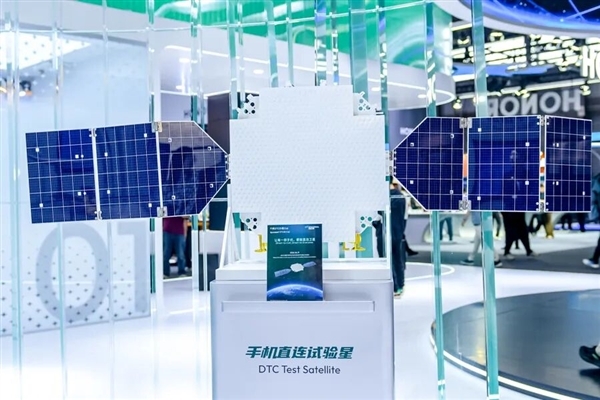
Unlike traditional communication satellites, the Qianfan Constellation’s most notable civilian innovation is its ability to enable direct satellite communication for ordinary smartphones without requiring additional hardware modifications. This allows for internet access, voice calls, and message transmission. Relevant technical trials have been successfully completed and verified, with public availability anticipated from late 2026 to early 2027.
Beyond civilian broadband access, the constellation supports a diverse range of services, including maritime vessel networking, in-flight internet for civil aviation, agricultural and forestry IoT data collection, and emergency communication for geological disasters.
It also caters to overseas enterprises by facilitating secure and controllable cross-border data transmission, addressing a critical gap in China’s integrated space-air-ground digital infrastructure.
-
![]()
Volkswagen's Market Share in China Drops to 9.7% in a Decade, U.S. Brands Down to 5%: Chinese Automakers Take the Offensive to Competitors' Doorsteps
-
![]()
In the AI-Driven Office Era, Is WPS Becoming a Hidden Threat to Hard Drives?
-
![]()
When AI Begins to Reshape Infrastructure: A Reshuffle in the U.S. Cloud Market
-
![]()
Tencent’s Strategic Maneuver: Selling Kuaishou, Investing in Kling
-
Has the Semi-Annual Achievement Rate Dipped Below 40%? Can AIVA Circumvent the 'Multi-Shareholder Death Spiral'?
-
![]()
Stepping Out of the Humanoid Robot Concept: Why is Autonomous Driving the First Large-Scale Implementation Track for Physical AI?
-
![]()
WPS: Criticism Warranted, Yet Open to Improvement
-
![]()
Farewell to Image-First: Robotic Vision is Undergoing a Fundamental Reconstruction