China’s eSIM Smartphones Adopt Three Key Strategies: Pure eSIM, Single SIM Slot with Dual eSIMs, and Quad-SIM Dual Standby
 08/06 2026
 330
330
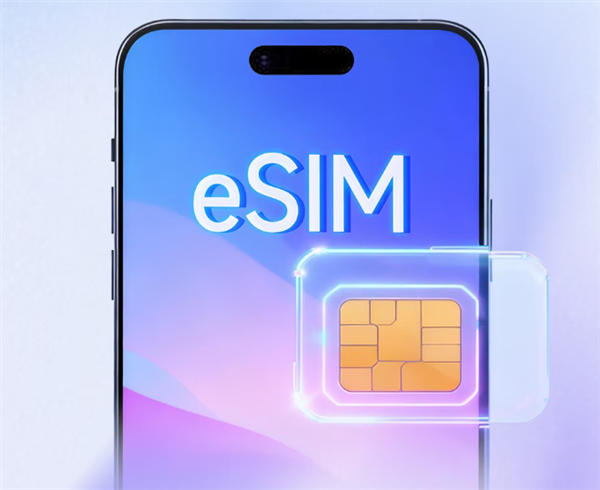
Kuaikeji, August 6 News: In October 2025, the Ministry of Industry and Information Technology officially authorized China Telecom, China Mobile, and China Unicom to initiate commercial trials for eSIM smartphone services.
This development signifies the expansion of eSIM technology in China from the Internet of Things (IoT) and smart wearables into the smartphone market, officially propelling China into a new era of comprehensive eSIM adoption across all device categories.
According to the official account of the China Academy of Information and Communications Technology (CAICT), CAICT’s Terminal Laboratory recently released the “eSIM Industry Development Research Report (2026).”
The report highlights that the global eSIM market has entered a period of rapid growth. In 2025, global shipments of eSIM-enabled devices reached 605 million units, marking an 18% year-on-year increase and setting a new record.
Currently, manufacturers worldwide have established two distinct paths for eSIM product development.
One approach, led by Apple, focuses on pure eSIM solutions without physical SIM slots. The other, adopted by companies like Samsung and Google, involves a transitional strategy that supports both physical SIM cards and eSIMs.
In the Chinese market, eSIM smartphones are primarily categorized into three types:
- The first type features a pure eSIM design, eliminating physical SIM card slots entirely.
- The second type combines a single physical SIM slot with dual eSIM storage capabilities.
- The third type offers a “2 physical SIM cards + 2 eSIMs” quad-SIM dual standby solution.
From a security perspective, eSIM chips are directly soldered onto the device’s mainboard, with encryption keys permanently stored in security chips rated at EAL4+ or higher. This design significantly reduces the risk of physical SIM card cloning and tampering.
Additionally, leveraging a full-link digital management architecture, eSIM ensures end-to-end security for processes such as data distribution, installation and activation, number portability, and device management.
China’s eSIM commercial framework also incorporates multi-layered security measures, including EID/TAC verification, real-name authentication, and behavioral risk monitoring. These mechanisms further enhance eSIM’s security by transforming its technological capabilities into a manageable and controllable entry point.
The report also notes that with the world’s largest smartphone consumer base and the most comprehensive terminal manufacturing ecosystem, China is poised to become the global leader in eSIM market potential.
-
![]()
China’s eSIM Smartphones Adopt Three Key Strategies: Pure eSIM, Single SIM Slot with Dual eSIMs, and Quad-SIM Dual Standby
-
![]()
Traditional Fuel Vehicle Market Base Dwindles: BBA Vehicles Struggle Despite 300,000 Yuan Price Cuts, Prompting Closure and Absconding of Several 4S Dealerships
-
![]()
Largan Precision Makes Another Attempt at Hong Kong Stock Exchange IPO Amid High Growth, Raising Concerns Over 'Apple Dependency' and Operational Independence
-
![]()
From "Tongyi" to "Qianwen", and on to "Qianwen Office": A Showcase of Alibaba's Astute Leadership Decision-Making
-
![]()
Is Qwen3.8 the 'Zelda' for Qianwen Office?
-
![]()
Why Did Musk Remove Chinese Elements Post-Delivery of 10GW Photovoltaic Gear?
-
![]()
Five-Year Market Share Dive: 65% Drop Sees Japanese Automakers Falter in China
-
![]()
Innovative ‘Large Family Box-Shaped’ Model, Great Wall H10, Officially Launches with Limited-Time Trade-In Price Starting at 201,800 Yuan