Five Major Players Enter the Arena: The All-Out Battle for the Ultimate AI Office Super Gateway Begins
 08/07 2026
 562
562
The Warring States Era of AI Office Has Arrived
Author | Jian An
Editor | Lu Xucheng
In late summer 2026, China's AI office sector witnessed a silent yet profound transformation. Within a mere two weeks, Tencent, Alibaba, ByteDance, and Baidu simultaneously initiated consolidation efforts, swiftly reining in previously decentralized AI office projects within their groups, centralizing resources, and merging products. Coupled with the official release of WPS Comate by Kingsoft Office in mid-July, the five leading players all completed strategic realignments in record time.
This was no ordinary product iteration but a full-scale battle for the gateway to corporate productivity over the next decade.
A decade ago, DingTalk and WeCom (WeChat Work) opened the era of collaborative office tools, later joined by Feishu, ushering in a "Three Kingdoms" era of competition. A decade later, AI agents have surpassed usability thresholds, shifting the office battleground's core conflict from "how to collaborate efficiently" to "how to make AI do the work." Everyone understands that whoever secures the next-generation office gateway will hold the initiative in the B-end productivity market.
A multi-way contest centered around AI office agents has erupted, and the industry's window of opportunity may be shorter than anyone anticipated.

The Gateway Battle
Let's examine the dense ( dense here means 'frequent' or 'intensive') moves by the tech giants:
On July 20, Tencent restructured QClaw Product Center's operations under its Cloud Product Division VI, aligning it with WorkBuddy under a unified management system.
On July 30, ByteDance merged the Feishu and Doubao product teams to form the new "Doubao Product Team," with former Feishu head Xie Xin reporting to Doubao head Zhao Qi.
On August 3, Alibaba consolidated QoderWork, MuleRun, and Wukong into "Qianwen Office," officially launching its public beta.
On August 4, Baidu initiated team integration between its internal office agent dodo and Baidu Dazi, fully incorporating dodo's R&D personnel and resources into Baidu Dazi.
Within half a month, these four major firms nearly simultaneously centralized their AI office product lines. Six months prior, they had encouraged internal exploration and rapid trial-and-error; six months later, they began concentrating resources and merging products for all-out assaults.
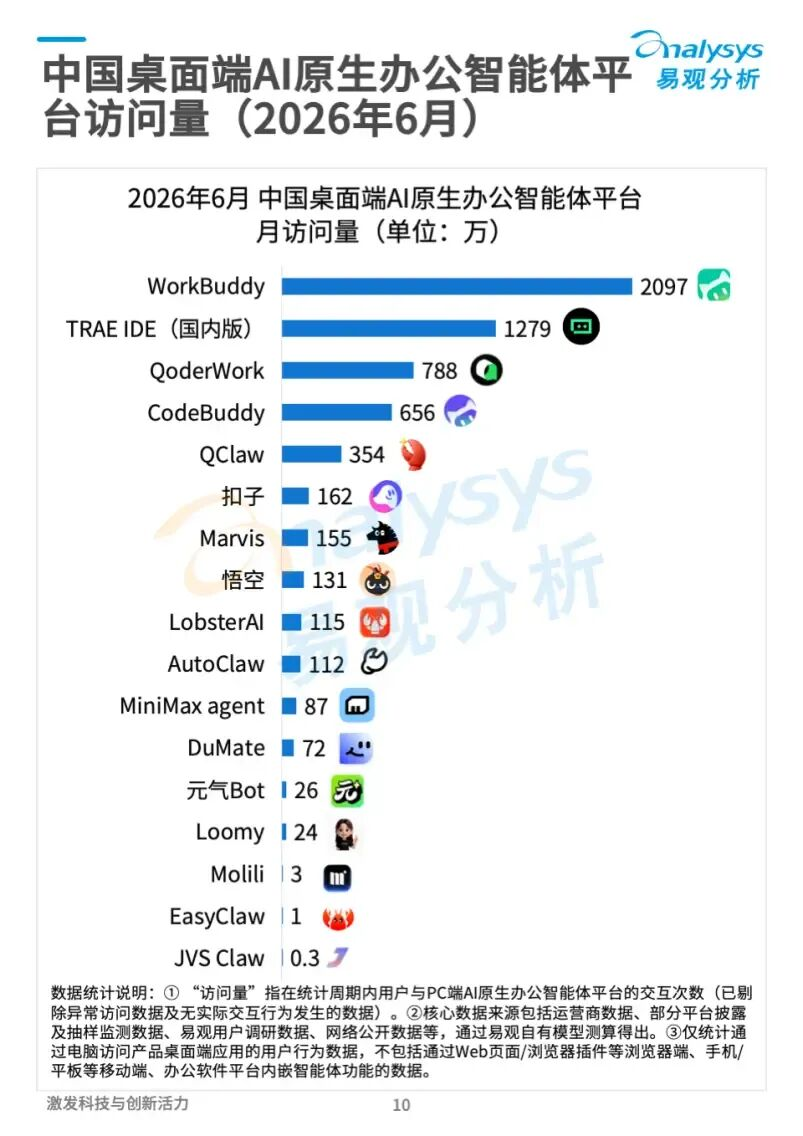
Why did the giants suddenly accelerate their shifts? This set of data may illuminate the issue: According to Analysys' "Q2 2026 China Office Agent Platform Market Insights" report, in June 2026, the 17 mainstream desktop-native AI office agents included in the statistics collectively surpassed 60 million monthly visits. In March, this figure stood at around 20 million. A threefold increase in three months—AI office agents are transforming from "novelty toys" for users into "daily productivity tools."
Source: Analysys
In fact, AI office tools are not new. Over the past few years, nearly all office software has added AI sidebars capable of writing copy, summarizing content, and generating PPTs. However, these functions remain essentially "human-operated tools with AI assistance," failing to break free from the "co-pilot" framework.
The real transformation occurred earlier this year. The OpenClaw open-source project ignited enthusiasm for desktop agent forms, where users issue natural language commands, and AI autonomously operates computers, invokes software, and completes entire tasks. Around the same time, Claude Code achieved $1 billion in annualized revenue within just six months, validating the commercial viability of the "pay-for-task-completion" model.
After proving successful in programming scenarios, these capabilities rapidly expanded into general office settings, instantly expanding market imagination. For major firms, general-purpose large models for consumer (C-end) applications consumed massive computational resources over the past year without establishing stable profit models. In contrast, office scenarios offer three key attributes: high frequency, high stickiness, and high willingness to pay, making them an even larger market for agents following AI programming.
User demands are also evolving. Beyond "AI answering questions," people care more about "whether AI can complete entire tasks." From organizing materials and generating reports to system integration and approval initiation, users expect agents to handle complete workflows rather than merely output text snippets.
More importantly, the industry has largely reached consensus: The gateway to office software is shifting. Previously, employees started their day by opening documents, IM, or email; in the future, they may first open an agent, which then invokes various tools after clarifying objectives. When AI agents become employees' first stop after powering on computers, traditional tools like DingTalk, Feishu, and WeCom will recede to the background, becoming capability modules invoked by AI. This gateway shift implies a redistribution of power—no company wants to be left behind.
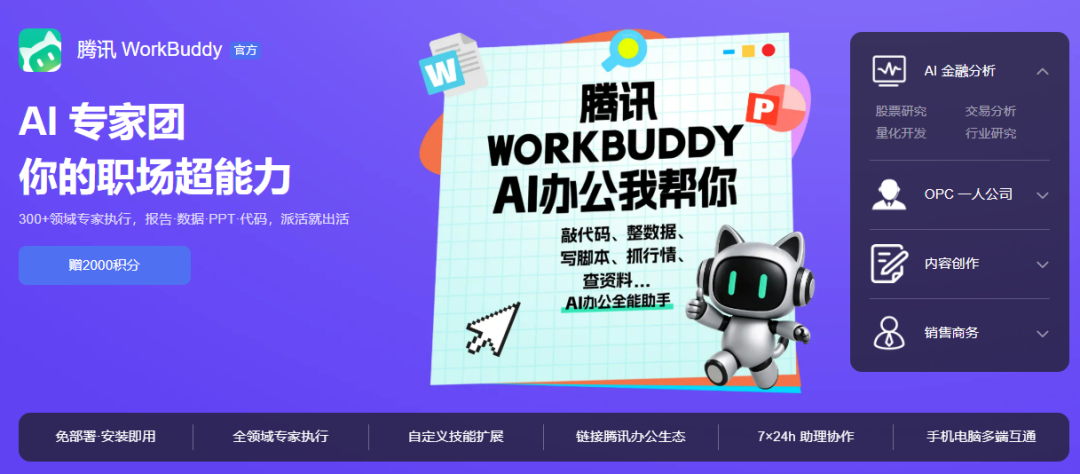
Tencent seized the early "market share" advantage. In its Q1 2026 earnings announcement, Tencent claimed that WorkBuddy had become China's most widely used efficiency AI agent service by daily active accounts.
Source: WorkBuddy
Analysys data also shows WorkBuddy's monthly visits surging from 8.85 million at its March launch to 20.97 million in June, more than doubling and exceeding the combined total of second-place ByteTRAEIDE Domestic Edition (12.79 million) and third-place Alibaba QoderWork (7.88 million).
Moreover, Tencent's four products alone accounted for 32.62 million visits, over half the total market. Adding ByteDance's 14.41 million and Alibaba's 9.19 million, these three firms command over 90% market share, leaving less than 10% for other players.
Citibank research reports reveal even stronger data: WorkBuddy's cross-platform monthly active users reached 20 million, with daily active users exceeding 13 million, indicating high user stickiness. Some view WorkBuddy as Tencent's potential third strategic product after QQ and WeChat.
Tencent's early lead undoubtedly pressures other giants, but being ahead doesn't guarantee final victory. The industry widely believes the AI office sector remains in its infancy, far from settled, with opportunities for latecomers to overtake.

Five Players, Distinct Strategies
After initial traffic gaps emerged, the cost-effectiveness ( cost-effectiveness , meaning 'cost-effectiveness') of the race mechanism rapidly declined—effective during industry chaos to cover possibilities with minimal cost, it turns into internal friction once market direction clarifies. Thus, an unprecedented organizational reshuffle began. Each company's integration path differs, reflecting their distinct organizational DNA and AI office philosophies.
Tencent: Multiple Front-End Entries, Unified Back-End Strategy
Tencent led this race early. By March, WorkBuddy entered public beta, featuring deployment-free, user-friendly desktop agents. Users could download and command AI to handle local files, generate office documents, and operate browsers using natural language. Tencent had already decided to bet heavily on office agents, gradually shifting resources toward WorkBuddy, which it designated a "super project." Even Pony Ma closely followed product progress, never missing WorkBuddy meetings.
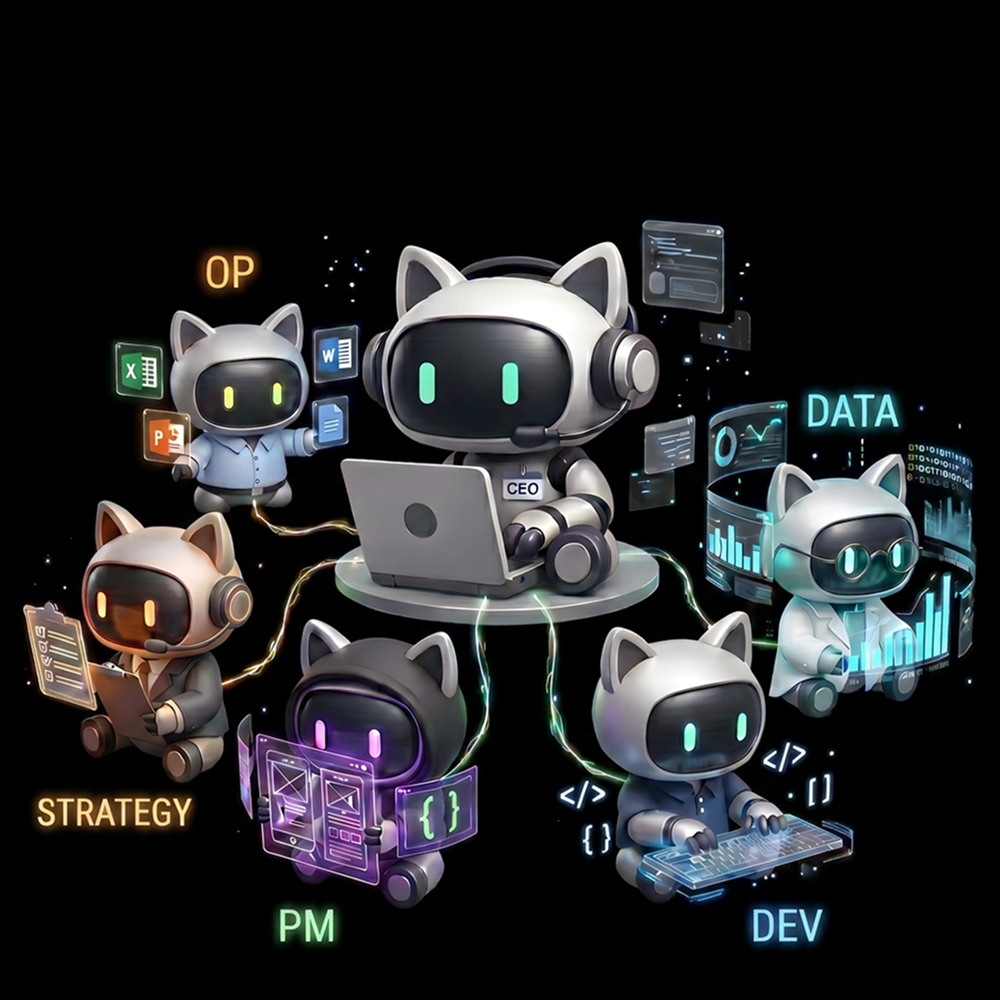
On July 20, Tencent announced merging parts of QClaw Product Center's business and team into WorkBuddy, led by Tencent Cloud VP Liu Yi. Notably, both products remain independently operated: QClaw focuses on personal assistants, built on open-source OpenClaw with emphasis on local operation and WeChat remote recall; WorkBuddy positions itself as an all-scenario AI office platform covering daily work, code development, and design creativity.
Source: WorkBuddy
Tencent's approach: Maintain multiple front-end entries while centralizing back-end resources, unifying model access, skill ecosystems, security capabilities, and cloud resources. Liu Yi stated, "We're uniformly evaluating user scenarios and value across all agent products."
Alibaba: "Three-in-One" Bet on AI Office
Alibaba's path underwent a dramatic shift. Previously, Alibaba simultaneously developed three agent products—Wukong, QoderWork, and MuleRun—targeting enterprise collaboration, desktop office, and cloud agents respectively, typical of internal competition.
After DingTalk's management changes in June, Alibaba swiftly ended internal competition, merging the three products into "Qianwen Office," positioned as an AI productivity platform for enterprises. New DingTalk CEO Chen Yusen leads the effort, with group executives like Wu Yongming personally attending key meetings. Internally, Alibaba now views "AI office" as a strategic AI domain, with Qianwen Office as its core implementation vehicle and a top-priority strategic product.
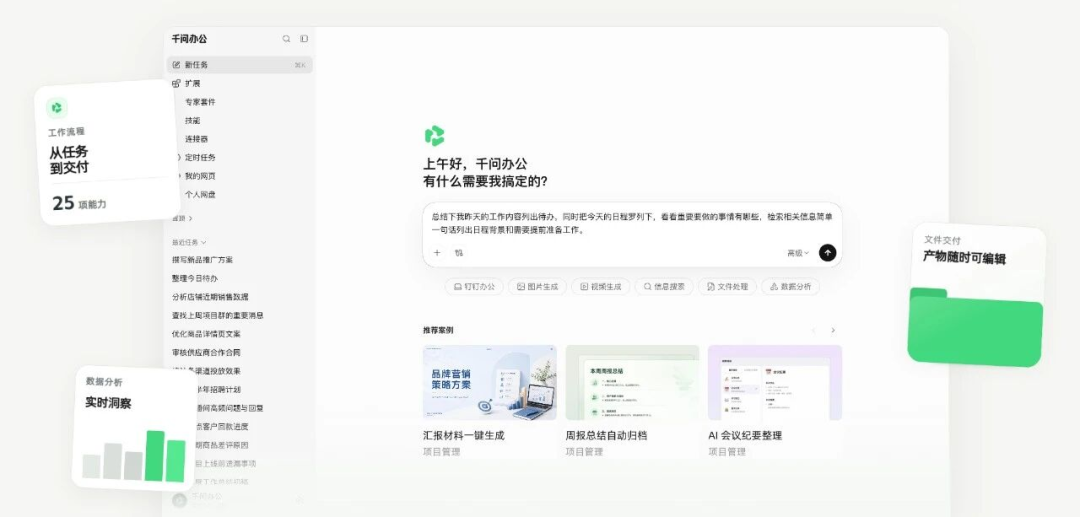
Source: Qianwen Office
By consolidating three teams and technical routes into the enterprise market, Alibaba's adjustment is the most radical, yet its internal evaluation remains pragmatic. According to Huxiu, Qianwen Office prioritizes refining product experience and enterprise scenario implementation over short-term user counts and monthly actives.
ByteDance: Feishu Steps Aside, Doubao Takes Center Stage
ByteDance's integration is the most thorough and symbolic. Feishu, ByteDance's decade-long project with over 3 billion yuan in annual revenue, split into two: its product team merged into Doubao under Doubao head Zhao Qi, with former Feishu head Xie Xin now reporting to Zhao; its sales, marketing, and customer service teams joined Volcano Engine to form a new "Creativity Service Platform."
This means Feishu, once seen as ByteDance's B-end hope, becomes a scenario entry point in the AI era, with Doubao serving as the true "brain." The adjustment's core logic: Let AI lead, with collaboration tools becoming implementation scenes for AI capabilities.
Previously, Feishu's agent product Aily underperformed commercially, while Doubao, despite hundreds of millions of C-end users, failed to deeply penetrate office scenarios. Their integration allows Doubao's large model capabilities to directly leverage Feishu's enterprise scenes and client resources, creating synergies between "models and scenarios."
ByteDance's strengths are clear: Doubao's massive C-end traffic, Feishu's strong reputation among high-end enterprise clients, and Volcano Engine's computational and MaaS support. Its challenge lies in rapidly aligning products and teams to convert organizational momentum into market share.
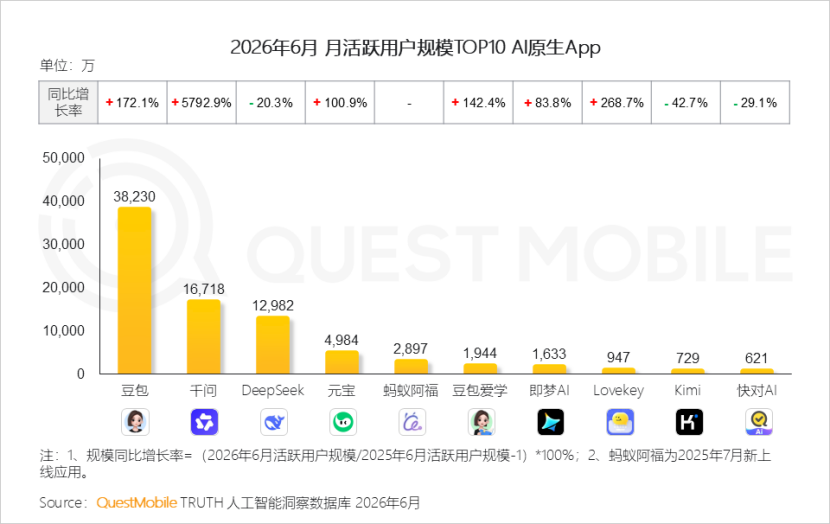
Source: QuestMobile
Baidu: Internal-External Unification, "Dazi" Debuts
Baidu also began integrating dodo and Baidu Dazi in early August. Dodo, Baidu's long-used internal office agent, and Baidu Dazi, its professional office agent platform launched in March, merged to form a unified office agent serving internal office, personal productivity, and enterprise collaboration.
Baidu's differentiated strength lies in information retrieval. Leveraging years of search technology accumulation, Baidu Dazi achieves higher accuracy and fewer hallucinations in material organization and industry research scenarios. It also integrates Baidu Search, Netdisk, Maps, Baike, and other ecosystem capabilities, forming a complete toolchain.
Baidu Dazi also excels in agent evaluations: topping PinchBench and DeepResearch Bench, two authoritative benchmarks, with task completion rates surpassing Anthropic and OpenAI counterparts. In Frost & Sullivan and Headleo Research Institute's "2026 China AI Agent Best Application Practices," Baidu Dazi ranked among the "Top 10 Most Practical Agents."
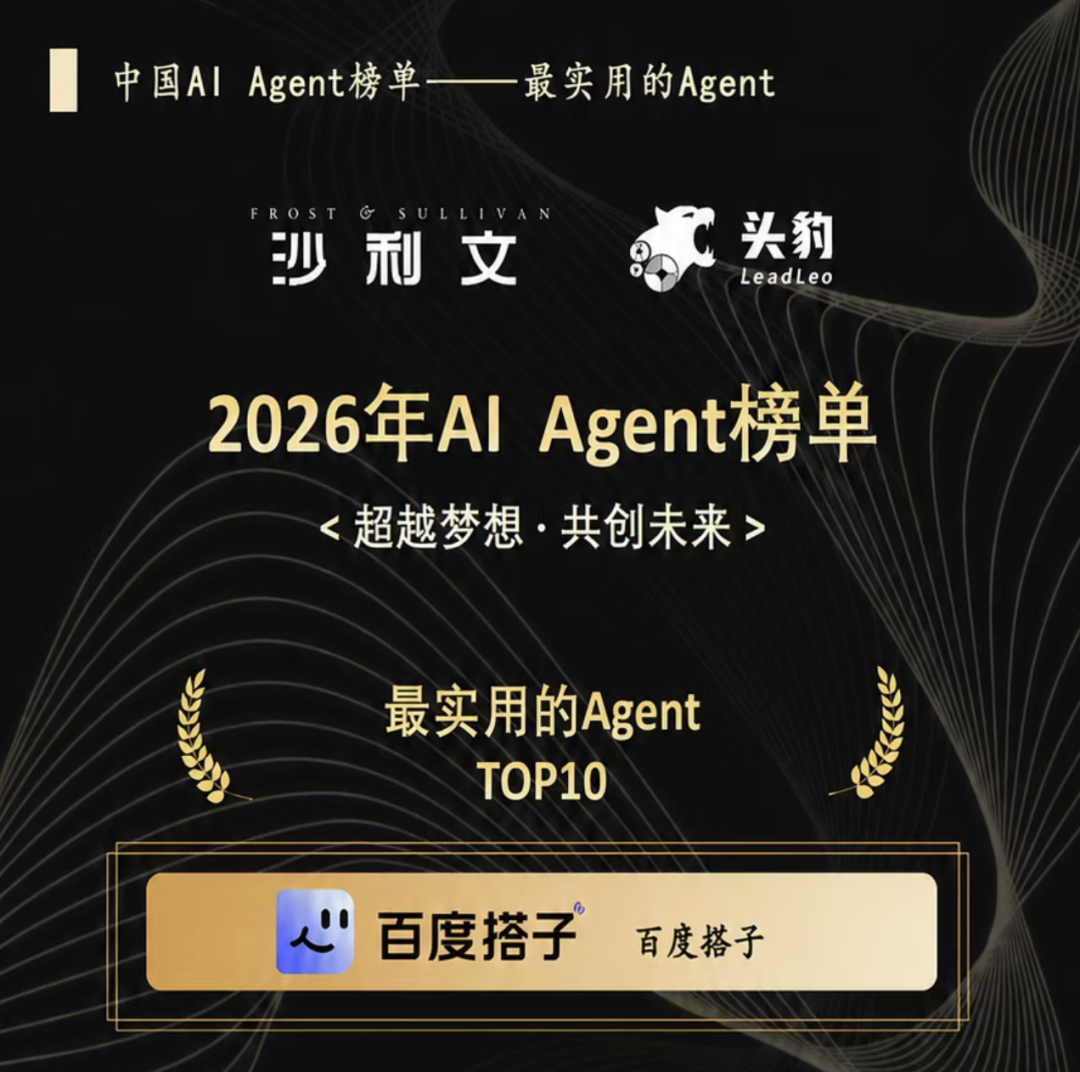
Source: Baidu Intelligent Cloud
Baidu Dazi's rollout remains steady: From March 22 launch to July 10, daily queries surged 20-fold; enterprise edition and Dazi Alliance launched in July to expand B-end markets; dodo merged in early August to export internally validated capabilities to external clients. Rather than pursuing rapid user growth, it relies on technical stability and search DNA to enter the office market.
Kingsoft Office: Document-Native, "The Only Opportunity"
Kingsoft Office stands out in this melee, pursuing a "document core outward extension" route. On July 15, Kingsoft Office upgraded WPS365, launching WPS Comate—an AI office agent for organizations—positioned as an organizational-level AI office gateway, human-machine interaction platform, and AI enterprise foundation, emphasizing the "enterprise brain" concept.
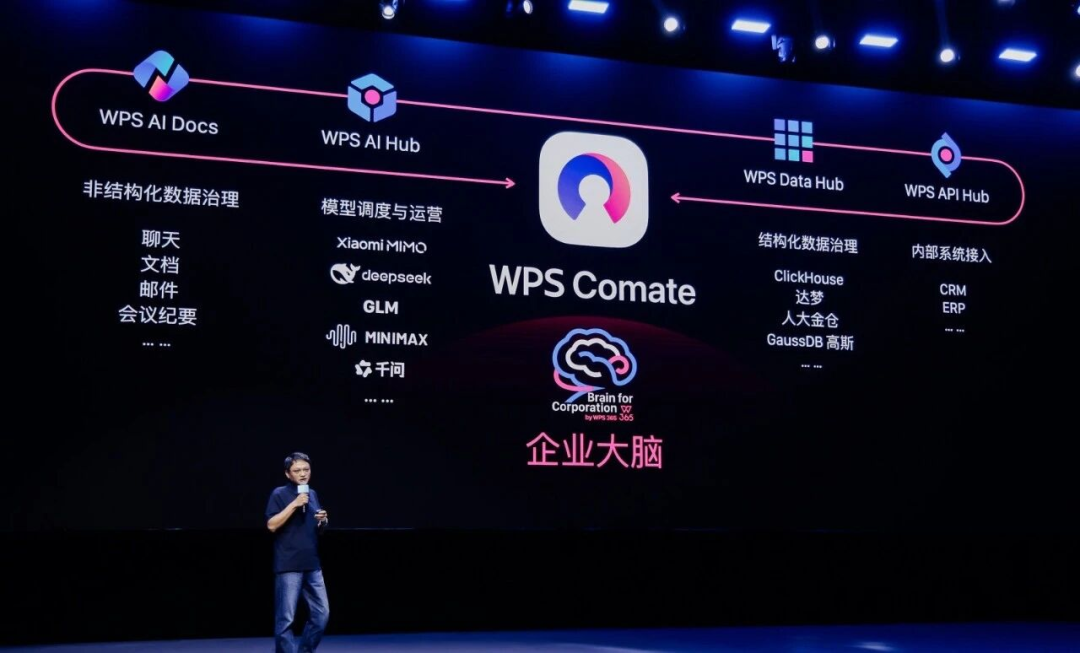
Source: Network
Kingsoft Office CEO Zhang Qingyuan stated, "AI represents our sole and most critical opportunity in the coming years." WPS Comate proposes the "3-2-1" system: three integrations (knowledge, data, capabilities), two controls (cost, security), and one platform (unified platform), addressing enterprise pain points like data silos, scattered knowledge, and cost overruns.
Kingsoft's core strength lies in 38 years of document technology accumulation, with its MonkeyOCR and spreadsheet processing capabilities ranking first globally, enabling deep AI embedding into contracts, reports, and regulations rather than adding a chat window. It also boasts a strong government and enterprise client base, with exceptional private deployment and trusted IT adaptation capabilities, making it preferred by clients with strict data security requirements.
This technological and scenario advantage is also reflected in customer data: Within a week of its launch, WPS Comate secured collaborative intentions from over 450 medium-to-large enterprises in its first batch, spanning multiple sectors such as transportation, finance, manufacturing, pharmaceuticals, and energy.

The Final Battleground
Although the five players take different paths, the core dimensions of competition are highly consistent. The upcoming competition is no longer about 'whose model is smarter,' but rather who can solve the 'last mile' of enterprise implementation.
Firstly, there is the issue of data security and compliance. The essence of competition in the B-end market is a competition of enterprise-level capabilities. No matter how well a function is demonstrated, it is useless if it cannot integrate into an enterprise's core processes. Data security is the most critical concern for enterprises, especially in finance, government, and large state-owned enterprises, which all require data to remain within their domains. Responses to this need include Tencent WorkBuddy's local sandbox operation, Alibaba Qianwen Office's private cloud deployment, and Kingsoft WPS Comate's full-stack privatization. Whoever can provide enterprises with sufficient security will win high-value major clients.
Secondly, there is the ability to integrate systems. Enterprise systems such as ERP, CRM, and OA are often disperse (scattered) across different vendors, with inconsistent data standards. AI cannot merely exist within its own product ecosystem but must also integrate with these business systems. However, currently, while each company has launched connector and API Hub products, there are significant differences in their actual coverage and adaptation speed. Whoever can connect and integrate more third-party systems will enable AI to undertake more practical work.
Delivery capability is also crucial. Implementing enterprise AI is not about selling software but requires accompaniment, adaptation, and customization. Kingsoft's FDE on-site delivery, Alibaba's DingTalk service system, and Baidu's Partner Alliance are all efforts to address delivery shortcomings. Strong delivery capabilities represent an unavoidable barrier for lightweight SaaS products.
Currently, all players are building a Skill ecosystem to support enterprises and partners in developing exclusive skills and accumulating industry experience. For example, Chery Automobile has launched over 4,000 office intelligent agents on WPS Comate, covering after-sales, R&D, and other scenarios. Baidu Partner has introduced enterprise-level Skill access standards and collaborated with partners to create industry solutions. Tencent has also launched the SkillHub marketplace, supporting employees in sharing mature work methods. Such industry Skills form a strong positive cycle—the more enterprises use them, the richer the accumulated skills become, improving the product's adaptability to the industry and, in turn, attracting more enterprises. In the future, coverage of vertical industries will also become a key indicator distinguishing leading players from the rest.
Business models are another challenge that all players are exploring. Traditional office software charges per seat, while AI agent consumption is calculated based on Tokens. This means business models must shift from 'selling heads' to 'selling Tokens.' The current industry mainstream model is 'basic subscription + pay-as-you-go,' but there is no standard answer on how to price it or make customers feel it is worth the money.
Wang Dong, Vice President of Kingsoft Office, once mentioned that cost runaway is the primary pain point for enterprise AI implementation. Using his own company as an example, when Kingsoft initially promoted AI internally, there was a frightening situation where the average per-person daily Token consumption reached 1,750 yuan, which was completely unsustainable. Therefore, cost governance itself is part of product capability, with multi-model scheduling and task-based hierarchical allocation of computing power being essential.
The more core issue is how to make enterprises willing to pay for the value of AI. Rather than how much labor is saved, enterprises are more concerned about whether it can increase revenue or improve efficiency. Whoever can quantitatively prove AI's business value will secure higher customer unit prices and better renewal rates.

Conclusion
The current excitement is just the beginning. As Liu Yi, Vice President of Tencent Cloud and head of WorkBuddy, said, the market is still in a very early stage, and all players face significant challenges.
The first challenge is cultivating user habits. Many enterprises still treat AI as a nice-to-have tool rather than truly embedding it into core business processes. Employees also need a long adaptation period to transition from doing tasks themselves to directing AI to do them.
The second challenge is integrating heterogeneous systems. Different enterprises have vastly different IT architectures, with many legacy and customized systems. Connectors cannot cover all scenarios, and for AI to truly run through the entire Link (chain), extensive adaptation work is required.
The third challenge is quantifying ROI. The efficiency of knowledge work is difficult to measure precisely, and the improvements brought by AI are hard to directly translate into revenue growth or cost savings. Without clear returns, enterprises will be more cautious about large-scale investments.
As for the industry's final outcome, it is unlikely that a 'winner-takes-all' scenario will emerge. However, it is certain that the core of competition will continue to shift downward: from comparing model parameters to task completion rates, then to the depth of industry implementation, and finally to the understanding of office scenarios and enterprise service capabilities.
The war in collaborative office has raged for a decade without a clear winner, and the war in AI office has only just begun. The next one to two years will be a critical period for all players to refine their products and validate customer value. Whoever can truly transform AI into tangible productivity will emerge victorious in this fierce competition.
-
![]()
Huawei Router Tops China’s Market, Xiaomi Claims Second Place Worldwide
-
Will Leading Content Creators All Transition into Sellers of 'AI Courses'?
-
![]()
Semi-annual Report | China's Sports Camera Market Nearly Doubles in Size in H1 2026, with DJI and Insta360 Dominating as a Dual Oligopoly; Full-Year E-commerce Sales Forecast to Exceed RMB 20 Billion
-
![]()
Automakers Embark on a Collective 'Downsizing' Path: Can Model Reduction Rescue Profits?
-
![]()
STO Express Under Scrutiny: Low Delivery Costs, but Safety Remains Paramount
-
![]()
Five Major Players Enter the Arena: The All-Out Battle for the Ultimate AI Office Super Gateway Begins
-
![]()
Why Does Changan Technology Abandon Internal Capital Injection and Embrace Marketization?
-
![]()
Royalties Outstrip Licensing Fees for the First Time: Arm’s Leasing Business Thrives