Automakers Embark on a Collective 'Downsizing' Path: Can Model Reduction Rescue Profits?
 08/07 2026
 463
463
In the summer of 2026, apart from the excitement around new model launches, a key topic dominating the automotive industry is which models are being phased out. In July, following a supervisory board meeting, Volkswagen Group announced its plan to gradually streamline its model lineup, aiming to reduce the number of models by up to 50%. Around the same time, Nissan revealed its intention to trim its global model portfolio from 56 to 45. Toyota decided to halt the development of the Lexus LF-ZC, initially slated for mass production in 2026. Changan Automobile explicitly stated at an internal communication meeting that it would completely abandon its previous strategy of 'having more children for better competition'—a quantity-over-quality approach. A global 'downsizing movement' is sweeping through the automotive sector.
From the consumer's viewpoint, automakers cutting models might seem counterintuitive—doesn't offering more models mean more revenue? However, the industry's reality is far more nuanced than this straightforward assumption.
▍Why Are Automakers 'Culling Models'?
Consider the data: According to the China Passenger Car Association (CPCA), from January to May 2026, the Chinese automotive industry's profit amounted to 144 billion yuan, with a profit margin of just 3.4%, significantly lower than the average of 6.1% in downstream industries. The profit margin in vehicle manufacturing has plummeted from 5% three years ago to a mere 1.5% today.
How have profits dwindled? Automakers are facing pressure from both upstream and downstream.
Upstream, raw material prices have soared. In the first half of 2026, lithium carbonate prices rebounded from lows to nearly 200,000 yuan per ton. Automotive-grade memory chips and copper prices surged by more than 40% year-on-year, with some raw materials seeing increases exceeding 180%. Tire companies also announced successive price hikes. Ultimately, these costs are passed on to vehicle manufacturers.
Downstream, price wars have become the norm. From January to May, 77 passenger car models initiated price reductions, with an average discount of 13.1% across all categories. Gasoline vehicles, burdened by high inventory and shrinking demand, experienced average price drops of 14.9%, with some joint-venture models offering discounts exceeding 20%. New energy vehicles (NEVs) saw average price reductions of 30,000 yuan, around 12%. Luxury brands' price defenses crumbled in the first half of 2026, with headlines like 'Buy a Land Rover for 160,000 yuan' going viral.
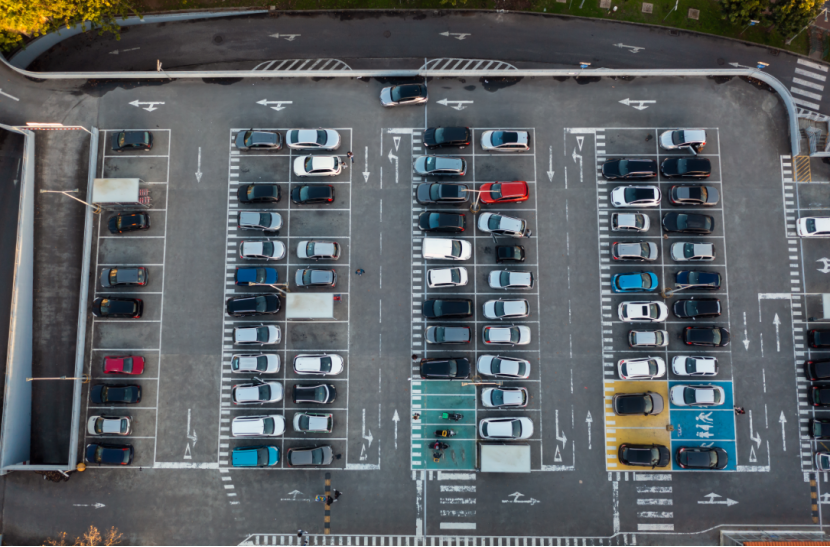
With rising upstream costs and falling terminal prices, profit margins in vehicle manufacturing have been severely compressed. Cui Dongshu, Secretary-General of the CPCA, attributed the concentrated profit declines among automakers in the first half of the year to the triple pressure of soaring upstream costs, intensified terminal price wars, and rigid transformation investments. Costs are the core issue, while sluggish sales further exacerbate losses.
More critically, domestic narrow passenger vehicle retail sales totaled 8.701 million units in the first half of 2026, down 20.2% year-on-year. In a stage of inventory competition, the room for growth through price cuts is diminishing. Meanwhile, the retail penetration rate of domestic NEVs continuously surpassed 60%, accelerating the decline of the traditional gasoline vehicle market. Many gasoline models find themselves in an awkward predicament of being 'unsellable.' In this industry environment, maintaining a vast product matrix is increasingly uneconomical. When a model fails to achieve economies of scale, its mere existence drains corporate profits. Culling them is, instead, a way to stop losses.
▍Who Is Culling Models and How?
This 'downsizing' trend is not limited to a single automaker. Volkswagen, Nissan, Toyota, Changan, Great Wall, Geely, and Seres—spanning multinational giants to domestic brands—are all cutting back, albeit with varying approaches and rationales.
Volkswagen Group's adjustments are the most aggressive. Under its 2030 strategic plan, Volkswagen aims to reduce model numbers by up to 50%, trim optional configurations by 75%, and cut global annual production capacity from 10 million to 9 million units. Models first slated for discontinuation include the Touareg, Touran, T-Roc Cabriolet, Audi A1, Q2, TT, R8, Q8 e-tron, and Porsche 718 Boxster, 718 Cayman, and the first-generation Macan. What remains will be high-profit, high-popularity core models like the Lavida, Sagitar, Tiguan, and Passat. Arno Antlitz, Volkswagen Group's CFO, explained that current cost-cutting measures are insufficient amid global economic and geopolitical uncertainties, necessitating a 'fundamental restructuring of the business model.'
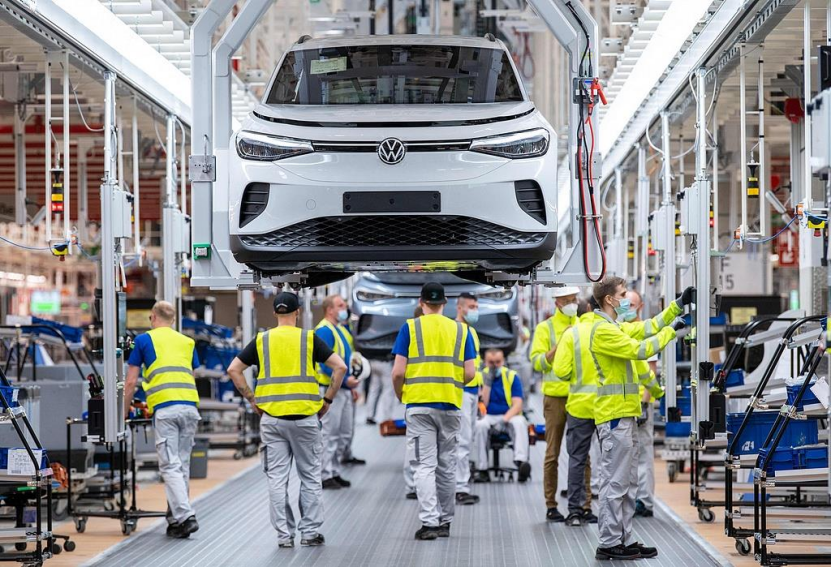
Why has Volkswagen reached this juncture? In 2025, its operating profit plummeted 54% year-on-year to 8.9 billion euros, while net profit after tax dropped 44% to 6.9 billion euros, hitting its lowest level since 2016. In the first quarter of 2026, sales in China collapsed by 20%, and in North America by 9%. FAW-Volkswagen's retail sales plunged 43.3% year-on-year in June. Volkswagen, once a global giant riding on economies of scale, is now suffocating under its own size.
Nissan's adjustments are relatively moderate. It plans to reduce its global model lineup from 56 to 45, phasing out underperforming models and reallocating investments to high-growth areas. Nissan also aims to concentrate 80% of its sales on three core model series built on shared platforms, expecting to boost per-model sales by over 30%. Ivan Espinoza, Nissan's CEO, emphasized that this is not a contraction of the product lineup but a strategy for long-term growth. Nissan's rationale: Instead of spreading resources thin on mediocre products, focus on excelling in a few models.
Toyota's approach leans more toward 'hitting the brakes.' It abandoned the Lexus LF-ZC, initially slated for mass production in 2026. The model, unveiled at the 2023 Japan Mobility Show, featured fast charging and long range as selling points. Originally scheduled for production by the end of 2026, it was delayed to mid-2027 before being canceled. Toyota stated that the decision was based on market demand changes and part of a broader vehicle development project adjustment. Given its slower-than-expected electrification transition, stopping losses is a rational choice.
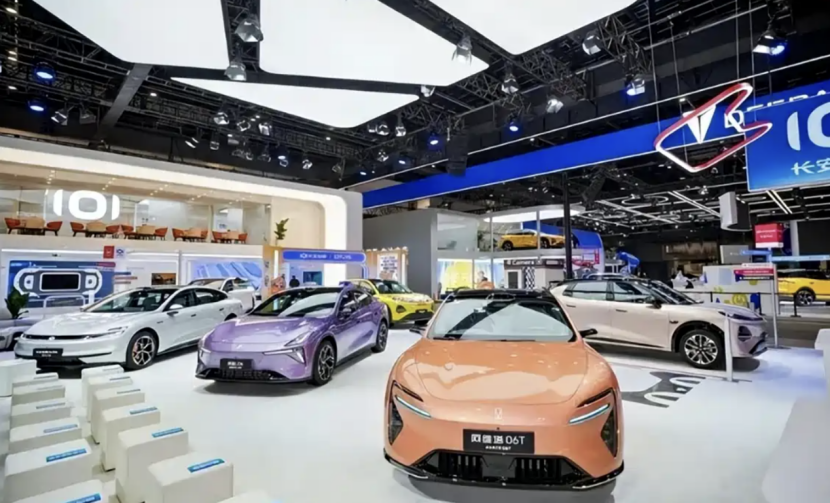
Chinese domestic brands are also making adjustments, with Changan Automobile's moves being the most representative. In the first half of 2026, Changan proactively cut several low-profit products. Adjustments to just one sub-50,000-yuan low-end model reduced sales by about 70,000 units. Tan Benhong, Deputy Secretary of the CPC Committee at Changan Automobile, stated at a mid-year communication meeting: 'Changan has abandoned the strategy of 'having more children for better competition' and now pursues high-quality development. We are cautious about merely pursuing scale to outcompete others. We must balance volume and profit and consider the long term.' Over the next five years, Changan plans to streamline its product lineup from 63 to 36 models.
Great Wall, Geely, and Seres are also taking action. Great Wall plans to integrate Haval, Ora, and Great Wall Cannon under the GWM brand. Geely aims to consolidate brands like Geely Galaxy, Lynk & Co, and Zeekr under its main listed platform. Seres has divested its underperforming Seres Blue brand.
The rationale behind these adjustments is similar: In an era of inventory competition, the extensive expansion model of relying on multiple brands and models to flood the market no longer works. In recent years, automakers blindly launched sub-brands and flooded the market with new models to capture niches, resulting in redundant, homogenized product lineups that drained corporate resources. With razor-thin profits today, every penny must be spent wisely.
However, streamlining product lines is not a cure-all. Culling models is just the first step; more importantly, saved resources must be invested wisely. If automakers merely reduce model numbers without achieving breakthroughs in product strength, R&D, and cost control, 'downsizing' will only be a one-time financial fix, not a long-term competitiveness restoration. Zhu Huarong, Chairman of Changan Automobile, set a goal to create six global blockbuster models with annual sales exceeding 300,000 units. In other words, after streamlining, there must be hits to take over.
Whether streamlining product lines can truly help automakers escape the profit muddle remains uncertain. Profit turnarounds may occur in stages: Leading domestic brands with complete self-developed supply chains and high-margin overseas growth could restore profit margins to over 4.5% by Q4 2026. However, joint-venture automakers lacking core technologies and with high shares of gasoline vehicles may continue bleeding into Q1 2027. One thing is certain: The era of flooding the market with models is over. With a 1.5% profit margin, every model must prove its worth.
Layout 丨 Yang Shuo Image Sources: Qianku.com, Volkswagen Group, Changan Automobile
-
![]()
China Unveils Its First Embodied AI Development Bureau: Why Shunde Takes the Lead?
-
![]()
#Hytera HP780 #PDT Two-Way Radio #Industrial Private Network #Field Communication #Equipment for Extreme Cold Communication #Emergency Communication
-
![]()
Huawei Router Tops China’s Market, Xiaomi Claims Second Place Worldwide
-
Will Leading Content Creators All Transition into Sellers of 'AI Courses'?
-
![]()
Semi-annual Report | China's Sports Camera Market Nearly Doubles in Size in H1 2026, with DJI and Insta360 Dominating as a Dual Oligopoly; Full-Year E-commerce Sales Forecast to Exceed RMB 20 Billion
-
![]()
Automakers Embark on a Collective 'Downsizing' Path: Can Model Reduction Rescue Profits?
-
![]()
STO Express Under Scrutiny: Low Delivery Costs, but Safety Remains Paramount
-
![]()
Five Major Players Enter the Arena: The All-Out Battle for the Ultimate AI Office Super Gateway Begins