Horizon Aims for 'Intelligent Driving Market' in Affordable Car Models, Making Urban Assisted Driving Accessible to All
 12/10 2025
 559
559
Lead
"Shouldn't everyday Chinese car owners—ordinary people navigating their daily routines—have access to top-notch urban assisted driving?" This query motivated Horizon's founder and CEO, Yu Kai, to recognize that Horizon and its partners have a duty to tackle this issue. As a result, an urban assisted driving solution, powered by a single Journey 6M chip, is set to make its debut in affordable car models priced around RMB 100,000.
Published by Heyan Yueche Studio
Written by Li Suwan
Edited by He Zi
Full text: 3,475 characters
Reading time: 5 minutes
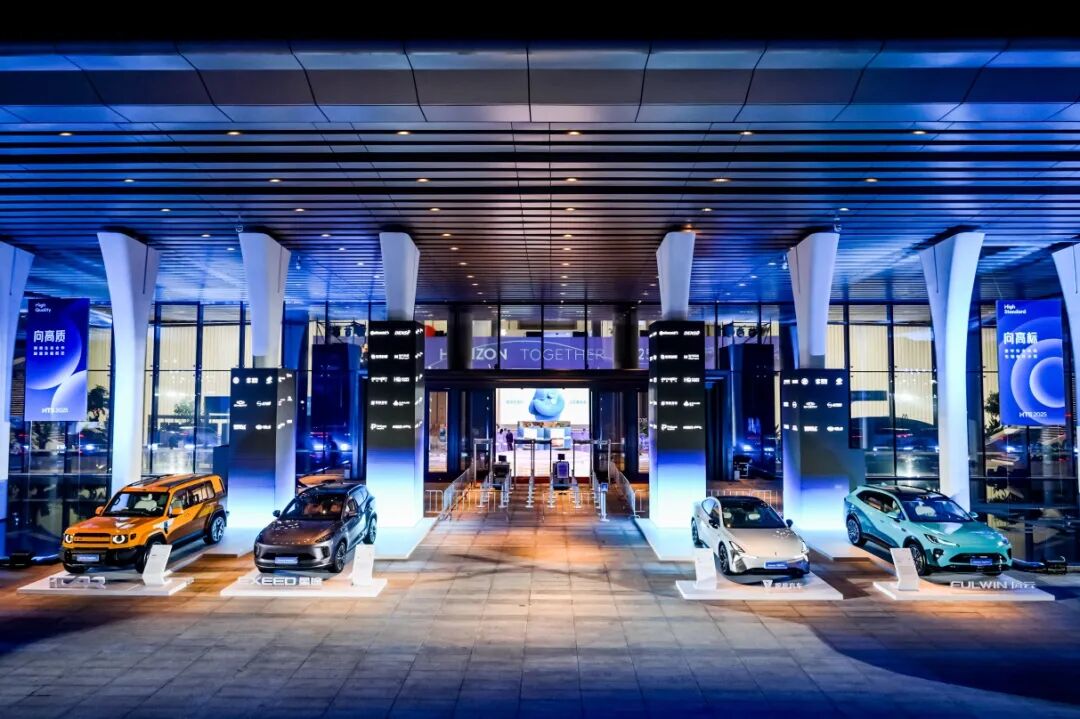
"Dream big, but stay grounded"—this well-known adage reflects Yu Kai's vision at the 2025 Horizon Technology Ecosystem Conference (Horizon Together 2025), where he emphasized "striving for excellence in physical AI and laying the groundwork for inclusive ecosystems."
At the conference, Yu Kai drew on Horizon's decade-long industry experience and insights to systematically explain how the company is driving intelligent driving from technological breakthroughs ("reaching for higher heights") to industrial collaboration ("advancing together at elevated levels") through three key pillars: BPU®, compiler, and algorithm. This approach fosters a broad ecosystem, spanning smart cars to general-purpose robots.
"Advancing together at elevated levels" signifies a transformative shift for Horizon. Even cutting-edge technology should not remain exclusive but eventually become accessible to the masses. Yu Kai underscored Horizon's commitment to making smart cars and robots widely available, partnering with global industry leaders and developers to transform advanced tech enjoyed by a select few into everyday tools for many. "Previously, top-tier intelligent driving was limited to high-end vehicles. Today, Horizon HSD brings it to the RMB 130,000 price range. Next, we aim to make advanced intelligent driving accessible to affordable car models priced around RMB 100,000," Yu Kai declared, sparking widespread discussion in the automotive industry.

Affordable car models priced around RMB 100,000 will soon feature urban assisted driving
This year, Yu Kai traveled through Guangzhou and other cities in new car models equipped with Horizon's technology, gaining a deeper understanding of "everyday life." Over the past three years, Horizon has collaborated with automakers to promote inclusive urban intelligent driving. However, the current landscape shows a trend toward high-end urban intelligent driving, making full inclusivity a challenging goal.
Yu Kai pointed out that Horizon's involvement has changed the industry's inclusivity landscape. The upcoming mass production of urban assisted driving solutions powered by a single Journey 6M chip means this technology will reach affordable car models priced around RMB 100,000. Horizon's initial partners for single Journey 6M-based solutions fall into two collaboration models: (1) Horizon's classic model, offering chip-based toolchain reference designs, partnering with Bosch, JoyDrive, and QCraft to deliver user-friendly urban assisted driving; (2) Horizon's new HSD Together algorithm service model, collaborating with CARIZON (a joint venture between Volkswagen and Denso) and HCT to introduce practical urban assisted driving.
2025 is widely seen as the "first year of intelligent driving popularization" in the automotive industry, with advanced intelligent driving rapidly entering the mainstream RMB 100,000–200,000 market from high-end models priced over RMB 300,000. Some automakers are even extending basic intelligent driving to models under RMB 100,000. Data shows that in the first three quarters of this year, over 50% of passenger vehicles sold in China were priced under RMB 130,000, while 30% were priced over RMB 200,000. Currently, high-end urban intelligent driving solutions from NVIDIA and Huawei primarily cover models priced over RMB 200,000, leaving a near-blank space in advanced intelligent driving experiences for models under RMB 130,000, which dominate half of the Chinese market.
"Shouldn't everyday Chinese car owners—ordinary people navigating their daily routines—have access to user-friendly urban assisted driving?" Many innovations arise from aspiration, but some stem from "frustration." Yu Kai expressed frustration that Horizon and its partners have a responsibility to solve this issue. Consequently, an urban assisted driving solution powered by a single Journey 6M chip is set for mass production.
This marks a significant shift in mindset and strategy for Horizon, which previously "reached for higher heights." Horizon's journey began amid humanity's exploration of the cosmos. On July 14, 2015, as NASA's New Horizons probe made its historic flyby of Pluto, pushing the boundaries of human knowledge to the edge of the solar system, Horizon was officially registered in Zhongguancun, Beijing, on the same day. This was not a deliberate arrangement but a metaphorical alignment: a company named "Horizon" embarked on a persistent climb toward the unknown peaks of physical intelligence. Since 2021, Horizon has built upon its Journey 2, 3, and 5 chip series to expand the technical boundaries of high-computing-power and advanced assisted driving, continuing its "ascent to higher heights."
At the conference, Yu Kai introduced a new perspective: "Horizon is transitioning from 'reaching for higher heights' to 'advancing together at elevated levels,' moving from 'pushing upper limits and setting benchmarks' to 'empowering the industry and benefiting the masses,' accelerating the entry of every enterprise and user into the era of smart cars and general-purpose robots."
Two Major Players Accelerate Intelligent Driving Democratization
Through joint efforts by automakers and tech companies, China's automotive industry has not only gained a competitive edge in the new energy sector but also in intelligent driving, with some technologies leading globally.
Statistics show that the penetration rate of passenger vehicles equipped with combined driving assistance (L2) in China has reached approximately 65%, with over 80% of new energy passenger vehicles featuring L2 or higher-level assistance. The market is shifting from early L2 feature accumulation to a "pragmatic" stage focused on user experience and real value, with advanced intelligent driving such as urban NOA accelerating its rollout.
Horizon anticipated this trend early and began planning the Journey 6 chip generation to push computational limits while building a software team capable of delivering high-level assisted driving in complex urban and even rural scenarios, paving the way for future L3 and L4 advancements.
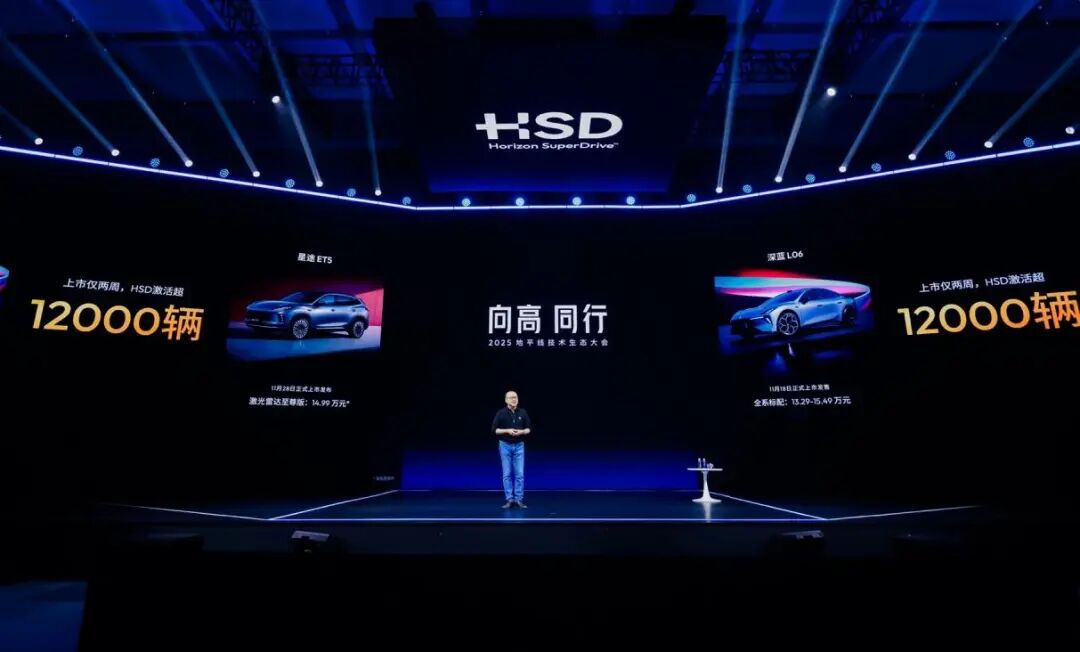
Following the release of its next-generation Journey 6 chip series last year and Horizon SuperDrive (HSD) in April this year, Horizon HSD officially entered mass production on November 18, marking Horizon's entry into the urban assisted driving and urban NOA arena. Partnering with Changan and Chery, Horizon launched the Deepal L06 and Exeed ET5, the first models equipped with Horizon HSD. Within two weeks, 12,000 vehicles activated HSD Horizon SuperDrive, bringing urban assisted driving experiences to the mainstream market under RMB 150,000.
In the race for automotive intelligence, Horizon and Huawei have emerged as key players, both serving as partners or suppliers to automakers without building their own vehicles. However, they differ sharply in core positioning, business models, market strategies, and technological directions, offering automakers and consumers distinct choices. Huawei's model resembles Apple's closed ecosystem, acting as a Tier-1 full-stack solution provider covering chips, hardware, operating systems, algorithms, and applications. It offers integrated intelligent services primarily through two modes: Harmony Intelligent Mobility (deep collaboration) and Qiankun ADS solutions, with unified technical standards and ecosystem autonomy. In contrast, Horizon follows an "Android-style" open approach as a Tier-2 foundational supplier, focusing on intelligent driving chips and providing automakers with flexible, open solutions at various levels.
Yu Kai believes that large intelligent driving models represent the beginning of physical AI foundational models. A strong intelligent driving model embodies three key ecological values: a "showcase" of technical capabilities, a "cornerstone" for technological foundations, and a "common ground" for partners' innovations. He pointed out that as the industry fully transitions to data-driven paradigms, all participants face three severe challenges: high computational costs for model training (annual investments often reach billions of yuan), a severe shortage of top AI algorithm talent, and accelerating product iteration cycles measured in months.
To address these, Horizon's collaboration models have evolved. During the Journey 2 to Journey 5 era, Horizon adopted the classic "SoC + algorithm IP licensing + hardware reference design" model, helping partners launch numerous mature and reliable highway navigation-assisted driving products. For the Journey 6P and HSD era, Horizon chose to develop the HSD full-stack "showcase" in-house and introduced the new HSD Together "algorithm service" model, opening it to the entire industry for deep co-creation with clear division of labor. Partners can focus on their strengths, such as system integration testing, model adaptation development, feature customization, and hardware/software delivery, while Horizon provides "algorithm services" covering the entire product development cycle, including data services and the Edison SaaS platform, professional algorithm adaptation engineering and consulting, and core foundational model licensing. Yu Kai explained, "The fundamental goal of the HSD Together algorithm service model is to enable partners to significantly reduce manpower investment, computational consumption, and time-to-market by 90% in product development, based on Horizon's proven intelligent foundation."
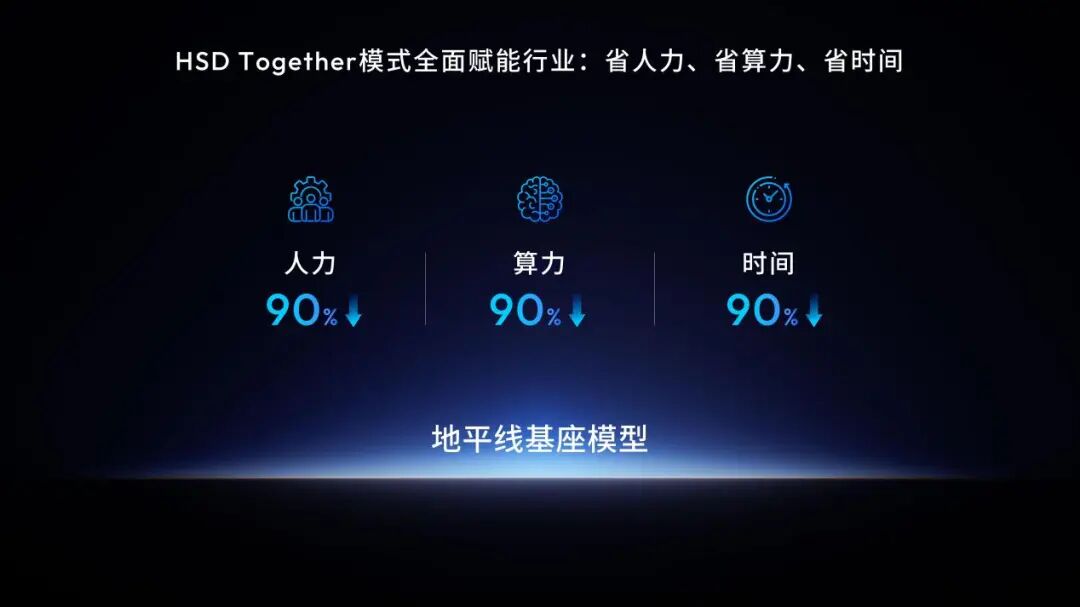
All technological explorations and business model innovations point to a deeper question: How can the best technologies serve the broadest populations? Horizon is accelerating this inclusivity with its "Journey acceleration," shortening the time to reach one million chip shipments for its product family: Journey 3 took ~36 months, Journey 5 reduced it to 24 months, and the latest Journey 6 series achieved it in just 12 months. Currently, the Journey 6 family covers all market segments, with the Journey 6H/P designed for next-generation full-scenario assisted driving. Over 20 models are slated for mass production, with launches beginning in November 2025. From Journey 2 to Journey 6, Horizon has shipped over 10 million chips in five years. Over the next 3–5 years, Horizon aims to collaborate with ecosystem partners to reach a new milestone of "10 million mass-produced urban assisted driving HSD solutions."

Currently focusing on the mainstream RMB 100,000–200,000 market, Horizon's move to bring advanced intelligent driving to affordable car models priced around RMB 100,000—while maintaining high functionality and extreme cost control—will undoubtedly accelerate its pace of intelligent democratization. In contrast, Huawei targets the mid-to-high-end and luxury markets above RMB 200,000, prioritizing technological leadership and premium experiences. Its full-stack solutions come with higher costs but are gradually penetrating the sub-RMB 200,000 segment through technology decentralization. Neither approach is inherently superior; they cater to different market needs and development goals, jointly driving the penetration of intelligent automotive technologies into diverse scenarios.
Commentary
For automakers, choosing Horizon suits those seeking to retain brand and technological autonomy while quickly acquiring cost-effective, mature intelligent capabilities. Opting for Huawei aligns with those preferring deep integration of cutting-edge technologies, especially under Harmony Intelligent Mobility, though it requires accepting higher collaboration binding. For consumers, Horizon's route offers models concentrated in mainstream price ranges with practical, cost-effective intelligent features and diverse choices from multiple suppliers. Huawei's route focuses on mid-to-high-end models with more complete and cutting-edge intelligent cockpit and driving experiences, high system integration, and forward-looking technological implementation. Both Horizon and Huawei offer unique strengths in intelligent driving, but Horizon's model makes intelligent driving more accessible to the general public.
(This article is original to Heyan Yueche and may not be reproduced without authorization.)
-
![]()
Hyundai Motor Workers Strike Today, Fearing Job Losses to Robots
-
![]()
Embracing 'Light': O-film Unveils Its 'Illuminating the Future' Strategy
-
![]()
SenseTime’s SenseNova U1.5 Lite Goes Open Source: Ushering in a New Era of Predictable AI Image Generation
-
![]()
Collaboration Initiated! Tesla Officially Welcomes Doubao Onboard
-
![]()
WPS: From Alternative to Leader, Kingsoft Software Bets on AI Office, H1 Revenue Nears 5 Billion
-
![]()
Can TECNO Mobile Expand Beyond Africa?
-
![]()
A Sample of AI Breakthrough for a Company
-
![]()
Goldman Sachs Raises the Bar: China’s Global Expansion Steps into the '3.0 Era,' Now Exporting AI Industrial Prowess