Su Qing Cools Enthusiasm for Autonomous Driving: Don’t Overhype It—Tough Challenges Lie Ahead!
 12/10 2025
 555
555
"Recently, everyone’s been riding high on optimism. The single-stage approach is done, and a flood of haphazard concepts has surfaced. Will we soon enter a golden age of autonomous driving? Frankly, I need to temper some expectations." "Stay grounded, folks—we’re about to hit another rough patch." At Horizon Robotics’ 2025 Technology Ecosystem Conference on December 9th, Su Qing, Vice President and Chief Architect, threw a bucket of cold water on the autonomous driving sector. Su Qing bluntly stated that rather than entering a revolutionary phase, autonomous driving will likely see incremental optimization of existing systems in the near future.
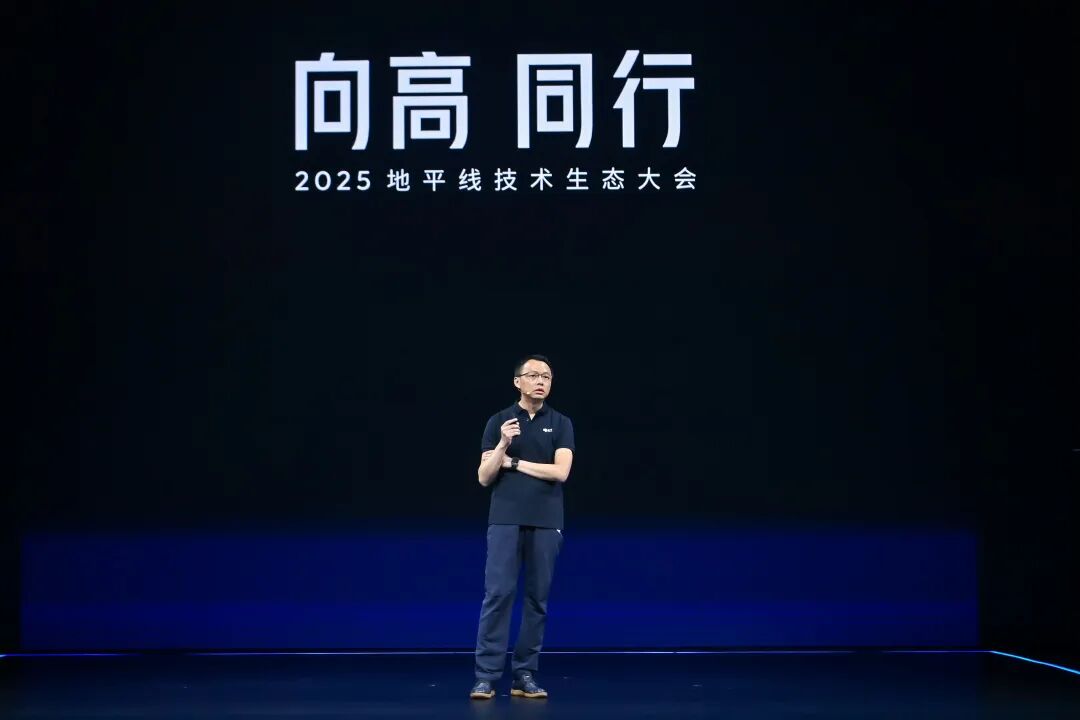
During his speech, Su Qing revealed that when he first considered joining Horizon Robotics, he repeatedly emphasized to founder Yu Kai that he wanted no part in autonomous driving. His primary reason? The field was too painful, and he saw no clear path forward. "Back then, autonomous driving seemed to work decently when the car was in motion, but compared to a real human driver, the gap was immense. Countless scenarios couldn’t be handled, and the behavior felt robotic—just a machine operating on reflex. This was the case two or three years ago, and even in 2023 and 2024, the industry widely agreed: it functioned, but whether it could ever match human-like intelligence and adaptability remained uncertain. That was my mindset at the time," Su Qing explained.
Su Qing views Tesla’s FSD V12 as a pivotal turning point for the industry. Before its arrival, deep learning had only revamped the perception layer, while decision-making and control remained rooted in rule-based systems—a "half-baked revolution." He likened FSD V12’s impact to the first successful nuclear fission experiment in the atomic age. "Knowing the wrong path, identifying the right one, and actually executing it are worlds apart." Su Qing argued that FSD V12 bridged this gap, proving the viability of an end-to-end approach.
However, Su Qing cautioned that FSD V12’s paradigm shift may not become the norm and could even represent a technological peak. "Humans tend to dismiss possibilities until they happen; once they do, we assume they’ll keep happening." He warned that the industry’s current optimism about autonomous tech’s trajectory is misplaced. "Most breakthroughs mark the peak of an era, not the start of a new one. What we’re seeing now might be the last wave," Su Qing said.
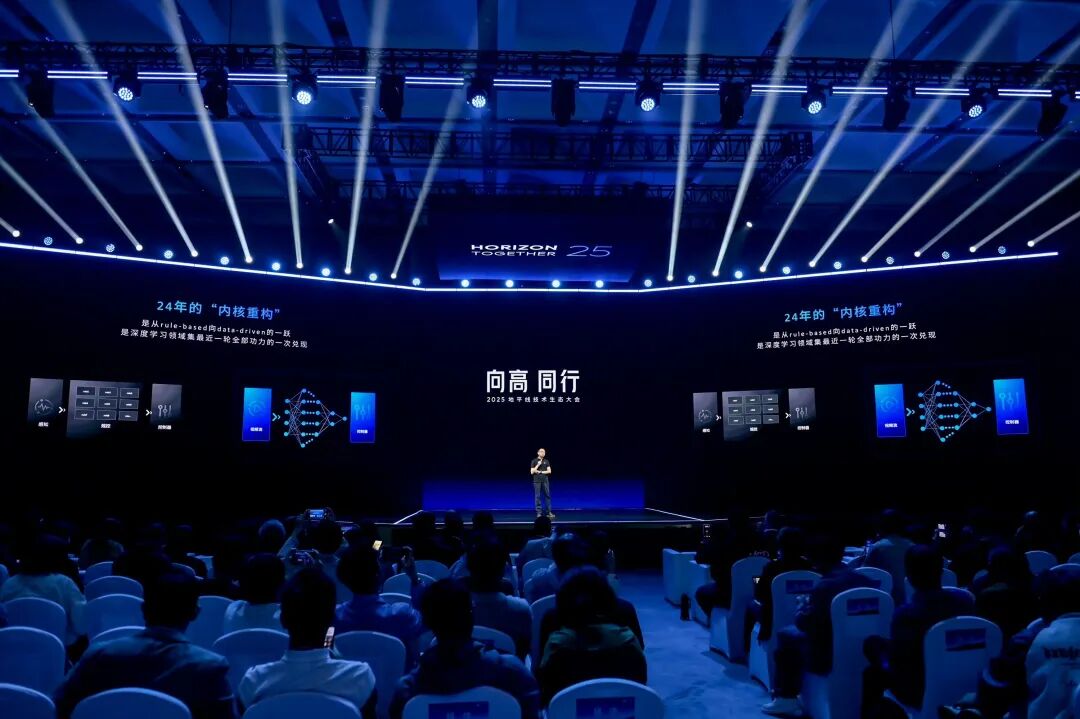
Su Qing’s skepticism stems from two observations: First, AI paradigms typically shift every two to three decades. Based on progress in large language models and other fields, he sees subtle signs that this generation of deep learning may be nearing its limits. Second, the current core reconstruction of autonomous driving systems is largely complete. "Another massive overhaul wouldn’t just mean pushing deep learning from 50% to 100% of the system—it would require a fundamental theoretical shift," he said. He emphasized that technological evolution follows a cycle: theoretical breakthroughs precede application advancements. So far, no signs of the next theoretical leap have emerged, and even after it does, translating it into practical use could take 5, 10, or 20 years. "My personal view is that the next three years will focus on optimizing existing systems, not rebuilding theoretical foundations," Su Qing concluded.
On the industrial front, however, he sees a silver lining. Systems like FSD and HSD have propelled Urban L2 (Level 2 autonomy) into a "dividend period," where the technology performs reliably across vehicles priced from hundreds of thousands of dollars down to $20,000 or even $10,000. "The day when Urban L2 is equally accessible in $10,000 cars—or cheaper—will arrive," he predicted.

This new paradigm has also unified methodologies, boosting development efficiency. "With the current approach, we could realistically increase MPI (Miles Per Intervention) to 50,000 or 100,000 within two to three years while maintaining human-like performance and automatic generalization across regions," Su Qing said. Using Horizon’s SOP (Start of Production) process as an example, he noted that after adopting the new methodology, most cities tested required no adjustments. Only rare edge cases outside the system’s training data needed handling, eliminating the need for repeated ODD (Operational Design Domain) refinements. This saved significant time—a boon for L4 development.
Given his "tough times" forecast, Su Qing outlined Horizon Robotics’ three priorities:
First, despite potential ceilings in large models, Horizon will double down on computing power. Each new chip and product generation will aim for a tenfold increase in compute and model capacity. "The computer industry’s essence is relentlessly stacking computing power—it’s a printing industry that becomes cost-effective over time. Deviating from this logic means being left behind," Su Qing said.
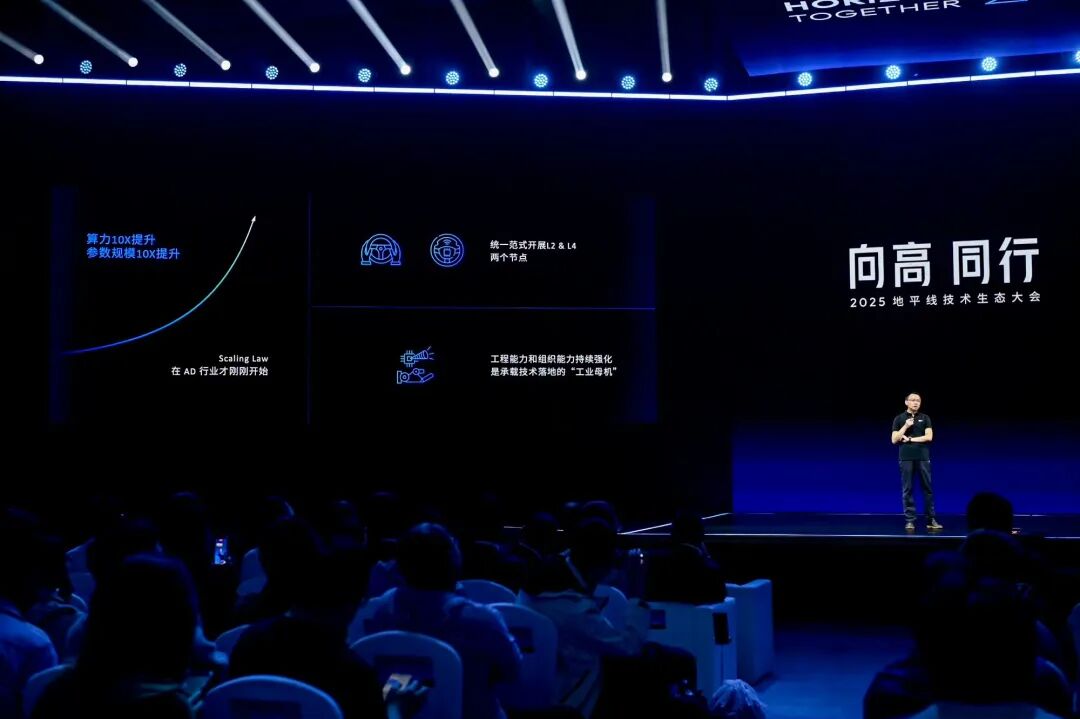
Second, Horizon will pursue L2 and L4 development under a unified framework. "We’ll invest heavily in L4, but not piecemeal. Instead, we’ll use a single development paradigm, sensor setup, and ODD regions to bridge L2 to L4," Su Qing explained. This approach accelerates technological iteration, cuts deployment costs, and speeds up regional expansion. He predicted that L2 drivers today could be using quasi-L4 systems within three years.
Third, Horizon will strengthen its engineering and organizational capabilities. "Only a stable company with robust engineering can adapt to change. When new tech emerges, it can integrate it quickly. When problems arise post-integration, it can resolve them systematically," Su Qing said. He views strong engineering and organizational muscle as the "industrial mother machine"—the only certain foundation a company can rely on in an uncertain world.
-
![]()
Hyundai Motor Workers Strike Today, Fearing Job Losses to Robots
-
![]()
Embracing 'Light': O-film Unveils Its 'Illuminating the Future' Strategy
-
![]()
SenseTime’s SenseNova U1.5 Lite Goes Open Source: Ushering in a New Era of Predictable AI Image Generation
-
![]()
Collaboration Initiated! Tesla Officially Welcomes Doubao Onboard
-
![]()
WPS: From Alternative to Leader, Kingsoft Software Bets on AI Office, H1 Revenue Nears 5 Billion
-
![]()
Can TECNO Mobile Expand Beyond Africa?
-
![]()
A Sample of AI Breakthrough for a Company
-
![]()
Goldman Sachs Raises the Bar: China’s Global Expansion Steps into the '3.0 Era,' Now Exporting AI Industrial Prowess