If intelligent driving does not charge fees, it will only harm the automotive industry
 12/10 2025
 668
668
Written by Wang Miao, Art edited by Gu Qingqing, Produced by Wangjie
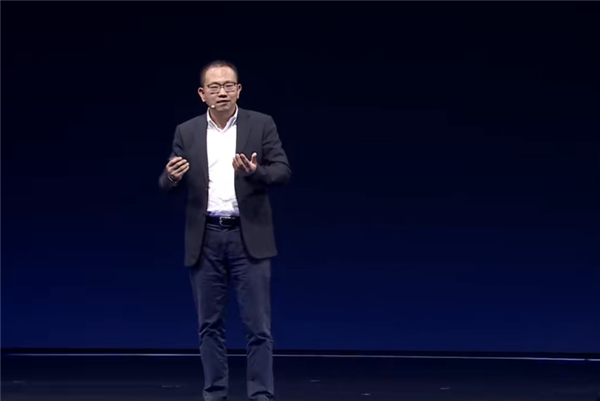
At this year's Horizon Technology Ecosystem Conference, two statements pierced the nerves of the intelligent driving industry like needles.
The first came from Wu Yongqiao, President of Bosch Intelligent Driving Control China: 'If intelligent driving doesn't charge fees, it will actually cause significant harm to the industry.'
The second came from Su Jing, Vice President and Chief Architect of Horizon Robotics: 'The deep learning technology itself has begun to show signs of reaching its ceiling. Over the next three years, the autonomous driving industry will enter a period of extreme optimization.'
These contrasting viewpoints, presented almost in the same setting, laid bare the real situation of China's automotive intelligence on the table.
From the user's perspective, intelligent driving has become a daily, indispensable function.
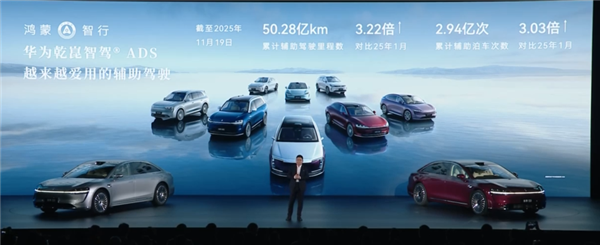
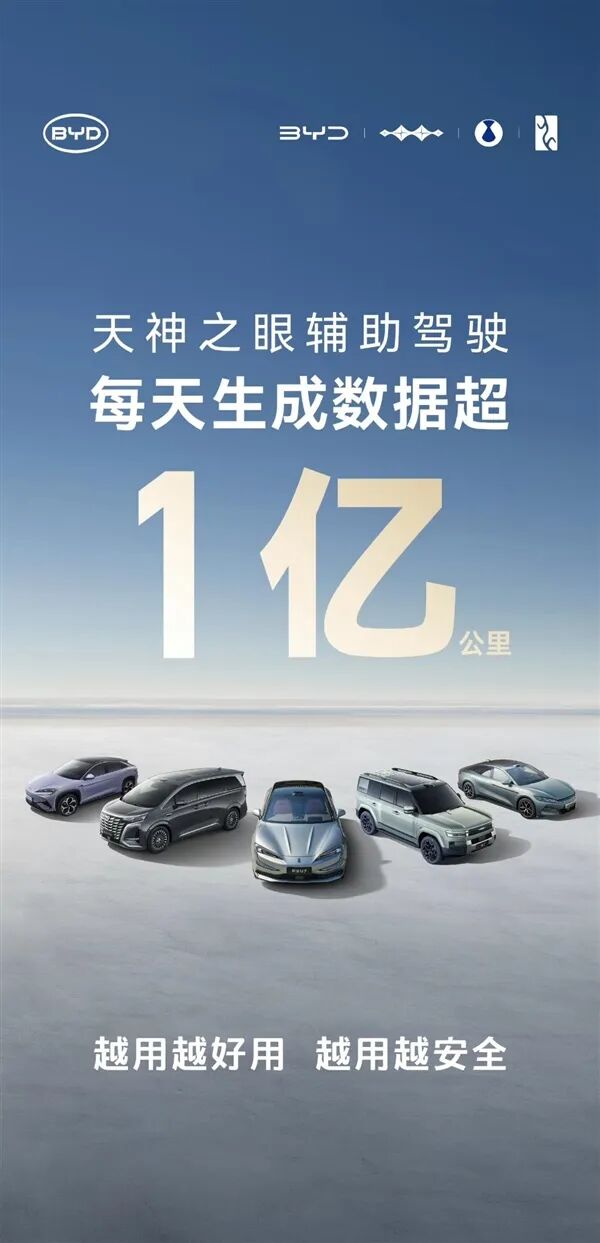
The cumulative assisted driving mileage of Huawei ADS has surpassed 5 billion kilometers. The sales volume of BYD's 'Divine Eye' models has exceeded 2 million units, generating approximately 130 million kilometers of intelligent driving data per day. Features like 'automatic lane changing, automatic parking, and urban assisted driving' in various scenarios are being used more and more smoothly.
However, from the corporate perspective, it's a different picture: expensive chips, algorithm team salaries, training cluster costs on massive data, long-term investment in engineering systems... If all automakers default to 'giving away high-level intelligent driving for free,' this industry won't be far from 'heavy losses.'
The question now facing the entire industry is simple: Should intelligent driving charge fees? Wu Yongqiao's view is 'it must charge fees; otherwise, it will be a disaster.' Su Jing's judgment is 'the industry doesn't have another major outbreak temporarily; caution is needed.'
On the other hand, automakers like Huawei, BYD, and Changan have reached their highest intensity of investment in history. Intelligent driving is no longer a 'selling point' but a 'fundamental.'
This article aims to bring together these facts to explain an unavoidable reality in 2025:
The business model for high-level intelligent driving must shift from 'competing on configurations' to 'getting users to pay.' This is a decisive issue for whether China's automotive industry can continue to move forward.
01
Why 'Free' Is Not a Victory for the Industry
Everyone can see how fiercely competitive intelligent driving has become in recent years: more hardware, higher claimed computing power, faster urban NOA rollout speeds.
It looks vibrant, but behind this lies an issue that the industry dares not delve into too deeply—the cost structure is entirely unhealthy.
Wu Yongqiao's viewpoint strikes a nerve because it points out not just a superficial controversy over 'charging or not' but something more fundamental to the industry's operating logic.
He mentioned a key judgment: 'If no one charges fees, it will actually cause significant harm to the industry and could even be a devastating blow. Every company will suffer heavy losses. How can this industry develop healthily?'
This statement needs no embellishment; it is the most authentic warning.
The essence of intelligent driving is not 'selling components' but 'selling capabilities.' This differs from traditional automotive sales of mechanical parts. Once a mechanical structure is finalized, costs are relatively stable.
However, the costs of intelligent driving are continuous, rolling, and never-ending: data must be continuously collected, models must be continuously trained, OTA updates must be continuously rolled out, the liability system must be continuously improved, and algorithm teams must be continuously invested in.
Can you expect a research and development system with a thousand-strong workforce to provide capability upgrades to users for free over the long term? Any idealism, when applied to financial statements, will be brought back to reality.
So, what the industry faces now is not 'whether free is good' but 'whether free aligns with normal business logic.' Moreover, today's intelligent driving has a very strong positive feedback attribute. 'The more it is used, the stronger it becomes; the stronger it is, the more willing users are to use it.'
Huawei ADS's 5 billion kilometers of assisted driving mileage is the best evidence of this positive feedback. The more competitive the industry becomes, the more data is generated, and the faster the iteration, but the costs also rise. Whoever makes intelligent driving a 'free standard feature' may seem to please users on the surface, but at the bottom level, the entire industry is bearing unsustainable costs.
Some may argue that Tesla also offers standard features. However, the original quote cited by Wu Yongqiao actually points out the key: 'Tesla has set a very good example for the industry in terms of FSD paid services.'
Tesla offers basic capabilities for free but charges for high-level capabilities. Its business model is clear. In China, many companies dare not charge fees not because their technological costs are low but because they fear others won't charge and they'll 'lose out in the competition.' This is not a business strategy but industry anxiety.
Ultimately, 'free intelligent driving' may seem user-friendly but is actually overdraft ing (overdrawing) the future of the entire industry.
02
Technology Is Entering a 'Period of Extreme Optimization'
At the same conference, Horizon Robotics' Vice President Su Jing poured cold water from a technological perspective, which actually strongly correlates with the 'necessity of charging fees.'
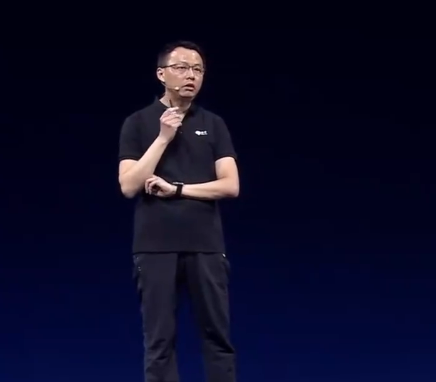
Su Jing judged that there would be no new theoretical core in the autonomous driving industry over the next three years and that the industry would enter a stage of 'extreme optimization on existing systems.' He mentioned two reasons:
The Scaling Law of deep learning has faintly (vaguely) touched its ceiling.
The end-to-end revolution has been completed, and the next theoretical breakthrough is needed to move forward.
What does this mean? It means that the past path of 'relying on stacking computing power, models, and sensors to exchange for better experiences' will become increasingly costly, while experience improvements will slow down and become more difficult.
In other words, the industry is now entering not a 'cost-reduction period' but a 'period of doubled cost investment.' If everyone insists on not charging fees at this point, it will indeed be 'tough times ahead.'
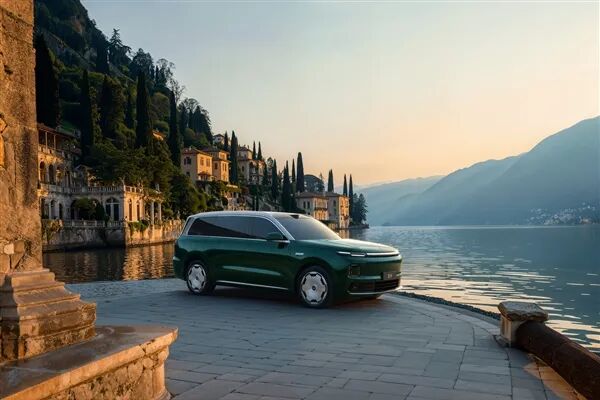
Especially with end-to-end technology becoming the consensus, training costs will rise even higher. The DEEPAL AD Max of Seres L06 uses dual-core high-computing-power chips provided by Horizon Robotics, adopts an end-to-end algorithm sharing the same origin as Tesla's FSD, and comes standard with LiDAR across all models.
With such an aggressive technological route, expensive hardware, and direct user experience, user experience will undoubtedly be good, but the pressure on the research and development system will also double.
The more such models there are, the more 'free intelligent driving' resembles an unsustainable commercial illusion.
Now, let's look at the regulatory side. The Ministry of Industry and Information Technology and eight other departments have included 'conditional approval for the production access of L3-level models' in their regulations. This is a legal pathway that truly starts with changes in the liable entity. A change in the liable entity means not just stronger technology but also that automakers bear greater result risks.
Asking automakers to bear more legal risks, double their investment in research and development, and yet demand that they offer it for free is logically unsound.
More critically, as the industry moves towards L3 and L4, costs tend to become service-oriented. The pilot commercialization of urban L4 will likely adopt a 'monthly subscription' or 'pay-per-mile' model, which is inherently an evolution of commercial logic.
From the perspective of the entire industrial chain, the arrival of the 'period of extreme optimization' is not a technological stagnation but a prelude to industry reshuffling.
To survive this period, companies must have stable and reliable revenue sources. Charging for high-level intelligent driving is the most reasonable, natural, and sustainable approach.
03
Users Are Willing to Pay for Good Intelligent Driving
While the industry debates 'whether charging is reasonable,' consumers' actual usage data has already provided an answer.
First, look at Huawei. By November 2025, Huawei ADS had accumulated 5 billion kilometers of assisted driving mileage, over 294 million assisted parking instances, and had avoided more than 3 million potential collisions. These numbers are not marketing slogans but direct 'user votes.' If the experience were poor, no one would willingly use it daily.
Now, consider the growth of urban NOA. According to data provided by Li Wenguang, President of Intelligent Driving Product Line at HiVision, highway-assisted driving mileage accounts for over 60%, assisted parking accounts for over 40%, and urban-assisted driving is approaching 20% and continues to rise. Users' willingness to use these features means they are willing to pay for higher-level capabilities.
More critically, there is the experience upgrade. The pilot of urban L4 is about to land, and autonomous trucking on main highways will enter the commercial phase in 2027 and 2028.
These capabilities are not 'configurations' but 'services.' Since they are services, they must have a price; since they require continuous iteration, they must have a business model.
BYD's approach of 'intelligent driving for all' is very typical. Although it has reduced hardware costs through economies of scale, enabling high-level capabilities in models priced below 100,000 yuan, it has not denied the commercial essence of the industry.
The 2 million 'Divine Eye' models sold by BYD have not only driven sales but also generated 130 million kilometers of data per day. The more data there is, the stronger the algorithms become, but the costs of machine learning and training behind it also rise.
All these indicate one thing: users are willing to pay for experiences, the industry must charge for capabilities, and future intelligent driving cannot be a 'free capability' but will be a 'tiered capability + service subscription.' This is not a marketing model but the only realistic path for future industrial upgrading.
More importantly, as the liable entity for L3 partially shifts to automakers, the costs of high-level intelligent driving are not just about algorithms and data but also include legal risks, insurance liabilities, and automotive-grade safety systems.
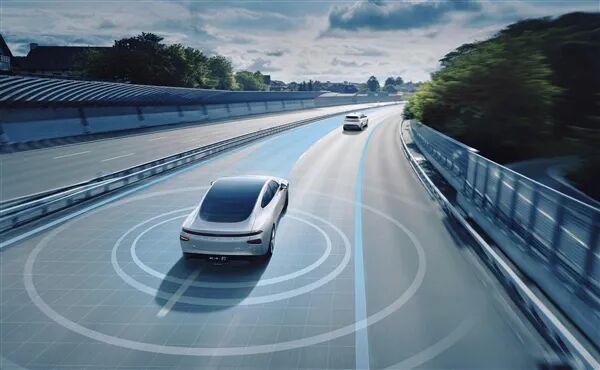
At this stage, if automakers insist on not charging fees, it is not being user-friendly but irresponsible to themselves and the industry.
Ultimately, charging for high-level intelligent driving is not a 'price hike' but a sign that the entire industry is entering a mature phase.
Summary
Charging Fees Is Not a Regression but the True Coming-of-Age Ceremony for Intelligent Driving
Looking back at this critical juncture in 2025, Wu Yongqiao's original statement that 'if intelligent driving doesn't charge fees, it will bring disaster to the industry' indeed seems like a necessary reminder before the industry moves to the next stage.
Today, intelligent driving is no longer a technological showcase in laboratories but a system genuinely running in users' vehicles. The 5 billion kilometers, 2 million units, and 130 million kilometers of daily new data stand behind computing power, data, algorithms, liabilities, and the long-term investment of countless engineers.
However, if the industry treats such a high-cost system as a 'free benefit,' it will inevitably lead to a result that no one wants to see: technological stagnation, capital withdrawal, team layoffs, and industry regression. Not because the technology is inadequate but because the business model cannot support the industry's scale.
Horizon says the industry is entering a 'period of extreme optimization,' Huawei says users are increasingly willing to use it, policies are advancing L3 access, and BYD is bringing intelligent driving to a larger market.
These seemingly unrelated facts all connect to a common point: intelligent driving is shifting from 'technology-driven' to 'business-driven.' Only with a complete business model can the industry go further.
Charging fees is not a regression but common sense; not a barrier but value; not squeezing users but ensuring the industry doesn't turn back in the coming years.
True 'intelligent driving for all' cannot be achieved through free giveaways but must be supported by a healthy commercial cycle. Only in this way can China's intelligent driving industry maintain strong vitality before the next technological cycle arrives and continue to surge forward.
-
![]()
ByteDance, DJI, and Xiaohongshu Secure Top Three Positions Among China’s Fastest-Growing Unicorns
-
Tesla's in-car voice system in China is finally learning to 'understand human language'
-
![]()
Foreigners Are Amazed: Chinese Electric Vehicle Drive Systems Unveil Innovative 'Poses'
-
![]()
700,000 Brothers and the Future of Robots: Behind JD.com's 'Nirvana Plan'
-
![]()
Zhipu's Trillion-Dollar Valuation: A New Chapter for China's AI
-
![]()
Is Laifen, a 'Dyson Alternative' on the Rise, Now Ensnared by the 'Alternative Curse'?
-
![]()
Beyond Patents: Insta360 and DJI Compete in Retail
-
![]()
Piercing Through Industry Chaos: The Curtain Rises on Compliance for Autonomous Driving