Avita Faces a Pivotal Listing Challenge
 12/11 2025
 506
506
Introduction
Being Outside the 'Five Realms': A Dual Edge of Regret and Opportunity for Avita
Recently, Avita has taken a significant step by officially submitting its prospectus to the Hong Kong Stock Exchange, with the ambition of going public.
The entire automotive industry is now closely observing this brand, which was born with a 'golden key' in hand.
This high-end intelligent electric vehicle brand, a collaborative effort between Changan Automobile, Huawei, and CATL, has garnered considerable attention since its inception.
However, a closer look at its prospectus unveils a narrative filled with contradictions: on one hand, the brand aspires to be 'highly attractive, intelligent, and valuable'; on the other, it grapples with sustained losses exceeding 10 billion yuan and a market performance that is 'acclaimed but not selling well'.
Imbalance Between Resource Endowments and Market Performance
Avita's starting point is indeed enviable.
Changan Automobile provides robust manufacturing and supply chain support, CATL ensures cutting-edge core battery technology, and Huawei contributes its intelligent driving and cockpit systems. This 'CHN' collaboration model was once lauded as a 'perfect match' within the industry. Yet, after three years of operation, Avita has failed to mirror the sales success of another Chinese brand from the same city—Aito.
At first glance, Avita's growth trajectory seems impressive. Deliveries surged from 20,000 units in 2023 to 61,000 units in 2024, reaching 56,000 units in the first half of 2025—a growth rate that would be commendable in any industry. However, when scrutinized through the lens of return on investment, issues begin to surface.
According to the prospectus, the company has accumulated losses exceeding 10 billion yuan between 2022 and 2024. This implies that Avita incurs substantial losses for every vehicle sold. High R&D investment and marketing expenses drain its cash flow, compelling the company to continuously rely on external funding. Thus, this Hong Kong listing has become an urgent priority to secure financial support.
This scenario of 'losing money to gain attention' falls significantly short of market expectations for the 'scale effects and profitability' that a 'giant consortium' should deliver.
More intriguingly, when compared horizontally, Aito, also empowered by Huawei's technology, witnessed sales exceed 50,000 units in November, while Li Auto consistently maintains monthly sales of 30,000 units. Avita, despite possessing no less resource endowment, lags behind in market performance by an order of magnitude. This raises the question: Where does the problem lie?
A deep dive into Avita's product lineup reveals a key contradiction: during the startup phase, when rapid volume growth is crucial, Avita opted for a seemingly 'aloof' development path.
While Li Auto precisely targeted family users with its 'dad car' and Aito swiftly entered the 6-seat/7-seat SUV market, Avita's initial models were the relatively niche 5-seat coupe SUV (Avita 11) and sedan (Avita 12). This choice reflects Avita's commitment to a 'sporty, stylish, and tech-savvy' brand identity but caused it to miss out on the largest segment of the new energy vehicle market—family users.
Avita's product launch priorities have also been perplexing. For instance, during a stage when volume-driving models were desperately needed, Avita invested resources in launching limited-edition models like the Avita 012. While beneficial for enhancing brand prestige, these models fail to contribute significantly to sales volume.
Avita seems trapped in the traditional mindset of luxury brand building, hoping to establish brand stature first before penetrating downward. However, the rules of the new energy vehicle market have evolved, and a high-end positioning without scale effects is increasingly unsustainable.
Fortunately, Avita has begun showing pragmatic adjustments in its product strategy.
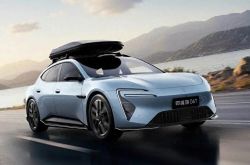
The Avita 07 achieved sales of 24,900 units in the first half of 2025, accounting for 43.99% of the brand's total and becoming its sales pillar. In October, with the launch of the 2026 refreshed model, monthly sales of the Avita 07 surged to 7,684 units, demonstrating strong growth momentum. The success of this model lies in its precise targeting of the mainstream mid-size SUV market priced between 200,000 and 300,000 yuan, coupled with a differentiated competitive edge formed by its technological combination of 'Huawei ADS 4 Intelligent Driving System + HarmonyOS Cockpit'.
The market performance of the Avita 07 underscores a crucial lesson: in the fiercely competitive new energy vehicle market, precisely meeting mainstream consumer demands is essential for achieving significant scale effects. This also indirectly validates the deviation in Avita's previous product strategy—overemphasizing brand prestige while neglecting the market size foundation.
Furthermore, unlike Aito, which adopts Huawei's Smart Selection model, Avita uses the HI (Huawei Inside) model. This approach grants Avita greater autonomy but also means it cannot fully leverage Huawei's comprehensive support in product definition, channel sales, and brand marketing. While competitors swiftly replicate successful formulas, Avita must still navigate product positioning independently.
Where Lies the Key to Breakthrough?
Ultimately, Avita must address several critical issues to achieve a genuine breakthrough.
First, its product lineup requires urgent improvement. The prospectus reveals that Avita plans to use the funds raised primarily for R&D and new model development. Industry expectations suggest that launching 6-seat/7-seat SUV models should be part of its plans.
However, the market window is narrowing. Ideal Auto's L series and Aito's M series have already captured consumer mindshare. For Avita to catch up now, it must demonstrate genuine capabilities. This means Avita needs to establish unique selling points in design language, intelligent experience, or spatial layout to stand out in the hyper-competitive market.
This brings us to the issue of profitability. Avita's asset-light model sounds clever—avoiding the need to build its own factories and reducing heavy asset investments.
However, this also means weaker bargaining power in the supply chain and greater difficulty in cost control. Losing money on every vehicle sold is unsustainable, and the capital markets will not tolerate it indefinitely. Ultimately, automakers must generate profits. Impressive sales figures mean little without corresponding profitability.
Then there's the overseas market, which looks promising but is challenging to execute. The prospectus claims entry into 29 overseas markets, an impressive number, but the reality is far more complex. Each market has unique regulations, charging standards, and consumer preferences, raising doubts about whether domestic success can be replicated abroad. This is not as simple as shipping vehicles overseas for sale; after-sales service, charging networks, and brand building must all keep pace—a systematic endeavor.
Entering 29 overseas markets also means Avita faces more complex certification systems, supply chain layouts, and brand-building challenges. Replicating domestic success overseas is no easy feat.
In Essence, Avita Must Focus on Three Priorities.
First, leverage Changan's manufacturing strengths and Huawei's technological support to create more blockbuster models and avoid lingering in niche markets.
Second, strike a balance between 'premium' and 'volume' in brand positioning. Overemphasizing niche appeal may hinder scalability, while complete conformity risks losing brand distinctiveness. Thus, precise target customer segmentation is crucial.
Third, and most importantly, demonstrate profitability potential to investors by proving the sustainability of its business model. While maintaining R&D investment, Avita must strictly control expenses, strive for an early turnaround in gross margin, and prove to the capital markets that it can not only build excellent vehicles but also create a healthy business ecosystem.
Competition in the new energy vehicle market has entered the deep waters, with capital markets shifting from storytelling to performance evaluation. Avita's listing is, in essence, a major test of its ability to find a viable path between idealism and reality.
If this 'giant consortium model' succeeds, it will not only secure Avita's survival but also serve as an excellent demonstration for Changan's new energy brand ascension and overall transformation.
-
![]()
ByteDance, DJI, and Xiaohongshu Secure Top Three Positions Among China’s Fastest-Growing Unicorns
-
Tesla's in-car voice system in China is finally learning to 'understand human language'
-
![]()
Foreigners Are Amazed: Chinese Electric Vehicle Drive Systems Unveil Innovative 'Poses'
-
![]()
700,000 Brothers and the Future of Robots: Behind JD.com's 'Nirvana Plan'
-
![]()
Zhipu's Trillion-Dollar Valuation: A New Chapter for China's AI
-
![]()
Is Laifen, a 'Dyson Alternative' on the Rise, Now Ensnared by the 'Alternative Curse'?
-
![]()
Beyond Patents: Insta360 and DJI Compete in Retail
-
![]()
Piercing Through Industry Chaos: The Curtain Rises on Compliance for Autonomous Driving