Defining Cars Without Building Them: The Technological Foundation Behind HUAWEI AITO's 'Five Brands' Alliance
 12/11 2025
 747
747
Six years have passed since Huawei declared its commitment to 'not building cars but focusing on ICT technologies to help automakers build better vehicles.' During this period, the HUAWEI AITO ecosystem has expanded steadily, with its five brands—AITO, Luxeed, Enjoyland, Exalt, and Shangjie—forming the 'Five Brands' matrix. Their market performance has continued to rise, establishing them as a significant force in the smart vehicle sector. By November 2025, the 'Five Brands' had secured a spot among the top ten domestic automakers and ranked first among new energy vehicle (NEV) startups in terms of total deliveries. This achievement not only validates the feasibility of Huawei's technology-empowerment model but also sparks broader discussions about HUAWEI AITO's industrial positioning.
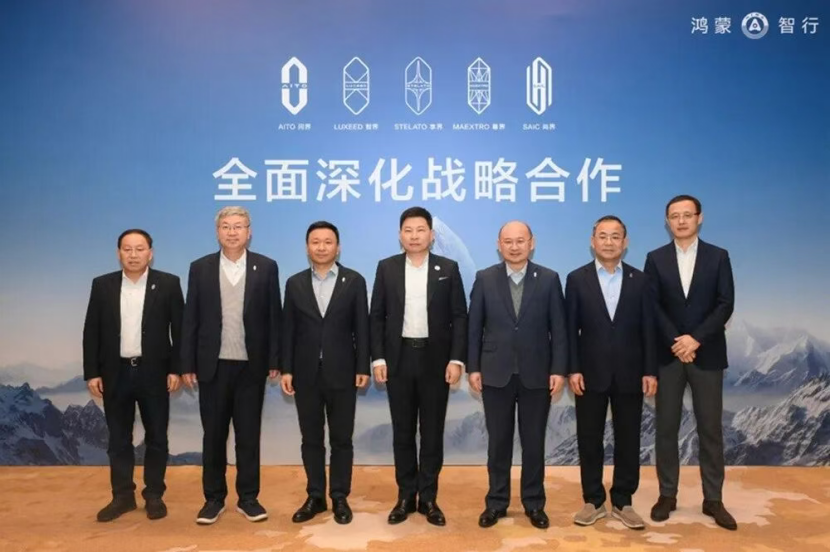
With Yinwang Intelligence launching its 'Jingxi' brand, Huawei's strategic layout in the smart vehicle sector has become clearer. The recent annual livestream event, 'A Leap Forward | Together with HUAWEI AITO,' held in Shanghai, marked a pivotal moment. During this event, Huawei and its 'Five Brands' officially announced a comprehensive deepening of strategic cooperation, signaling HUAWEI AITO's transition from a loose collaborative framework to a standardized technological alliance. This move aims to reshape industry norms through ecological synergy.
▍Huawei's Dual-Track Strategy for Smart Vehicles
Huawei's approach in the smart vehicle sector has always adhered to its promise of 'not building complete vehicles,' yet its level of involvement far exceeds that of a traditional supplier. In recent years, Huawei has advanced its automotive strategy through two parallel but well-defined paths: one led by its Consumer Business Group (BG), centered around the 'Jie' (Bound) series, and the other managed by its Intelligent Automotive Solution Business Unit (BU), utilizing the 'Jing' (Realm) series as its carrier. These two tracks do not compete with each other; instead, they form a complementary and synergistic ecological matrix tailored to the diverse needs and capabilities of partner automakers.
Prior to this strategic cooperation upgrade, HUAWEI AITO operated more as a loosely connected, line-based collaborative framework. While Huawei's Consumer BG played a leading role in product positioning, design, and manufacturing, its partnerships with automakers such as Seres, Chery, and BAIC Motor were conducted on a one-on-one basis. This resulted in variations in marketing channel dependencies and backend service system standards across brands. Under this model, the 'Five Brands' shared Huawei's technological endorsement and the 'Jie' branding but lacked strong horizontal connections. This not only led to redundant internal investments but also caused consumer confusion regarding HUAWEI AITO's brand identity, with some users questioning, 'What kind of brand is HUAWEI AITO?' As market scale expanded and industry competition intensified, this fragmented approach became increasingly unsustainable, making standardization and resource integration imperative.

The recent cooperation upgrade centers on the principles of 'unified standards and shared resources.' A series of implemented measures not only addressed past developmental pain points but also clarified HUAWEI AITO's industrial positioning. At the technological level, HUAWEI AITO promotes the unification and platform-based development of core technologies and components, including in-cabin systems, intelligent driving, and cloud services. By standardizing quality control and ecological interfaces, internal redundant R&D investments have been significantly reduced, enhancing overall operational efficiency. This ensures that products across different 'Jie' brands deliver a consistent core technological experience, eliminating inconsistencies caused by technological fragmentation. In terms of service system construction, a cross-brand shared after-sales service network will standardize the entire customer journey, from pre-sales to delivery and post-sales support.
Currently, the collaborative model of the 'Jie' series heavily relies on Huawei's Consumer BG's expertise in consumer electronics and its channel advantages. From AITO to Shangjie, each model benefits from Huawei's deep involvement in product definition, industrial design, intelligent experience, and even sales. When customers visit Huawei stores, they encounter not only smartphones and tablets but also smart vehicles equipped with HarmonyOS in-cabin systems and ADS advanced intelligent driving solutions. This approach ensures a highly consistent user experience and enables Huawei to swiftly convert its brand momentum from the consumer electronics sector into tangible sales in the automotive market. By 2025, the cumulative deliveries of the 'Five Brands' continued to climb, validating the effectiveness of this model in the marketplace. More importantly, by leveraging its Consumer BG, Huawei has gained control over user touchpoints and data loops, laying the foundation for future software services and ecological expansion.
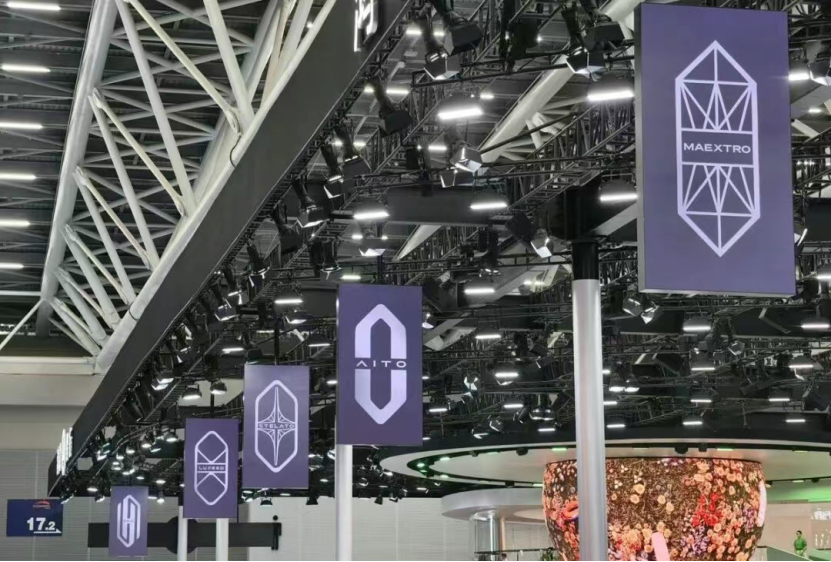
Simultaneously, the 'Jing' series targets large state-owned automakers like GAC Group and Dongfeng Motor Corporation, adopting a collaboration model that emphasizes the autonomy of the original equipment manufacturers (OEMs). In this path, Huawei's Automotive BU provides full-stack technological solutions, including the Qiankun Intelligent Driving System, HarmonyOS Smart Cockpit, and cloud service support. A dedicated team of several hundred personnel is stationed for joint development, but brand ownership, sales channels, and manufacturing systems remain under the control of the partner automakers. This approach minimizes disruptions to the existing structures of traditional automakers, enabling them to undergo intelligent transformation while preserving their brand identities. For instance, models like GAC's 'Qijing' and Dongfeng's 'Yijing,' though not sold in Huawei stores, share the same technological foundation as the 'Jie' series, demonstrating Huawei's standardized technological output capabilities.
▍Ecological Synergy: From Product Alliance to Service Community
While early HUAWEI AITO focused primarily on the success of individual models, the current deepening of the 'Five Brands' alliance signifies Huawei's push to evolve the entire collaborative framework from product-level integration to ecological-level fusion. Multiple initiatives announced at the Shanghai event aim to break down brand boundaries and construct a unified user value network. Two of the most notable directions are service system unification and co-building a charging network.
In terms of after-sales service, although the 'Jie' brands previously shared Huawei's technologies, differences in after-sales networks and service standards persisted. With the establishment of the alliance mechanism, Huawei promotes cross-brand shared service centers, allowing users who purchase any model—be it AITO or Exalt—to receive standardized maintenance, repairs, and technical support at any authorized outlet. This change significantly enhances user convenience while reducing the costs for partner automakers in building separate service systems.
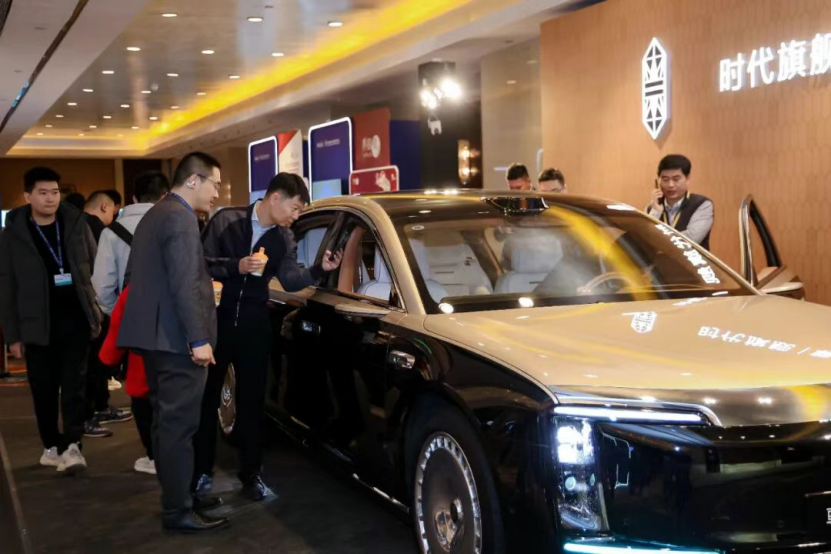
Taking it a step further, Huawei extends its 'user-centric' philosophy from consumer electronics to the automotive sector, creating service spaces akin to 'Harmony Hotels.' These venues offer complimentary high-quality dining, children's play areas, business facilities, and even 24-hour 'Starry Night Service.' This service experience, which transcends traditional 4S dealership models, is becoming a distinctive hallmark of HUAWEI AITO, setting it apart from other NEV startups.
The co-building of a charging network addresses a long-standing user pain point. Previously, despite widespread fast-charging support across 'Five Brands' models, the lack of a dedicated charging network remained a common complaint. The alliance now explicitly commits to joint investments in constructing 'HUAWEI AITO Charging Stations,' ensuring that future owners can access reliable and efficient charging infrastructure under a unified brand and standard. This not only enhances usability but also fosters brand loyalty, marking a substantive step in HUAWEI AITO's transition from 'selling vehicles' to 'providing full lifecycle mobility services.'
Additionally, measures such as technological standardization, the establishment of joint innovation centers, and integrated marketing further strengthen internal synergies within the alliance. By standardizing interfaces for the HarmonyOS Smart Cockpit and intelligent driving systems, partner automakers can reduce redundant validation and adaptation work, accelerating product iteration. The joint innovation center serves as a collaborative platform for developing next-generation smart vehicle technologies, including vehicle-road-cloud integration and AI large model in-car applications. Meanwhile, the alliance-level marketing mechanism integrates resources to create synchronized promotional campaigns during key events, preventing diluted messaging caused by fragmented efforts.
During the livestream, Yu Chengdong also unveiled HUAWEI AITO's product roadmap for the coming year: at least 12 new or refreshed models will enter the market, covering all mainstream and premium segments, including coupes, SUVs, and MPVs. This extensive product lineup features clear division of labor among the 'Jie' brands, enabling coordinated operations.

This comprehensive synergy, spanning products, services, technologies, and ecosystems, essentially constructs a smart vehicle 'operating system ecosystem' centered around Huawei. Within this ecosystem, automakers are no longer isolated competitors but participants jointly upholding user experience standards. Users, in turn, become part of Huawei's digital ecosystem rather than mere vehicle purchasers. Although Huawei does not hold vehicle manufacturing qualifications, it achieves deep integration into critical supply chain links by defining experience standards, controlling core interaction interfaces, and integrating service resources.
The formation of the HUAWEI AITO 'Five Brands' alliance reflects Huawei's clear positioning in the automotive industry—not as a traditional Tier 1 supplier nor as a vehicle manufacturer, but as an ecological architect and experience definer. It also reveals that the future of smart vehicle competition will shift from individual product performance to systemic capabilities in delivering a full-link user experience. The success of this model ultimately hinges on its ability to consistently deliver on its promise of 'consistent and high-quality' user experiences while maintaining technological leadership and service innovation in a fiercely competitive market.
Layout 丨 Yang Shuo
Image Source: HUAWEI AITO
-
![]()
The First Batch of Victims of the AI Bubble: Programmers
-
![]()
ByteDance, DJI, and Xiaohongshu Secure Top Three Positions Among China’s Fastest-Growing Unicorns
-
Tesla's in-car voice system in China is finally learning to 'understand human language'
-
![]()
Foreigners Are Amazed: Chinese Electric Vehicle Drive Systems Unveil Innovative 'Poses'
-
![]()
700,000 Brothers and the Future of Robots: Behind JD.com's 'Nirvana Plan'
-
![]()
Zhipu's Trillion-Dollar Valuation: A New Chapter for China's AI
-
![]()
Is Laifen, a 'Dyson Alternative' on the Rise, Now Ensnared by the 'Alternative Curse'?
-
![]()
Beyond Patents: Insta360 and DJI Compete in Retail