Top 10 Events of 2025: Reviewing the Ascent of China's Auto Industry
 01/05 2026
 543
543
Preface
Introduction
By examining the major events of the past year, we can trace the footprints of the auto industry's past and discern its future trajectory.
As 2025 draws to a close, China's auto industry has undergone profound restructuring and witnessed a resurgence in value appreciation. From the grand narrative of the "Year of Intelligent Driving" at the year's outset to the "anti-price war" measures implemented throughout, the industry has transitioned from a "price war" bloodbath to a "value war" blue ocean. It has shifted from policy-driven growth in the domestic market to qualitative upgrades in overseas expansion, reshaping order amid turmoil and seeking boundaries amidst fierce competition.
This year, national subsidies and industrial policies have continued to provide robust support. The penetration rate of new energy vehicles (NEVs) has historically surpassed 50%, officially reversing the fuel-electric balance. Companies have shifted from solo operations to strategic alliances, with central enterprise restructuring and brand consolidation proceeding in tandem. Technological regulations have tightened, with intelligent driving promotions returning to rationality and battery safety becoming a stringent requirement. The competitive landscape has broadened, with marketing irregularities prompting regulatory intervention and self-discipline and standardization gradually becoming the consensus.
To this end, Automobile Panorama has compiled the top 10 most-watched events of 2025. They are not merely footnotes of the past but herald a more rational, safer, and globally oriented new phase for China's auto industry.
01 Policy Synergy Drives Auto Consumption Beyond Expectations
Driven by national subsidies, local incentives, and trade-in policies, China's auto market demonstrated robust growth in 2025. Annual sales are projected to reach 34.6 million units, up over 10% year-on-year (YoY); domestic sales are expected to hit approximately 27.6 million units, up 8% YoY, while exports are forecast to exceed 7 million units, up nearly 20% YoY.
Specifically, from January to November, auto trade-in applications surpassed 11.2 million, accounting for roughly one-third of total sales. Policy "incentive showers" effectively nurtured market prosperity, driving related consumption exceeding 2.5 trillion yuan and benefiting over 360 million people.
Despite market hesitancy triggered by subsidy gaps at year-end, the issuance of the "2026 Auto Trade-In Subsidy Implementation Rules" and confirmation of policy continuity at the Central Economic Work Conference solidified market confidence, supporting a smooth industry transition.
02 Industry 'Anti-Price War' Normalization: Competition Logic Shifts to Value Reshaping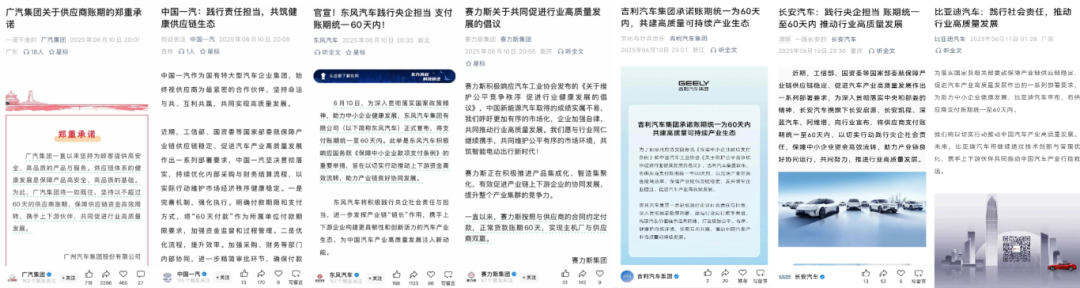
In 2025, "anti-price war" efforts escalated from industry appeals to national policy directives. During the Two Sessions, "anti-price war" was included in the government work report, with major manufacturers actively responding by enforcing anti-overtime measures. The National Development and Reform Commission publicly stated, "No illegal extension of working hours."
As industry insiders feared the anti-price war winds might bypass the auto sector, in June, the auto industry launched vigorous anti-price war initiatives, starting with the implementation of 60-day payment terms. Multiple enterprises actively followed suit.
In September, regulatory crackdowns intensified as six ministries, including the Ministry of Industry and Information Technology and the Cyberspace Administration, launched a three-month campaign targeting online irregularities in the auto sector, such as false testing, exaggerated promotions, and online water army hype.
In December, the State Administration for Market Regulation explicitly prohibited below-cost sales, price collusion, and other unfair competition practices. A policy-guided, market-driven "anti-price war" has risen from industry demands to a key proposition for national economic transformation.
From year-start to year-end, with unwavering determination to advance anti-price war efforts, regulatory authorities continuously strengthened enforcement, while enterprises actively responded, collectively steering the industry from "price wars" to "value wars" and fostering a healthier, more sustainable competitive ecosystem.
03 NEV Sales Surpass 50%: The Fuel-Electric Divide Reaches a Turning Point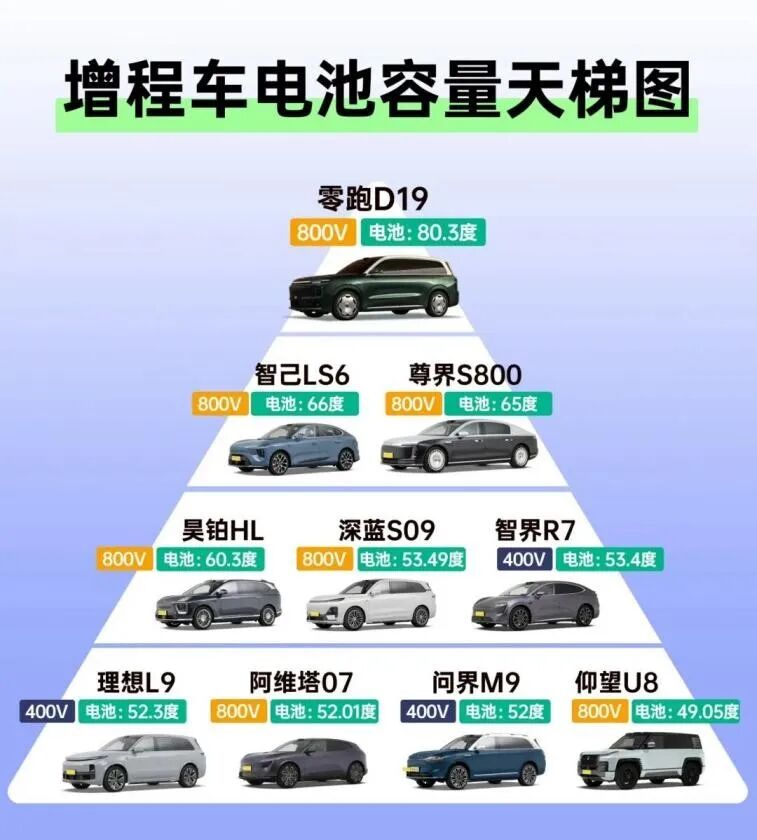
2025 marked a critical turning point in China's auto market structure: NEVs accounted for over 50% of domestic sales for the first time, signaling a new phase of electrification substitution and a definitive crossing of the fuel-electric divide.
Notably, battery electric vehicles (BEVs) excelled, with terminal sales reaching 6.906 million units from January to November and projected to exceed 7.5 million units annually; extended-range electric vehicles (EREVs) also gained user recognition with large battery configurations.
In contrast, fuel vehicles appeared somewhat marginalized, but from year-end NEV penetration trends, NEV growth has slowed, and fuel vehicles still retain a market presence.
04 Overseas Strategy Evolution: From 'Going Out' to 'Stepping Up'
In 2025, China's auto exports not only broke records in scale but also achieved qualitative upgrades. From January to November, auto exports reached 6.343 million units, up 18.7% YoY, with full-year exports expected to hit 7 million units, setting a new record.
In 2023, China surpassed Japan as the world's largest auto exporter for the first time. By 2025, Chinese automakers aimed not just for volume but also for global competitiveness.
Led by BYD, Changan, and Geely, automakers shifted from trade exports to deeper global engagement through overseas factory construction, R&D center establishment, and technology/standard exports, actively reshaping the global auto industry value chain.
This not only solidified China's position as the world's largest auto exporter but also marked a systematic shift from an "export powerhouse" to an "export power" in the auto sector.
05 Tightened Regulation on Intelligent Driving Promotions: Industry Bids Farewell to Excessive Marketing
Dubbed the "Year of Intelligent Driving," 2025 saw technological popularization alongside regulatory standardization. Early in the year, leading companies planned intelligent driving launches, with advanced driver-assistance systems (ADAS) penetrating models priced below 100,000 yuan, heralding the era of universal intelligent driving.
However, several intelligent driving accidents during the industry's acceleration phase poured cold water on the market, prompting swift regulatory tightening. Authorities explicitly prohibited misleading terms like "autonomous driving" and "high-level intelligent driving," mandating uniform use of terms like "combined driver assistance systems."
This move urged companies to refocus on technological essence, curb exaggerated promotions, and clarify boundaries for the long-term healthy development of intelligent driving technologies.
06 Release of Stringent National Battery Standards: Safety as the Foundation for High-Quality Development
On March 28, the revised mandatory national standard "Safety Requirements for Traction Batteries Used in Electric Vehicles" (GB38031-2025) was officially released, set to take effect on July 1, 2026.
The new standard mandates that traction batteries must achieve "no fire, no explosion" and introduces a battery bottom impact test. Dubbed the "strictest national battery standard ever," it complements year-round regulations on vehicle acceleration performance and hidden door handle designs, progressively refining the automotive product safety regulatory framework and underpinning the safe development of the new energy sector.
07 Inauguration of China Changan Automobile Group: Central Enterprises Form a 'Three-Pillar' Landscape
On July 29, approved by the State Council, "China Changan Automobile Group" was officially inaugurated in Chongqing, transitioning from a military-industry affiliate to an independent central enterprise. This establishes three major central enterprise auto groups in China: FAW Group, Dongfeng Motor Corporation, and China Changan Automobile Group.
Changan's establishment sets a new benchmark for optimizing state-owned capital layouts through strategic restructuring, providing a replicable "New Changan Model" for state-owned enterprise reforms. It also positions itself as a core pillar for achieving dual goals of "auto power" and "tech power" through technological leadership in new energy and intelligent connected vehicles.
On December 10, Changan produced its 30 millionth Chinese-brand vehicle, marking a milestone for the new central enterprise and showcasing initial efficiency gains from restructuring.
08 Wave of Integrations and Restructurings: Industry Enters an Era of Systemic Efficiency Competition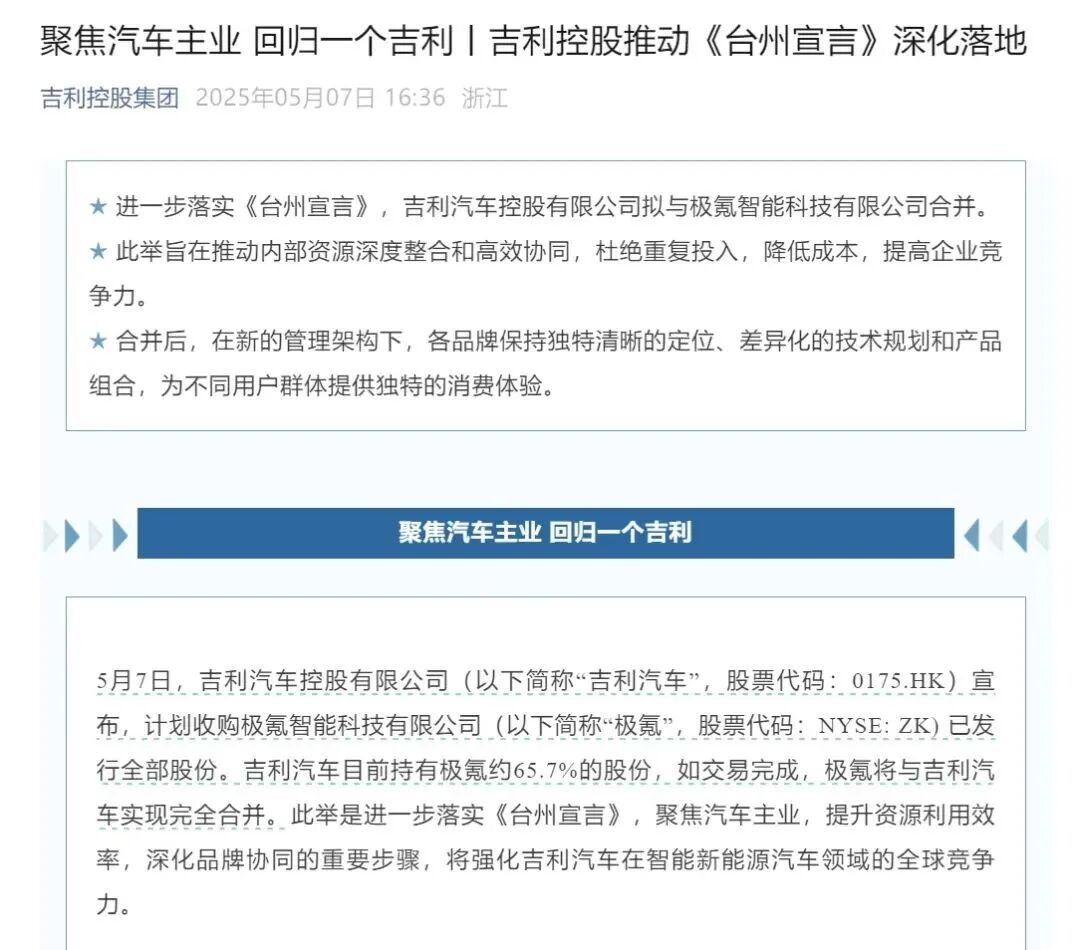
In 2025, China's auto industry entered a period of intensive consolidation, shifting from a "quantity-over-quality" brand competition model to a "concentrated efforts for greater outcomes" systemic efficiency competition.
Although the cross-enterprise merger between Dongfeng and Changan did not materialize, the industry consolidation trend became irreversible: Dongfeng initiated internal restructuring, merging Aion Technology with Neuron and Fengshen; Geely accelerated its "One Geely" strategy, completing equity mergers between Zeekr and Lynk & Co, integrating Wingz and Geometry into Galaxy, and privatizing Zeekr to rejoin Geely; GAC Group promoted integrated operations between Aion and Hyper, while NIO dissolved its Firefly and Leo sub-brands, fully integrating them into the NIO ecosystem; Ford China unified its two major sales channels.
This consolidation wave was no accident but an inevitable outcome of industry development at a specific stage. Rising cost pressures and increased R&D investments drove companies to seek resource synergies and cost efficiencies through integration. Market brand counts are expected to continue declining in the coming years, with further concentration anticipated.
09 Approval for L3 Autonomous Driving on Public Roads: Mass Production Applications Enter a New Phase
On December 15, the Ministry of Industry and Information Technology conditionally approved L3 conditional autonomous driving model access for two companies, Chongqing Changan and BAIC BluePark Magna, in its 401st Announcement. Subsequently, the Deepal and Arcfox models completed license plate registrations, officially gaining legal road operation status, marking China's autonomous driving industry's acceleration from technological verification to mass production applications.
The legalization of L3 vehicles not only injects strong momentum into autonomous driving technological innovation and iterative upgrades but also fosters a safe, efficient, and integrated industrial ecosystem. As a critical transition for high-level autonomous driving, L3 mass production applications will accumulate vast real-world driving data, laying the foundation for subsequent technological advancements. Simultaneously, they provide a replicable "Chinese Solution" for autonomous driving commercialization, accelerating the overall upgrade of the intelligent connected vehicle industry.
10 Comprehensive Expansion of Competitive Dimensions: Industry Self-Regulation and Standardization Progress in Parallel
As the industry undergoes accelerated reshuffling, automaker competition has expanded from product technology to ecosystem construction and marketing strategies, continuously broadening the competitive landscape.
Amid head-to-head competition, marketing irregularities surfaced. "Fine-print marketing" faced market backlash for misleading consumers, while NIO's collision test video at its launch event sparked controversy. Multiple corporate leaders publicly criticized industry malpractices: Huawei's Richard Yu cautiously reflected on the excessive pursuit of zero-to-100 km/h acceleration times, while Great Wall Motors' Wei Jianjun highlighted regulatory loopholes in "zero-kilometer used car" exports.
Industry appeals and public oversight ultimately drove substantive regulatory actions. For instance, in response to zero-kilometer used car irregularities, multiple departments jointly issued the "Notice on Further Strengthening Used Car Export Management," proposing six measures to tighten export qualification management, enhance compliance reviews, and promote healthy, sustainable industry development, further standardizing corporate operations and guiding the used car export sector toward compliance and high-quality growth.
Editor-in-Chief: Yang Jing Editor: He Zengrong
THE END
-
![]()
Enflame Tech's IPO Journey: Navigating Over 5.9 Billion Yuan in Losses and Soaring Debt in Q1 This Year
-
![]()
Trillion-Yuan Giant Li Shufu 'Streamlines': Could Levc Be the Casualty?
-
![]()
AI Competes for Electricity and Generates Power in the Gobi Desert
-
![]()
The First Batch of Victims of the AI Bubble: Programmers
-
![]()
ByteDance, DJI, and Xiaohongshu Secure Top Three Positions Among China’s Fastest-Growing Unicorns
-
Tesla's in-car voice system in China is finally learning to 'understand human language'
-
![]()
Foreigners Are Amazed: Chinese Electric Vehicle Drive Systems Unveil Innovative 'Poses'
-
![]()
700,000 Brothers and the Future of Robots: Behind JD.com's 'Nirvana Plan'