‘Lobster’ Fever Grips Hardware Sector: Huawei, Xiaomi, and Midea Join the Trend—Is This the New Gateway to Success for Big Brands?
 03/12 2026
 536
536
The hardware industry is now riding the wave of the 'lobster' craze.

In 2026, the tech world's hottest 'animal' is undoubtedly the 'lobster.' The popularity of OpenClaw has driven up Mac mini prices and led to stock shortages, with even door-to-door 'lobster' installation services becoming a paid offering.
Internet behemoths like Tencent, Alibaba, Baidu, ByteDance, and Meituan have all jumped on the bandwagon, with a plethora of Claw products sprouting up. This lobster fever isn't limited to the internet realm—it has now permeated the hardware industry.
Following the unveiling of Xiaomi's miclaw, another smartphone giant, Huawei, has announced its own Claw product. Beyond the smartphone sphere, home appliance brands have also taken note of OpenClaw's popularity and are preparing to bring 'lobsters' into our homes.
Xiaomi, Huawei, and Midea Join the Fray: Hardware Brands Also Want to 'Raise Shrimp'
Xiaomi: Shrimp Farming at Home, in Cars, and On the Go
Facing the OpenClaw craze, Xiaomi may have been the quickest smartphone manufacturer to react. On March 6, Xiaomi officially announced Xiaomi miclaw and launched an internal beta, initially supporting the Xiaomi 17 series.
Specifically, miclaw is built on Xiaomi's proprietary large model, MiMO. Late last year, Xiaomi unveiled the open-source model MiMo-V2-Flash, which is claimed to rival DeepSeek-V3.2 and Kimi-K2 in performance while requiring significantly fewer parameters. Additionally, Xiaomi's MiMO series includes other model products, such as the multimodal visual large model MiMo-VL-7B and the language reasoning large model MiMo-7B, which could theoretically be utilized in miclaw.
Of course, what everyone is most curious about is what miclaw can actually do. According to Xiaomi's official information, miclaw can transform smartphones into AI hardware, enabling AI to understand and execute users' vague requests expressed in natural language. In this process, authorized miclaw will invoke apps and Mi Home ecosystem capabilities, as well as utilize system tools to complete commands.
From official demonstration cases, a major highlight of miclaw is its ability to use the smartphone as a control hub within the Mi Home AIoT ecosystem, directly invoking and managing smart home products. This allows AI capabilities to extend beyond the phone screen and interact with other smart hardware.
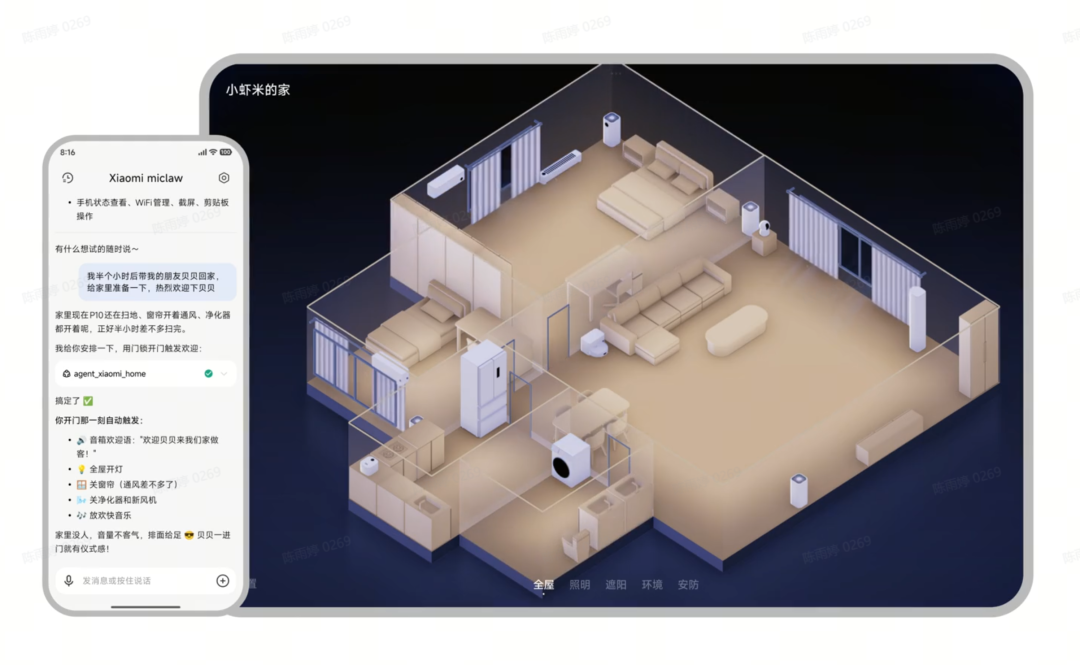
(Image Source: Xiaomi)
Huawei: Elevating Xiaoyi Assistant to a Work Companion
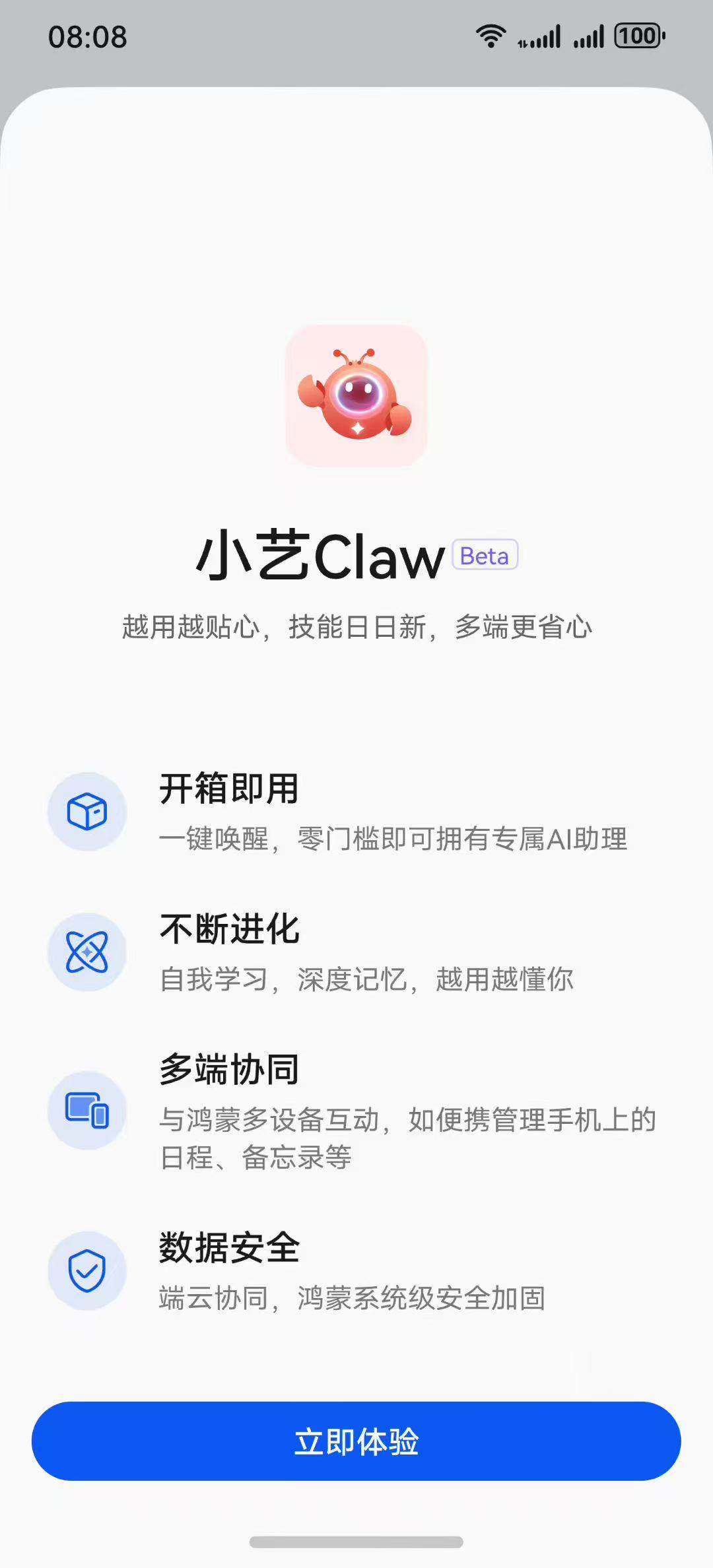
On March 11, He Gang, CEO of Huawei's Consumer Business Group, shared Xiaoyi Claw on Weibo, stating that he had been testing it for several days. From the screenshots he posted, Xiaoyi Claw is still in the testing phase, featuring four specific scenario sections: 'Information Hunter,' 'Confidant,' 'Work Companion,' and 'Creative Genius.'
'Information Hunter' is primarily responsible for collecting and organizing hot information, 'Confidant' acts as a chat partner or emotional outlet, 'Work Companion' handles repetitive tasks to boost efficiency, and 'Creative Genius' allows AI to provide inspiration and generate copy.
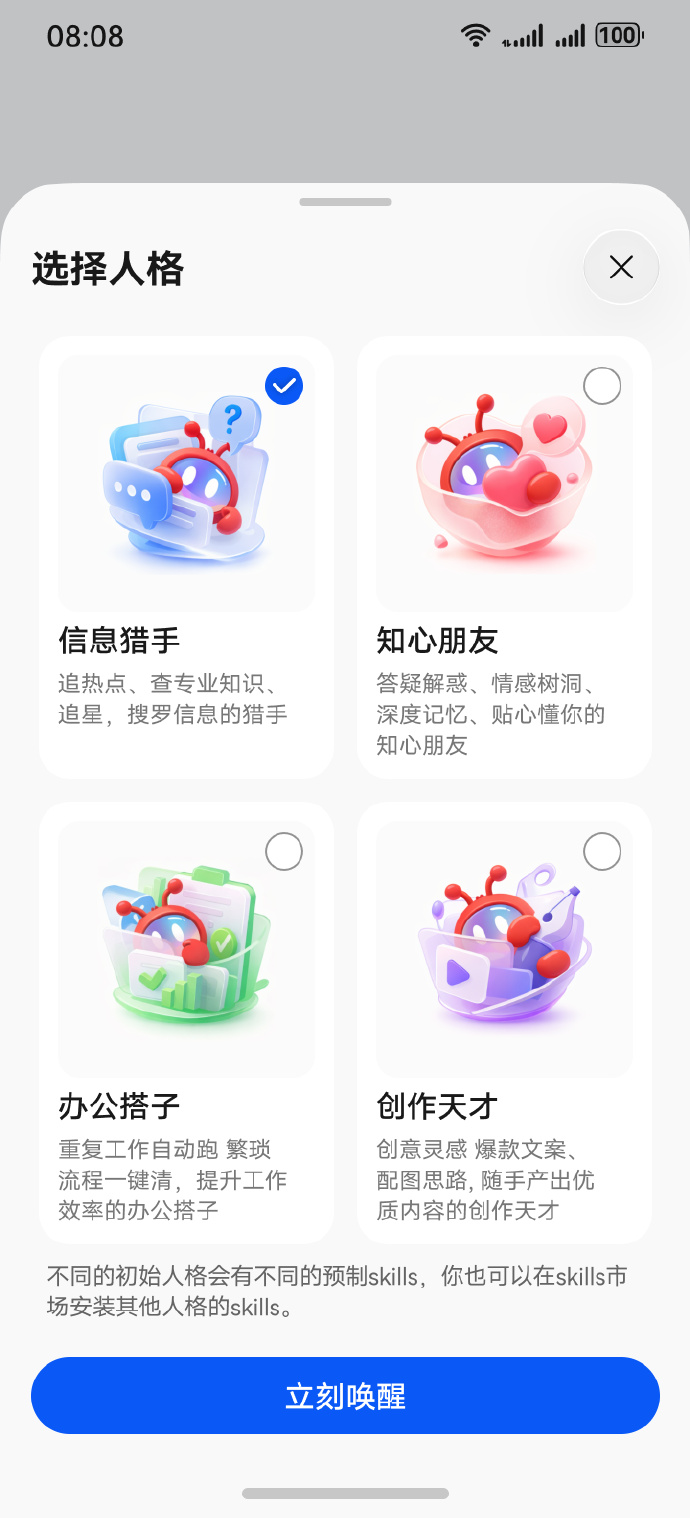
(Image Source: Weibo)
Additionally, at Huawei's HarmonyOS Smart Home Technology Communication Conference on March 11, He Gang announced the newly upgraded Xiaoyi Butler 6.0, promoting it as an 'AI large model-powered family assistant.' It integrates Xiaoyi's intelligent agent and features the ability to create and modify scenarios with a single sentence. Xiaolei speculates that Xiaomi's Xiaoyi Claw on Huawei phones will later be integrated into the HarmonyOS whole-house smart system, invoking various hardware products within the ecosystem to play a greater role.
Midea: All-Encompassing 'Shrimp Farming'
On March 10, Midea officially launched its home intelligent agent, MevoX, at the 2026 Whole-House Smart Strategy Conference, directly bringing 'lobsters' into users' homes. According to official information, the MevoX agent is powered by Midea's large language model 3.0, based on 20 billion interaction data points and 1 trillion tokens.
Furthermore, Midea has developed the Family Intelligence Navigation System MIA1.0 based on MevoX, which primarily serves to implement the agent's capabilities into specific scenarios. MIA1.0 can invoke not only the agent's thinking and reasoning abilities but also the hardware capabilities within Midea's whole-house smart system, acting as both a 'brain' and transforming home appliances and furniture into its own 'limbs.'

(Image Source: Midea)
In Xiaolei's view, Midea's advantage in 'raising shrimp' lies in its extremely comprehensive all-scenario whole-house smart ecosystem, covering almost all categories of home appliances. Moreover, Midea has collaborated with multiple smartphone and automotive brands, achieving cross-domain ecological integration. This allows Midea's 'shrimp farming' to form a significant ecological advantage, finding more practical usage scenarios for users.
Overall, the goal of smartphone and home appliance brands in 'raising shrimp' is to find a foothold for AI scenarios within their hardware products, with Claw serving as an excellent tool for realization. Additionally, Xiaomi and Huawei are not only major smartphone players but also leaders in the home appliance ecosystem. The 'shrimp' they are raising on their phones will play a greater role in whole-house smart scenarios in the future.
What Sets Hardware Brands' 'Shrimp Farming' Apart?
Whether it's OpenClaw or Claw products from smartphone and home appliance brands, they are essentially tools specifically designed for AI Agent scenarios and share many commonalities. However, distinct differences emerge in specific usage scenarios.
Let's start with OpenClaw, the globally popular 'lobster.' It is not a product of any single company but an open-source project. OpenClaw operates in a wild, ownerless landscape—as long as you understand coding and have an API Key, you can make it perform almost any task. Its advantage lies in its free and highly customizable nature, capable of immense utility in the hands of professionals.
(Image Source: OpenClaw)
However, its drawback is also its excessive freedom, posing significant security risks for ordinary users, including but not limited to privacy breaches, loss of important data, and financial losses. We have already seen numerous related cases on major social media platforms.
Additionally, while OpenClaw may seem easy to get started with, the probability of unsuccessful deployment is high for novice users without programming knowledge. Simply choosing which model product to purchase, obtaining an API, and completing deployment can stump a large group of people, let alone troubleshooting bugs or installing corresponding Skills after deployment. It is precisely due to these entry barriers that paid services like OpenClaw door-to-door installation have emerged.
Ultimately, OpenClaw is a decentralized, high-risk AI tool unsuitable for ordinary users.
In contrast, the 'lobsters' led by hardware brands are quite different. On the device side, which permissions the Agent can invoke, which photos it can access, and which third-party apps it can operate are all within the manufacturer's OS permission management framework. This strong control sacrifices some freedom but ensures ecological stability and security controllability.
Take smartphone Claw products, for example. They are developed and fully controlled by manufacturers. First, while OpenClaw allows users to choose their model, smartphone Claw models are typically developed and provided by the manufacturers.
Second, smartphone Claw has significantly fewer permissions than OpenClaw, and smartphones usually have much stricter permission management mechanisms than PCs. Which permissions and tools the AI can invoke are recorded and monitored by the system. Many people using OpenClaw often grant critical permissions haphazardly by following tutorials and copying a few lines of code.
(Image Source: Weibo)
Nowadays, there are many one-click deployment tools for OpenClaw on the internet, but their quality varies. If malicious code is implanted in one of them, it could spell disaster for users. In comparison, deployment tools launched by internet giants are relatively more reliable.
Furthermore, while OpenClaw has a high ceiling, specific usage scenarios require users to discover and deploy them themselves. Professional users primarily use it to enhance work and creative efficiency. In contrast, smartphone Claw's application scenarios are relatively clearer.
After all, smartphones are already the most widely used hardware devices with the highest penetration rate, integrating multiple application scenarios. With Claw, users can enjoy a better experience through their phones, such as AI correctly understanding vague requests in natural language and automatically invoking phone resources to complete tasks.
The same applies to Claw in home appliances. Currently, different categories of home appliances have largely achieved intelligence and are interconnected into a smart home network. However, without deep AI involvement, most smart functions are limited to executing simple voice commands. Although some whole-house smart systems already feature multi-device automated collaboration, this is primarily achieved through preset scenario modes, far from true AI Agent capabilities.
Introducing Claw into the home appliance sector means equipping the AI brain in smart homes with 'hands and feet,' enabling it not only to think but also to execute. Scenarios are no longer limited to helping people make decisions but evolve into performing tasks on their behalf.
Will the 'Lobster Craze' Fade?
It must be acknowledged that the 'lobster craze' fueled by various parties is, to some extent, related to herd behavior driven by AI anxiety. OpenClaw has largely become a fashion item in social circles—not 'raising shrimp' seems outdated.
Looking back at the history of tech internet development, this phenomenon is not new. It happened when large models first emerged and when the metaverse concept was hot. Whether such trends can continue ultimately depends on whether they address genuine needs.
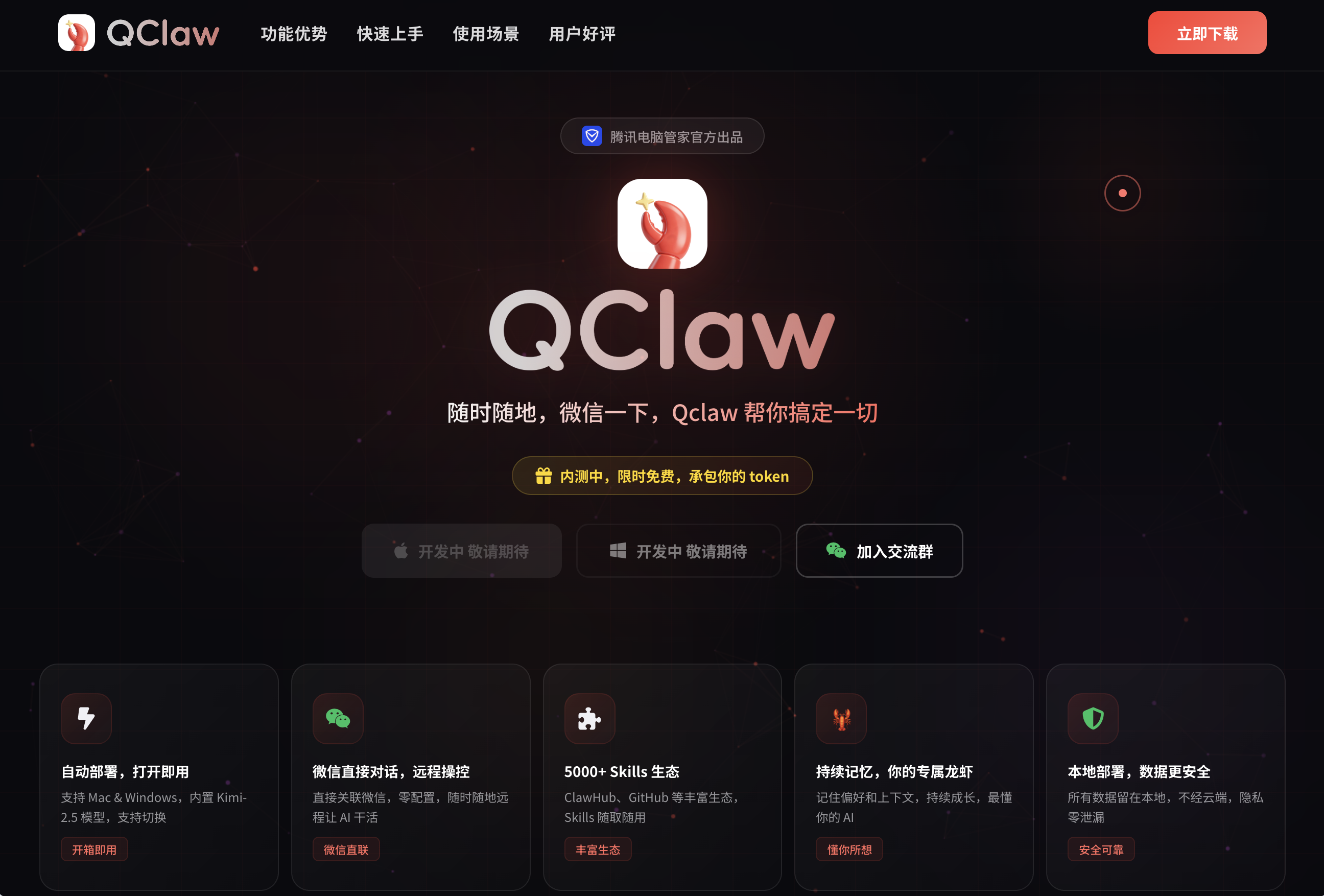
Regarding OpenClaw, Xiaolei maintains the same viewpoint: it's excellent but unsuitable for ordinary users. After all, for novices, the risks and rewards of OpenClaw are asymmetrical. If ordinary people want to 'raise lobsters,' it's more suitable to directly choose Claw tools from major companies like Tencent, Alibaba, and ByteDance, which offer more mature and comprehensive solutions with better risk control. Judging by the current momentum, the Claw competition among internet giants will continue for a long time.
(Image Source: Tencent)
Recently, Pony Ma announced on his WeChat Moments that Tencent will launch a wave of Claw products, each targeting specific user groups. As for OpenClaw, it remains more suitable for professional users like geeks and programmers with technical skills, who are not afraid of troubleshooting, can solve various unexpected problems, and prefer highly customizable tools.
Xiaolei holds a positive attitude toward the future of Claw products launched by hardware brands. As mentioned earlier, smartphone Claw is manufacturer-led, with more controllable risks and practical application scenarios. The same applies to the home appliance sector—brands like Midea, Skyworth, and Hisense have deep roots in the home appliance industry, with rich product categories and well-established ecosystems. Claw tools can help them achieve the leap from home appliance intelligence to home appliance AI.
Of course, smartphone and home appliance Claw are still in their infancy. Both Xiaomi's miclaw and Huawei's Xiaoyi Claw are still in beta testing, with many AI Agent functions not yet perfect. However, it's already evident that smartphone and home appliance Claw will be a major trend.
If the initial stage of AI was about competing in large models, the next stage will be about competing in the specific scenarios where AI lands. Whether it's smartphones or home appliances, the ultimate goal is to transform AI technology into advantages that make products more user-friendly and enhance the overall experience, allowing ordinary people to enjoy the fruits of AI's rapid development.
The Future of 'Lobsters' Is Roboticization
As mentioned earlier, OpenClaw is essentially a tool that can access large models and possess local permissions. Upon closer inspection, OpenClaw has limitations—the large model serves as its brain, while its 'hands and feet' involve invoking local tools, permissions, and resources, but it is largely confined to the PC platform. Even if OpenClaw can extend information to other PCs, smartphones, and other devices via the internet and certain communication tools, it still has significant limitations.
In contrast, other hardware devices, including smartphones and home appliances, offer greater potential for evolution. Xiaolei believes that the future trend of 'lobsters' is roboticization. This may sound far-fetched, but there are already traces of this development.
In recent years, robotics and embodied AI technologies have advanced rapidly, attracting many players to enter the field. Robots are closely related to large models, especially multimodal models, and can be seen as physical embodiments of model-powered Claws. Of course, humanoid robots have not yet reached the stage where they can enter every household and replace humans in completing work and household chores. However, the roboticization of home appliances and even smartphones is already taking shape.
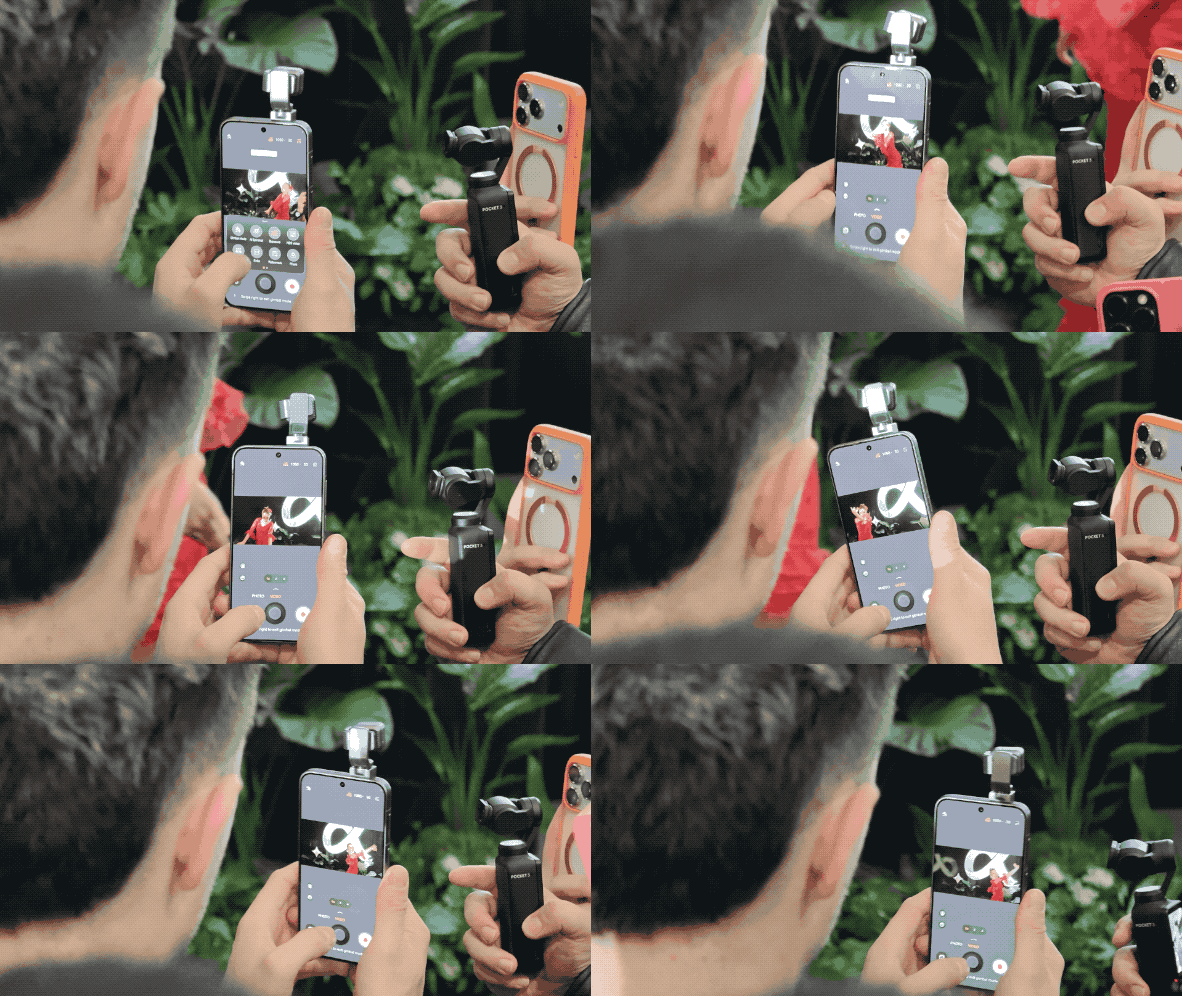
At this year's Mobile World Congress (MWC), Honor's Robot Phone emerged as a star attraction, captivating audiences and ranking among the most sought-after products at the show. Its standout feature is its embodied intelligence, which is powered by a pan-tilt mechanism enabling the camera to rotate freely. By diverging from the conventional smartphone design, this device facilitates AI-driven automatic tracking and shooting scenarios. The key to the Robot Phone's innovation lies in its roboticization strategy, which sets it apart from traditional mobile devices.
(Image source: Leitech)
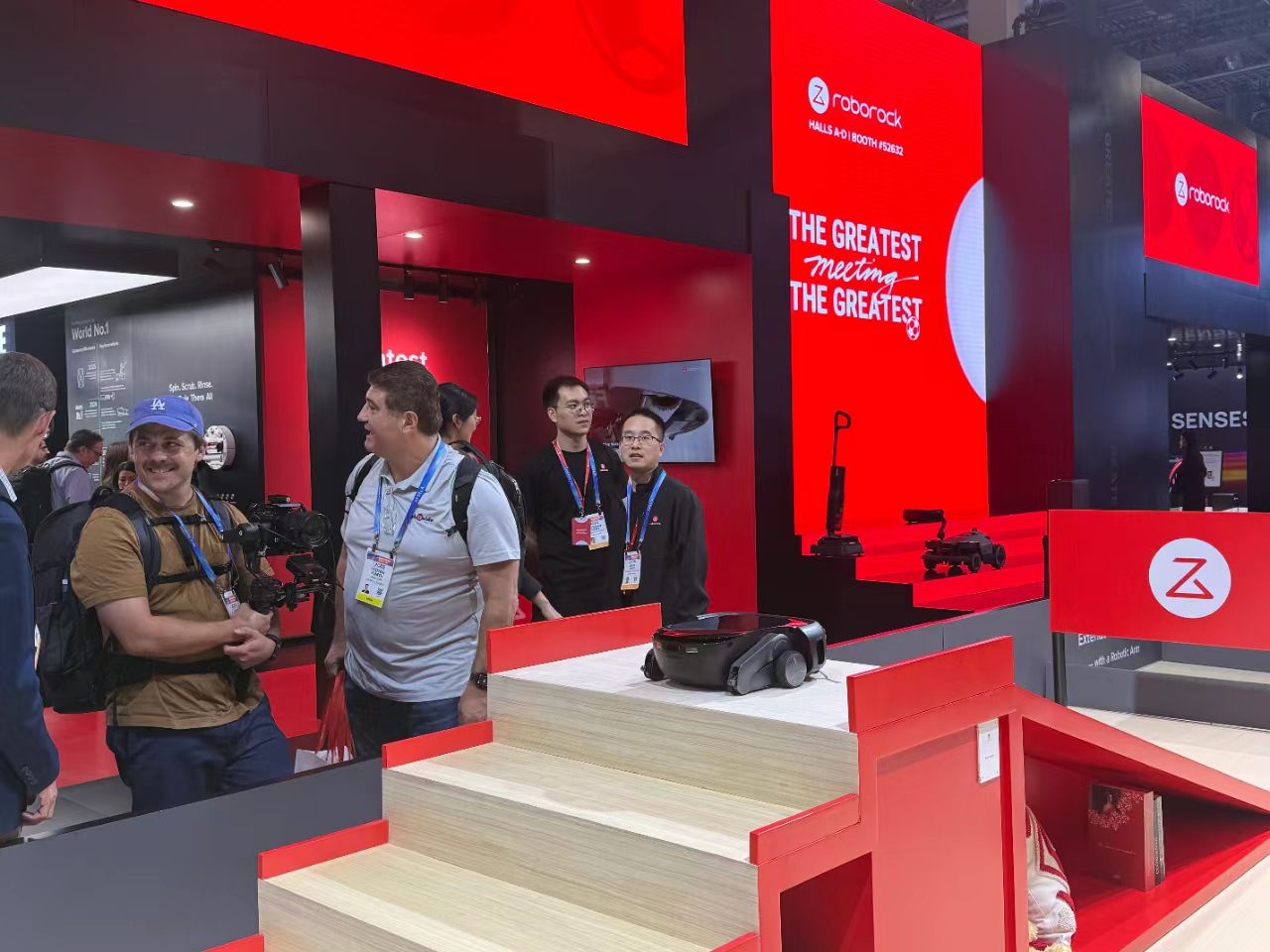
The same trend of roboticization can be observed in the realm of home appliances. While fully humanoid household robots are still a rarity, there has been a steady stream of products incorporating robotic elements, such as floor-sweeping robots, washing machines, cooking machines, and stair-climbing machines equipped with robotic arms. Both Roborock and Dreame have introduced floor-sweeping robots featuring robotic arms. These products transcend the traditional cleaning logic of floor-sweeping robots, acquiring the ability to move obstacles and organize items, thereby enhancing their functionality.
At the Consumer Electronics Show (CES) this year, Dreame also unveiled a stair-climbing floor-sweeping robot and the world's first AI-embodied intelligent washing machine. The former can navigate three-dimensional spaces and utilize its robotic arm to climb stairs for comprehensive house cleaning, marking a fundamental technological leap for traditional floor-sweeping robots through embodied intelligence. The latter is a washing machine equipped with a robotic arm capable of proactively placing clothes into the machine and completing a series of subsequent washing tasks, streamlining the laundry process.
(Image source: Leitech)
When these hardware products are outfitted with Claw tools, these robotic components can unleash even greater potential. Envision a future where all home appliances are equipped with robotic arms. In such a scenario, we would simply need to issue a task, akin to assigning whole-house chores, to "Longxia" (a hypothetical AI assistant), which would then dissect it into various detailed subtasks and steps, directing and mobilizing different home appliances to fulfill their respective household duties.
In this evolution, operations that we once took for granted, such as placing clothes in the washing machine, loading dishes into the dishwasher, and putting ingredients into the cooking machine, will all become "redundant" household tasks in the future, as AI and robotics take over these routine activities.
From OpenClaw at the software level, to native agents at the system level, and then to smartphones and smart home appliances integrated with robotic arms, a clear trajectory of technological advancement is evident:
AI is steadily transitioning from virtual dialog boxes into the physical realm. "Longxia" serves as a control hub for cross-system interactions, while hardware devices represented by robotic arms act as the hands and feet responsible for executing tasks in the physical world. Perhaps in the not-so-distant future, hardware that fails to deeply integrate with large AI models and lacks embodied intelligence capabilities will become obsolete.
The grand vision of tech giants is just unfolding, and a fully automated intelligent era that truly comprehends your intentions and can even act on your behalf is on the horizon. With the rapid evolution of "Longxia" and embodied intelligence, those seemingly futuristic scenarios may be closer to reality than we imagine.

OpenClaw, Longxia, AI, Xiaomi, Huawei, Midea, Honor
Source: Leitech
All images in this article are sourced from the 123RF licensed image library. Credit: Leitech
-
![]()
Hardware is the skeleton, AI is the soul, and data integrates the two
-
![]()
China’s AI Industry: A Unified Pivot Towards Monetization?
-
![]()
New Progress! Infineon Completes Acquisition of ams OSRAM's Non-Optical Sensor Business
-
![]()
35 Million Bet on an Optical Future! Tengjing Technology Makes a Move in AR
-
![]()
Why World Models Get Stuck on Construction Roads in Autonomous Driving Applications
-
Alibaba Initiates Cultural Transformation: Is Jack Ma Making a Strategic Comeback?
-
Tianfeng Heads to Hong Kong for IPO with RMB 3.8 Billion in Funds: Xingyu's Cross-Border Foray into Embodied AI Faces Uncertain Future
-
![]()
Mengshi Auto’s High-End Aspirations Dashed: Huawei Partnership Fails to Revive Sales, New Model’s Entry Price Dips Below 300,000 Yuan