Avita's Hong Kong IPO: Even the Heirs of Affluent Families Must Sometimes 'Seek Handouts'
 01/06 2026
 441
441
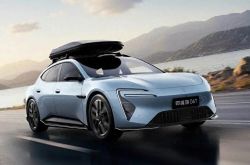
Avita is an automaker that has been adorned with a luxurious aura right from its inception.
Despite the prestigious 'Changan + Huawei + CATL' partnership, Avita's overall sales are on the rise, yet the persistent issue of 'increasing revenue without boosting profits' continues to haunt the company. To tackle its funding challenges, going public and raising capital has emerged as the optimal solution for Avita.
Avita's dash towards an IPO on the Hong Kong Stock Exchange is not only a significant highlight in the intelligent vehicle sector for 2026 but also a pivotal battle in the capitalization journey of this new energy vehicle brand exuding a luxurious charm.
Three Key Motivations Behind the Urgent IPO
For Avita, there are several motivations driving its Hong Kong IPO, with the most pressing being the need for a capital injection.
Although Avita's revenue growth remains robust, with RMB 12.2 billion in revenue in just the first half of 2025, marking a 98.5% year-on-year increase, its losses are equally staggering. Over the past three and a half years, Avita has racked up losses totaling RMB 11.313 billion.
Currently, Avita is still in a phase where it 'loses money on every car sold.' While vehicle sales have turned its gross profit margin positive, after accounting for R&D and marketing expenses, selling more vehicles leads to greater losses.
The second motivation is to secure Huawei's intelligent driving technology. Previously, to secure Huawei's top-tier intelligent driving and cockpit technologies, Avita invested RMB 11.5 billion to acquire a 10% stake in Huawei's subsidiary, 'AITO Auto.'
However, this investment has significantly strained Avita's cash flow. To raise funds, Avita has resorted to taking on substantial short-term debt, with short-term borrowings reaching RMB 3.5 billion by mid-2025.
The third motivation is global expansion. For Avita to establish itself in the global luxury vehicle market, it requires a continuous influx of funds.
Currently, Avita's vehicles have made their way into over 30 countries globally, with a target to expand to 80 countries by 2030. A significant portion of the funds raised from this Hong Kong IPO will be earmarked for overseas market expansion.
Solid Rationale Backing Avita's Valuation
Avita's Hong Kong IPO has drawn considerable attention from the capital market, with the solid rationale supporting its valuation primarily revolving around the following points.
The first major pillar of support is undoubtedly the backing of the three industry giants: Huawei, CATL, and Changan. In the capital market, companies associated with Huawei's supply chain often command higher valuation premiums. One of the most prized aspects of Avita by the capital market is its deep cooperation with Huawei and its status as a shareholder in Huawei's AITO Auto.
Avita and Huawei have transcended a mere supplier-customer relationship, evolving into a community of shared interests. This means Avita gains priority access to Huawei's latest intelligent driving technologies, and this investment can also generate dividend income in the future.
Meanwhile, Avita's backers extend beyond Huawei; it also enjoys the support of Changan Automobile and CATL. As the first central state-owned new energy vehicle company to file an IPO application with the Hong Kong Stock Exchange, Avita benefits from a high level of credit endorsement, providing a significant safety net during periods of tightened financing.
The second major pillar of support stems from Avita's own robust growth. The capital market has long harbored concerns about Avita's losses being a 'bottomless pit.' However, Avita is dispelling these doubts with its own impressive growth trajectory.
In 2024, Avita's revenue reached RMB 15.195 billion, marking a staggering 169% year-on-year increase. By the first half of 2025 alone, it achieved RMB 12.208 billion in revenue. Meanwhile, Avita's operating cash flow turned positive in the first half of the year, and its gross profit margin continued to climb, indicating that Avita is gradually developing self-sustaining capabilities.
The third pillar of support is Avita's high-end positioning and global expansion potential. Avita targets the high-end market, with prices ranging from RMB 200,000 to RMB 700,000, and consistently achieves monthly sales exceeding 10,000 units. The market's acceptance and recognition of domestically produced high-end vehicles offer significant growth potential.
At the same time, Avita is actively expanding overseas, with plans to enter 80 countries globally by 2030, unlocking vast potential in the international market.
However, every coin has two sides. Despite being backed by the three industry titans—Changan, Huawei, and CATL—Avita faces scrutiny from the capital market over its perceived lack of 'autonomy in core technologies.'
Business Flaws in the Hong Kong IPO
Concerns about Avita persist in the capital market, which worries that Avita might merely be an 'assembler' lacking a unique identity.
Currently, Avita relies heavily on external suppliers like Huawei and CATL for its core components, including the three electric systems (battery, motor, and electronic control), intelligent driving, and cockpit technologies. In the supply chain, Avita also possesses relatively weak bargaining power, with battery costs accounting for an excessively high proportion of raw material costs, and the top five suppliers once accounting for up to 97.2% of its supply.
Meanwhile, in its cooperation with Huawei, although Avita has invested in Huawei's subsidiary AITO Auto, Huawei's empowered automotive brands extend beyond Avita to include Seres, Luxshare, and ZHIJIE, among others. How Avita can secure more resource allocation in its collaboration with Huawei is a long-term challenge it must confront.
In the price range around RMB 300,000, Avita even faces direct competition with Seres M7 and ZHIJIE R7, raising concerns among investors that Huawei's resources may not be exclusively dedicated to Avita.
Furthermore, another point of concern for the capital market is when profitability will truly materialize.
Despite Avita's monthly sales exceeding 10,000 units, it still falls significantly short of its annual sales target of 200,000 to 220,000 units, with the market remaining skeptical about its ability to achieve scalable profitability. Although revenue growth is rapid, Avita's net profit margin remains negative, with R&D investments and marketing expenses acting as two significant burdens.
Summary
As a member of Huawei's ecosystem of vehicles, Avita is the only automaker with a central state-owned enterprise background and an independent path to IPO in Huawei's intelligent vehicle selection mode.
For Avita, which has yet to achieve profitability, a capital injection is crucial at this stage. After all, even the heirs of affluent families must sometimes 'seek handouts.' As long as Huawei's intelligent technologies can maintain their leading edge, Avita, as a close ally in Huawei's intelligent vehicle selection, is poised to secure a significant market share.
-
![]()
Enflame Tech's IPO Journey: Navigating Over 5.9 Billion Yuan in Losses and Soaring Debt in Q1 This Year
-
![]()
Trillion-Yuan Giant Li Shufu 'Streamlines': Could Levc Be the Casualty?
-
![]()
AI Competes for Electricity and Generates Power in the Gobi Desert
-
![]()
The First Batch of Victims of the AI Bubble: Programmers
-
![]()
ByteDance, DJI, and Xiaohongshu Secure Top Three Positions Among China’s Fastest-Growing Unicorns
-
Tesla's in-car voice system in China is finally learning to 'understand human language'
-
![]()
Foreigners Are Amazed: Chinese Electric Vehicle Drive Systems Unveil Innovative 'Poses'
-
![]()
700,000 Brothers and the Future of Robots: Behind JD.com's 'Nirvana Plan'