2026 Automakers' Sales Targets Unveiled: The Divide Between 'Steady Players' and 'Aggressive Players'
 01/15 2026
 597
597
The Chinese auto market in 2025 concluded on a note of 'slowing incremental growth and intensifying stock competition.' According to data from the China Passenger Car Association (CPCA), annual sales of new energy narrowly defined passenger vehicles reached 12.809 million units, up 17.6% year-on-year. The export market also continued to be a bright spot for growth. However, internal industry differentiation has become increasingly pronounced—some automakers exceeded annual targets, seizing opportunities through new energy and globalization strategies, while others fell short, struggling with product iteration and cost control.
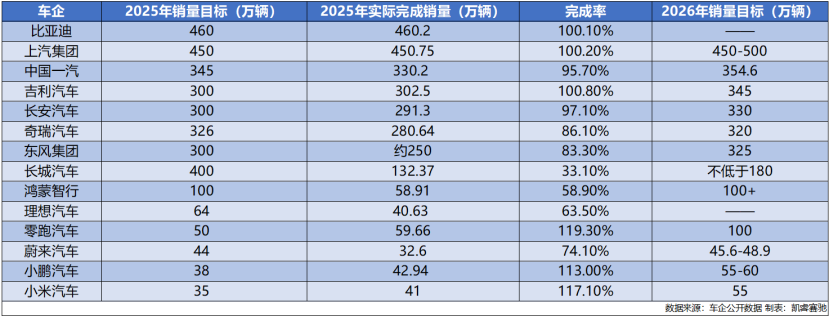
This divergence is not only reflected in the 2025 performance results but also directly maps onto the 2026 sales target settings. As 2026 begins, multiple mainstream automakers have successively announced their annual plans. Traditional automotive groups generally opt for a 'steady growth' path, prioritizing new energy transformation and overseas expansion as core strategies. Meanwhile, new automotive forces and tech companies entering the sector, building on their high-speed delivery momentum in 2025, have set aggressive targets far exceeding the industry average growth rate. On the surface, this appears to be a numerical difference, but in reality, it reflects automakers' judgments of market trends, calibrations of their own strategies, and responses to the accelerating industry shakeout. Against the backdrop of the CPCA's forecast of only 1% growth in domestic passenger vehicle retail sales and a 61% new energy penetration rate in 2026, these targets also signal the onset of a new round of industry consolidation and strategic maneuvering.
▍Target Divergence: Traditional Automakers' 'Steadiness' vs. New Forces' 'Advancement'
In 2025, structural changes in the Chinese automotive market continued to deepen, with the retail penetration rate of the new energy market exceeding 50% for six consecutive months. The competitive landscape has shifted from mere price wars to a comprehensive contest of technology, product, and globalization capabilities. Against this backdrop, the 2026 sales target settings of new forces and traditional independent automakers present a stark contrast. New forces such as Leapmotor, NIO, and Xiaomi generally prioritize 'scale expansion,' with target growth rates far exceeding the industry average. In contrast, traditional independent automakers like Geely, Changan, and Chery emphasize 'steady progress,' with relatively restrained target growth rates.
This differentiated target setting stems from variations in the 2025 target completion rates among automakers. Taking Geely as an example, in 2025, its total sales reached 3.025 million units, exceeding the annual target of 3 million units with a 39% year-on-year increase. Among them, new energy sales reached 1.6878 million units, surging by 90% year-on-year. This impressive performance led Geely to further raise its 2026 sales target to 3.45 million units, a 14% year-on-year increase. Meanwhile, Chery's actual sales in 2025 were 2.806 million units, falling short of the 3.26 million unit target with a completion rate of only 86.1%. Based on this reality, Chery slightly adjusted its 2026 target to 3.2 million units, a 14% year-on-year increase, aiming to narrow the gap through increased investment in new energy and intelligence while maintaining stability.
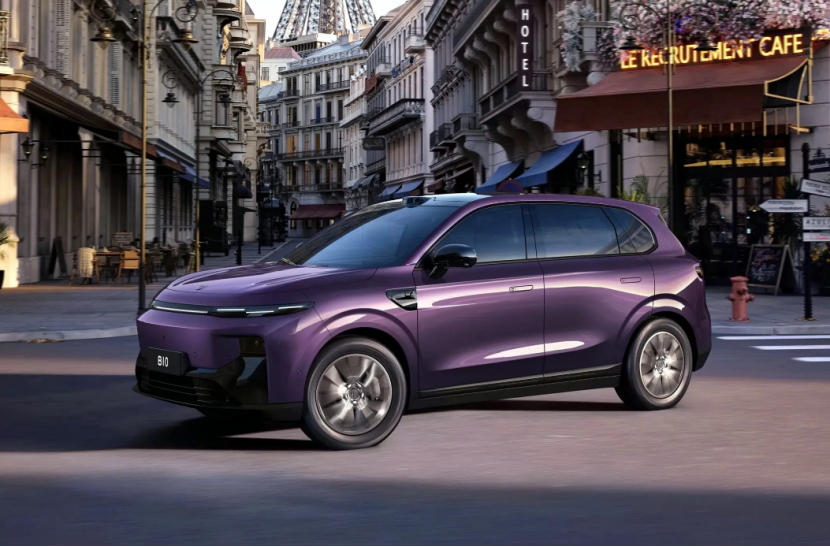
Behind the aggressive targets of new forces lie both practical demands for scale effects and the pressure of the return on investment cycles for channel and energy replenishment systems. Leapmotor sold 596,600 units in 2025, a 103% year-on-year increase, exceeding the 500,000 unit target and becoming the new force sales champion. Based on this, Leapmotor set its 2026 sales target at 1 million units, corresponding to a 67.5% year-on-year increase, making it the most 'aggressive' among new forces. Notably, Leapmotor's overseas layout and capacity arrangements are seen as crucial support for its 1 million unit sales target, including accelerating overseas sales networks and localized production plans through partners. Similarly, Xiaomi Motors, having exceeded its 2025 target of 350,000 units with actual deliveries exceeding 410,000 units, set its 2026 target at 550,000 units, corresponding to a 34% increase.
In contrast, NIO delivered 326,000 units in 2025, falling short of the 440,000 unit target. However, sales in the fourth quarter of 2025 showed significant growth. NIO set its 2026 sales target at 456,000-489,000 units, corresponding to a 40%-50% increase, reflecting a rational positioning of 'stable growth range.' NIO founder Li Bin stated that with the launch of new products such as the all-new ES8 and Ledo, NIO is expected to achieve profitability in the fourth quarter of 2025, thereby supporting its 2026 sales target.
▍Structural Optimization Under Steady Growth, Survival Anxiety Amid Scale Sprint
The divergence in automakers' 2026 sales targets essentially reflects different strategic responses to industry trends among various camps. Traditional automakers' 'steadiness' focuses on balancing 'growth' and 'profitability' in the stock market, seeking incremental growth through new energy transformation and overseas expansion. In contrast, new forces' 'advancement' aims to exchange 'scale' for 'time' in the shakeout, attempting to build competitive barriers through rapid expansion.
Traditional automakers' 'steady growth' is not conservative but based on judgments of industry cycles, prioritizing 'structural optimization.' From a core strategic perspective, new energy business and overseas markets are two key engines, continuing the growth highlights of 2025 and responding to the slow growth expected in 2026. In 2025, traditional automakers' new energy businesses showed strong potential: Geely's new energy sales increased by 90% year-on-year, Chery's by 54.9%, and Changan's by 26.2%. These figures make new energy a 'must-win' area in 2026.

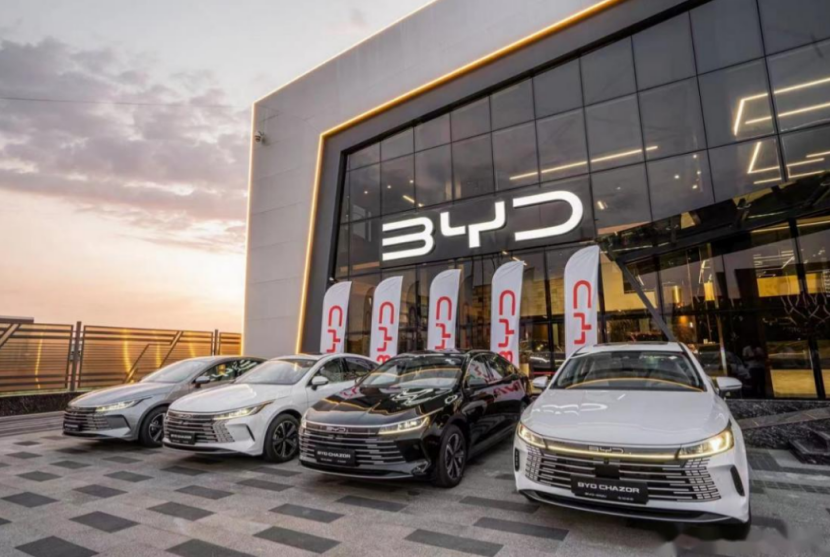
Geely plans to increase its new energy penetration rate to over 64% in 2026, Changan aims to raise its new energy target to 1.4 million units, and Chery plans to strengthen its new energy product matrix with 17 new models, all attempting to seize more market share against the backdrop of a 61% industry penetration rate through electrification transformation. Meanwhile, overseas markets have become the 'second growth curve' for traditional automakers. In 2025, Geely exported 420,100 units, Changan exported 639,000 units, and BYD's overseas sales entered the 'million unit club.' These achievements make the 2026 overseas targets more confident—Geely plans to increase overseas sales by over 50% year-on-year, Changan aims for 1 million units, and BYD targets 1.5-1.6 million units.
More importantly, traditional automakers' overseas layouts have shifted from 'product exports' to 'ecosystem roots.' BYD is building a battery factory in Hungary to support its European vehicle base; Changan is setting up a new energy vehicle factory in Thailand; Geely is establishing a full-chain localization system covering 'research, production, supply, sales, and service' through factories in Brazil and Indonesia. This transformation not only reduces logistics costs and avoids trade barriers but also enhances brand premium through technology exports. For example, BYD's overseas business gross margin has reached 28%, far exceeding the domestic average.
Additionally, traditional automakers have significantly increased their emphasis on 'profitability,' particularly evident in Great Wall Motors' target adjustments. In 2026, Great Wall set its net profit target at no less than 10 billion yuan while lowering its sales target to 1.8 million units. This 'profit-first' strategy reflects traditional automakers' caution against the 'scale trap.'
Against the backdrop of intensifying destocking pressure and potential resurgence of price wars in the 2026 auto market, blindly pursuing sales volume may compress profit margins. Therefore, companies like Geely, Changan, and Chery have implicitly incorporated 'structural upgrading' logic into their target settings—improving overall profitability by increasing the sales proportion of their high-end brands. For example, Geely set its Zeekr target at 300,000 units and Lynk & Co at 400,000 units in 2026, accounting for over 20% combined, attempting to balance the cost pressure of new energy transformation through product structure optimization.
The 'scale sprint' of new forces and tech companies stems from anxiety over the 'survival window.' Against the backdrop of accelerating industry shakeouts, scale effects are crucial for reducing costs, improving cash flow, and attracting capital. Leapmotor's full-domain self-research technology requires a scale of 1 million units to achieve profitability; Xiaomi's smart vehicle business needs to diversify its product lineup to reduce reliance on a single hit model and improve capacity utilization; HiMo Intelligence needs to amortize Huawei ADS 4.0's R&D costs through million-unit sales. Therefore, these companies' aggressive targets essentially represent a strategic choice of 'exchanging scale for survival.'

From an industry perspective, market concentration will further increase. The combined 2026 targets of leading automakers (traditional + new forces) exceed 18 million units. Based on the CPCA's forecast of 24 million units in retail sales, leading companies will occupy nearly 75% of the market share, far exceeding the 2025 level. Meanwhile, small and medium-sized automakers, facing capital shortages and technological backwardness, will see their survival space further compressed. JPMorgan predicts a possible 3%-5% decline in Chinese auto sales in 2026, a backdrop that may accelerate industry consolidation, with some companies facing acquisition or market exit risks. Simultaneously, competition between traditional automakers and new forces has escalated from single-model comparisons to ecosystem battles encompassing 'batteries + intelligent driving + cabins + supply chains.' These technological layouts not only support sales targets but also aim to secure long-term competitive discourse power.
Layout 丨 Yang Shuo
Image sources: Qianku.com, Leapmotor, BYD, Geely Auto
-
![]()
Enflame Tech's IPO Journey: Navigating Over 5.9 Billion Yuan in Losses and Soaring Debt in Q1 This Year
-
![]()
Trillion-Yuan Giant Li Shufu 'Streamlines': Could Levc Be the Casualty?
-
![]()
AI Competes for Electricity and Generates Power in the Gobi Desert
-
![]()
The First Batch of Victims of the AI Bubble: Programmers
-
![]()
ByteDance, DJI, and Xiaohongshu Secure Top Three Positions Among China’s Fastest-Growing Unicorns
-
Tesla's in-car voice system in China is finally learning to 'understand human language'
-
![]()
Foreigners Are Amazed: Chinese Electric Vehicle Drive Systems Unveil Innovative 'Poses'
-
![]()
700,000 Brothers and the Future of Robots: Behind JD.com's 'Nirvana Plan'