How AI Reshapes the Automotive Industry | Hello 2026
 01/18 2026
 682
682
"Artificial intelligence permeates the entire chain, extending beyond driving" Author | Zhen Yao Editor | Li Guozheng Produced by | Bangning Studio (gbngzs)
As the intelligent transformation of the automotive industry enters deep waters, 2026 takes on milestone significance—AI (artificial intelligence) is no longer a supplementary feature but the core variable reshaping the automotive industry's rules.
From the convenient interaction of summoning vehicles with a wave of the hand, to real-time intercom during group travel, to the proactive voice prompt “I’m blocked, please move” when parking autonomously—over 20 functional iterations directly address real user pain points... Recently, Huawei's Qiankun Intelligent Driving ADS was upgraded to version 4.1, serving as a microcosm of AI reshaping the automotive industry's rules.
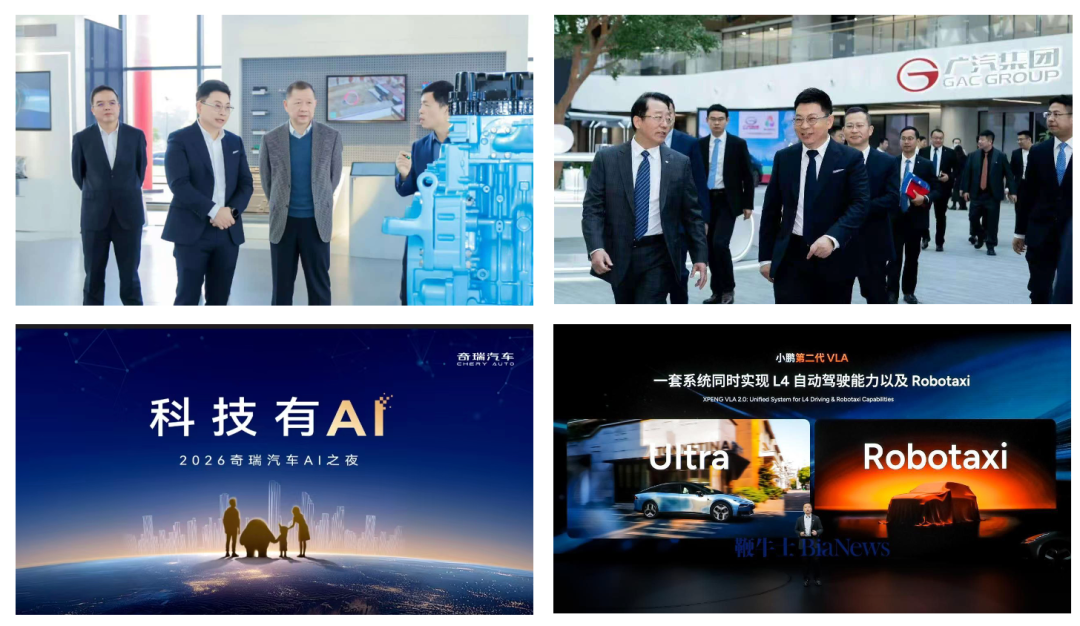
Automakers are making frequent moves, racing in the AI arena. Yu Chengdong, Huawei's Executive Director, Head of the Product Investment Review Committee, and Chairman of Terminal BG, has been tirelessly visiting Guangqi Group and Dongfeng Motor to promote the deep integration of the HarmonyOS ecosystem with automakers. His intention is to use AI technology as a link to establish a closed-loop integration of hardware and software.
On January 8, XPENG Motors implemented "Physical AI," with four new models all equipped with the second-generation VLA large model. This year, XPENG will begin operating Robotaxi services, as well as mass-producing humanoid robots and flying cars.
On January 17, Chery Automobile will host its first AI Night, marking Chery's strategic focus on AI.
If the keyword for the automotive industry over the past decade has been electrification, then for 2026 and beyond, the "game-changer" reshaping the industry landscape is undoubtedly AI.
What significant impacts will AI bring to the automotive industry?
"Today's AI is transforming the automotive industry," said Professor Xie Hui, head of the Autonomous Driving Interdisciplinary Research Center at Tianjin University, in an interview with Bangning Studio. He noted that by 2025, AI will have permeated every aspect of automotive R&D, production, and service, from core scenarios like smart cockpits and autonomous driving.
Fan Jialin, Deputy General Manager of Xiaomi Automobile's Sales and Operations Department, similarly believes, "AI has long been transforming the automotive industry."
"When I talked about AI in 2024, I used the phrase 'the wind is rising, signaling an impending storm' to describe it. At that time, while its momentum was strong, it hadn't truly entered the implementation stage. When discussing AI again in 2025, I would use the phrase 'suddenly, a spring breeze comes, blossoming a thousand trees and ten thousand branches' to depict it. More importantly, AI will trigger a disruptive transformation across the entire human society," said Zhao Fuquan, FISITA Lifetime Honorary President, Tsinghua University Professor, and Dean of the Institute for Automotive Industry and Technology Strategy.
The AI era has arrived. Every industry, enterprise, and even individual must fully embrace AI to develop future-oriented core competitiveness, especially in the automotive industry.
▍01 Autonomous Driving: The Most Profoundly Impacted Area
On December 15, 2025, China's intelligent connected vehicle industry achieved a historic breakthrough: the Ministry of Industry and Information Technology approved the L3 conditional autonomous driving functionality of BAIC New Energy's ARCFOX αS (L3 version) and Changan Automobile's Deepal SL03 for market access. These two models are set to conduct road trials in designated areas of Beijing and Chongqing.
This announcement marks the end of autonomous driving being confined to laboratory demonstrations and demonstration zone road tests, transforming it into a standardized industrial product where the system assumes primary driving responsibility under specific conditions.
Its deeper significance lies in China's autonomous driving entering a true road deployment phase, accelerating the reconfiguration of the global AI competition landscape, and shifting the AI competition from the virtual bit world to a new battlefield of deep interaction with the atomic world.
Multiple industry experts believe that among AI's full-chain penetration into the automotive industry, autonomous driving will be the most profoundly impacted area.
"Once autonomous driving truly lands, the disruption it brings will be enormous," said Zhou Hongyi, founder of 360 Group. He noted that in the past, the concept of cars as a second space failed to resonate deeply because driving itself was laborious. However, with the widespread adoption of autonomous driving, people will be able to "eat hotpot and sing songs" while commuting, fundamentally changing travel patterns and truly turning cars into a second space.
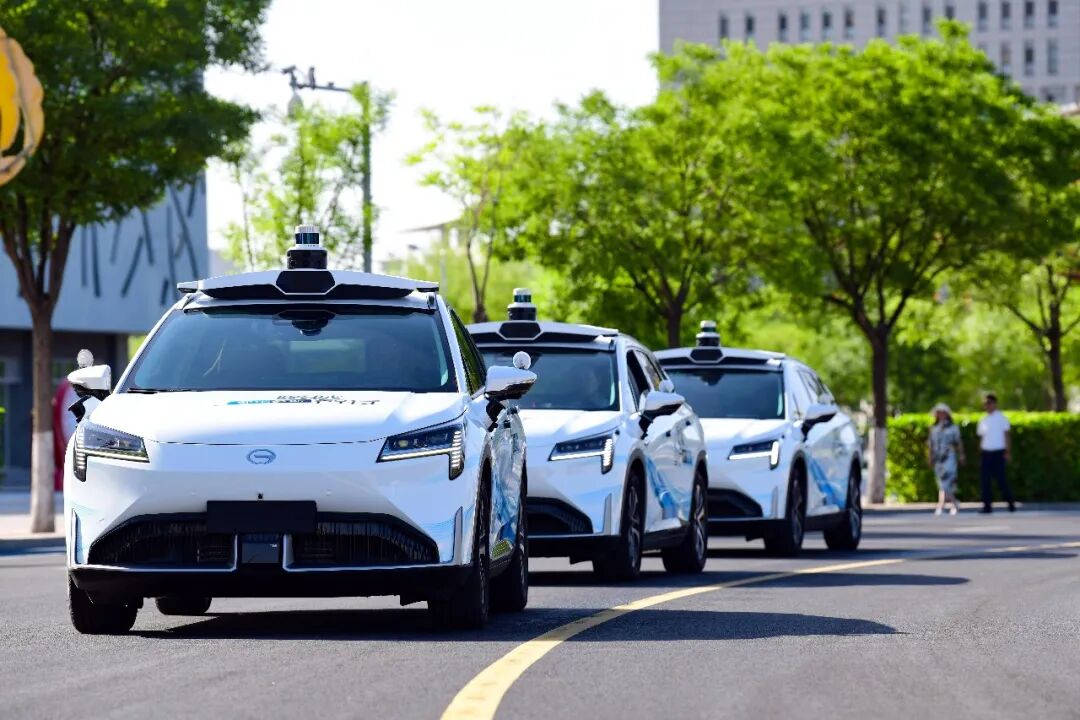
If intelligent driving democratization represents AI's implementation in the private car sector, then the large-scale advancement of Robotaxi (autonomous taxis) is an important attempt by AI to reconstruct the travel ecosystem.
In 2025, with dense (intensive) policy pilots and technological maturity, Robotaxi services entered the commercialization fast lane, transitioning from novelty experiences to daily travel options.
In Shanghai, driverless autonomous taxis have become a common sight on the streets, with residents able to hail a ride via their phones and board within five minutes, smoothly navigating through the city's complex road conditions. Wuhan, with 3,829 kilometers of open test roads and a service coverage of 7.7 million people, aims to become the "Autonomous Driving Capital."
By the third quarter of 2025, companies such as Pony.ai, Baidu Apollo Go, and WeRide had launched commercial demonstration operations in multiple cities, including Beijing, Chongqing, and Guangzhou. Driven by both policy and market forces, the industry is accelerating toward scaling deployment.
In the future, vehicles could drop off their owners at work and then independently take on delivery orders or courier services, generating additional income for users. The definition of cars will be completely rewritten, ushering in a disruptive transformation.
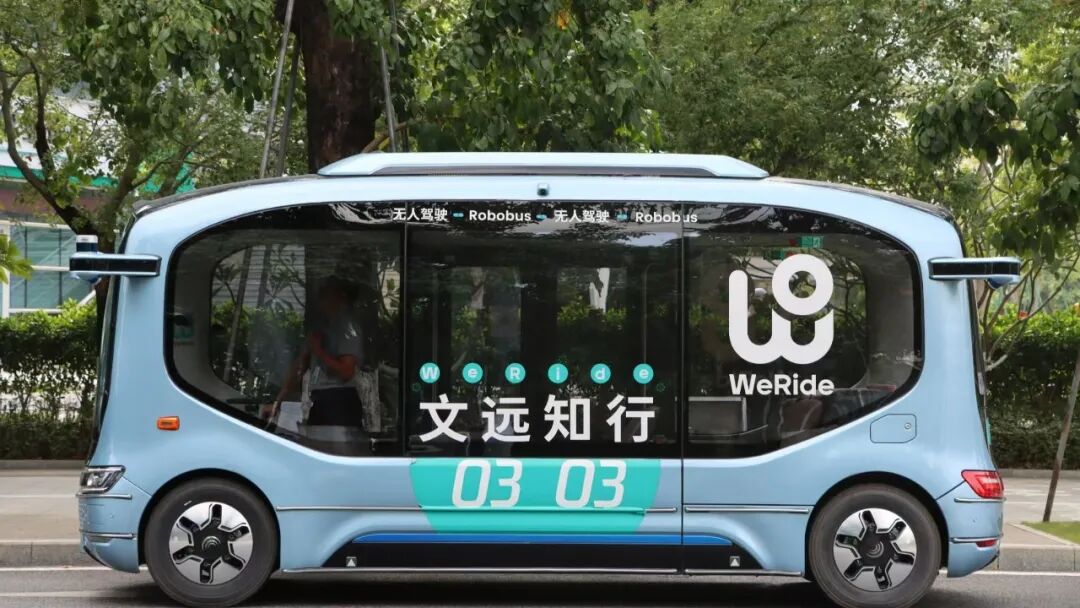
Academician Ouyang Minggao of the Chinese Academy of Sciences and Tsinghua University Professor predicts that from 2026 to 2030, autonomous driving will become the core theme of industry competition.
The trigger for this transformation could be Tesla's Full Self-Driving (FSD) entering the Chinese market. Leveraging an end-to-end technical route based on artificial intelligence large models and benefiting from zero marginal costs for software, it could easily create a winner-takes-all scenario, requiring the entire industry to pay close attention and respond proactively.
"The artificial intelligence large model revolution has upgraded intelligent technology transformation into a breakthrough at the technological revolution level, which must be fully seized," Ouyang Minggao stated bluntly.
Today, AI large models are becoming the core driving force for autonomous driving: Companies like Huawei and XPENG have achieved breakthroughs in autonomous driving technology through large-scale models, enabling systems with chain-of-thought reasoning capabilities to handle complex long-tail scenarios like humans. The deployment of inference-based AI models, such as NVIDIA's Alpamayo, allows vehicles to anticipate potential children behind rolling balls by the roadside, significantly enhancing safety.
The autonomous driving revolution led by AI is reshaping the automotive industry in all aspects, from technology and lifestyle to business models.
▍02 Full-Chain Penetration: AI Extends Beyond Driving
Beyond transforming travel patterns, AI is also reconstructing the entire value chain of the automotive industry in the role of a tool—from R&D and design to production and manufacturing, from marketing and services to operational management, AI is present everywhere.
"Our team's core work is to develop professional intelligent agents covering the entire business process for automotive and power industry enterprises," Xie Hui introduced. These include agents for component design, simulation modeling, optimization, controller tuning and calibration, experimental data analysis, experimental report generation, and after-sales services. As land (implementation) carriers of industry large models combined with specific scenarios, the application of these agents is accelerating comprehensively.
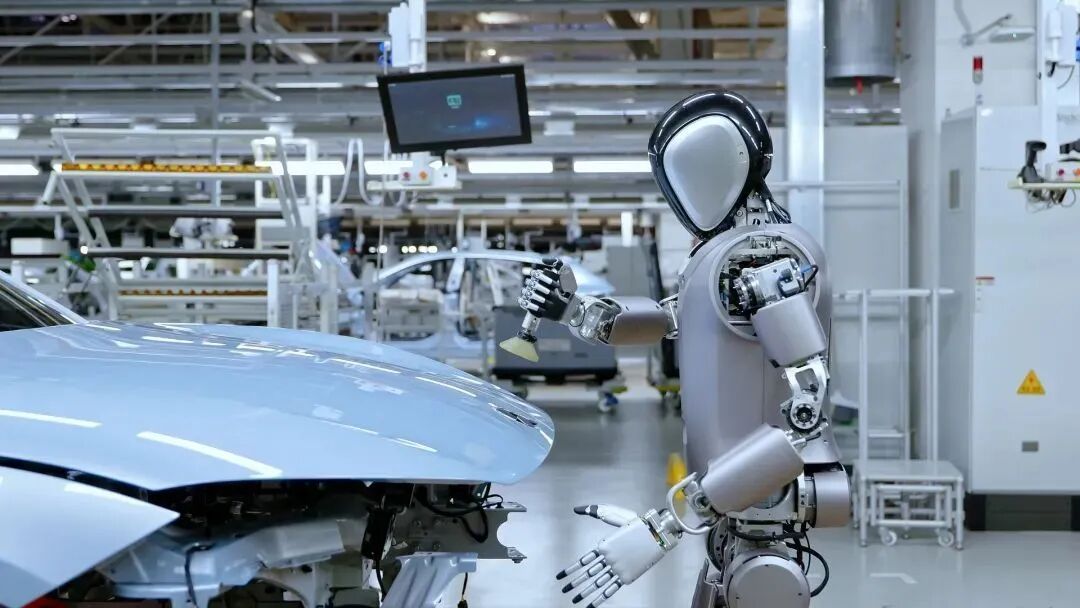
The large-scale application of intelligent agents precisely addresses two core pain points in the industry: First, they serve as "digital employees" to fill position (position) gaps caused by population decline and a shortage of professional talent; second, they significantly boost R&D and design efficiency, shortening project cycles.
Under this trend, the automotive industry is undergoing bidirectional intelligent upgrades: On the product side, autonomous driving and smart cockpits continue to advance; on the R&D side, efficiency gains are achieved throughout the entire lifecycle, from design to after-sales.
Xie Hui stated that his team is promoting the creation of "digital employee" matrices within enterprises, planning to help companies add over a thousand "digital employees" within a year. These digital employees encapsulate core knowledge and experience, promising (are expected to) reshape industry production organization, R&D design, and marketing service models.
In this wave of transformation, enterprises that embrace AI intelligent agents early will be the first to benefit.
In R&D, generative AI has compressed the design cycle for vehicle renderings from one or two days to just minutes; in simulation testing, AI has accelerated computational fluid dynamics analysis speed by over a hundred times, reducing the cost of physical prototype trials.
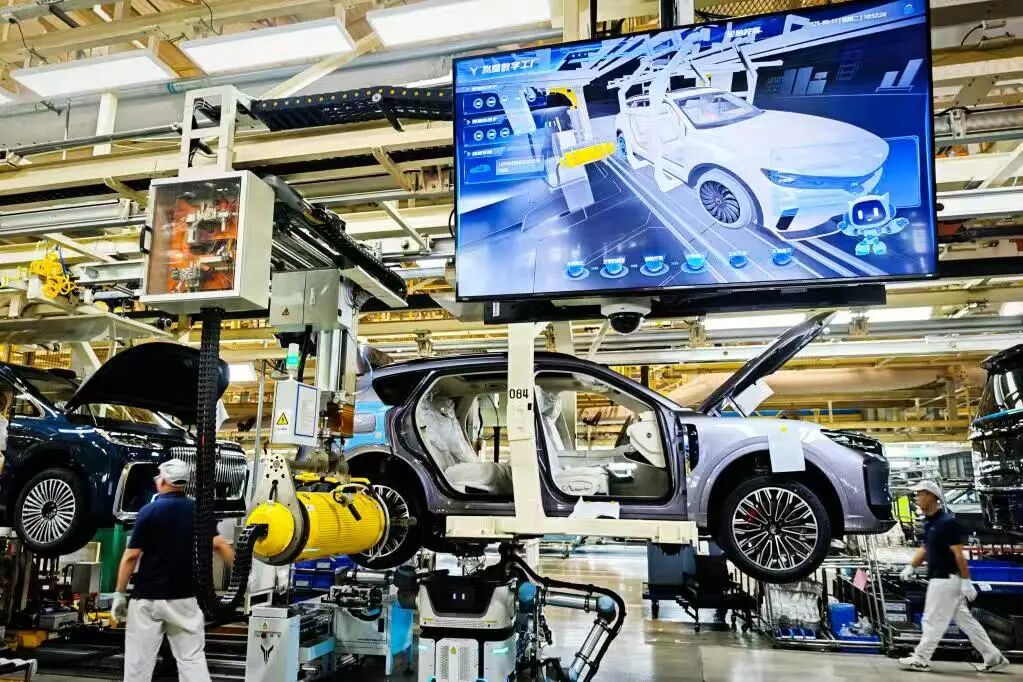
In production workshops, AI empowers "lighthouse factories." For example, one automaker optimized wheel casting process parameters with AI, improving exception handling (exception handling) efficiency by 40% and reducing the scrap rate by 43%. Another company replaced manual inspections with AI visual detection, increasing battery tray inspection speed by over ten times and reducing the workforce by 13 inspectors.
In logistics, AI algorithms plan paths for AGV trolleys, ensuring precise outbound delivery of components and flexible production.
In marketing and services, intelligent name badges analyze customer needs, helping automakers increase sales by 22% year-on-year; AI live-streaming robots can independently handle search interactions and lead generation, enabling low-cost online operations.
In after-sales, AI analyzes vehicle lifecycle data to predict component failure trends, successfully warning (early warning) and containing multiple quality issue escalations, saving an average of 3,000 hours in management costs.
A report by Strategy& points out that automakers fully implementing AI transformation could see their operating profit margins increase by 40%-60%.
Behind these figures lies AI's deep reconstruction of the automotive industry—from product forms and business models to the value chain. Cars are no longer just transportation tools but smart terminals that integrate AI capabilities. Consequently, industry competition has shifted from hardware parameter comparisons to software algorithms and data ecosystems.
Of course, the AI transformation is not achieved overnight, and technological implementation still requires rationality. As experts have said, the advancement of universal intelligent driving benefits from technological dividends, but avoiding exaggerated propaganda and compliant development are essential for sustainable progress.
In the future, as technologies like embodied intelligence and vehicle-road-cloud integration continue to evolve, the fusion of AI and the automotive industry will become even deeper. What is certain is that AI will not only transform the automotive industry but also profoundly influence people's lifestyles by reshaping the travel ecosystem.
This transformation has just begun.

-
![]()
Enflame Tech's IPO Journey: Navigating Over 5.9 Billion Yuan in Losses and Soaring Debt in Q1 This Year
-
![]()
Trillion-Yuan Giant Li Shufu 'Streamlines': Could Levc Be the Casualty?
-
![]()
AI Competes for Electricity and Generates Power in the Gobi Desert
-
![]()
The First Batch of Victims of the AI Bubble: Programmers
-
![]()
ByteDance, DJI, and Xiaohongshu Secure Top Three Positions Among China’s Fastest-Growing Unicorns
-
Tesla's in-car voice system in China is finally learning to 'understand human language'
-
![]()
Foreigners Are Amazed: Chinese Electric Vehicle Drive Systems Unveil Innovative 'Poses'
-
![]()
700,000 Brothers and the Future of Robots: Behind JD.com's 'Nirvana Plan'