At the Crossroads: The Four Key Trends Defining China's Auto Market in 2026
 01/27 2026
 550
550
In 2025, China's auto market closed out the year with total sales hitting approximately 34 million vehicles, with exports emerging as a standout sector. The penetration rate of new energy vehicles (NEVs) consistently exceeded 50% on a monthly basis from mid-year onwards, reaching 60% in December. However, this rapid growth serves as a harbinger of underlying market transformations. As we step into 2026, China's auto market stands at a pivotal juncture of transformation, marked by concurrent internal "refinement" and external "expansion."
01 Market Landscape
Domestic "Micro-Growth," Exports, and Technological Exports as New Growth Drivers
Numerous industry insiders have already sensed the shifting tides in the market. In 2026, China's auto market is poised to enter a phase of "micro-growth" or even "stock" market conditions. Some institutions project a slight year-on-year decline in domestic passenger vehicle sales for 2026. Meanwhile, exports are set to become a key growth engine, with annual export volumes expected to sustain mid-to-high growth rates exceeding 10%. This trend was evident in 2025 when China ascended to the position of the world's largest auto exporter.
More significantly, China's role in exports is transitioning from "product exports" to encompass "technology exports" and "standard outputs." This shift was palpable at CES 2026, where Chinese automakers and supply chain companies were not mere spectators but active participants shaping the future of mobility. Geely unveiled its global AI 2.0 technology system, built on a super-large AI model; Great Wall Motors showcased its fully self-developed intelligent mobility solutions; Leapmotor pushed the boundaries of central computing performance with Qualcomm's dual 8797 Supreme Edition chips. Black Sesame Technologies' driving chips cleared relevant reviews, paving the way for global sales. This indicates that China's auto industry is moving beyond cost-based competition to export technological solutions and ecological standards.
The evolving market landscape means automakers can no longer rely on rapid domestic market growth. Companies lacking core technologies, cost control, and scale effects will face significant hurdles. In 2026, automakers with insufficient annual sales volumes are increasingly likely to exit the Chinese market. As market growth slows, every move becomes more calculated, and competition intensifies. This will be a common challenge for all players in the automotive industry in 2026.
02 Technological Routes
Large Batteries + Hybrids May Overtake Pure EVs, Centralized Architectures Lay the Groundwork
As we enter 2026, the penetration rate of new energy vehicles is expected to climb further, stabilizing around 60%. A notable trend is the rapid rise of hybrid technology, with competition shifting from mere fuel efficiency to "pure electric range." At the outset of 2026, BYD set the tone with a launch event, announcing "large battery DM-i versions" for four main hybrid models—Qin PLUS DM-i, Qin L DM-i, Seal 05/06 DM-i—and defining its strategy as transitioning from "intelligent driving for all" in 2025 to "long-range for all" in 2026.
The pure electric range (CLTC standard) of these Qin family hybrid models has significantly increased to 210 kilometers, enabling most urban commuters to achieve "weekly charging," with daily usage costs approaching those of pure EVs, while eliminating range anxiety and charging queue issues for long-distance travel. 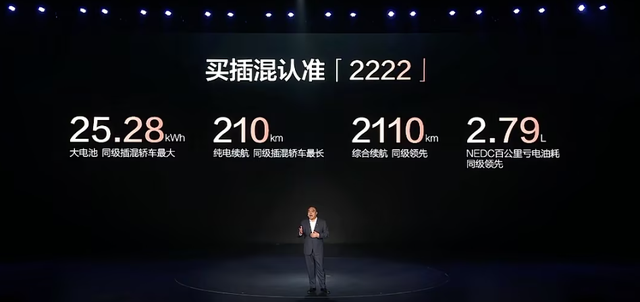
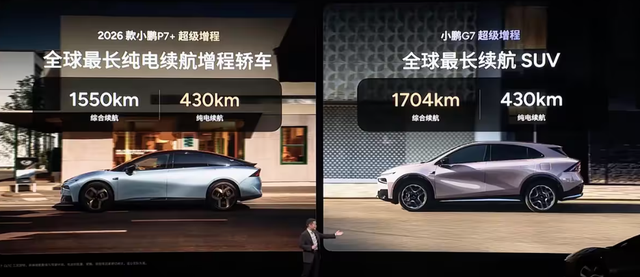
Xpeng follows a similar trajectory. In early January 2026, Xpeng launched the G7 Super Extended-Range Edition, expanding its "Super Extended-Range" technology platform to more mainstream SUV models. This "ultra-fast charging large battery + efficient range extender" combination aims to enable users to rely on pure electric driving in cities and refuel conveniently for long-distance travel. Both camps are betting on "large battery hybrids," indicating fierce competition in this segment in 2026. Hybrid models' market growth is likely to surpass pure EVs, becoming the primary driver for increasing new energy penetration.
03 Intelligent Evolution
From Feature Accumulation to "Physical AI," System-Level Capabilities Become Decisive
In 2026, automotive intelligence enters a pivotal phase. The most notable development is the attempt to unlock "long-tail scenarios" for advanced autonomous driving. At CES 2026, NVIDIA CEO Jensen Huang announced the "arrival of the ChatGPT moment for physical AI," with its open-source Alpamayo series models introducing "chain-of-thought" reasoning. This means the system can perform multi-step logical deductions in unlearned extreme scenarios, such as signal failures, and provide explainable decisions, marking a significant step toward building safety trust. 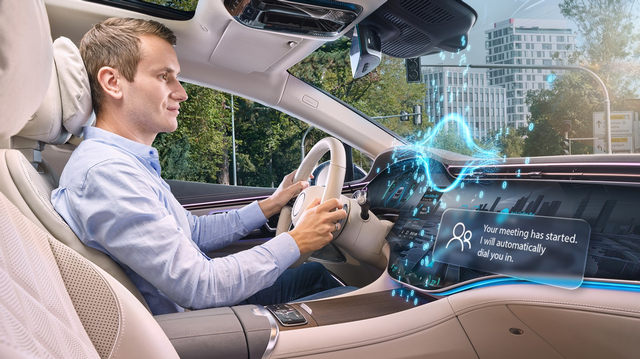
Meanwhile, domestic policies are breaking new ground. The emergence of the first L3-certified models paves the way for commercializing advanced functions. Geely's Qianli Haohan G-ASD system has outlined a clear L2-to-L4 evolution path and announced the rollout of advanced functions in 2026, pending regulatory approval. From explainable AI models to clear regulatory responsibility definitions, autonomous driving is steadily moving from labs and test sites to consumers' daily roads. 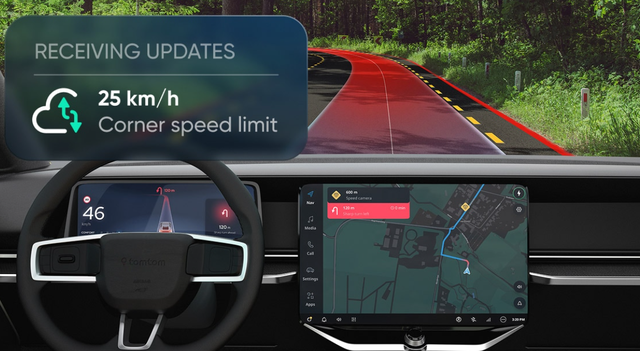
The direction of intelligent cockpits is also undergoing profound changes, shifting from simple feature accumulation and passive responses to "proactive AI" that understands scenarios and anticipates needs. At CES, Bosch's AI cockpit platform enables vehicles to learn driver habits, triggering coordinated responses from air conditioning, seat heating, and steering wheel heating with a simple "I'm cold." Garmin's solution allows passengers to have private conversations via headrest speakers or create immersive lighting atmospheres synchronized with movie content. Aptiv's cockpit monitoring system accurately judges occupant postures, providing smarter trigger decisions for airbags.
This "proactive service" capability will be a new dimension for high-end model competition in 2026. As hardware parameters like chip computing power and screen quantity converge, the true experience gap will be determined by AI algorithms, data accumulation, and depth of understanding user needs. Automotive competition is accelerating from the "feature phone" era to the "smartphone" era, with AI being the decisive "operating system."
04 Industry Transformation
Cross-Sector Integration and Accelerated Elimination, Ecological Competition Begins
With rapid technological development, industry governance is also improving. Starting January 1, 2026, the first batch of mandatory national standards for intelligent connected vehicles will be implemented, providing foundational safeguards for safety and reliability. These standards signal the industry's shift from a "innovation-first" phase to a new stage of "balancing innovation and regulation," raising compliance thresholds for technological development.
These standards mean the auto industry is transitioning from a "innovation-first" approach to one that balances innovation and regulation. For consumers, this translates to better product quality and safety; for companies, it imposes higher compliance costs and technological barriers. It compels all players to prioritize safety and reliability alongside innovation and novelty.
In this environment, the "Matthew effect" in market competition will become more pronounced. On one hand, leading companies like BYD, through strategies like "long-range for all," continuously raise market entry barriers and consumer expectations. On the other hand, the massive investment required for intelligent R&D concentrates resources among fewer players. For tail brands (less successful brands), 2026 will be increasingly challenging. These automakers struggle to compete with giants on cost control and cannot keep pace with technological iterations. The once-vibrant new energy vehicle startup camp (group) has dwindled after multiple rounds of consolidation. Even among survivors, achieving stable profitability and building long-term competitive moats remains unresolved.
These realities indicate that automotive competition has entered deep waters. The era of relying solely on financing, marketing, and single-point feature innovations is over. True technological system strength, supply chain cost control, scalable implementation capabilities, and sustained cash flow have become decisive factors for survival.
Conclusion
In 2026, the value of intelligent vehicles will no longer be solely determined by battery size and screen quantity but by their ability to provide "seamless" long-range driving and "empathetic" intelligent experiences. As policies and regulations improve, market growth flattens, and technological routes converge, companies that truly understand user needs, invest continuously in core technologies, and achieve efficient commercial closures will find new growth in the stock market. The industry's elimination race is accelerating, but this does not mean fewer opportunities. On the contrary, in a more mature and rational market, the true value of products and experiences will be amplified. 2026 may be a pivotal year for China's auto industry, transitioning from "quantitative" accumulation to "qualitative" selection. The curtain has risen, and the show is about to begin.
-
![]()
Enflame Tech's IPO Journey: Navigating Over 5.9 Billion Yuan in Losses and Soaring Debt in Q1 This Year
-
![]()
Trillion-Yuan Giant Li Shufu 'Streamlines': Could Levc Be the Casualty?
-
![]()
AI Competes for Electricity and Generates Power in the Gobi Desert
-
![]()
The First Batch of Victims of the AI Bubble: Programmers
-
![]()
ByteDance, DJI, and Xiaohongshu Secure Top Three Positions Among China’s Fastest-Growing Unicorns
-
Tesla's in-car voice system in China is finally learning to 'understand human language'
-
![]()
Foreigners Are Amazed: Chinese Electric Vehicle Drive Systems Unveil Innovative 'Poses'
-
![]()
700,000 Brothers and the Future of Robots: Behind JD.com's 'Nirvana Plan'