Looking Back at 2025: Jaguar Records 14,217 Sales, Land Rover Hits 12,302 – Why Are British Luxury Brands Struggling?
 01/29 2026
 555
555
Author: Liu Jia
Produced by: Insight Auto
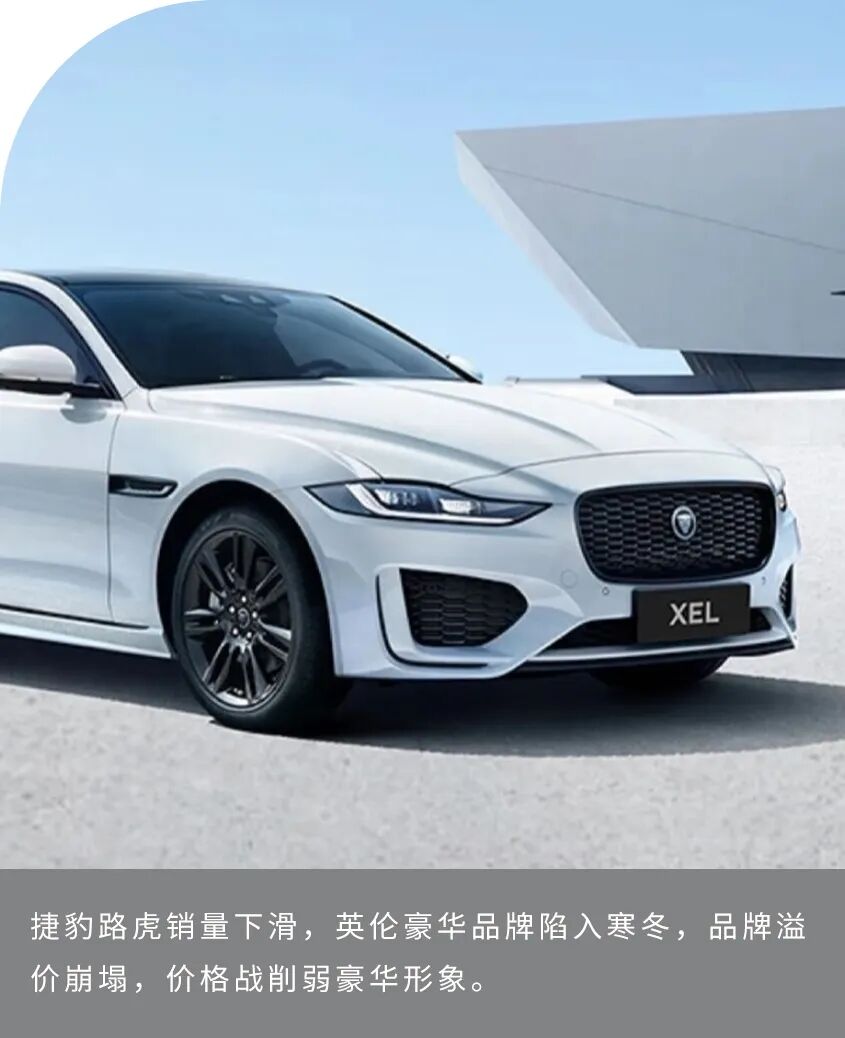
Retail sales data compiled by Dongchedi reveals that in 2025, Jaguar sold 14,217 units in the Chinese market, while Land Rover sold 12,302 units. The combined sales of these two British luxury brands fell short of 30,000 units.
Comparing this to the 2024 figures (Jaguar: 17,326 units for the full year, Land Rover: 20,248 units for the full year), Jaguar's sales in 2025 declined by 17.9% year-on-year, and Land Rover's sales dropped by 39.2% year-on-year. The combined sales of the two brands fell by over 20% compared to the 37,600 units sold in 2024—a stark contrast to their peak annual sales of nearly 200,000 units.
Amidst the broader luxury car market's shift towards new energy and intelligent vehicles, Jaguar Land Rover, once renowned for its unique brand identity, has been steadily retreating under the dual pressures of high-end domestic brands and new energy competitors.
From being a market favorite with vehicles commanding a premium to struggling for recognition even with price cuts and inventory clearance, Jaguar Land Rover's market downturn is not a mere coincidence but an inevitable result of the disconnect between brand strategy, product lineup, and market demand. It also mirrors the collective challenges faced by second-tier luxury brands during the industry's transformation.

Erosion of Brand Premium: Price Wars Tarnish British Luxury Appeal
The decline of Jaguar Land Rover's brand began with the sustained erosion of its luxury premium. In August 2025, Land Rover launched a time-limited official price reduction policy for the Range Rover Evoque L. The SE Yuguang Zunyao Edition, originally priced at 429,800 yuan, was slashed by 190,000 yuan to start at 239,800 yuan. The HSE Ningguang Limited Edition, originally priced at 475,800 yuan, was reduced by 206,000 yuan to a minimum of 269,800 yuan. This marked the largest single official price reduction in the luxury car market that year, with a maximum discount of 44%.
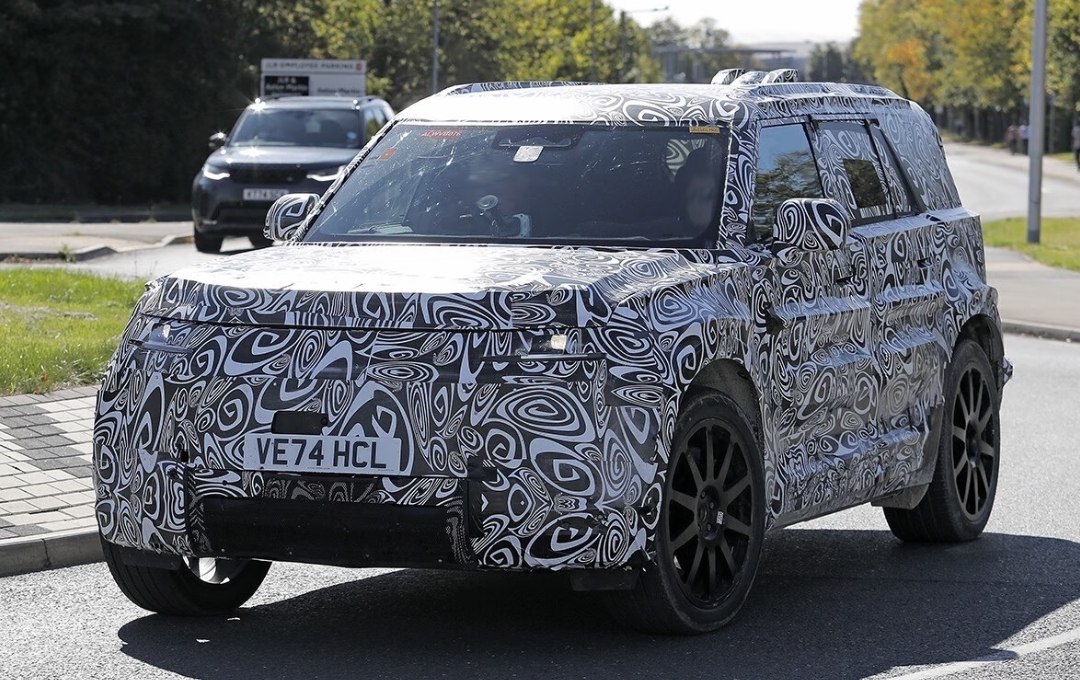
This "drastic" price cut was not an isolated incident. The Land Rover Discovery Sport also saw terminal discounts of around 160,000 yuan, while Jaguar models similarly suffered alarming terminal discounts. These official price reductions were, in essence, a transparent acknowledgment of the long-existing low terminal prices, aimed solely at alleviating dealer inventory pressure. At the time, the inventory coefficient exceeded 2.0, meaning that for every vehicle sold, two remained in storage.
The collapse of the pricing system directly undermined the brand's luxury positioning. Once a symbol of status and prestige, with the Range Rover Administration Edition often costing three to four million yuan after landing, and options and price hikes becoming the market norm, Jaguar attracted consumers seeking individuality with its British sporting heritage.
Today, however, terminal prices at half off have significantly tarnished Jaguar Land Rover's luxury image in consumers' minds. More embarrassingly, even with substantial price cuts, sales remain dismal. In August 2025, Land Rover's monthly sales were just 841 units, with the Range Rover Evoque L selling 552 units and the Discovery Sport only 289 units, far from reaching even a fraction of their peak sales.
The price war not only failed to boost sales but also fostered a wait-and-see mentality among consumers, who adopted a "buy low, not high" approach, further exacerbating the vicious cycle of declining sales and brand devaluation. To make matters worse, the dealer network faced severe pressure, with 30% of stores choosing to exit the network or switch to other brands due to sustained losses, severely damaging channel stability.

Delayed Product Transformation: Dual Setbacks in New Energy and Intelligence
In 2025, as the automotive industry underwent a profound transformation towards new energy and intelligence, the disconnect in product competitiveness became the core issue behind Jaguar Land Rover's market downturn.
Although Jaguar announced its "Reimagine" strategy as early as 2021, planning a full transition to a pure electric luxury brand by 2025 with annual investments of approximately 2.5 billion pounds in electrification technology research and development, and Land Rover launched several plug-in hybrid models while collaborating with Chery to create the electric brand "Freelander," the pace of strategic implementation was slow, with extremely low market visibility.
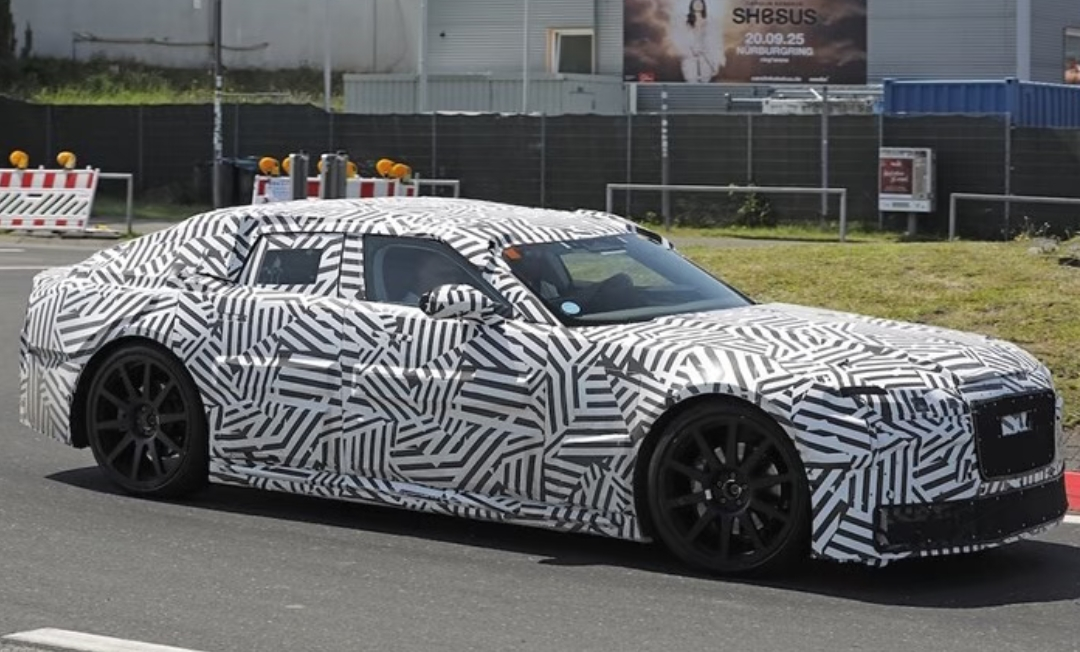
By the end of 2025, Jaguar Land Rover's new energy products in the Chinese market were still primarily plug-in hybrids, with only the Jaguar I-PACE as a pure electric model. Slow model updates failed to meet consumers' escalating new energy demands.
The electric brand "Freelander," developed in collaboration with Chery, was originally scheduled for a Chinese debut by the end of 2026 but was later adjusted to launch first in the Middle East in 2026, with the Chinese market launch delayed once again, missing the window of opportunity in the new energy sector.
The shortcomings in intelligent configurations further eroded Jaguar Land Rover's competitive edge. It should be noted that some Land Rover models are equipped with the InControl OS 2.0 system, powered by the Qualcomm Snapdragon SA8155P chip, which performs adequately in terms of basic smoothness and supports features like navigation projection and voice-controlled air conditioning. However, it lacks advanced autonomous driving capabilities and still lags behind mainstream intelligent cockpit interaction experiences.
In the 200,000-300,000 yuan price range, new energy models from AITO and Li Auto not only offer larger spaces and lower usage costs but also deliver cutting-edge intelligent experiences with configurations like Huawei's HarmonyOS cockpit and full-scenario intelligent driving systems. Tesla's Model Y continued to sell well throughout the year, with monthly sales frequently exceeding 30,000 units, surpassing Land Rover's entire brand annual sales in just half a month.
Meanwhile, entry-level models from first-tier luxury brands like BMW X1 and Audi Q3 continued to lower prices, exerting dual pressure in terms of brand strength and product competitiveness. Jaguar Land Rover lost its traditional advantages in fuel vehicles while failing to secure a foothold in the new energy sector, ultimately finding itself in a precarious position.
Additionally, product reliability and usage cost issues continued to influence consumer choices.
Although some owners reported positive driving experiences and believed that perceptions of the brand's quality were biased, Jaguar Land Rover consistently ranked low in J.D. Power's quality rankings. In 2015, CCTV's 3·15 program exposed transmission failures in their vehicles, and related quality complaints have remained among the highest in the luxury brand segment in recent years.
Moreover, the high maintenance costs of their models, with single 4S store service fees around 1,500 yuan and exorbitant electronic part repair costs, deterred many consumers due to the persistently high maintenance expenses.

Market Response Missteps: Dual Deficiencies in Localization and Channel Construction
Jaguar Land Rover's market downturn also stemmed from the combined effects of lagging localization efforts and a disordered channel system. To cater to Chinese market demands, Land Rover introduced extended wheelbase models like the Range Rover Evoque L, making localized adjustments in space and configurations. However, these adjustments remained superficial and did not penetrate the core levels of product development and technical adaptation.
Although its collaboration with Chery provided an opportunity for localized development, the slow implementation of electrification products and the prioritization of the first cooperative electric model for the Middle East market, neglecting the urgent needs of the Chinese market, reflected a delayed judgment of market trends in China.
Compared to the precise insights into Chinese consumer demands by domestic brands and new energy players, Jaguar Land Rover's localization efforts appeared passive and sluggish, failing to truly address market pain points.
The channel system's issues further exacerbated the brand's market predicament. For a long time, Jaguar Land Rover's terminal pricing system has been chaotic, with significant price discrepancies across regions and dealers. Some models were even subject to bundled financial packages and regional restrictions, severely impacting the consumer purchasing experience.
The official price reductions aimed at alleviating inventory pressure, while somewhat unifying terminal prices, further compressed dealer profit margins, intensifying conflicts between the brand and dealers. This led to a decline in service quality from some dealers, creating a vicious cycle.
Meanwhile, the sales network was concentrated in first-tier cities, with insufficient service outlets in second- and third-tier cities and inconsistent after-sales service quality, making it difficult to establish a stable brand reputation. Under the trend of market penetration, they missed out on a large number of potential users.
The 2025 sales figures for Jaguar and Land Rover serve as a wake-up call for British luxury brands in the Chinese market.
From 17,300 units and 20,200 units in 2024 to 14,200 units and 12,300 units in 2025, with Jaguar dropping by 17.9% and Land Rover by 39.2% year-on-year, and from nearly 200,000 units in annual sales to a combined total of less than 30,000 units, Jaguar Land Rover's decline is the result of multiple factors, including the erosion of brand premium, delayed product transformation, and misguided market responses.
During this critical period of automotive industry transformation, second-tier luxury brands that fail to keep pace with market trends, accelerate their new energy and intelligent transformations, deeply advance localization efforts, and improve their channel and service systems will ultimately be eliminated by the market.
Although Jaguar Land Rover has laid out an electrification strategy and its collaboration with Chery provides an opportunity for localized development, the late launch of its first electric model, along with the time-consuming process of repairing its brand image and rebuilding its channel system, means there is no quick fix.
For Jaguar Land Rover, the sales trough in 2025 represents both a crisis and an opportunity to re-evaluate its positioning and adjust its development strategy.
Only by setting aside its ingrained notions of British luxury and truly focusing on the needs of the Chinese market, achieving comprehensive innovation in technology research and development, product lineup, and channel construction, can it hope to regain a foothold in the fiercely competitive market. Otherwise, this "winter" may mark the end of the brand's presence in the Chinese market.
END
-
![]()
Enflame Tech's IPO Journey: Navigating Over 5.9 Billion Yuan in Losses and Soaring Debt in Q1 This Year
-
![]()
Trillion-Yuan Giant Li Shufu 'Streamlines': Could Levc Be the Casualty?
-
![]()
AI Competes for Electricity and Generates Power in the Gobi Desert
-
![]()
The First Batch of Victims of the AI Bubble: Programmers
-
![]()
ByteDance, DJI, and Xiaohongshu Secure Top Three Positions Among China’s Fastest-Growing Unicorns
-
Tesla's in-car voice system in China is finally learning to 'understand human language'
-
![]()
Foreigners Are Amazed: Chinese Electric Vehicle Drive Systems Unveil Innovative 'Poses'
-
![]()
700,000 Brothers and the Future of Robots: Behind JD.com's 'Nirvana Plan'