The AI-Driven 'Red Packet War' Commences: Can the Traditional Key Unlock the Modern Lock?
 01/28 2026
 561
561
Mark Twain once remarked, "History doesn't repeat itself, but it often rhymes."
On the cusp of the 2026 Spring Festival, the familiar atmosphere of competition once again enveloped China's digital landscape.
Shortly after the Laba Festival, Tencent and Baidu simultaneously activated their long-dormant "nuclear buttons": Tencent announced that Yuanbao would distribute a staggering 1 billion yuan in cash red packets during the Year of the Horse, while Baidu countered with a 500 million yuan red packet campaign for its Wenxin series products.
This scenario feels all too familiar.
Twelve years ago, during the 2014 Spring Festival, WeChat executed a "Pearl Harbor-style surprise attack" with its "Red Packet War," achieving in a single night what Alipay had taken a decade to build. Eight years ago, during the 2018 Spring Festival, Douyin and Kuaishou utilized "red packet rain," backed by real money, to propel China's internet from a text-and-image era into the age of short videos.
Now, in 2026, the tech giants are attempting to wield the same "tried-and-true" key—Spring Festival red packets—to unlock an unprecedented "new lock": the widespread adoption of AI assistants.
The intriguing question arises: Does this key still hold its magic?
01 Why the Aggressive "Red Packet War" Now?
Rewinding three months, it's hard to fathom the usually "laid-back" Tencent adopting such an aggressive stance.
For much of 2025, Tencent's AI endeavors were criticized as "lukewarm" by outsiders: Yuanbao was launched but lacked the buzz generated by ByteDance's Doubao; in the realm of large-scale model technology, it was almost entirely eclipsed by Qianwen and DeepSeek; Pony Ma repeatedly emphasized "composure" in internal speeches, seemingly uninterested in direct competition.
On January 25, a "1 billion yuan pledge" tore off the veil of gentleness.
Why the sudden shift? Two direct reasons seem evident.
One is the widening gap in active user numbers.
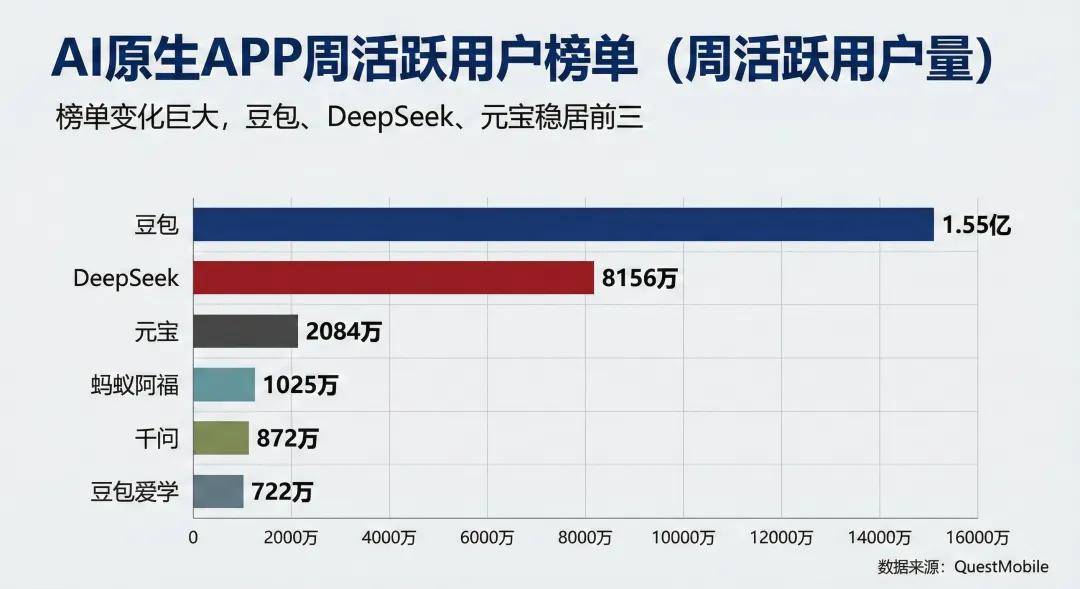
According to QuestMobile's December 2025 report, Doubao led with 155 million weekly active users; DeepSeek, a technical dark horse, surged to 81.56 million weekly active users without massive advertising, relying solely on hardcore word-of-mouth. Yuanbao, backed by WeChat's vast user base, had only 20.84 million weekly active users, while also facing pressure from Alibaba's ecosystem.
The other is the evolving nature of "internet gateways."
Citigroup, in its latest research report, offered a not-so-novel but realistic perspective: AI assistants are not just apps but "browsers for the AI era." Previously, the battle was over "time spent"; now, it's over "intent." For instance, when users seek to learn how to make braised pork, they turn to Doubao or DeepSeek instead of WeChat's search bar or Baidu, indicating that the foundations of the giants' survival are being "undermined."
Thus, Tencent and Baidu's "Red Packet War," which Pony Ma hopes will "recreate the glory of WeChat's red packet era," is fundamentally a defensive battle for the "iron throne" of mobile internet, possibly entering its final window of opportunity.
02 Tencent's Strategy: Leveraging "Social Chains" to Protect Yuanbao
Tencent's strength lies not in traffic but in its ability to transform red packets into social currency.
A closer examination of Yuanbao's red packet mechanics reveals a strong "WeChat flavor," employing two key features: "social fission" and "Yuanbao Pai."
First, social fission likely involves sharing Yuanbao's red packets via WeChat or QQ.
Imagine your relatives sending a "New Year greeting video generated by Yuanbao" with a red packet attached in a group chat. Clicking it not only reveals the red packet but also introduces Yuanbao's capabilities. This "word-of-mouth" fission efficiency was proven in 2014; even tech-averse older adults or users in lower-tier markets may download the app under the influence of "social + red packet" incentives.
Then there's Yuanbao Pai, a feature once dubbed a "top-secret project" by Pony Ma.
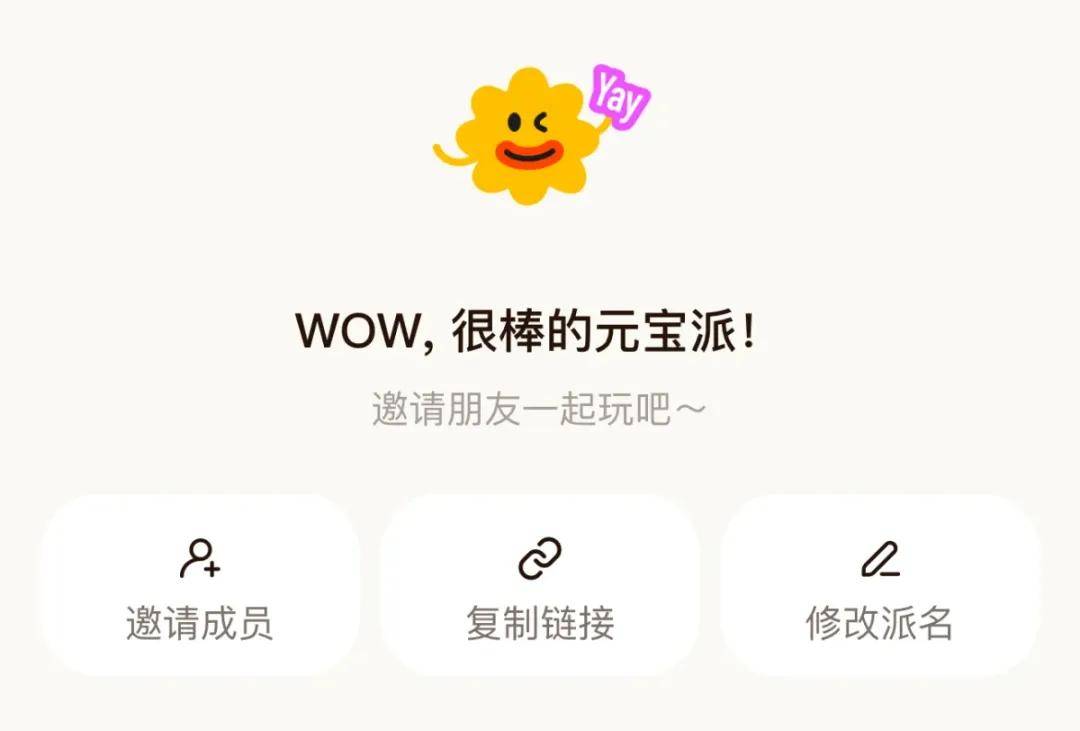
According to Tencent Technology reports, during internal testing, "Yuanbao Pai" functions like a group member who is always responsive. Simply @Yuanbao, and it remains active, joking around, managing group messages, or reacting to emojis. Like any human "group friend," it integrates into the group, acting as a participant, catalyst, or even the soul of the social dynamic.
If AI remains confined to one-on-one chats, it remains a tool; if it can join group conversations, it gains an ecosystem. Tencent's approach is clear: use its "social chains" to transform AI from a "cold Q&A machine" into a "warm social node."
So far, only Tencent can play this card effectively.
03 Baidu's Last Stand: A "Daring Leap" via Spring Festival Red Packets
Compared to Tencent's defensive offense, Baidu's situation resembles a survival breakthrough.
Five billion yuan in cash is no small sum for Baidu, which is in a cost-cutting phase. Yet, Robin Li chose to follow suit.
Citigroup's report highlighted alarming data: multiple AI assistants saw a significant rise in Web-end DAU (Daily Active Users), with Baidu's Wenxin Assistant Web usage accounting for 65%.
The "good news" is Baidu maintains its PC-end advantage; the "bad news" is that in most users' minds, Wenxin remains a "work tool": remembered for writing reports or searching for information in the office but forgotten once users pick up their phones outside work.
In 2026, losing mobile-end traction would be a "worst nightmare." Correspondingly, Baidu's Spring Festival red packet design is heavily structured:

Deep integration with Baidu App: To claim red packets, users must download the app.
Card collection: The return of "collect rare cards to win 10,000 yuan" aims to drive repeated AI interactions.
Video viewing rewards: Combined with Baidu App's video feed to increase engagement time.
Baidu's logic is clear: use frequent red packet incentives to shift users from "searching" to "asking questions," building new user habits. It's a daring leap; if successful, Baidu will secure its gateway to the AI era.
04 The Silent Giant and the Disruptive Dark Horse
In this "Red Packet War," two players' stances are intriguing.
The first is the "elephant in the room"—ByteDance.
So far, ByteDance hasn't announced cash giveaways like Tencent or Baidu. However, Volcano Engine became the exclusive AI cloud partner for the 2026 CCTV Spring Festival Gala, raising the possibility of Doubao's exposure during the event.
Of course, Doubao, with 155 million weekly active users, doesn't need red packets for a "cold start." It has already mastered "scenario-based penetration": through Douyin's content ecosystem, users casually become Doubao fans while browsing videos. This "subtle yet powerful" approach is more daunting than cash giveaways.
The second is the "barbarian at the gate"—DeepSeek.
Rumors suggest DeepSeek will officially release DeepSeek V4 during the Lunar New Year, with expected significant capability upgrades.

DeepSeek's existence is the greatest irony of the "Red Packet War," proving with tangible results that model capability may matter more than traffic. If the model isn't "smart," no amount of red packets will retain users; if it's powerful enough, users will spread the word organically.
In a way, DeepSeek's niche resembles Google's early internet days when Yahoo and portal sites bombarded users with ads, while Google won the future with a minimalist search bar.
05 Can the Old Key Unlock the New Lock?
Returning to the initial question: Can the 2026 "Red Packet War" replicate the 2014 miracle?
Our view is pessimistic, or at least cautious.
The key remains the same, but the "new lock's" internal structure has changed entirely.
Red packet grabbing and video scrolling are classic "instant gratification" activities with low barriers and rapid dopamine feedback. However, AI assistants require higher educational costs; red packets can lure users in but can't teach them how to use the tool. If users don't form dependencies through 7–10 days of high-frequency use, uninstalling takes just a second.
Regardless of the outcome, the 2026 Spring Festival will undoubtedly be etched into China's internet history, initiating a nationwide, real-user-density stress test. It's not just about how much traffic red packets can buy but a clash of different logics:
Tencent bets that social chains remain an unbeatable moat.
Baidu bets that search habits can smoothly transition to conversation.
ByteDance bets that content ecosystems are the best soil for AI.
DeepSeek bets that technological faith can overcome capital.
As for the final outcome, there's no rush to predict. By the eighth day of the New Year, when people no longer feel "compelled" to click icons for a few yuan in rewards, the apps that remain on their home screens will be the true winners of the "Red Packet War."
-
![]()
Registered Capital Slashed to 372 Million Yuan! Yutong Optical Finalizes Industrial and Commercial Change Registration
-
![]()
Zhuque-3 Successfully Lands, and 'Time Traveler' Secures Another ¥100 Million in Funding: China's Commercial Space Industry Experiences a 'Dynamic August'
-
![]()
Autohome Faces a Shrinking Window of Opportunity
-
![]()
Even a Titan Like Musk Has Faced Setbacks in Fulfilling Promises
-
![]()
AI Office: The End of the Racing Era, Context Becomes the Key to Success
-
![]()
Domestic Vehicle Chassis Revolution ②: The Steering Wheel Remains, But Mechanical Connections in the Steering System Are Decreasing
-
![]()
Exploring MiniMax Design: Can Video Editing Be as Simple as Speaking?
-
![]()
Why Can SenseTime Achieve Profitability While CloudWalk Still Faces Challenges, Despite Both Adopting Large Models?