The Automotive Market Kicks Off the New Year on a Sluggish Note: January Sales Forecast and Car-Buying Guide Amid New Policies
 01/30 2026
 584
584
In the traditional rhythm of the domestic automotive market, with the exception of the Spring Festival month, January and December of each year typically stand out as peak consumption periods. The lingering momentum from year-end sales promotions and the early-year surge in car-buying demand often propel sales upwards. However, January 2026 has defied this convention. As the month draws to a close, a sales downturn appears increasingly likely.
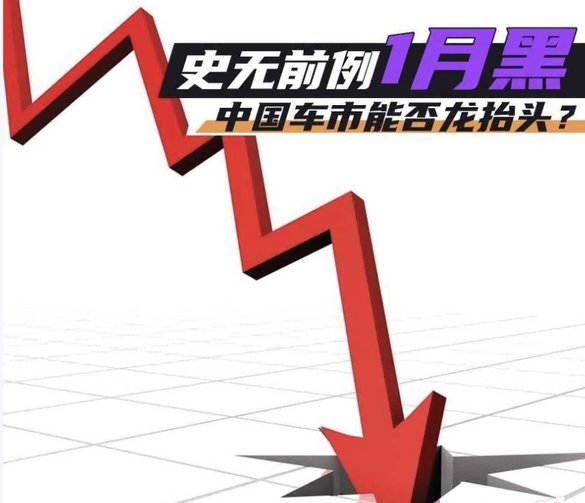
The primary driving forces behind this shift (the term "core incentive" is adjusted to "primary driving forces" for a more natural English expression) stem from the reduction in purchase tax incentives and the expiration of subsidies. Despite the introduction of new car consumption stimulus policies, their magnitude pales in comparison to those of 2025. Coupled with adjustments to the purchase tax on new energy vehicles, consumer enthusiasm has been further dampened. What are the key factors contributing to the anticipated sales decline in January 2026, and how can consumers with immediate car-buying needs make more cost-effective purchases under the new policy landscape?
Sales Forecast: Peak Season Fades, Decline Trend Emerges
According to the latest data from the China Passenger Car Association, retail sales of passenger cars in the first 18 days of January 2026 reached a mere 679,000 units, marking a 28% year-on-year decrease and a 37% month-on-month decline. Manufacturer wholesale volumes stood at 740,000 units, down 35% year-on-year and 30% month-on-month, painting a bleak picture of the automotive market with a precipitous drop.
Based on this data projection, the retail sales volume of narrowly defined passenger cars for the entire month of January is expected to hover around 1.8 million units, representing a 20.4% month-on-month decrease. Although this figure roughly aligns with the same period last year, it falls far short of expectations for a traditional peak season. The new energy market has experienced a more pronounced cooling, with retail sales of new energy passenger cars in the first 18 days of January reaching 312,000 units, a 16% year-on-year decrease and a 52% month-on-month decline. The penetration rate plummeted from over 50% in the fourth quarter of 2025 to 44.4%, becoming a significant drag on overall sales.
Root Causes of the Decline: A Confluence of Factors
The automotive market's cooldown in January 2026, during what should have been a peak season, is not attributable to a single cause but rather a confluence of long-simmering contradictions in policy adjustments, consumer confidence, and market supply and demand. Policy changes serve as the most direct catalyst.

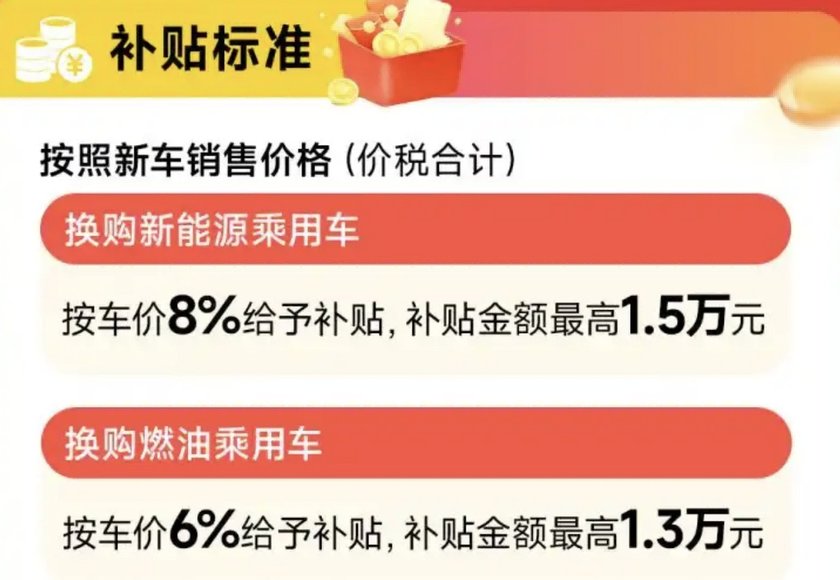
Firstly, the scale of purchase tax and subsidy policies has been significantly scaled back. Starting in 2026, the purchase tax on new energy vehicles has shifted from full exemption to a 50% reduction, increasing the cost of purchasing a single vehicle by several thousand yuan. Simultaneously, the trade-in subsidy has transitioned from a fixed amount in 2025 to a calculation based on the vehicle price proportion, with particularly notable reductions for low-priced new energy vehicle models. Taking models priced below 100,000 yuan as an example, the fixed subsidy of 20,000 yuan available in 2025 has dropped to around 12,000 yuan in 2026, directly dampening the car-buying enthusiasm of price-sensitive consumers and leading to a contraction in demand for low-end markets.
Secondly, there has been an advance in consumption demand and a lack of confidence. Towards the end of 2025, many consumers rushed to buy cars to capitalize on the full purchase tax exemption and fixed subsidies, resulting in a significant overdraft (the term "advance consumption" is retained for clarity) of car-buying demand in January 2026. Meanwhile, against the backdrop of a slowing economic recovery, consumers' income expectations have become more cautious. The traditional peak season for returning home and buying cars before the Spring Festival has lost its appeal, with many families postponing large-ticket purchases like cars, further suppressing demand release.
Thirdly, supply-demand imbalances and channel pressures have come to the fore. In December 2025, the inventory alert index for automotive dealers rose to 57.7%, remaining above the threshold for two consecutive months. Some original equipment manufacturers (OEMs) continued to adopt a volume-pushing mindset, transferring pressure to dealers by increasing inventory, exacerbating channel conflicts. Against this backdrop, although automakers have launched a new round of financial promotion battles, consumers are more inclined towards 'direct price reductions,' limiting the effectiveness of promotions in reversing the sales decline. Additionally, new policies have introduced stringent technical indicators, eliminating a batch of low-range, low-tech models, temporarily narrowing the range of consumer choices and suppressing sales.
Consumption Advice: Rational Car-Buying Amid New Policies
Faced with policy adjustments and market fluctuations, consumers with immediate car-buying needs under the new policies do not need to blindly follow trends or hold onto their money while waiting. They can make rational choices based on their own needs, focusing on policy benefits and market trends.
Firstly, accurately grasp policy benefits and focus on beneficiary models. The core of the new policies is 'precise drip irrigation' rather than the 'flood irrigation' approach of 2025. Models priced between 150,000 and 200,000 yuan have emerged as the largest beneficiary group. Taking a new energy vehicle priced around 170,000 yuan as an example, scrapping an old car and purchasing a new one can yield a full 20,000 yuan subsidy, coupled with a 50% reduction in purchase tax, resulting in actual incentives on par with those in 2025. Meanwhile, the scope of eligible old cars has been further expanded to include gasoline cars registered before June 2013. Consumers can prioritize models that meet subsidy conditions to maximize policy benefits.
Secondly, distinguish between demand types and rationally choose between fuel and new energy vehicles. Consumers with a rigid need for commuting and limited budgets can focus on low-priced models with manufacturer subsidies as a safety net. Some brands still offer full purchase tax subsidies to counteract policy impacts, allowing consumers to compare and select high-cost-performance options. Consumers pursuing long-term usage costs can prioritize plug-in hybrid models with a range of ≥100 kilometers (under WLTC conditions), which meet subsidy requirements while offering the dual advantages of fuel and electric vehicles.
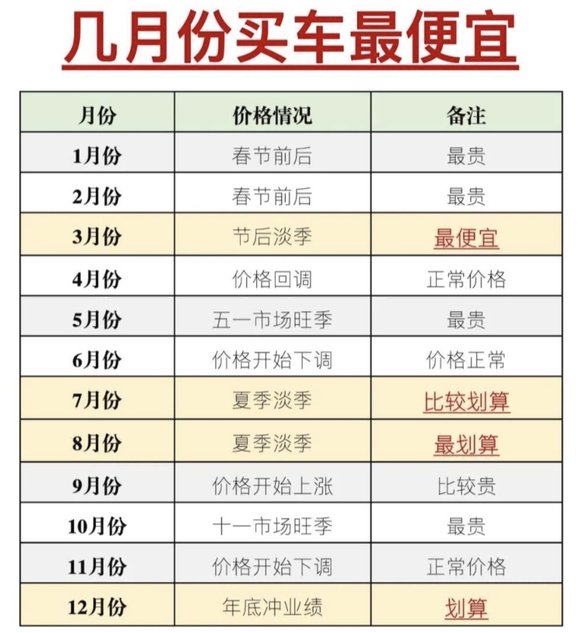
Finally, avoid financial promotion traps and prioritize directly subsidized models. When faced with financial schemes for credit-based car purchases offered by automakers, consumers need to be wary of hidden expenses implied in interest subsidies, avoiding situations where 'the car is scrapped but the loan is still being repaid.' If possible, prioritize models with direct price reductions and cash subsidies, which offer better cost-performance. Meanwhile, waiting for the end-of-month sales push by dealers can provide greater room for negotiation, further reducing car-buying costs.
Epilogue
The sales decline in the automotive market in January 2026 is a phased manifestation (the term "Periodic performance" is adjusted to "phased manifestation" for a more accurate description) of policy adjustments and market transformation, with the industry shifting from scale expansion to rational adjustment. For consumers, there is no need to be swayed by market fluctuations. Making rational decisions based on their own needs and policy benefits is the key to achieving the goal of 'buying the right car at a cost-effective price.'
-
![]()
Enflame Tech's IPO Journey: Navigating Over 5.9 Billion Yuan in Losses and Soaring Debt in Q1 This Year
-
![]()
Trillion-Yuan Giant Li Shufu 'Streamlines': Could Levc Be the Casualty?
-
![]()
AI Competes for Electricity and Generates Power in the Gobi Desert
-
![]()
The First Batch of Victims of the AI Bubble: Programmers
-
![]()
ByteDance, DJI, and Xiaohongshu Secure Top Three Positions Among China’s Fastest-Growing Unicorns
-
Tesla's in-car voice system in China is finally learning to 'understand human language'
-
![]()
Foreigners Are Amazed: Chinese Electric Vehicle Drive Systems Unveil Innovative 'Poses'
-
![]()
700,000 Brothers and the Future of Robots: Behind JD.com's 'Nirvana Plan'