Auto Companies vs. AI in the Memory Chip Market: Uncompetitive and Challenging to Collaborate
 01/30 2026
 628
628
The two-year memory chip crisis is merely in its infancy.
Unable to compete? Then, why not collaborate?
However, collaboration may not be a viable option.
As 2026 commences, numerous auto companies find themselves perplexed by a fresh wave of 'chip shortages.' 'The most significant cost pressure this year stems not from raw materials but from memory. Currently, memory prices have skyrocketed,'
In early January, NIO celebrated the production of its one-millionth new car, yet Li Bin remained anxious. Less than a week afterward, Lei Jun was live-calculating costs.
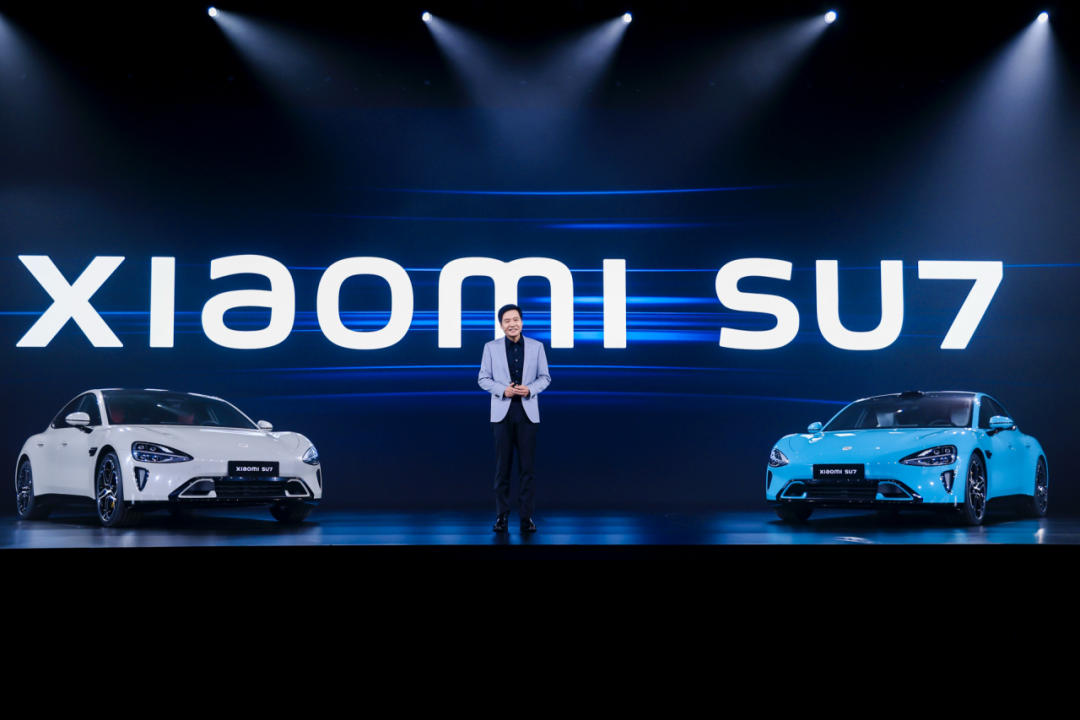
'Memory prices are now escalating on a quarterly basis. In the last quarter, they surged by 40% to 50%, and it's anticipated that they will continue to rise in the first quarter. Following this trajectory, memory costs for cars alone are projected to increase by several thousand yuan this year,' he remarked. He also noted that the new Xiaomi SU7 is experiencing quarterly spikes in memory costs, with an anticipated rise of several thousand yuan per vehicle.
"
Li Auto has also issued warnings. The head of the supply chain sounded a more pessimistic tone, stating that the supply satisfaction rate for memory chips in the automotive industry might dip below 50% in 2026. Chang'an Automobile President Zhao Fei also voiced concerns, stating, 'The risk of battery price hikes is manageable, but various chips, including storage and intelligent computing, may encounter 'black swans.'
After all, for smart vehicles, memory chips have transcended their role as mere 'auxiliary components' and have become the foundational infrastructure supporting the entire vehicle's electronic architecture. Hints from various auto companies suggest that a new round of structural crisis is looming.
Industry insiders indicate that risks in the automotive semiconductor supply chain may emerge in the first half of this year, with memory chip prices expected to more than double. Analysts from Morgan Stanley estimate that memory shortages could drive up electric vehicle costs by $300 to $400 and traditional fuel vehicle costs by $100 to $200.
Shenlan Automobile Chairman Deng Chenghao also performed calculations, arriving at a figure akin to Lei Jun's. Memory chip price hikes will elevate costs by a thousand yuan per vehicle. This cost escalation will introduce new financial crisis risks for suppliers and automakers.
'We can't endure this,' remarked an insider from a new-energy vehicle brand.
Even financially robust Volkswagen suspended production of its Golf and Tiguan models last year due to chip shortages, incurring daily losses of up to €40 million. Following this incident, Volkswagen learned to plan ahead. Previously safeguarded by supply contracts, Nexperia chip shortages did not disrupt its German factory production.
The root cause of this chip crisis lies in the resource competition between the explosive demand growth from AI data centers and the steady rise in chip demand from the automotive industry, which is at the heart of the current DRAM supply chain tension.
Chip manufacturers are prioritizing capacity allocation to the more lucrative and rapidly expanding data center and AI markets. Meanwhile, the automotive industry accounts for less than 10% of the global DRAM market, rendering it with weak bargaining power.
A report from Wells Fargo corroborates this trend. Analysts state that the automotive industry's share of the global DRAM market is less than 10%, placing it at a disadvantage as chip manufacturers naturally prioritize more profitable customers, such as cloud and AI operators.
Wells Fargo provided some data: DDR5 spot prices have surged to more than eight times the 2024 average, while DDR4 prices have exceeded 16 times the average. Data from the PCPartPicker platform indicates that consumer-grade DDR4 and DDR5 memory module prices have doubled or tripled, with some high-end server memory modules for data centers approaching 50,000 yuan each.
Regarding storage, current chip capacity is scarce and often adheres to the 'highest bidder wins' principle. Chips sold to AI customers typically yield several times the profit of those sold to the automotive industry.
Consequently, lured by soaring market demand and high profits, major chip suppliers including Micron, Samsung, and SK Hynix are expediting their shift in capacity towards high-bandwidth memory (HBM) and other high-end products, further diminishing chip sources for the automotive industry.
A Micron Technology executive stated candidly at a groundbreaking ceremony in New York State that the AI wave is rapidly consuming global high-end semiconductor capacity, with shortages reaching 'unprecedented' levels. Micron's new capacity has been booked 'indefinitely' by cloud providers, while SK Hynix's HBM4 capacity for 2026 has been snapped up by NVIDIA and Google, with 2027 orders also fully booked.
This advance ordering is essentially risk management, as missing the deployment window for AI servers could mean being left behind by competitors.
'This year, the automotive industry must vie with AI computing centers, smartphones, and other consumer electronics for memory resources. We simply can't compete; their investments are in the hundreds of billions of dollars,' lamented Li Bin.
Moreover, as major chip suppliers pivot to other areas, analysts predict that global DRAM demand will grow by approximately 26% in 2026, while supply will only increase by about 21%, implying a supply gap of around 14%.
Consequently, auto companies have become the 'weak' party in the chip supply chain. Lacking influence in the chip sector, they not only have to contend with soaring prices but may also face production line shutdowns due to chip supply disruptions.
AI has not only altered the demand curve for computing power but has also fundamentally transformed the competitive landscape of the entire semiconductor supply chain. Nowadays, 'AI is draining the memory market' has become a consensus in the automotive industry.
The cause of this situation is not solely the AI boom but also the fact that the supply side has generally been in a 'destocking, capacity control' state over the past one to two years. Coupled with high industry concentration and insufficient supply elasticity, when demand picks up, the supply side struggles to respond swiftly, triggering structural supply-demand imbalances.
Essentially, it's due to the mismatch between the surge in memory demand driven by the automotive industry's intelligent transformation and the global memory chip capacity allocation mechanism. Meanwhile, the lengthy certification cycle and high reliability requirements for automotive-grade chips prevent automakers from swiftly switching models or alternative solutions.
Moreover, automotive-grade chips must endure temperature differentials from -40°C to 150°C, be vibration-resistant, and have a lifespan exceeding 15 years. The production line certification cycle is at least 18 months, making it challenging for chip supply to keep pace with demand growth.
Previously, Toyota rarely disclosed supply chain cost pressures but admitted to bearing approximately 5.1 trillion yen in additional costs over four and a half years and warned of potential price hikes to pass on the pressure, underscoring the profound impact of global inflation on manufacturing.
To stabilize the supply chain, Toyota has reversed course and raised prices for some suppliers by 10%-15%, shifting from a 'cost control' to a 'supply chain stability' priority strategy. This pressure may continue to be passed on to the end consumer market in the future.
As Volkswagen and Toyota take action, an increasing number of auto companies are beginning to intervene more proactively in the chip supply chain, enhancing their influence through joint development, equity investments, and other means. Additionally, domestic memory chip manufacturers are accelerating their capacity expansion.
Auto companies like Li Auto and NIO have commenced attempts to secure supply by signing long-term capacity guarantee agreements or even directly participating in joint investments with local memory manufacturers. Tesla and BYD are striving for self-sufficiency by independently developing AI chips or establishing semiconductor production lines.
As the memory chip shortage intensifies, more auto companies may be compelled to redesign their electronic architectures to reduce reliance on single chips or switch to more advanced processes like DDR5, but this necessitates time and substantial investment. Nevertheless, it all requires time.
UBS has even issued a warning that the shortage could disrupt global automotive production as early as the second quarter of this year. Electric vehicle manufacturers highly dependent on advanced chips, such as Tesla and BYD, will be most severely affected. Traditional automakers like Ford and General Motors will face relatively less impact, but their high-end models will also encounter challenges.
As a core part of the supply chain, companies like Visteon and Aptiv, which primarily provide high-tech cockpit and driving assistance systems, will not be spared and will face direct order delivery delays due to chip shortages.
However, Sassine Ghazi, president and CEO of EDA and IP giant Synopsys, stated that the memory chip shortage will persist until 2027, marking a 'golden era' for memory companies.
For the automotive industry, the two-year memory chip crisis is merely unfolding.
Note: Some images are sourced from the internet. If there is any infringement, please contact us for removal.
-END-
-
![]()
Enflame Tech's IPO Journey: Navigating Over 5.9 Billion Yuan in Losses and Soaring Debt in Q1 This Year
-
![]()
Trillion-Yuan Giant Li Shufu 'Streamlines': Could Levc Be the Casualty?
-
![]()
AI Competes for Electricity and Generates Power in the Gobi Desert
-
![]()
The First Batch of Victims of the AI Bubble: Programmers
-
![]()
ByteDance, DJI, and Xiaohongshu Secure Top Three Positions Among China’s Fastest-Growing Unicorns
-
Tesla's in-car voice system in China is finally learning to 'understand human language'
-
![]()
Foreigners Are Amazed: Chinese Electric Vehicle Drive Systems Unveil Innovative 'Poses'
-
![]()
700,000 Brothers and the Future of Robots: Behind JD.com's 'Nirvana Plan'