Charging Stations Now Subject to 3C Certification!
 01/30 2026
 636
636
Following the inclusion of power banks, the requirement for mandatory 3C certification has been extended to charging stations. Products lacking this certification will be prohibited from the market starting August 1, 2026, marking a significant shift towards safety and compliance within the industry. This development places numerous charging station operators at a critical juncture, with a comprehensive industry reshuffle already underway.
To ensure aviation safety, the Civil Aviation Administration issued an urgent notice in 2025, prohibiting passengers from carrying power banks on domestic flights that lack CCC certification (hereinafter referred to as '3C certification'), have unclear 3C logos, or are recalled models/batches. This move caused a stir within the industry. Vivid scenes emerged, including piles of unqualified power banks at airport security checks, offline merchants hastily clearing their inventory, and small/medium manufacturers accelerating their exit due to the financial pressures of obtaining certification.
The mandatory 3C control, triggered by safety hazards, now extends its reach to the new energy vehicle sector. Recently, the State Administration for Market Regulation officially decided to implement mandatory product certification (CCC certification) management for electric vehicle power supply equipment. Starting August 1, 2026, equipment that lacks 3C certification and marking will be prohibited from being manufactured, sold, imported, or used in other business activities.
Reporters have learned that 3C certification is a product conformity assessment system implemented by the Chinese government to safeguard consumer safety and national security, as well as to strengthen product quality management. Incorporating charging stations into this system signifies that the charging industry will fully embrace an era of safety and compliance.
August 31, 2026, marks the final deadline for this policy. Charging stations without 3C certification by that date will be forced out of the market. A clear trend is also emerging: in the coming months, cities such as Beijing and Shanghai will witness numerous charging station operators facing critical decisions about their survival.
Policy Addresses Industry Chaos
The introduction of the mandatory 3C certification policy for charging stations is not a coincidence but a response to the escalating safety hazards and resource wastage in the industry's development. A comprehensive reshuffle is now inevitable.
From the current industry landscape, both the quality and safety compliance of existing charging stations are concerning. In late December of the previous year, the State Administration for Market Regulation inspected 47 batches of products from 47 sales units across seven platforms, including JD.com, Tmall, Taobao, and Pinduoduo. These products originated from 45 production units in nine provinces (municipalities), such as Guangdong, Hunan, Anhui, Zhejiang, Jiangsu, and Shaanxi. Fourteen batches were found to be unqualified, with an overall non-compliance rate nearing 30%. Among them, one batch was suspected of counterfeiting and was handed over to local market regulators. Fourteen batches failed to meet the non-normal charging end/stop conditions, and three batches failed the charging connection control timing requirements.
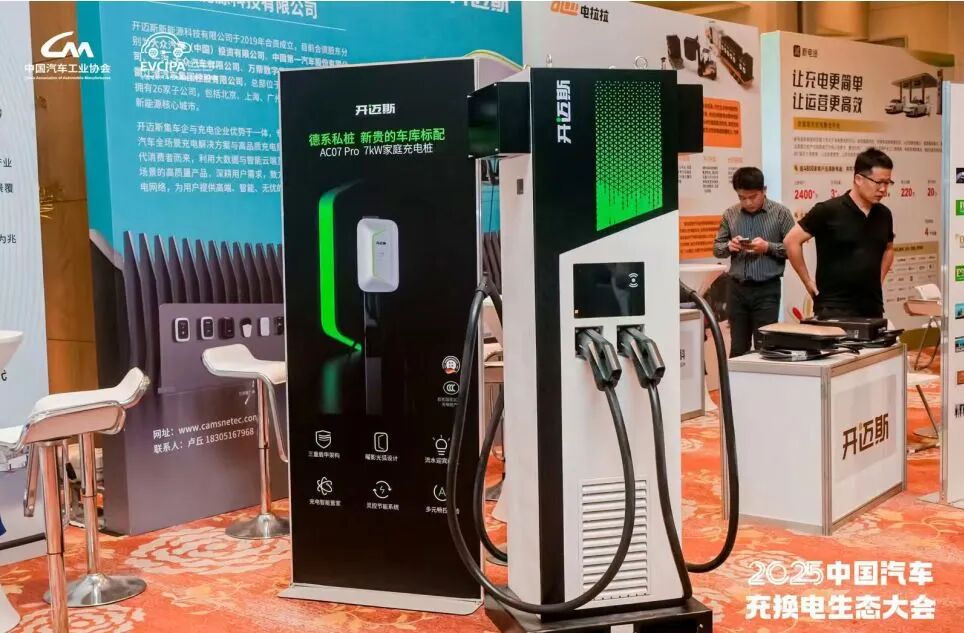
In recent years, frequent fire and explosion incidents during new energy vehicle charging have underscored this issue: a 2023 electric vehicle fire in Changjiang, Hainan; a 2024 electric minibus fire in Liupanshui, Guizhou, which ignited surrounding combustibles; and a 2025 new energy vehicle explosion and fire during charging in Chengdu. Relevant investigations have pointed to charging station safety issues as a primary cause of such accidents.
Enterprise-level qualification deficiencies further amplify industry risks. Public data reveals that only a handful of manufacturers in the industry currently possess CNAS/CMA-certified laboratories, indicating that most small/medium equipment assemblers will be eliminated due to their inability to meet certification requirements. The compliance of existing equipment is also a concern. Charging stations built between 2018 and 2020 are now nearing the end of their depreciation period, with 'zombie stations' prevalent nationwide. These stations occupy public space and pose hidden safety 'time bombs.'
Based on the Product Quality Law, this mandatory 3C certification enforces legal constraints with a significant leap in technical standards. It covers 178 safety indicators, a substantial increase from the old standard's 42, spanning electrical safety, electromagnetic compatibility, mechanical performance, environmental adaptability, and other core dimensions. Requirements such as insulation resistance ≥10MΩ, protective grounding resistance ≤0.1Ω, and tolerance for extreme temperatures ranging from -40°C to 85°C precisely address industry safety pain points.
Its core significance lies in achieving three breakthroughs through rigid standards: firstly, establishing a full lifecycle safety management system, shifting industry regulation from 'post-production spot checks' to 'full-process norms' to prevent inferior products from entering the market; secondly, promoting supply-side reforms, accelerating the elimination of outdated capacity, reducing fiscal resource waste, and optimizing industry resource allocation; thirdly, strengthening the new energy vehicle industry's supporting infrastructure, enhancing charging station safety through standardization to provide a solid foundation for implementing the national new energy vehicle strategy.
Short-Term Challenges, Long-Term Optimization
It is worth noting that the mandatory implementation of 3C certification has triggered a chain reaction in the industrial sector. In the short term, the market elimination mechanism has already commenced. State Grid and China Southern Power Grid have taken the lead in adjusting their procurement standards, explicitly refusing non-3C certified equipment starting in 2026. This has directly caused the collapse of the second-hand non-standard equipment market, with residual values dropping to zero.
For numerous small/medium operators relying on non-standard equipment, they must either invest in equipment upgrades and certification or face market exit. For upstream component suppliers, certification requirements also compel them to enhance safety standards for charging modules, cables, casings, and other products. This necessitates increased R&D investment to drive technological upgrades and improve the quality of the upstream supply chain.
In the long run, the industry reshuffle will reconstruct the market landscape. Small/medium assemblers lacking core technologies and incomplete qualifications will accelerate their exit. Meanwhile, enterprises with independent R&D capabilities, CNAS/CMA-certified laboratories, and comprehensive operation/maintenance systems will seize market share through their compliance advantages. Simultaneously, the policy will drive collaborative upgrades across the supply chain, from core component manufacturing for charging stations and intelligent operation/maintenance platform construction to charging safety monitoring technology R&D, all welcoming new development opportunities.
Reporters have learned that currently, Huawei, Teld, Caocao Charging, Jingneng New Energy, Shinhung, Lvneng Huichong, Bull Group, and other enterprises have already completed 3C certification for multiple products, seizing market opportunities. Taking Teld as an example, relying on its 'vehicle-station-cloud' integrated protection system, it has built a technological moat. Its 21kW Navigator Series intelligent AC charging station became one of the first certified products. Its industry-leading battery health database can monitor 256 battery characteristics in milliseconds, having blocked 1,700 charging safety hazards. This combination of technological and compliance advantages will further widen the gap between leading enterprises and small/medium manufacturers, driving the industry from 'scale competition' to 'quality breakthrough.'
Additionally, policy implementation will benefit downstream users and the entire new energy vehicle industry. For charging operators and new energy vehicle users, certified charging stations mean safer and more reliable charging services. For the new energy vehicle industry, a standardized charging infrastructure network will effectively alleviate consumer charging concerns, supporting sustained industry prosperity and market landscape optimization.
Enterprises Require Precise Strategies for Compliance Transformation
It is important to note that this policy is not a simple administrative directive but a precise means to eliminate inferior capacity through market mechanisms. Regulators have reserved sufficient adjustment buffer periods to facilitate a 'soft landing' for the industry.
From the implementation timeline, the policy will advance regionally and in phases: Beijing plans implementation in March 2026, Shenzhen in May 2026, Guangzhou in June 2026, and Hangzhou in July 2026. Nationwide inventory checks and compliance upgrades will be completed by August 2026. Considering the 3-6 month 3C certification process and old equipment depreciation cycles, the current time window primarily provides an orderly exit channel for non-compliant capacity while reserving upgrade time for qualified enterprises.
Industry insiders point out that for enterprises to navigate this window successfully, precise strategies are essential. Large charging station enterprises, leveraging their advantages in technology R&D, financial strength, and brand influence, are poised to further expand their market share and achieve scaled development. These enterprises can easily meet the high 3C certification standards and enhance their market competitiveness through the branding effect of certification, attracting more clients and resources. Conversely, small/medium enterprises face severe survival challenges, needing to either increase investment to improve product quality and technology for 3C certification or exit the charging station industry.
Therefore, small/medium enterprises must develop tailored strategies based on their resource strengths to navigate the industry pain period smoothly. Specific approaches include four core directions: firstly, prioritize certification for main models. Given financial constraints, focus on certifying high-market-share main models (e.g., 160kW fast charging, 7kW slow charging) and defer peripheral product layout (deployment); secondly, accelerate certification progress by proactively engaging certification agencies, conducting product rectifications and testing based on 178 safety indicators to avoid missing deadlines; thirdly, optimize product and technology systems to enhance reliability, leveraging big data monitoring for stronger safety control; fourthly, align with regional implementation timelines, developing differentiated upgrade plans based on local schedules, prioritizing inventory checks and upgrades for core regional equipment to reduce transformation costs.
'Obtaining CCC certification is a new starting point for our products to meet national safety baselines, not an endpoint,' said the General Manager of Caocao Charging. 'We always believe that safety is the lifeline of the charging infrastructure industry and a core manifestation of corporate social responsibility.' In the reporter's view, this is precisely the core driver of high-quality industry development.
As the August 2026 mandatory implementation deadline approaches, the charging station industry stands at a new starting point for standardized development. The comprehensive rollout of 3C certification will not only clear inferior capacity and reduce fiscal waste but also propel China's charging network toward safer, smarter, and more reliable evolution. This will lay a solid supporting foundation for the healthy development of the new energy vehicle industry and contribute Chinese strength to the global advancement of the new energy vehicle industry.
Image: From the Internet
Article: Auto Review
Layout: Auto Review
-
![]()
Enflame Tech's IPO Journey: Navigating Over 5.9 Billion Yuan in Losses and Soaring Debt in Q1 This Year
-
![]()
Trillion-Yuan Giant Li Shufu 'Streamlines': Could Levc Be the Casualty?
-
![]()
AI Competes for Electricity and Generates Power in the Gobi Desert
-
![]()
The First Batch of Victims of the AI Bubble: Programmers
-
![]()
ByteDance, DJI, and Xiaohongshu Secure Top Three Positions Among China’s Fastest-Growing Unicorns
-
Tesla's in-car voice system in China is finally learning to 'understand human language'
-
![]()
Foreigners Are Amazed: Chinese Electric Vehicle Drive Systems Unveil Innovative 'Poses'
-
![]()
700,000 Brothers and the Future of Robots: Behind JD.com's 'Nirvana Plan'