"New Energy Vehicles Face Another Regulatory 'Tightening'"
 01/30 2026
 472
472
In the context of the burgeoning new energy sector, regulation takes precedence over mere accountability.
When a new energy vehicle is involved in an accident, automakers are often swift to issue statements, particularly those concerning spontaneous combustion. To safeguard their reputation among consumers, automakers have long bypassed regulatory authorities to release their findings first.
While such rapid responses can mitigate the spread of rumors through speed, this self-defense approach by automakers can backfire. After all, no automaker would readily admit to having genuine issues.

With the continuous rise in the market penetration of new energy vehicles, the current domestic fleet of such vehicles has surpassed 40 million units. As sales continue to climb, this number is expected to soar in the coming years. When the scale expands, automakers cannot swiftly respond with statements after every incident.
Recently, the Ministry of Industry and Information Technology has revised and published the 'Access Review Requirements for Road Motor Vehicle Production Enterprises' and the 'Access Review Requirements for Road Motor Vehicle Products,' emphasizing the necessity to establish a monitoring platform for the operational safety status of new energy vehicle products throughout their entire lifecycle.
For new energy vehicles, this marks a significant transformation.
Monitoring Status
Prior to the establishment of the new monitoring platform, China already operated the world's largest new energy vehicle telematics platform. The National New Energy Vehicle Supervision Platform, commissioned by the Ministry of Industry and Information Technology and operated by Beijing Institute of Technology, has been online since 2017. Currently, over 40 million new energy vehicles are connected to this platform.
According to the provisions of GB/T 32960 'Technical Specifications for Remote Service and Management Systems of Electric Vehicles,' the platform collects and monitors over 70 data items across nine categories, including battery status, motor operation, charging behavior, mileage, and geographic location (desensitized).
Naturally, the platform's data does not originate directly from the vehicles but is reported through two or three tiers, generally from enterprise platforms to the national platform.
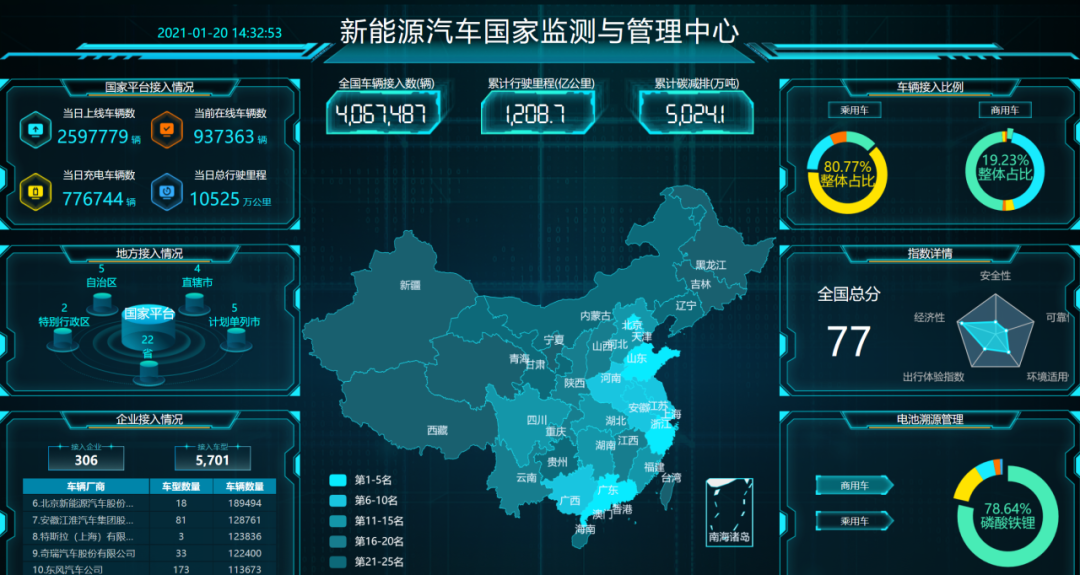
Some provinces have also piloted local monitoring platforms, where data is uploaded from enterprise platforms to local platforms and then aggregated to the national platform.
For instance, Shanghai was the first in the country to establish a local supervision platform. Since its inception in 2014, it has connected over 1.66 million new energy vehicles, including buses, taxis, logistics vehicles, and private cars.
Under the platform's supervision, the safety of new energy vehicles has been continuously improving. According to statistics, the accident rate of new energy vehicle fires dropped to below 0.05% in 2025, marking the first time it was lower than the 0.07% for fuel vehicles.
Simultaneously, this platform has enhanced risk supervision for new energy vehicles. Based on real-time data provided by the platform, the State Administration for Market Regulation has successfully warned and addressed 103 vehicles with high fire risks, averting economic losses of 15.45 million yuan.
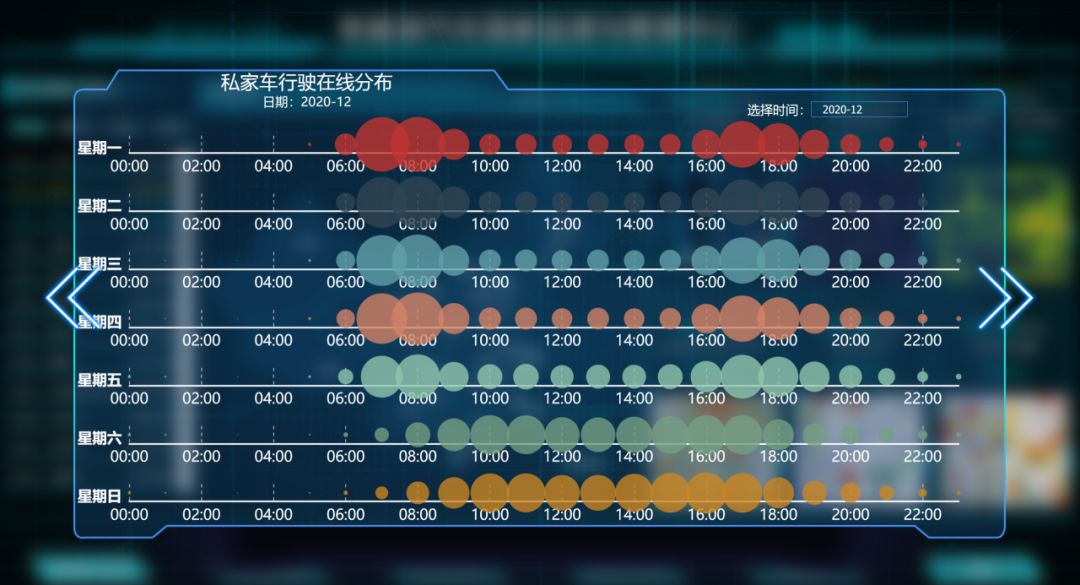
As a national-level platform, the National New Energy Vehicle Supervision Platform primarily undertakes macro-level supervision and serves government functions.
For example, the Ministry of Industry and Information Technology can utilize this platform for access management and product consistency verification; the Ministry of Finance can audit the issuance of financial subsidies for new energy vehicles through accessed data; the State Administration for Market Regulation can investigate and recall defective products based on monitoring data.
At the same time, local planning departments can effectively analyze charging pile layout and urban traffic planning by examining desensitized information such as regional vehicle distribution, charging habits, and usage intensity.
However, for consumers, the current impact of this platform is limited to verifying vehicle compliance. According to relevant department regulations, all new energy vehicles eligible for subsidies must mandatorily connect to the system.
Moreover, with the expanding number of connected vehicles, more issues have surfaced. The standards from nearly a decade ago are struggling to keep pace with technological advancements.
Limitations
Despite national platform supervision, the risk of thermal runaway persists and continues to grow.
Data indicates that in 2025, battery thermal runaway accounted for 10% of the total recalls of new energy vehicles, with design-related recalls accounting for 82.9% and manufacturing-related recalls accounting for 17.1%.
According to the 2025 China New Energy Vehicle Industry User Satisfaction Index released by the China Quality Association, the number of faults per 100 new vehicles in the industry reached 109 this year, an increase of 18 compared to the previous year.
Although the market share of new energy vehicles is rapidly expanding, core issues such as battery safety and product reliability remain shortcomings that constrain industry development. The current regulatory system still struggles to effectively prevent and mitigate risks.

We can still witness incidents of new energy vehicles catching fire through various channels, many of which occur while the vehicle is stationary or in normal operation without external impact. These incidents have raised widespread public concerns about the safety of new energy vehicles.
Behind this lies the limitations of the regulatory mechanism. According to the current GB/T 32960 standard, enterprises are required to collect 61 regular data items and 12 safety fault data items, including battery, motor, electric control, and location, and upload them every 30 seconds.
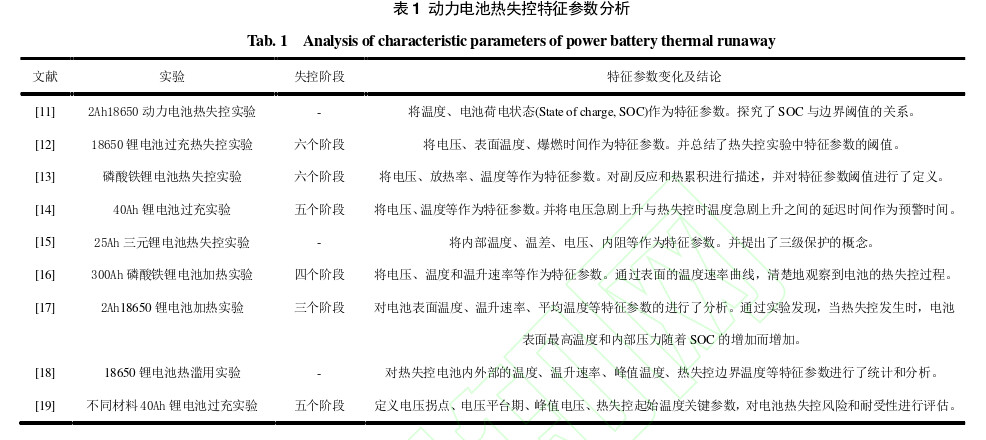
However, a data collection frequency of once every 30 seconds cannot meet the needs for precise accident cause analysis, let alone provide early warnings. Early signs of battery thermal runaway can occur within seconds, making it difficult for a 30-second data interval to capture critical changes and avoid the risk of spontaneous combustion.
More importantly, the scope of regulation is still limited. Vehicles in the public service sector are required to transmit data in real-time, while personally purchased passenger vehicles only report data when the vehicle status changes. If a privately used new energy vehicle is stored for a long time, it cannot be monitored by the platform, making it difficult to determine responsibility even if an accident occurs.
Moreover, the platform currently relies mainly on threshold-based alarms, lacking predictive analysis capabilities. For example, an alarm is triggered when the temperature exceeds 50°C. However, accidents often involve variability. When the battery temperature rapidly rises from normal levels, it also indicates a risk, but no warning can be issued because the 50°C threshold has not been reached.
Some advanced detection solutions utilizing AI large models can achieve early warnings 40 minutes in advance with a false alarm rate of <5%.
More importantly, the current monitoring standards involve data collection by enterprises before uploading to the platform, introducing various risk points. For example, a previous incident occurred when an automaker failed to adapt to the national platform protocol, resulting in a 3-hour delay in alarms.
New Changes
It is evident that the current regulatory platform is struggling to keep pace with the rapid development of new energy vehicles, especially with the continuous popularization of new technologies, necessitating that the regulatory platform evolve with the times.
The construction of the new regulatory platform aims to address these current contradictions.
For example, the new standard GB/T 45688—2025 mandates that when a vehicle is involved in an accident, complete operational data for the 30 seconds before and after the accident must be automatically reported, with a sampling period of less than 1 second, allowing for a nearly complete reconstruction of the vehicle's operating conditions at the moment of the accident.
This data can provide an objective basis for accident analysis and responsibility determination, effectively resolving liability disputes between consumers and automakers caused by missing or opaque data.
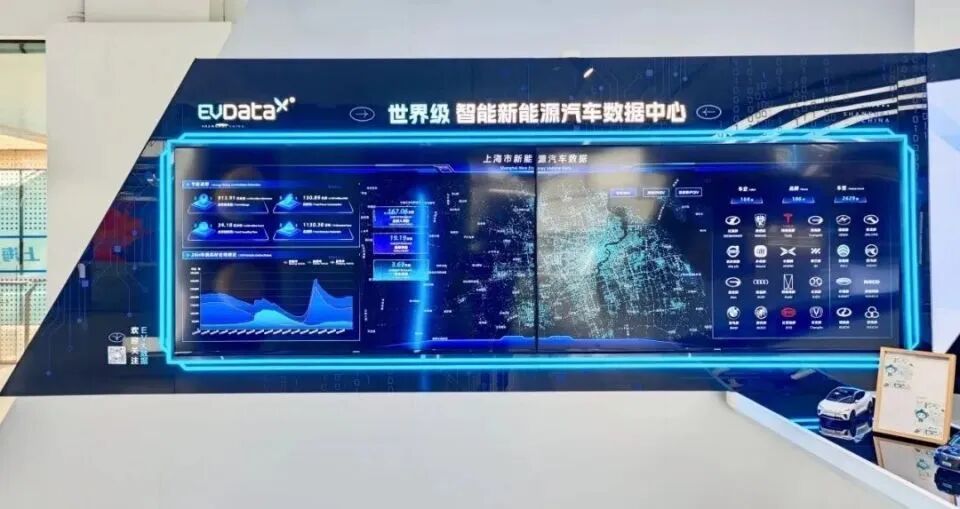
At the same time, establishing a transparent data-sharing mechanism will help eliminate public cognitive biases regarding the safety of new energy vehicles.
In terms of data security, the new standard requires the use of a "dual-channel upload" model, where data accuracy is cross-verified through two paths: enterprise-local-national and enterprise-national, preventing data tampering.
For vehicles parked for long periods, the new regulations mandate enterprises to establish a mechanism for identifying potential hazard vehicles, promptly tracking and confirming the safety status of vehicles offline for extended periods, and properly handling vehicles with safety hazards, such as those parked in large concentrations or frequently triggering alarms.
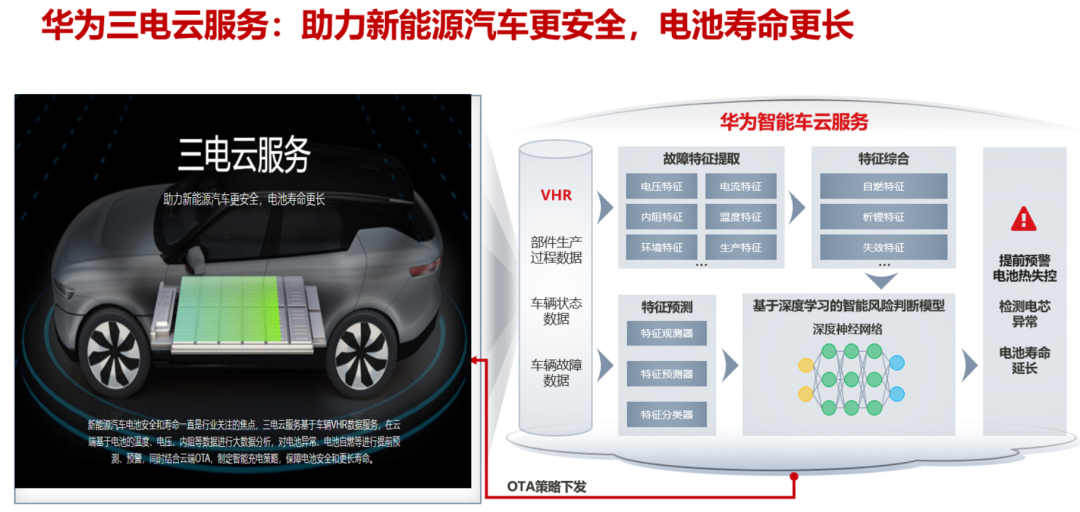
More importantly, the new regulations also require enterprises to establish battery thermal runaway early warning models capable of identifying potential risks in advance, significantly increasing automakers' investment in vehicle safety and preventing individual automakers from reducing safety investments through damage control measures.
With the development of new technologies, the scope of detection by the regulatory platform has also expanded. Regulation of L2+ and L3 autonomous driving technologies has been incorporated into the monitoring and reporting mechanisms, enabling real-time monitoring of the operational status of autonomous driving systems.
It is evident that the development of new technologies will strongly drive new energy vehicles toward greater safety and reduce the occurrence of various issues. For example, news often emerges of owners reporting cruise control failures, with vehicles speeding uncontrollably for hundreds of kilometers on highways, yet the outcomes of such incidents are usually left unresolved.
Currently, such issues are concentrated in fuel vehicles. During the establishment of the new platform, consideration could be given to including newly produced fuel vehicles in the regulatory scope, achieving comprehensive monitoring of new vehicles rather than limiting it to new energy vehicles.
The current safety monitoring system has achieved certain results but still exhibits significant deficiencies in data collection frequency and accuracy, early warning model technology, data authenticity assurance, and proactive identification of potential hazard vehicles. It struggles to meet the safety demands of the high-quality development of the new energy vehicle industry.
With the construction of the new platform, China will achieve full lifecycle safety monitoring from battery production to end-of-life, establishing a complete battery safety management system.
More importantly, the establishment of the new platform will create a unified external notification window, eliminating the need for automakers to conduct overnight investigations and bypass regulatory authorities to issue announcements.
The construction of the new monitoring platform will not only enhance the intrinsic safety of new energy vehicles but also provide strong support for industry technological advancement, market confidence maintenance, and regulatory system improvement, driving the new energy vehicle industry toward high-quality development.
Note: Some images are sourced from the internet. If there is any infringement, please contact us for removal.
-END-
-
![]()
Enflame Tech's IPO Journey: Navigating Over 5.9 Billion Yuan in Losses and Soaring Debt in Q1 This Year
-
![]()
Trillion-Yuan Giant Li Shufu 'Streamlines': Could Levc Be the Casualty?
-
![]()
AI Competes for Electricity and Generates Power in the Gobi Desert
-
![]()
The First Batch of Victims of the AI Bubble: Programmers
-
![]()
ByteDance, DJI, and Xiaohongshu Secure Top Three Positions Among China’s Fastest-Growing Unicorns
-
Tesla's in-car voice system in China is finally learning to 'understand human language'
-
![]()
Foreigners Are Amazed: Chinese Electric Vehicle Drive Systems Unveil Innovative 'Poses'
-
![]()
700,000 Brothers and the Future of Robots: Behind JD.com's 'Nirvana Plan'