Uber Invests $100 Million in Self-Built Fast-Charging Stations: A Game-Changer for Autonomous Driving! Is It a Strategic Bet or a 'Last-Ditch Effort'?
 02/25 2026
 475
475
Introduction
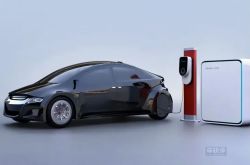
On February 18, Uber announced its decision to invest over $100 million in constructing fast-charging stations for autonomous vehicles across the San Francisco Bay Area, Los Angeles, and Dallas in the United States.
The announcement triggered a significant market response, with Uber's stock price surging nearly 3%.
In the fiercely competitive autonomous driving sector, Uber has long been regarded as a 'savvy player'—it refrains from manufacturing cars and instead focuses on developing a robust platform.
From its partnerships with Waymo in Austin and Atlanta to deploying 1,200 Robotaxis in the Middle East in collaboration with WeRide, and launching services in Dubai with Baidu Apollo Go, Uber has consistently adhered to an asset-light strategy.
However, this time, it has opted for a more 'hands-on' approach. With $100 million allocated for charging stations, what exactly is Uber's strategy?
The Driverless Car Era (WeChat Official Account: The Driverless Car Era) delves into this topic with everyone!
(For reference, please click: Uber's Net Profit Plummets 96% in Q4 2025! Will Its Bet on Autonomous Driving Unlock Trillions in Business Opportunities?)
I. Charging Stations: The 'Achilles' Heel' of Autonomous Driving
Autonomous taxis are operating smoothly, but who is responsible for charging them?
This seemingly minor question is, in fact, the linchpin for large-scale autonomous operations.
Unlike human drivers, autonomous vehicles do not seek out charging stations when their batteries are low, nor can they afford to park and charge for extended periods like private electric vehicles.
For Robotaxis to be profitable, the key metric is 'uptime'—vehicles must remain on the road to generate revenue.
In its statement, Uber explained that owning and operating its charging stations 'can enhance efficiency, reduce costs, and extend vehicle uptime, thereby maximizing utilization and operational hours.'
(For reference, please click: Uber 'Pours Money' into Autonomous Driving: Can $7 Billion in Cash Flow Secure Its Future? How Will Waymo, Tesla, Pony.ai, WeRide, and Baidu Apollo Go Respond?)
In simpler terms: minimize charging detours and maximize revenue-generating trips.
Currently, Uber manages fleet operations in Atlanta and Austin through its partnership with Waymo, including charging, cleaning, and inspections.
This 'concierge service' has highlighted a critical insight: charging infrastructure is becoming a bottleneck for large-scale autonomous fleet operations.
Pradeep Parameswaran, Uber's Global Head of Mobility, bluntly stated, 'Only by building charging infrastructure suitable for large-scale deployment can cities fully unlock the potential of autonomous driving and electrification.'
II. From 'Toll Collector' to 'Master of the House': Uber's New Strategy
Traditionally, Uber has played the role of a 'connector'—linking passengers and drivers while taking a commission.
However, in the era of autonomous driving, this model faces fundamental challenges: if vehicles are owned by autonomous driving companies, what value does the platform add?
Wall Street pessimists have already expressed their concerns—Uber's stock price has dropped 14% year-to-date.
With competitors like Waymo offering direct-to-consumer services, the risk of Uber being 'sidelined' is real.
Uber's response: evolve from a 'connector' to an 'operator.'
Beyond connecting riders with tech companies, Uber now aims to manage their vehicles. Charging stations are a cornerstone of this 'vehicle management service.'
Under Uber's plan, these fast-charging stations will be strategically located at 'autonomous vehicle hubs'—places where Uber already manages daily fleet operations.
In other words, Uber is building a comprehensive operation and maintenance system for autonomous fleets: from order dispatch to charging, maintenance, cleaning, and inspections—all under one roof.
This logic has already proven successful in Uber's partnerships with WeRide and Baidu Apollo Go: Uber handles ground operations, while tech companies focus on vehicle manufacturing and algorithms. This clear division of labor ensures mutual benefit.
III. Beyond Self-Building: Uber's Ambitions for a Charging Network
In addition to funding its charging stations, Uber has adopted a smarter approach: guaranteeing minimum usage for third-party charging stations.
Uber has announced agreements with charging operators like EVgo, Electra, Hubber, and Ionity, committing to ensure a minimum utilization rate for charging piles. If Uber drivers fall short of the agreed usage levels, Uber will cover the penalties.
Why is this strategy brilliant?
1. Leverage Uber's data to identify locations with the highest demand for charging infrastructure.
2. Use Uber's commitment to reduce investment risks for operators.
3. The result: over 1,000 new charging stations globally, prioritized for Uber drivers.
In key markets like New York, London, and Paris, Uber is quietly weaving an exclusive charging network using 'data + guarantees.'
For electric ride-hailing drivers, charging convenience now outweighs vehicle purchase costs as their top concern.
Whoever solves this problem can retain drivers—and thus passengers.
IV. Anxiety Reflected in Stock Charts, But Strategy Clear on Paper
Of course, Uber's move is not without risks.
While $100 million is a substantial investment in charging infrastructure, it's far from enough to support a nationwide autonomous fleet in the U.S.
Moreover, an Uber spokesperson declined to comment on whether Waymo would use these stations, stating only that they are 'designed for Uber network vehicles.' This suggests that in San Francisco and Los Angeles, where Waymo offers services through its own app, these charging stations may lie idle.
More intriguing is that Uber quietly adjusted its electric vehicle incentive strategy alongside the charging station announcement.
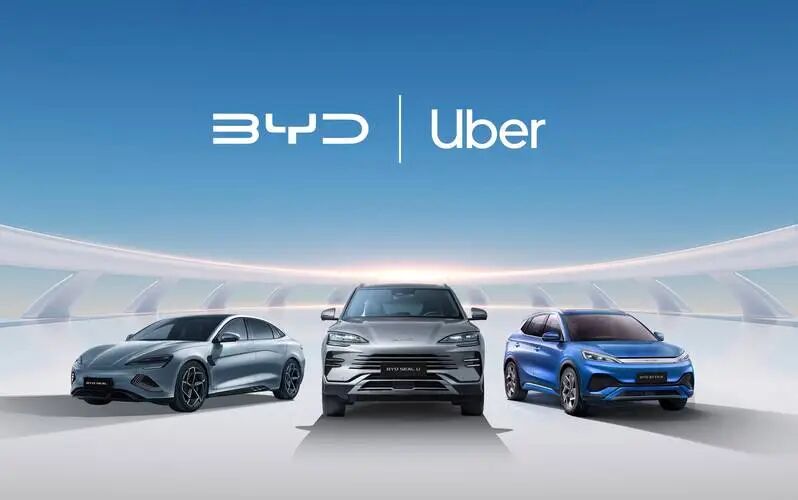
In December last year, Uber replaced monthly rewards for electric vehicle drivers with one-time subsidies for drivers switching from gasoline vehicles.
On one hand, heavy investment in infrastructure; on the other, a shift in subsidy approach! The logic is consistent: instead of scattered incentives for vehicle purchases, focus resources on solving the 'no place to charge' pain point.
V. Conclusion: Not Building Cars, But Building Homes for Them
Looking at Uber's $100 million investment, it's less about 'going heavy' and more about a 'software-hardware integration' strategic positioning.
In the autonomous driving marathon, Uber is neither the fastest technologist nor the most capital-rich player.
But it's proving that when cars no longer need drivers, they still need managers. Charging, maintenance, dispatch, cleaning—these 'dirty jobs' are precisely where platform companies can build competitive moats.
Uber has set a clear goal: by the end of 2026, offer autonomous driving services via the Uber app in at least 10 cities.
To achieve this, a software platform alone won't suffice—a 'hardware home' to keep vehicles running is essential.
Uber's $100 million buys more than charging stations; it buys a voice in the future mobility ecosystem.
As technical barriers lower, the real competitive edge will come from who can keep vehicles on the road 24/7 at the lowest cost and highest efficiency.
From ride-hailing platform to energy infrastructure provider, Uber's transformation may seem radical but is pragmatic. It understands that in the autonomous era, whoever controls 'electricity' and 'roads' controls the future.
This high-stakes gamble could be the key to shedding its 'traditional platform' label and reshaping its valuation logic.
In summary, The Driverless Car Era (WeChat Official Account: The Driverless Car Era) believes: If successful, Uber will become the 'mobility operating system' connecting technology, vehicles, energy, and users; if it fails, it may be dragged down by heavy assets and sink deeper.
But in any case, this 2026 move has transformed Uber from a bystander into a true player.
What do you think?
-
![]()
Depreciation Rate on Par with Mobile Phones: Just 40% Value Retention After Three Years—Why Do Battery Electric Vehicles Lose Their Worth?
-
![]()
Clearing Bugatti Stock Worth 7 Billion: Why is Porsche 'Cutting Ties'?
-
![]()
Don’t Dismiss Huawei’s Potential in Sedans Just Because the Shangjie Hasn’t Hit It Big Yet
-
![]()
Unsold Cars in China Find Success Overseas
-
![]()
Ghosn: Only I Can Save Nissan, Shareholders Beg Me to Return
-
![]()
Expanding Automobile Consumption: It's Time to Address the High Cost of Electric Vehicle Repairs
-
![]()
Luna Ultra Entangled in 'National Subsidy Fraud' Controversy, Insta360 Pushed to the Brink by DJI
-
![]()
People have long suffered from splash ads. Will the 'temporarily disappeared' traffic behemoth make a comeback?