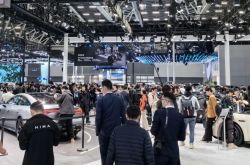
Dongfeng Group Implements Significant Personnel Changes Involving Several Executives
 02/25 2026
 536
536
This strategic move directly reflects the inevitable shift in automotive competition from 'head-to-head vehicle clashes' to 'comprehensive full-chain rivalry.' Author / Li Jun
Produced by / Insight Auto
Personnel changes are far more than simple rotations; they signify precise strategic maneuvers. On the eve of the Spring Festival, adjustments in the business information of Xiangyang Daan Center drew industry-wide attention. On the surface, it involved the replacement of two directors, but in essence, it represented a pivotal move by Dongfeng Group in the new energy and intelligent driving sector. Wang Jin and Tang Jing stepped down, making way for Wang Xicheng and Zhan Xin to take charge. This move directly underscores the inevitable transformation of automotive competition from 'head-to-head vehicle clashes' to 'comprehensive full-chain rivalry.'

Strategic Dual Focus: Technical Deepening and Scenario Expansion
The backgrounds of the new directors are pivotal to Daan's future trajectory. 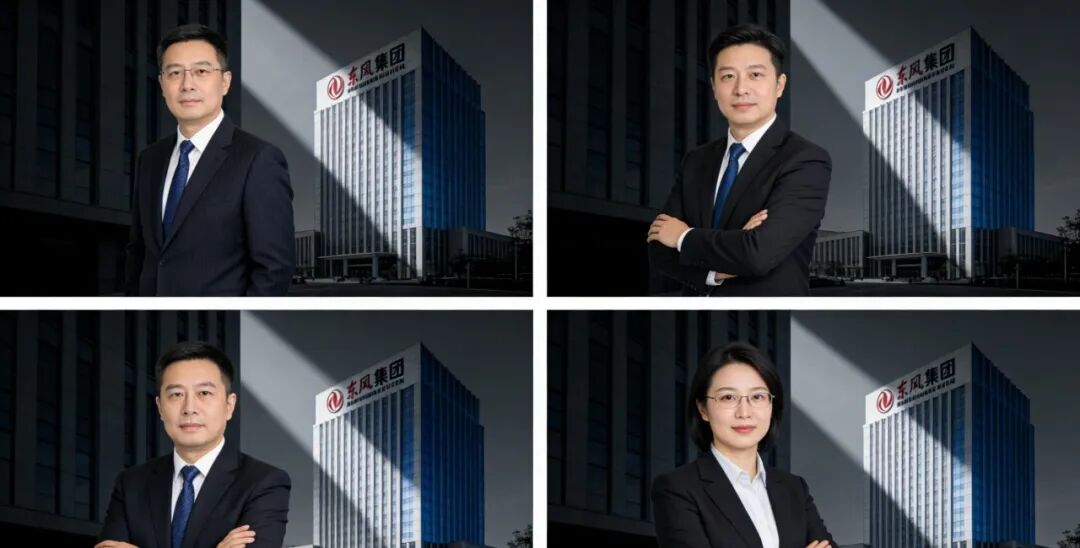
Wang Xicheng has extensive experience in the testing field, having progressed from Deputy Director of the Testing Department at Dongfeng Technology Center to Strategic Director of the R&D Headquarters, consistently driving technical verification as the core engine.
He possesses in-depth knowledge of industry standards and technical challenges. After assuming the role of General Manager of Daan last year, he swiftly expanded testing capabilities to encompass core new energy components, laying Daan's 'technological foundation.'
Zhan Xin, on the other hand, is a 'cross-border expert.' As Vice President of Dongfeng R&D Headquarters and Chairman of Dongfeng Yuexiang, he is not only well-versed in the technological evolution of commercial vehicles but also adept at implementing intelligent connected vehicle scenarios.
Dongfeng Yuexiang has established an autonomous bus operation network in 35 cities across 15 provinces, completing a cumulative 300,000 safe trips and accumulating 2 million kilometers of real-world road data, thus building Daan's 'scenario-based repository.'
One lays a solid technological foundation, while the other expands the application frontier. This combination is not coincidental but reflects Dongfeng's ultimate requirement for testing institutions: to address both 'technical rigor' and 'market relevance.'
Examining the departures of the outgoing executives further reveals a strategic closed-loop system.
Wang Jin was transferred to General Manager of Dongfeng Yuechuang Technology, which has just produced the world's largest 16,000-ton integrated die-casting battery enclosure. Daan's lightweight testing capabilities will directly support this core component.
Tang Jing was promoted to Deputy General Manager of the Commercial Vehicle Business Unit, leading Dongfeng Commercial Vehicle's new energy transformation. Daan's commercial vehicle testing system serves as the 'quality barrier' for this transformation.
This is not a talent exodus but a strategic reallocation; not a business fragmentation but a full-chain collaboration.
Why does Dongfeng place such high value on Daan?
Industry trends provide the answer. By 2026, the penetration rate of new energy vehicles is expected to exceed 50%, and the number of intelligent connected vehicles will surge. However, institutions with specialized new energy and intelligent driving testing qualifications account for only 18%. This supply-demand imbalance presents a strategic opportunity for the testing sector.
Testing is no longer just backend verification but frontend positioning. Whoever controls testing standards wields industry influence; whoever can swiftly adapt to technological advancements can help automotive companies avoid pitfalls. 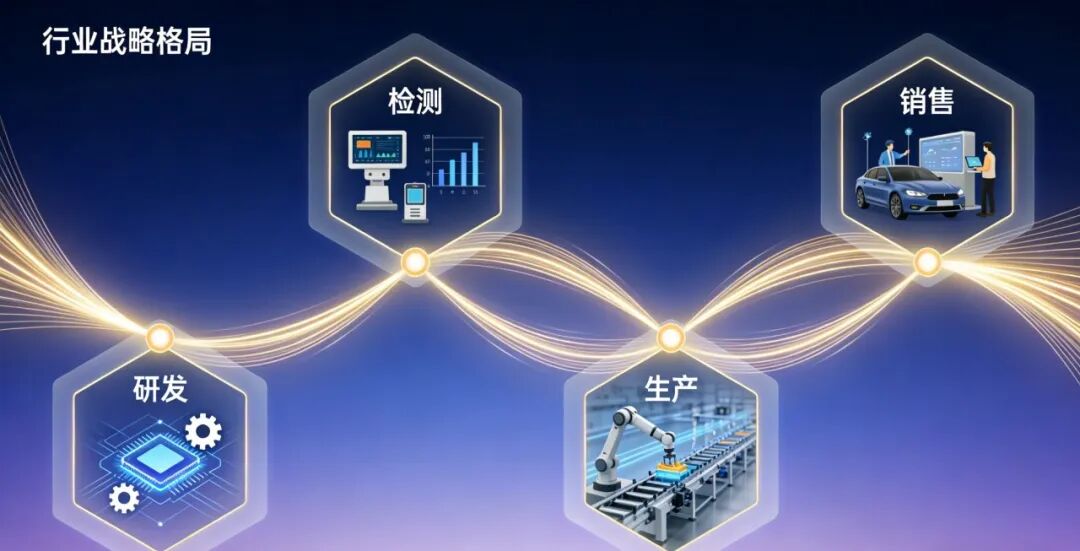
As a third-party testing giant under Dongfeng's control, Daan has already made forward-looking moves. In 2025, it launched the 'Anyan Equipment' brand, built a high-speed three-motor durability test bench, and even obtained ship power testing qualifications and led aircraft testing projects. Its positioning has transcended traditional automotive testing institutions, evolving into Dongfeng's 'full-scenario technological verification platform.'
Dongfeng's strategy is even more visionary: Daan's testing capabilities not only empower its proprietary brand's technological advancements but also extend to clients across the industry, creating a dual revenue model of 'technological output + standard setting.'
In contrast, most industry competitors remain confined to traditional testing sectors, while Daan leverages personnel adjustments to achieve triple upgrades in 'new energy + intelligent connected vehicles + full-industry-chain collaboration.' 
Capability Reconstruction Through Personnel Reorganization
The core of this leadership change lies in Dongfeng's redefinition of 'testing value.'
Previously, testing served as a 'certificate of conformity' before product launch; now, it has become a 'frontline gateway' in the R&D chain. Wang Xicheng's strategic vision drives Daan to deeply integrate into Dongfeng's new energy vehicle R&D, embedding testing standards from the design phase.
Previously, testing was isolated 'single-point services'; now, it has evolved into an open 'ecological hub.' Zhan Xin's intelligent connected vehicle resources enable Daan to connect 'vehicle-road-cloud' testing scenarios, transitioning from single-vehicle verification to system-level verification.
This judgment strikes at the heart of the industry. In the latter half of automotive competition, the core logic has shifted from 'speed races' to 'competitions in verification precision and iteration stability.' Daan's board reconstruction represents the 'strategic edge' Dongfeng has forged for this industrial transformation.
Personnel changes are merely the surface; capability reorganization is the essence. While other automotive companies remain entangled in configuration battles and price wars, Dongfeng has shifted the competitive battlefield to 'testing standards' and 'full-chain collaboration' through Daan Center.
This leadership change marks not only a new beginning for Daan but also a pivotal turning point for China's automotive industry to transition from 'scale competitions' to 'quality duels.' Whoever controls testing influence will emerge victorious in the new energy and intelligent driving wave.
END
-
![]()
Depreciation Rate on Par with Mobile Phones: Just 40% Value Retention After Three Years—Why Do Battery Electric Vehicles Lose Their Worth?
-
![]()
Clearing Bugatti Stock Worth 7 Billion: Why is Porsche 'Cutting Ties'?
-
![]()
Don’t Dismiss Huawei’s Potential in Sedans Just Because the Shangjie Hasn’t Hit It Big Yet
-
![]()
Unsold Cars in China Find Success Overseas
-
![]()
Ghosn: Only I Can Save Nissan, Shareholders Beg Me to Return
-
![]()
Expanding Automobile Consumption: It's Time to Address the High Cost of Electric Vehicle Repairs
-
![]()
Luna Ultra Entangled in 'National Subsidy Fraud' Controversy, Insta360 Pushed to the Brink by DJI
-
![]()
People have long suffered from splash ads. Will the 'temporarily disappeared' traffic behemoth make a comeback?