Horizon Chip Leader to Step Down, Su Qing Emerges as Potential Successor
 03/18 2026
 554
554

Source: Zhiche Technology, 36Kr Auto
Recently, 36Kr has exclusively learned that Chen Peng, the head of chip R&D at Horizon, is set to leave his position. According to sources, the frontrunner to replace him is Su Qing, Vice President and Chief Architect at the company.
Simultaneously, Horizon has recently undergone a significant leadership reshuffle. Zhu Wei, previously the Executive President of CATL, has taken over as President of Horizon, while the former President, Chen Liming, has transitioned to the role of Vice Chairman.

Key Personnel Changes at Horizon Amidst Critical Juncture
Chen Peng, a seasoned veteran in the chip industry, boasts 19 years of experience in the ICT chip sector before joining Horizon. At Horizon, he was primarily responsible for overseeing the SoC system architecture design for chips and coordinating with chip manufacturers. Chen joined Horizon during the development phase of the Journey 6 series chips and managed the entire lifecycle of the Journey 6P, from design to mass production and shipment.
The Journey 6P stands as one of Horizon's current flagship products, boasting an impressive 560 TOPS of computing power per chip. It is utilized in the mid-to-high-tier intelligent driving solutions of several automakers.
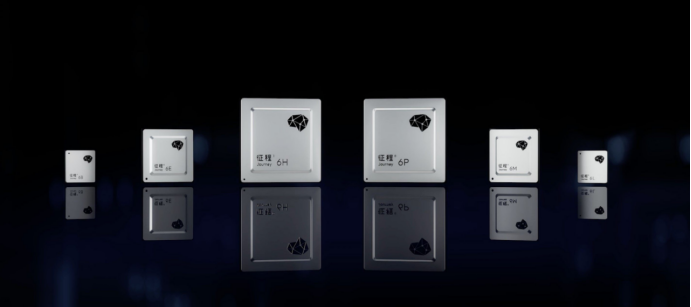
However, the chip that will truly shape Horizon's competitiveness in the next phase is not the Journey 6 but the Journey 7, which is expected to be launched between 2026 and 2027. Yu Kai revealed earlier this year that the Journey 7, featuring the fourth-generation BPU architecture "Riemann," will be released concurrently with Tesla's next-generation AI5. This implies a tight R&D timeline for the Journey 7.
Sources indicate that Horizon's leadership is keen on ensuring the new chip can adapt to the evolving landscape of large models. The company has recently engaged with leading domestic large model companies, such as MiniMax and Zhipu, to research chip requirements. The basic design of BPU4.0 is expected to be finalized by April.
Chen Peng is not the first key R&D leader to depart Horizon during a critical chip iteration phase. Industry insiders have observed that Horizon appears to follow a pattern of "changing teams with each new chip."
In 2021, Yu Kai brought in Chen Liming, the former President of Bosch China, at a time when Horizon needed to demonstrate to the industry its proficiency not only in algorithms but also in automotive-grade functional safety processes. Chen Liming, with his German industrial precision, played a pivotal role in securing the "admission ticket" from automakers, facilitating Horizon's transformation from a "technical team" to a "professional force." However, Chen Liming's departure and Zhu Wei's arrival signify another strategic move by Horizon to navigate the evolving industry landscape.
As 2026 unfolds, the rules of the intelligent driving industry are being rewritten, with intelligent driving solutions transitioning from "optional" to "standard." The demand for high-computing power on the device side has surged, and achieving a breakthrough in computing power could lead to intergenerational advantages. At this juncture, traditional academic and Tier 1 management styles are gradually losing their efficacy. Horizon now requires a "supply chain iron army" capable of international expansion, cost control, and forging strong partnerships with automakers to steer the ship. Zhu Wei's arrival could not be more timely.
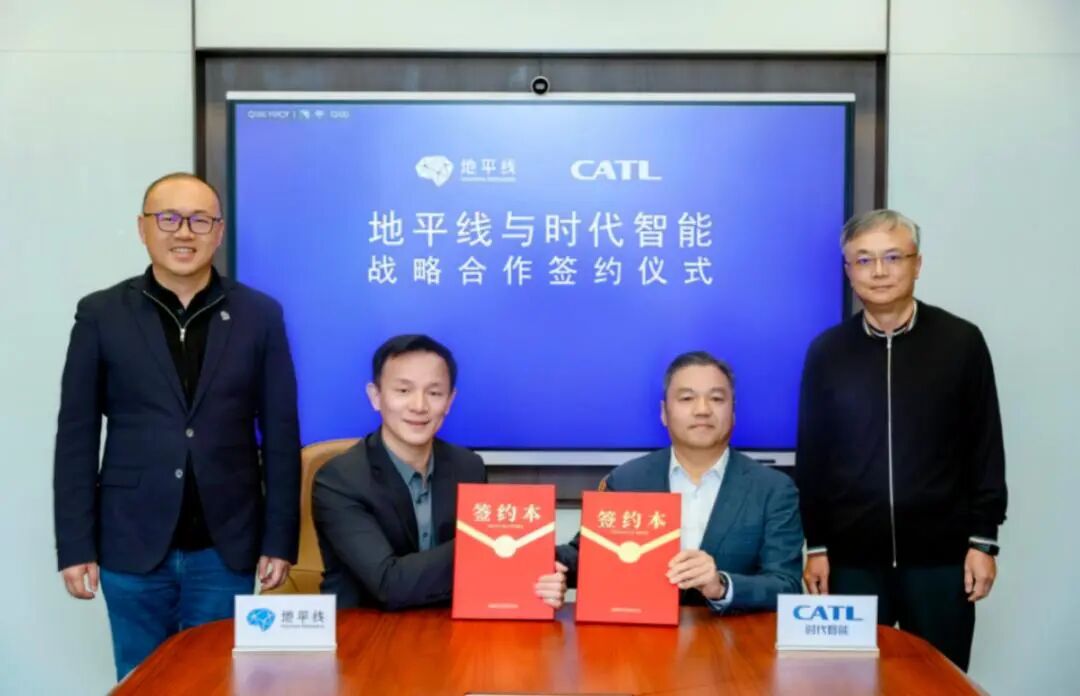
Zhu Wei brings with him eight years of experience at CATL, where he oversaw the company's passenger vehicle and overseas energy storage businesses. Prior to CATL, he served as Vice President of Valeo China, responsible for automotive comfort and assisted driving businesses. His career spans intelligent driving and new energy, with extensive experience in both domestic and international markets. This executive adjustment is a strategic move for Horizon as it aims to expand globally and transition towards marketization and efficiency.
Compared to the market-stabilizing Journey 6, the yet-to-be-launched Journey 7 chip will be pivotal in determining Horizon's competitiveness in the next industry phase. For Horizon, the Journey 7 represents a must-win battle.

High-Computing Power Chips Surge: Horizon Must Accelerate
Competition in the intelligent driving chip sector has intensified. While Horizon occupies a unique ecological niche among domestic chipmakers, it faces mounting pressure from industry giants, emerging competitors, and cross-border players, making it increasingly challenging to maintain market share.
On one hand, automakers are accelerating their in-house chip development. This year, leading automakers like NIO, XPeng, and Li Auto have expedited the launch of their self-developed chips. NIO's second general-purpose intelligent chip, Shenji, has successfully tape-out and entered mass production, with plans to sell externally. Li Auto's Mach 100 chip boasts an impressive 1,280 TOPS of computing power per chip, while XPeng's GX model is equipped with four Turin chips, delivering a total local computing power exceeding 3,000 TOPS. Automakers' demand for chip computing power is rapidly advancing from hundreds to thousands of TOPS, and breakthroughs in on-device computing power will create intergenerational advantages, directly squeezing the survival space of third-party chipmakers.
On the other hand, algorithm companies are also venturing into the chip sector. Momenta's first-generation assisted driving chip (codenamed BMC), developed in collaboration with Xinxin Hangtu, is scheduled for mass production this year and has secured design wins from multiple automakers, including SAIC Volkswagen and Beijing Hyundai, with the possibility of existing cooperative models switching to this chip. Algorithm companies extending into the chip sector are reconstructing intelligent driving solutions through integrated hardware and software, further diverting market share and narrowing the survival space for independent chipmakers.
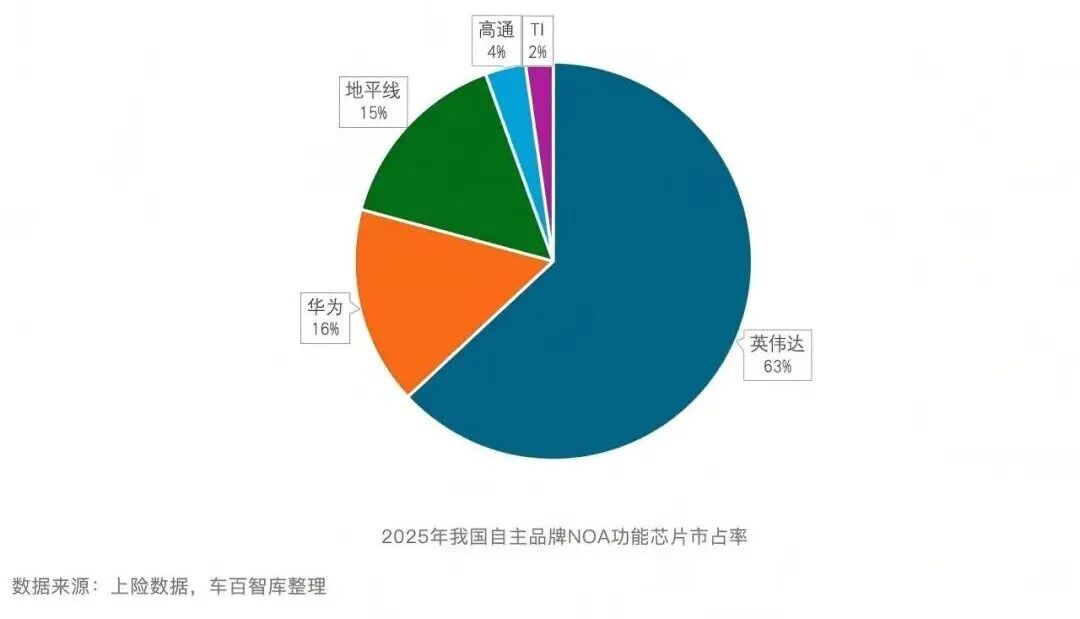
Additionally, NVIDIA remains firmly entrenched at the top of China's intelligent driving chip market, while Huawei continues to double down on the sector. Competitors like Black Sesame Technologies are fiercely competing in the low-end market. Amidst this multi-pronged onslaught, Horizon's ability to maintain its position is increasingly challenged. Even though Horizon launched its integrated hardware and software solution, HSD, last year and reshaped its ecosystem alliance this year with the "HSD Together" service model, opening up the Journey 6P chip ecosystem, it has triggered competitive conflicts among ecosystem partners. Some deeply partnered algorithm firms, dissatisfied with the intensified ecosystem, have begun exploring other chip solutions, underscoring the urgent need to enhance alliance cohesion.
Meanwhile, the integration of cockpit and driving functions has emerged as a new industry trend, with Qualcomm's Snapdragon 8797 chip becoming a favorite among automakers. Models like Leapmotor's D-series have already adopted it. Horizon plans to launch a cockpit-driving integrated chip product at this year's Beijing Auto Show, attempting to tap into this burgeoning market. This chip is reportedly Horizon's highest-computing-power and most complex design to date. Industry analysis suggests that the fusion solution of FSD + Grok has validated the potential of cockpit-driving integration, with Li Auto and XPeng even merging their intelligent driving and cockpit teams. Even low-end models are accelerating adoption due to cost-effectiveness. If Horizon misses this trend, it may further cede market initiative.

In Conclusion
As the intelligent driving industry accelerates its differentiation and the industry landscape remains fluid, the time window for Horizon is rapidly closing. Short-term technological or team changes could trigger structural gaps, which is why Horizon is expediting its internal adjustments and fully committing to product R&D.
As a benchmark enterprise in domestic intelligent driving chips, Horizon's breakthrough path not only concerns its own survival but also influences the industry's voice in domestic intelligent driving chips. Whether it can stabilize its R&D team, overcome product bottlenecks, expedite the launch of the Journey 7, and reconstruct ecosystem cohesion will be crucial to breaking through the current impasse and maintaining its leading position. This breakthrough battle has reached a critical juncture.
- End -
Disclaimer:
Any works noted as "Source: XXX (non-Zhiche Technology)" in this official account are reprinted from other media, with the purpose of transmitting and sharing more information. It does not represent this platform's endorsement of their views or assume responsibility for their authenticity. Copyright belongs to the original authors. If there is any infringement, please contact us for deletion.
-
![]()
The Unstoppable Rise of 'Optical Progress and Copper Decline': Sunny Optical’s Strategic Vision for the Next Decade
-
![]()
AI + Going Global in the Second Half: No Intermission for Robot Vacuum Cleaners
-
![]()
The Suffering Endured in E-commerce, Walmart Doesn't Want to Repeat in AI
-
![]()
What Does the Doubling of New Energy Vehicle Exports Mean?
-
![]()
Ghosn: 'Only I Can Save Nissan'
-
![]()
Volkswagen Lays Off 100,000 Employees, The Elephant Sits Down
-
![]()
Expanding Production Capacity! Yutong Optics Acquires Approximately 1.5 Hectares of Industrial Land in Chang'an, Dongguan
-
![]()
Why Is Nokia Making a Comeback in the AI Era?